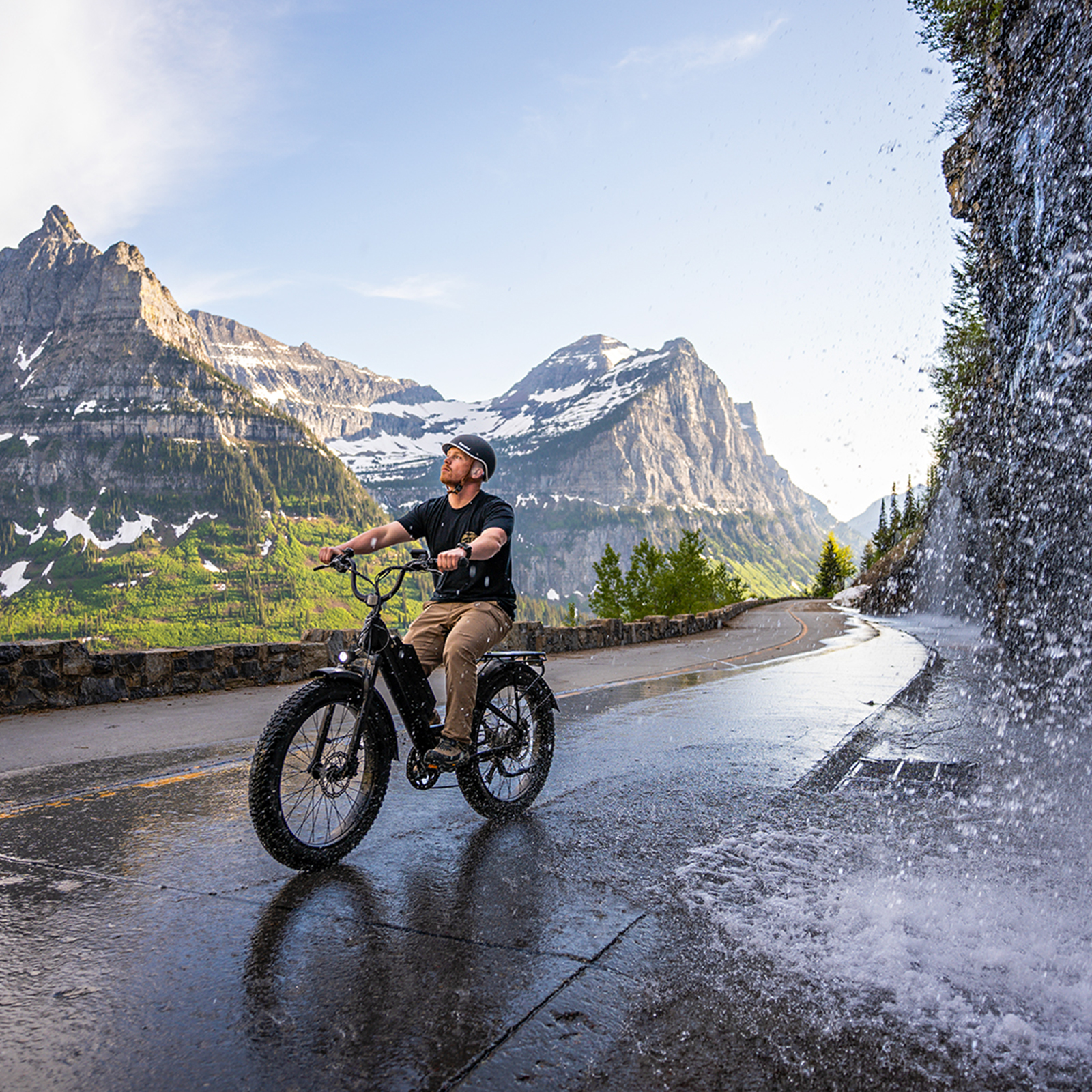
Each April, a small crew of Glacier National Park workers plows through snowdrifts that can rise taller than a house along Going-to-the-Sun Road.
During peak summer, an average of 4,600 vehicles traverse the route daily, chasing some of Montana’s most breathtaking views and hikes. But in the winter months, before tourists fill the parking lots, the 50-mile road transforms into a frozen ridge of ice and fog — dangerous and nearly unreachable.
Now, two brothers from the Flathead Reservation are documenting that annual transformation for Glacier fans to experience on the big screen. Jordan and Logan Lefler’s upcoming feature-length film, “Journey to the Sun,” traces the iconic road’s pioneering construction, the hazards of the spring plow, and the meaning Going-to-the-Sun holds for Indigenous communities and the millions who visit Glacier each year.
The story begins centuries before Glacier was designated a national park, when the mountains were central for the Blackfeet Nation to the east and the Confederated Salish and Kootenai Tribes (CSKT) to the west. The Blackfeet called the peaks, basins, and valleys of the Rocky Mountain Front the “backbone of the world,” a landscape used for vision quests and spiritual retreat.
The Leflers grew up in Arlee, where they were heavily influenced by their grandmother, an enrolled member of the CSKT. She shared stories of the bison hunt, explaining the tradition of using every single part of the animal to avoid waste. Their immersion in the CSKT culture had a significant impact on their approach to the film.
“We were taught to only take what we need and to give back to the land,” Jordan said. “We used that mindset in filming — always keeping our distance from wildlife and staying on the trails — and we believe the film will encourage that same outlook for viewers.”
Carrying this perspective into their work, the Leflers turned to archival footage, tracing the decades of planning and the crews who carved the mountainside into what is now Going-to-the-Sun Road. Between 1921 and 1933, when the full length of the road opened, the project consumed $2.5 million, 490,000 pounds of explosives, and the lives of three workers.
Workers lived in temporary camps for months, while supply trucks detoured around blasting zones. Much of the work was done by hand, as men suspended from cliff faces hauled heavy supplies down ladders, wearing World War I–era helmets to deflect falling rock.
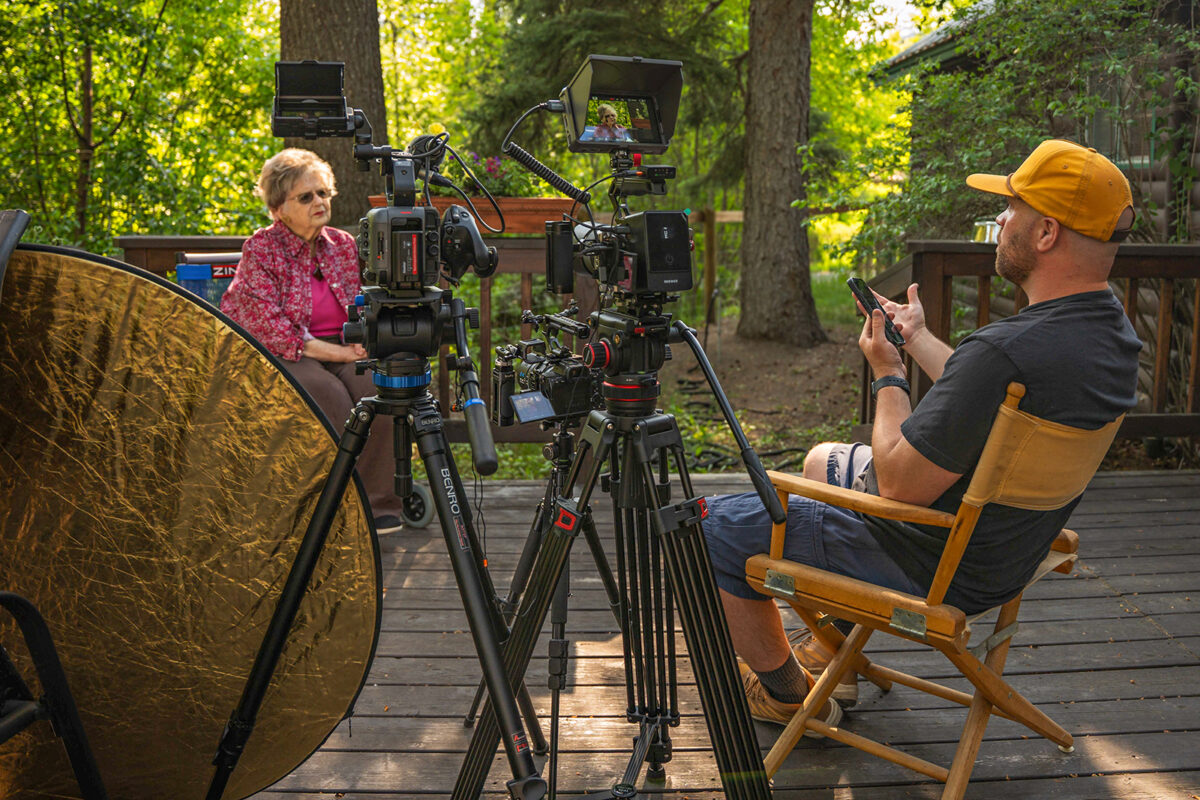
But the brothers didn’t want the history to exist only in black-and-white photos of people long gone. They sought out “living links to the past,” Logan explained, people who have direct connections to the road’s early history.
Mary Heller, the daughter of a Going-to-the-Sun construction worker, told them that the project had been a crucial source of income for her family. Her father kept $2 of each paycheck and sent the rest home to Lewistown. She showed the Leflers photos of him operating a jackhammer on the mountainside and let them leaf through the journals he kept during his time working in the high country.




The Leflers connected with Rae Marie Fauley, now in her mid-90s, who grew up in a construction camp along the road where her father supervised a crew. During the interview, she pulled out a photo book, offering a glimpse of life in the 1920s — people feeding bears, reaching out of car windows to pet them.
“A story is a story, but having the pictures to back it up is just unimaginable, mind-blowing,” Jordan said.
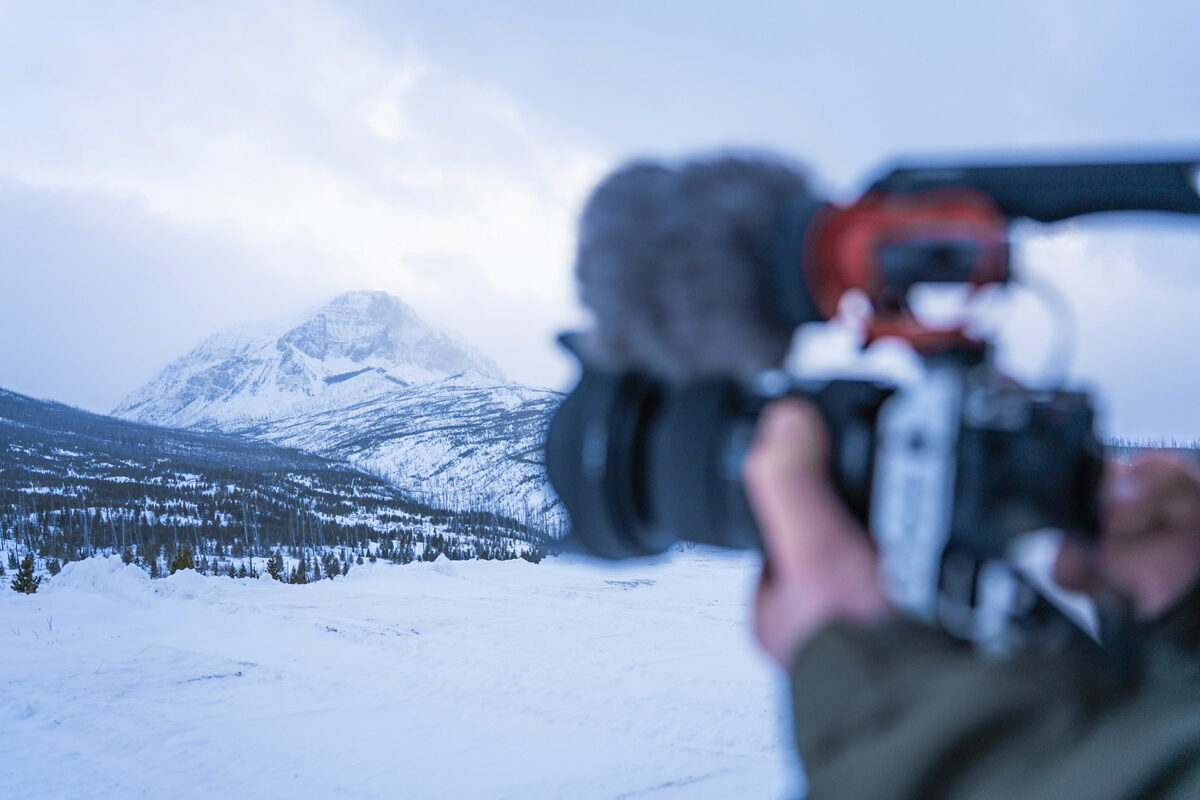
The brothers secured their filming permit in the fall of 2024, and they’ve been immersed in capturing the modern-day scenic route ever since. That winter, they spent days in West Glacier Village and St. Mary, filming deserted businesses with windows boarded and snow piled 5 feet up the doors. They filmed at Logan Pass while crews were still clearing the road, the parking lot glazed in ice and swallowed by fog.
The film captures every step of the grueling — and often unseen — work it takes to open the road each season. After the snow is cleared, crews spend weeks in hazardous avalanche zones, clearing rock debris and installing hundreds of guard rails to prevent deadly falls.
“People sometimes get a little antsy for the road to open, and we hope the film will give them respect for the people who make it possible,” Logan said. “We want the public to understand how dangerous their jobs are, and what they put on the line for us all to enjoy the park.”
In the spring, the Leflers biked the road six times to document the quiet, car-free shoulder season, when the mountains are still capped with winter snow, but green is beginning to return to the valleys. They hauled pounds of camera gear up Mount Oberlin and across the Highline Trail, following the road’s path from above to show its majesty from every angle.
They joined first-time visitors on their inaugural drive up the road, capturing some of their favorite footage in the process. Viewers see wide-eyed awe spread across the passengers’ faces as the car climbs higher. Peaks tower overhead, Bird Woman Falls cascades down Mount Oberlin, and mountain goats scale the jagged ridges, leading up to Logan Pass, where a herd of bighorn sheep wanders in the parking lot.
“There’s nothing that makes you feel more privileged to experience all this nature,” Logan said. “Jordan and I feel that privilege every time we visit, but especially when we’re with a first-time visitor.”
The brothers are in the process of wrapping up filming and finishing the last of their interviews with park employees, scientists, and tribal leaders. “Journey to the Sun,” a collaboration with Montana Public Broadcasting Service, will premiere next June.
Above all, the Leflers hope the film helps viewers feel a “sense of wonder and appreciation” for the history of the road and the land it occupies.
“When you drive the road, you feel that connection to the past — the sacredness of the land and the people who risked their lives to build it,” Jordan said. “We call that the ‘spirit of the road.’”