Film Exploring Blackfeet Nation Language, Indian Relays Wins at Banff Film Festival
The 2025 Banff Mountain Film Competition featured 87 films selected from around the world, awarding thirteen for various categories, including “Borrowed from the Earth” for Best Short Film
By Lauren Frick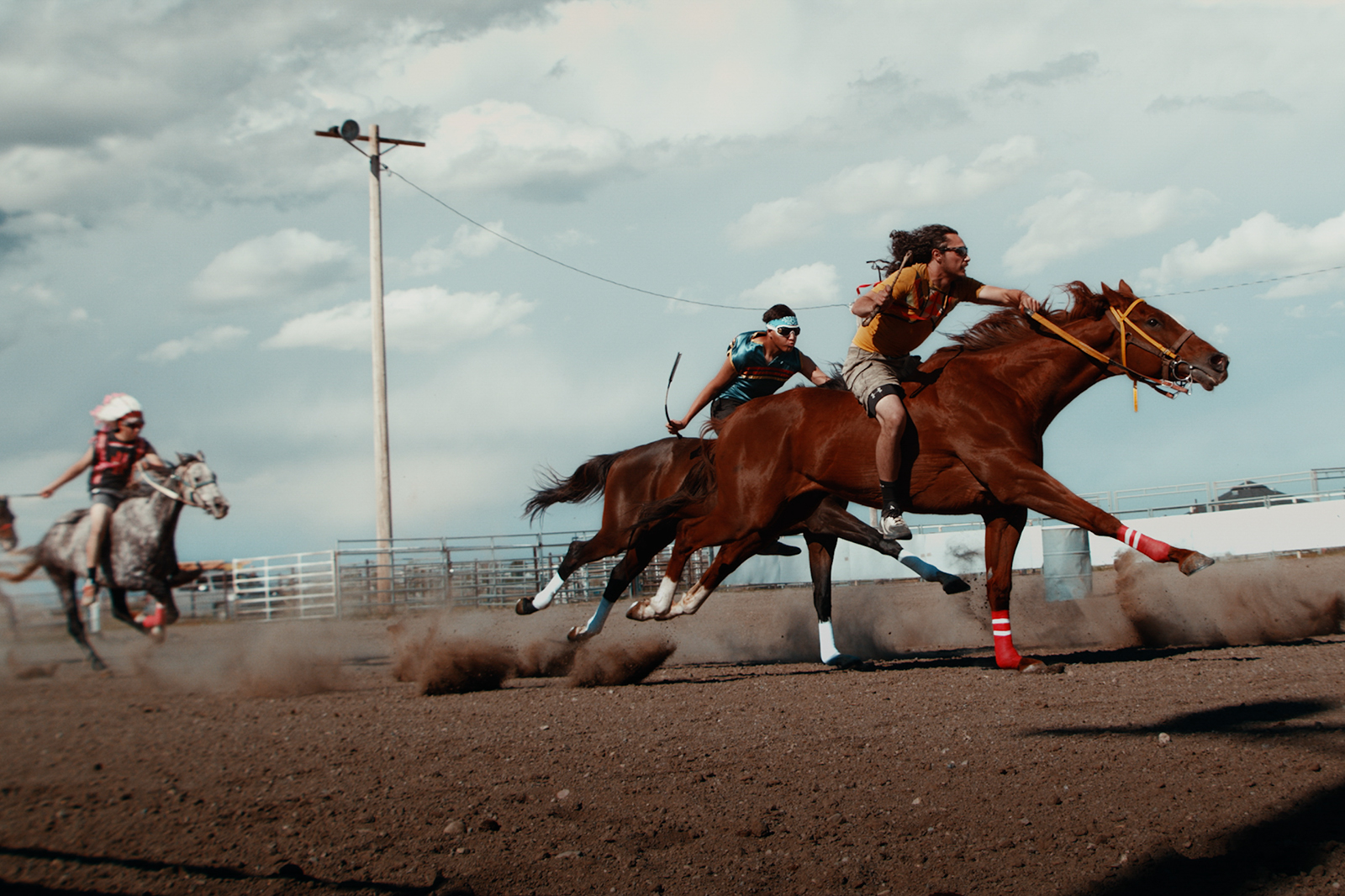
“A story is something that is so powerful. All of our history was passed down through stories. We call it ‘Aipoomah’sin;’ a transfer of knowledge.
“When we lose our stories, we lose our history. And a lot of these stories are being forgotten.”
These are the words of Blackfeet Nation elder and linguist, Marvin Weatherwax Sr., that accompany the opening images of “Borrowed from the Earth” — an exploration of the intertwining of Blackfoot language, culture and the time-honored tradition of Indian Relays.
The documentary was a journey that started more than a decade ago when producer Chad Dawson and director Zach Johaneson expressed the desire to tell a Montana story, all while diving deeper into the sport spectacle in which they both shared a deep fascination.
But over the course of the three-year filming process, Dawson and Johaneson discovered a story that went far beyond the beloved sport. One that instead drew a throughline between the Blackfeet Nation, horses and the power of storytelling.
“When we really got into the story, and really got into researching and finding those people and the characters that were going to be in it, we realized that it was much bigger than just a story about Indian Relay racing,” Dawson said. “That’s really where it became about language and the horse and the Blackfeet’s relationship with the horse, and what that ultimately means for what the Indian Relay race represents.”
While their main goal was to make a film with a “greater impact,” Dawson, Johaneson and the story of the Blackfeet Nation’s connection to Indian Relays has already garnered acclaim early in the film festival season.
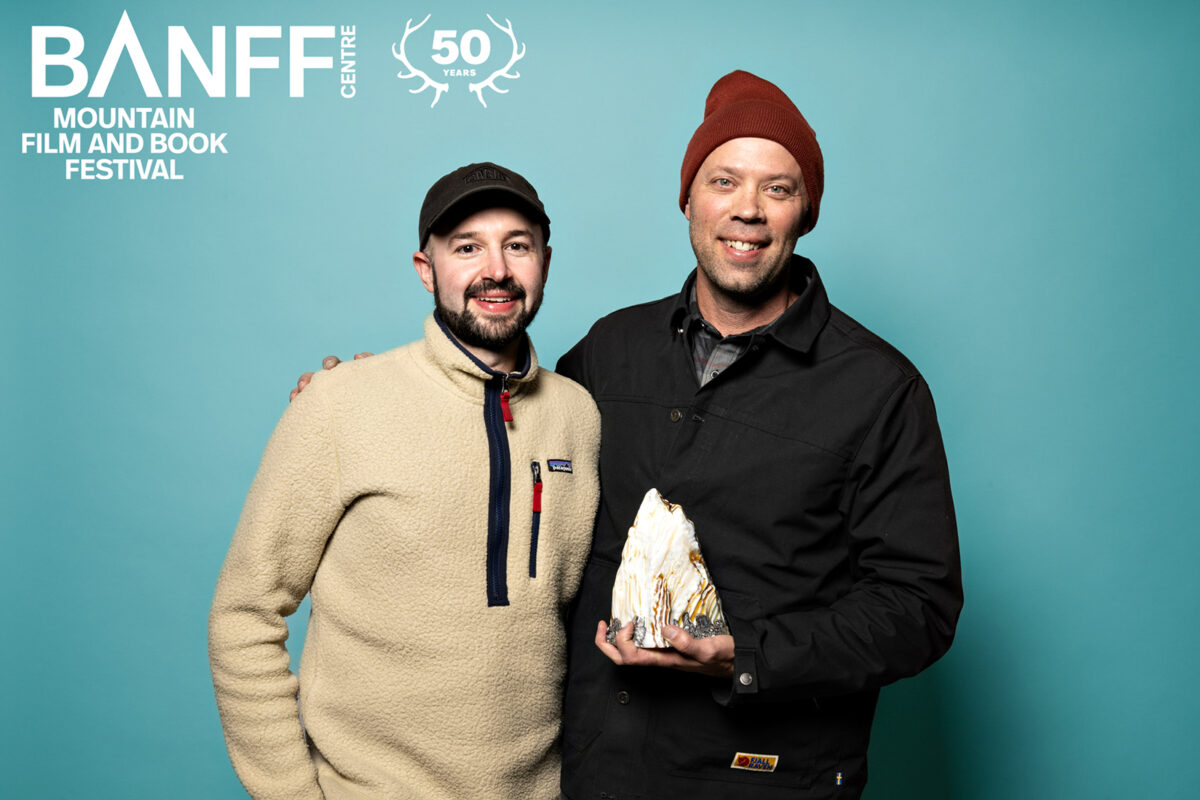
“Borrowed from the Earth” last month took home Best Short Film at the 2025 Banff Mountain Film and Book Festival and was also a Santa Fe International Film Festival 2025 official selection.
The Montana filmmakers were “incredibly honored” by the recognition so far, but their greatest accomplishment has been the positive feedback from the Blackfeet Nation.
“I don’t want to bring down the amazing achievement of this award, but with the Blackfeet people that we’ve shown in the film …the numerous people that we’ve shown said we did good by them, and that’s the tallest compliment that I think we’ll get,” Johaneson said.
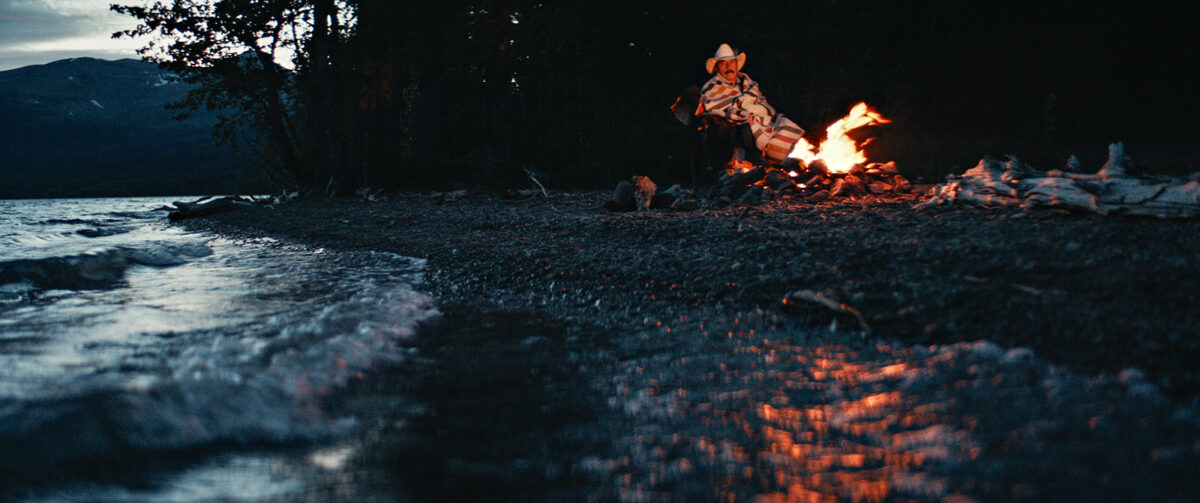
“To understand our stories, you have to understand our language,” Weatherwax, the narrator of the film, said.
While Dawson and Johaneson are Montanans, with Dawson being a fourth generation native of the Flathead Valley, neither are Indigenous members of the Blackfeet Nation.
This made it imperative that the people of the tribe were the ones to take the reins, especially when it came to the film’s central tenet — language.
While Indian Relays serve as the film’s canvas, it’s the Blackfoot language and culture that gives the story its depth and color.
The importance of language is a key theme throughout the film, which teaches viewers various Blackfoot words and phrases connected to storytelling, horses and racing.
“If you begin to lose language, you lose everything,” Dawson said. “If you let that go, you lose the ability to tell those stories in that language, and everything that those stories mean to a culture.
“I think for this film, it’s about listening intently, but remembering that if we lose our ability to tell stories in our native language, and the impact that those have and why things came to be, then we will cease to be able to tell any sort of story. With all the noise that I think is going on today, at its center, it is that story about language and the importance of continuing to tell stories in that language.”
It’s the measured, captivating tone of Weatherwax that weaves together the Blackfoot language and the story of the tribe’s strong connection to horses throughout the film.
“Marvin is a linguist, so he speaks Blackfoot fluently, and he is highly regarded in the Blackfeet Nation,” Johaneson said. “He’s just a phenomenal man, but also a phenomenal storyteller, so when we heard him speak, there was weight to what he said, and it was apparent right away that, if he’s willing, he’s our guy.
“These stories are very important to him and to the Blackfeet people, so his willingness to share was really, it was just a gift to us.”
Jesse DesRosier, another member of the Blackfeet Nation, crafted interview questions for Weatherwax and is credited as the film’s writer. By the end of the process, Dawson and Johaneson had nearly six hours of interview audio from Weatherwax to mold into the 15-minute film.
“Jesse helped guide that process,” Johaneson said. “He’s actually a language teacher at Blackfeet Community College in Browning, so he has a vast understanding of the language, and he wanted to include certain parts of the language along with what Marvin wanted.
“They said, ‘if we’re going to do this, we need to promote the language.’”
Having two non-Indigenous filmmakers also meant it was crucial to take the time needed to tell the story correctly, Johaneson said. Of the three years it took to make the film, only four days were dedicated to shooting on the reservation in Browning. Much of the time was spent learning from and building trust and relationships with the tribe, he said.
Without this approach, however, the film wouldn’t have gotten made, they said.
“We are indebted to the Blackfeet Nation,” Johaneson said. “This was shot on Blackfeet land, on tribal land, and it was our goal to honor their story. That’s why it took three years instead of three months. Because we care about that.”
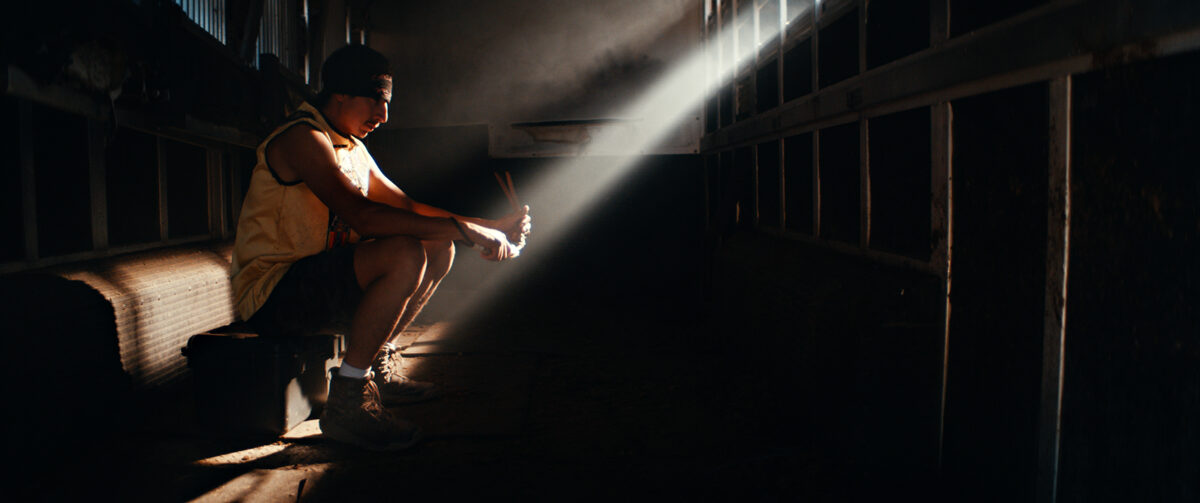
“The horses used to run free on the range, the same as the Indian people,” Weatherwax said. “Then they got us on reservations. We were physically fenced in. Maybe that’s why the connection with horses is so deep. We both understand what freedom is. And we both understand that it’s been taken away.”
Indian Relay teams are composed of four people and three horses, with the rider taking three laps around a racetrack, switching to a new bareback horse at the beginning of each lap – riding a total of three horses for the men’s circuit and two horses for the women’s in three heats. The two “holders” wait for the rider to finish a lap, holding the next horse on deck while keeping the animal calm. The “mugger” catches the incoming horse to allow the rider to dismount and jump onto the next horse.
While it started gaining popularity about four decades ago when the Shoshone-Bannack Tribes in Idaho began acquiring more thoroughbred horses, the sport has been around unofficially for hundreds of years.
To understand the Blackfeet’s connection to racing, the film opens with the origin of the tribe’s deep bond to horses themselves.
Weatherwax told the story of an old, poor man who offered his best possession, his teepee, to the lake in hopes of a better life, he said. After three days of prayers and songs, the lake offered him a gift in return.
“Out of the water came this beautiful teepee,” Weatherwax said. “There was two horses tied to it. The lake told him, you will, because of these horses, be stronger, a stronger warrior, and will make you a better hunter. In this teepee, you will never be without food.”
Since, the tribe has seen horses as a respected equal whose experiences of captivity often mirror the people of the Blackfeet Nation.
“Most people think you gotta break a horse, break them down so that they serve you,” Weatherwax said. “Building a relationship with the horse is more realistic than breaking the horse.
“I think there’s a part of them and a part of us that can’t be broken. My relationship with the horse is pretty much the same as my relationship with people. I trust them. I try to build it up so that they trust me.”
Although language and culture are the film’s pillars, it’s Indian Relay racing that is the vehicle to showing how that life-giving connection between horses and the tribe is still alive today, Dawson and Johaneson said.
“Our ancestors, our elders, told us that a story only has power if it’s told,” Weatherwax said.
After three years of listening and learning, Dawson and Johaneson are now looking to share Weatherwax and the Blackfeet Nation’s stories with as many people as possible, they said.
“In cultures where the oral history is quite literally how stories are passed along, how history is passed along, it’s really important to tell the stories,” Johaneson said.
This story’s widespread dissemination started with a film festival run and, to Dawson and Johaneson’s admitted surprise, an early film festival win.
The 2025 Banff Mountain Film Competition featured 87 films selected from around the world, awarding 13 for various categories, including “Borrowed from the Earth” for Best Short Film.
“We got tickets for the award ceremony, because we’re like, well, we’re going to be here, let’s get some tickets for it,” Johaneson said. “With the quality films that we saw, I have to admit, we didn’t think there was any chance that we would even be in for Best Short Film.
“But, you know, sure enough, we’re sitting there, and … when they read this paragraph, ‘oh, it’s about language’ and they said the word ‘Blackfeet,’ and I was like, ‘Oh my goodness.’ Both Chad and I kind of looked at each other, we’re in the front row, and we kind of just couldn’t believe it.”
No matter how the documentary performs the remainder of the festival season, the film’s greatest accomplishment for Dawson and Johaneson will be honoring the Blackfeet Nation and the place they both love, they said.
“When we were given the opportunity to not only tell a story about something that is so rich in Montana history, but to do it in a place that is so beautiful, it was really intimidating,” Dawson said. “You’re trying to do justice to something that is so core to your own being, that is also such a character in this film that it was…I think one of the greatest achievements of this film, too, is doing justice to a place that means so much to us and to the Blackfeet Nation.”
The Flathead Nordic Backcountry Patrol is bringing the Banff Mountain Film Festival to the Flathead Valley with screenings at the Flathead Valley Community College’s Wachholz College Center on Dec. 2 and Dec. 3. This year’s film festival will feature reserved ticketing available here. The lineup of films changes with each location of the film festival’s world tour.