Glacier Park Considers Shelving Reservation Pilot Program in Summer 2026
Administrators are reportedly pausing a vehicle reservation system that has divided park visitors and gateway communities since launching in 2021
By Tristan Scott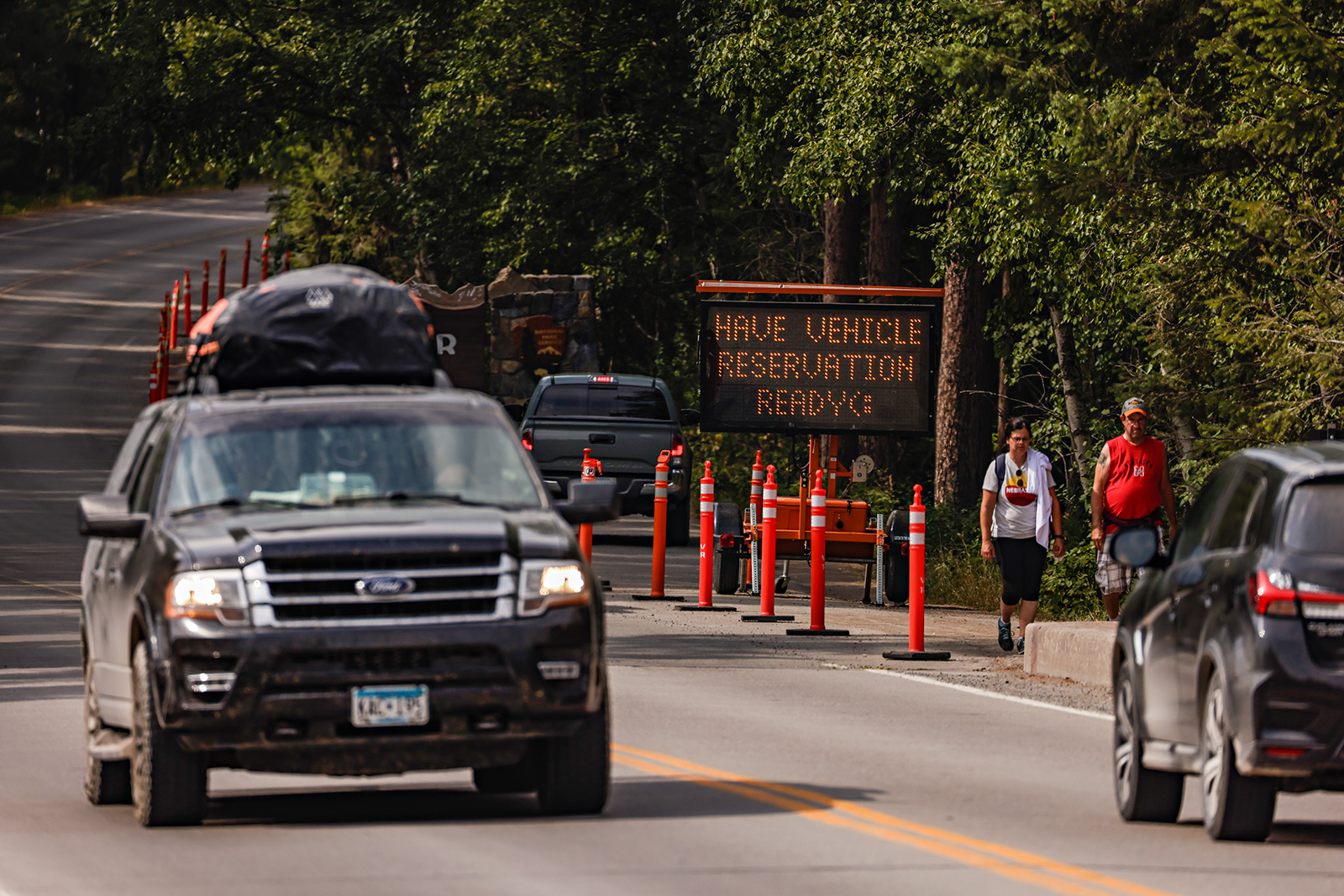
Critics of Glacier National Park’s vehicle reservation system on Wednesday celebrated news that administrators were shelving the pilot program launched in 2021 as part of a long-term effort to manage congestion along the park’s popular Going-to-the-Sun Road corridor.
Although park officials did not confirm the divisive program’s coda next summer, reports of its suspension spread quickly on Wednesday, prompting an outpouring of social media posts.
“Ending the rationing of access to Glacier National Park via vehicle reservation system is a great thing for locals and anyone who wants to visit the park,” according to a social media post from U.S. Rep. Ryan Zinke, R-Mont., a sharp critic of the program. “This will increase access, letting visitors drive the Going-to-the-Sun Road with more flexibility, and will bring much needed improvements to the shuttle system. More Montanans and travelers will now have the freedom to enjoy Glacier’s beauty without restrictive reservations, which will also benefit the gateway businesses that rely on tourism for their livelihood.”
First reported by the Daily Inter Lake, the news that Glacier was suspending its reservation system in 2026 apparently leaked during a presentation by Glacier Park Superintendent Dave Roemer to the Columbia Falls Chamber of Commerce. According to the Inter Lake’s report, Roemer told attendees of the chamber meeting that the system had succeeded in reducing peak midday congestion, but had also created unintended consequences, including surges of visitor traffic during early-morning hours before the reservation requirement went into effect, endangering wildlife.
“We don’t think that people driving in the dark to get to Logan [Pass] is good for the park or good for the visitor,” Roemer said at the Dec. 9 meeting, according to the Inter Lake. “There’s wildlife on the road in those hours, and we don’t feel that you should have to get up at 4:30 in the morning to enjoy your day in the park.”
However, a park spokesperson did not confirm whether the park was suspending its reservation requirement next year, writing in an email that “we will update the public once a decision for the 2026 season has been made.”
Park officials previously said that a 2026 summer pilot system was all but certain. However, the past year has delivered numerous administrative challenges as the Trump administration worked to reduce the federal workforce, creating a climate of uncertainty throughout the National Park Service.
“The National Park Service continuously reviews Glacier National Park’s pilot operation programs to determine adjustments for the following year,” a spokesperson wrote in an email to the Beacon. “Visitor use data, gate counts, congestion monitoring, traffic operations, and feedback from the public and gateway communities help inform strategies the park uses to manage congestion, shuttles, parking, and visitor access.”
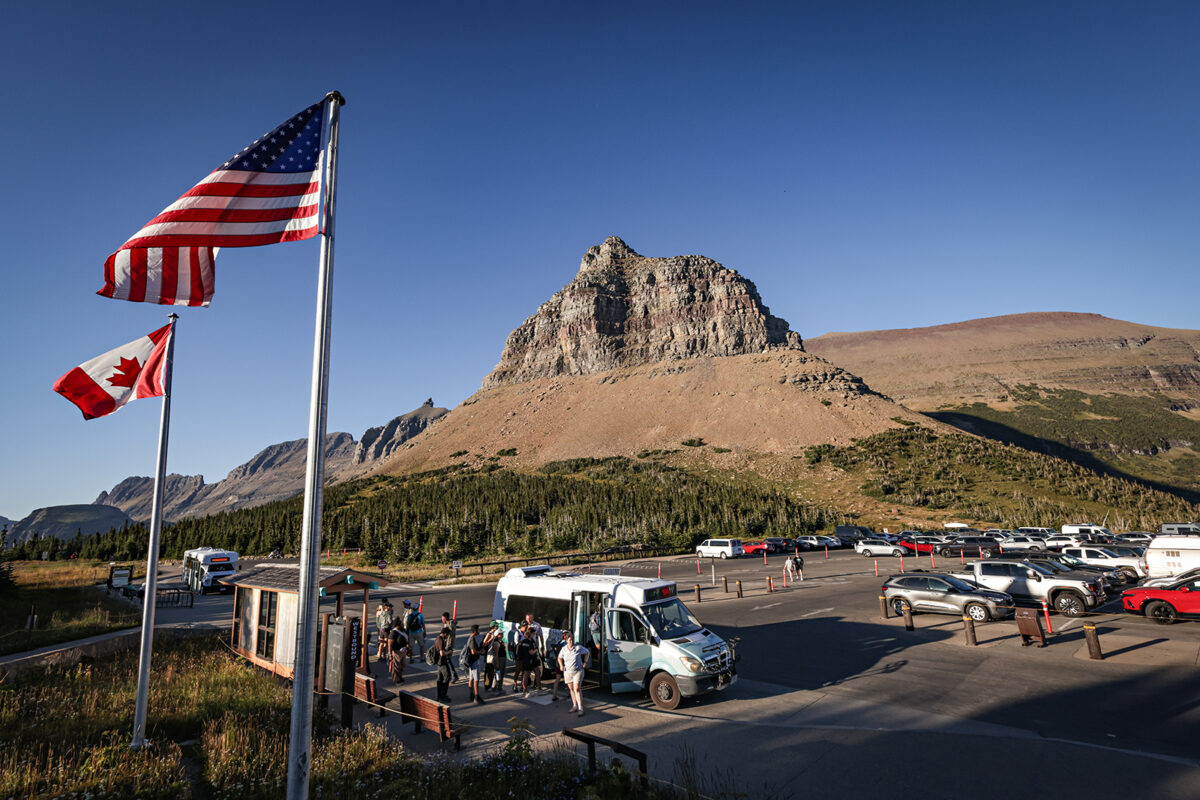
Prior to the Trump administration’s campaign to dramatically reduce the federal workforce, an effort that began last February, park officials were fine-tuning their long-term visitor-use management and transportation plan, which they hoped to complete by early 2026.
According to a tentative planning timeline announced last year, park officials would begin refining the long-term strategies early this year and start conducting analysis under the National Environmental Policy Act (NEPA) in the spring and summer of 2025, with a public review of the plan’s environmental assessment set for the summer and fall of 2025.
“We will be aiming to complete the plan ahead of the 2026 season,” according to park spokesperson who opted for an early retirement. “We will likely announce a 2026 summer pilot in November 2025, as we have been doing, so that people can plan for summer 2026 and not have to wait for our long-term plan to conclude.”
The spokesperson previously said that planning will most likely conclude in January or February of 2026.
So far, the reservation pilot program has included five phases of an adaptive reservation system, which park officials say has allowed them to test methods in each of the park’s three distinct valleys as well as along the Going-to-the-Sun Road corridor connecting the west entrance and St. Mary over Logan Pass. Although the Sun Road corridor is by far the most popular visitor destination, as well as the most problematic given its logistical constraints, Glacier’s 1-million-acre footprint consists of entry portals that are served by geographically disconnected road systems, requiring a nuanced management plan tailored to each of those districts and their unique characteristics.
The park’s visitor-use management strategies have grown more complex over the past two decades. In that time, annual visitation at Glacier National Park has increased from approximately 1.5 million to over 3 million visitors, most of them concentrated along the Going-to-the-Sun Road corridor and other front-country destinations during the peak season of June through September, creating severe congestion at the park’s most popular entrances.
When the park first introduced its managed access system in 2021, at the height of the Covid-19 pandemic, it was only in place at the West Glacier and St. Mary entrances, where the reservation period started at 6 a.m. and ended 5 p.m. That created a pinched-balloon effect and led to uneven pockets of congestion — park visitors caught unaware by the new vehicle-reservation policy would migrate to one of several unrestricted entrances, some of them hours away. Even so, by mid-morning the entrances would be overwhelmed and forced to close for the day.
Park officials learned from those missteps and adjusted the system to include the North Fork in 2022, while also narrowing the hours during which reservations were required, from 6 a.m. to 4 p.m. In 2023, the reservation requirements were expanded to include Many Glacier and Two Medicine, but the hours were pared back to 3 p.m., easing any sign of gridlock on most days except during that brief period just after the requirement is lifted.
In 2024, park officials adjusted the rules again, removing St. Mary and Two Medicine from the reservation requirement. Visitors were still able to procure vehicle reservations 120 days in advance on a rolling basis, but the booking window for next-day entry shifted to the evening instead of the morning, allowing the public to access the recreation.gov website starting at 7 p.m.
During the 2025 summer season, park visitors encountered yet another change as park officials debuted a timed-entry component to the reservation pilot. As in 2024, visitors were required to make reservations to access the park at the West Entrance and the North Fork between 7 a.m. and 3 p.m. However, visitors were also required to select a time block during which they could enter the park.