Lakefront Property Owners Say They’re Paying the Price for Montana’s Property Tax Reforms
While their land valuations tell one story about their wealth, many lakefront property owners who spoke with the Beacon said they’re struggling to afford increasing tax figures and fear losing property they’ve owned for decades as the state’s new property tax code partially fell into place this year.
By Mariah Thomas
Hellen Brien takes great pride in her gardens, which sit behind her home on the shore of Flathead Lake. In the summers, the gardens bloom with flowers of all hues. The raised beds have sat in her backyard for years, and she worries if she ever left the home, they wouldn’t continue to be taken care of.
For Brien, a 71-year-old retiree, the thought generates an emotional response. Her house was originally finished in 1954. Her family has renovated it since, adding on a third floor to accommodate three generations of the family that shared the home at one point. A shop sits on the land, along with a garage they use, too. The land her home sits on — about two-thirds of an acre in total — has been in her family even before 1954. Her grandpa worked for the steam plant in Somers when the Burlington Northern company owned the land.
“The homes were individual (from the land),” Daniel Brien, Hellen’s husband and a retired land surveyor, said. “You could build them, or they could build them for their employees. And he worked his way up into this company to have this prime spot.”

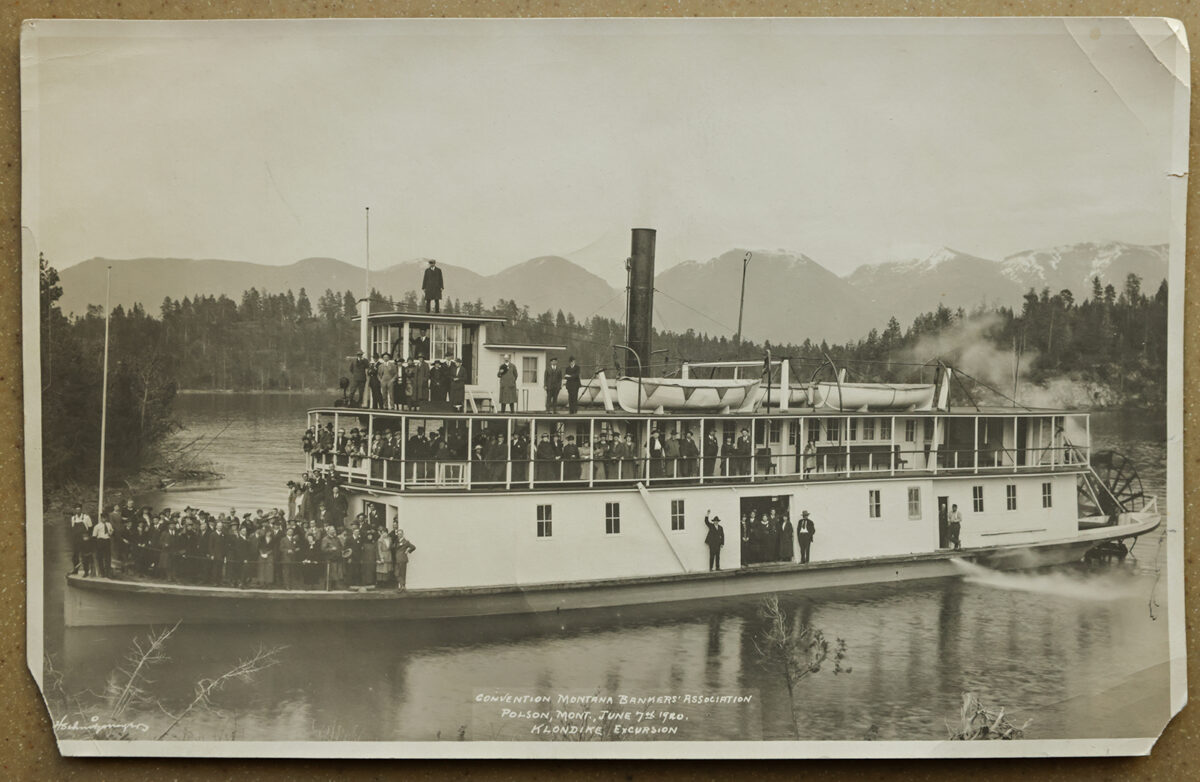
Brien’s grandpa passed the deed to her mother; her mother passed the deed onto her in 2024, according to state property records; and for years, Brien and her husband planned to pass the deed to their daughters, who have children of their own now. It’s the couple’s only property in the state — a true legacy property their family has owned for generations.
“I mean, it’s an old house that we’ve fixed up as best we can, because it’s just too old to mess with too much,” Brien said.
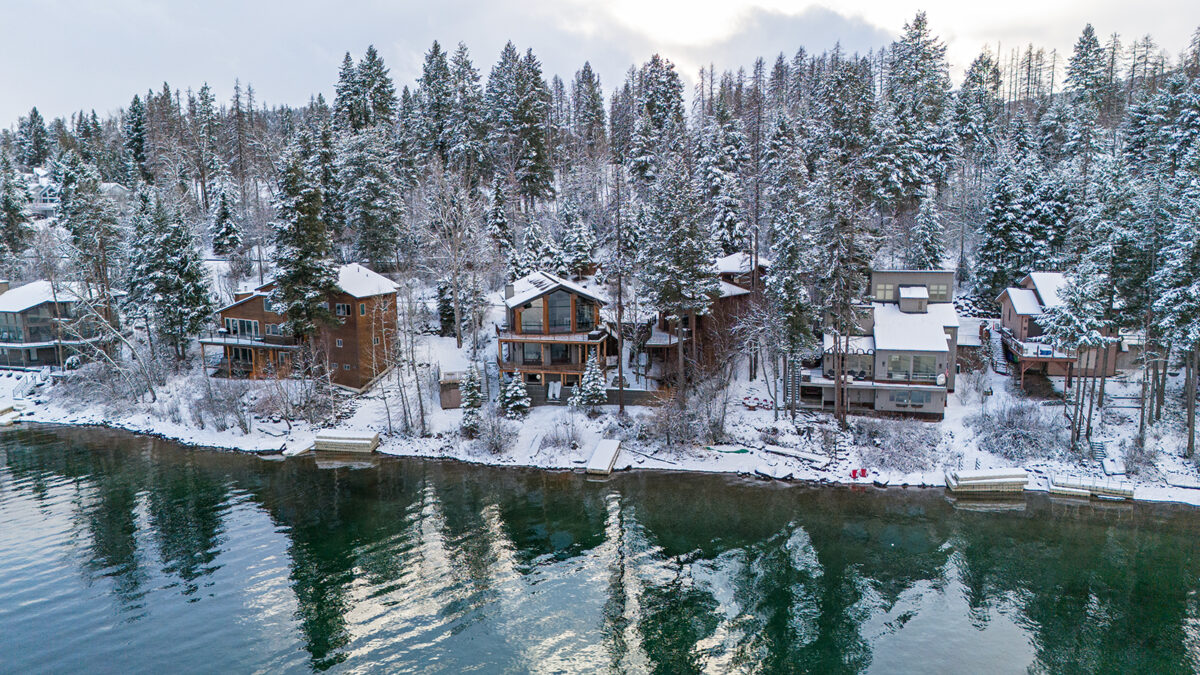
But lakefront property in Montana has seen a boom in demand, in line with booming demand for homes across the state in recent years. Lakefront property is also scarce.
The effect: Brien’s property valuation has climbed, and climbed, and climbed again. While her home and buildings on the property are valued at a total of $846,780 — a figure that jumped more than $300,000 between 2023 and 2025 — when taken with the land, her property valuation now sits at $2,358,780. It’s a sum Brien never dreamed she’d have to pay property taxes on. She and her husband attempted to appeal their valuation once, she said, but it only resulted in a higher number.
Most Montanans who pay property taxes — 80% — saw declines in their property tax bills this year following a tax code rewrite from the legislature. Another 10% saw their tax bills remain flat.
Brien and her husband are part of the 10% of Montanans whose taxes went up this year.
In 2023, she and her husband had to pay $8,959.86. The number jumped to $9,650.93 in 2024. This year, Brien is on the hook for $13,657 in property taxes.
While Brien said she has no issue paying her fair share, the uncertainty in the figures year after year has become a point of frustration. On a fixed income in retirement, finding the funds to keep paying an ever-increasing tax bill feels like a challenge. The situation has caused the Briens to grapple with the knowledge that, should either of them experience a health challenge, they’ll have to give up the home.
“Where is the concern from our governor and our legislators that they’re voting us off our property?” Brien said. “I’m really getting tired of renting from the state of Montana and the Department of Revenue.”

House Bill 231 and Senate Bill 542 rewrote Montana’s property tax code in 2025, to address soaring residential property tax bills facing many of the state’s residents. The bills changed tax rates, lowering rates for primary residences valued under $2 million, and implemented a homestead exemption, which will take effect in 2026. They came after Gov. Greg Gianforte convened a property tax task force focused on coming up with solutions to the state’s climbing residential property tax bills in 2024. A coalition of Democrats and moderate Republicans passed the reform. Factors like increases in local mills and increased valuations also contribute to tax bills.
In assessing the tax bills’ impact, Jason Slead, the spokesperson for the state’s Department of Revenue, said the state doesn’t maintain data on lakefront properties. But it does keep data on how the bills affected residential properties on a county-by-county basis. He shared those figures, which show that properties in Flathead County valued above $1.25 million have on average experienced tax increases under the new legislation.
A minority of homes in Flathead County — just shy of 5,500 — are valued above that figure. More than 40,000 residential properties in the county have valuations under $1.25 million.
Those 5,500 residences above $1.25 million saw taxes climb, on average, anywhere from 7.7% to 788.9% — nearly eight times the amount they paid in taxes the year before.
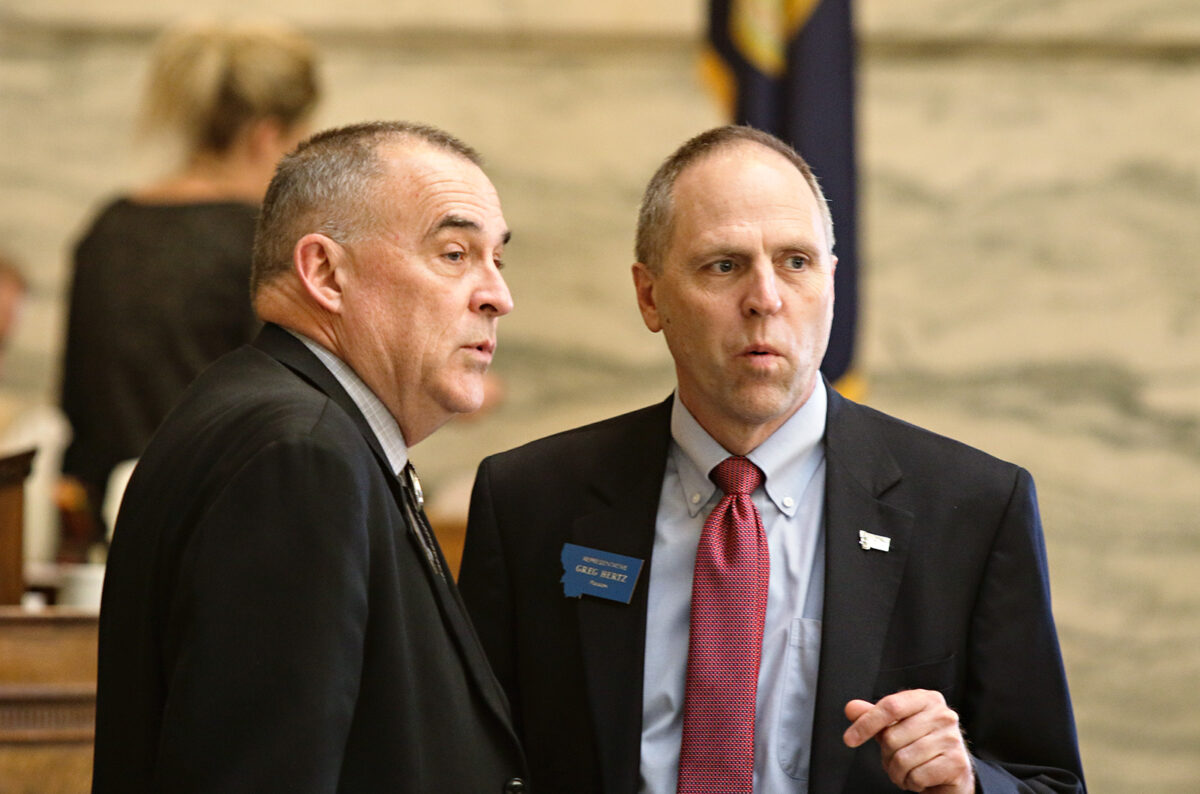
State Sen. Greg Hertz, R-Polson, sat on the governor’s property tax task force, but opposed the bills when they came through the legislature. He said the legislation created a “massive shift” in taxes to certain taxpayers.
Specifically, Hertz has repeatedly raised concerns about how the legislation would impact “land-rich” properties, by which he means properties where homes might not be high-value, but the land itself is. And Hertz points out that just because a property’s value sits above $1.25 million, it doesn’t mean the person who owns it can afford a corresponding tax hike.
“I think a lot of people who received tax reductions don’t quite understand who paid for those,” Hertz said. “I think the narrative is that rich out-of-staters are going to pay for this, but the reality is if your property taxes have decreased in the county, someone else in the county has to pay for that.”

Tracy Sharp, a freshman state representative from Polson, agreed with Hertz. He said during the legislative session, he wasn’t involved with appropriations, which made it challenging to track bills like HB 231 and SB 542. Sharp said he looked to more experienced members of his caucus to determine how he should vote on the legislation — and ended up voting for SB 542. But he regrets that vote after many constituents of his in Polson and Bigfork have been adversely impacted by the tax legislation.
“What they did was they looked at whose pockets can we dig into and take (money) out of?” Sharp said. “And I happen to have one of the districts that is one of the ones where they want to dig into their pockets. So, we’re paying more for this than other parts of the state, because we’re a resort area.”
The Beacon spoke to eight people, including Hertz and Brien, who own lakefront property, either on Flathead Lake, Whitefish Lake or Swan Lake. Except for one, all the owners’ property valuations sit over $1.25 million. Universally, their property valuations have gone up by hundreds of thousands — and in one case, millions — of dollars from 2023 to 2025.
Many property owners say the valuation of their land feels like it far outweighs the value of the homes that sit on them. Some can afford the increases, even if they’re unhappy about it. Others, like Brien, have struggled with the increasing valuations — and, therefore, increasing taxes — on property they never thought would have such a high value.
“We need, you know, tax money for this, that, or the other thing,” Sharp said. “But we shouldn’t develop a tax structure that ruins one group of people in favor of another.”
Don Smith, an 80-year-old retired lawyer, has owned property on Swan Lake since the 1970s. On the first parcel he bought, he and his wife had a trailer and generator for power, eventually building a cabin once they’d paid off their debt for the land. In 2000, he found another parcel, so they sold the first cabin and built a second one. He and his wife are native Montanans, but split time between their home state and Arizona.
Their land near Bigfork has long served as the summer gathering place for their family, and Smith remains heavily involved in his Montana neighborhood. He has served as the president of a Rural Improvement and Maintenance District in Swan Lake, on the board of the Swan Lakers, and is part of an unaffiliated group of homeowners urging the state’s Department of Fish, Wildlife and Parks to regulate surf boats that he says are “damaging the character of the lake, the ecology of the shoreline, private property, and the enjoyment of all peoples who desire to use the lake.”
Like Brien, Smith’s property valuation has gone up in recent years. While his home is worth $368,832, his nearly 16-acre lakefront property is worth $1,440,768, for a total property valuation of $1,809,600. That figure marks a hike of more than $500,000 from his 2023 valuation.
In line with the valuation climbing, Smith’s tax bill leapt from $7,918.49 in 2024 to $9,262.72 this year.
Since 2020, when Smith’s bill sat at just shy of $6,500, his taxes have climbed by nearly $3,000.
He filed an appeal with the Lake County Tax Appeal Board this year, a county official confirmed. If that doesn’t work, Smith said he plans to explore several other avenues to bring his tax bill back down, from staying in Montana for a longer period each year to qualify for the homestead exemption to filing for an agricultural or forest classification.
“My house isn’t any bigger than the ones that they’re trying to get the break to,” Smith said. “I’ve just got a lot of land.”
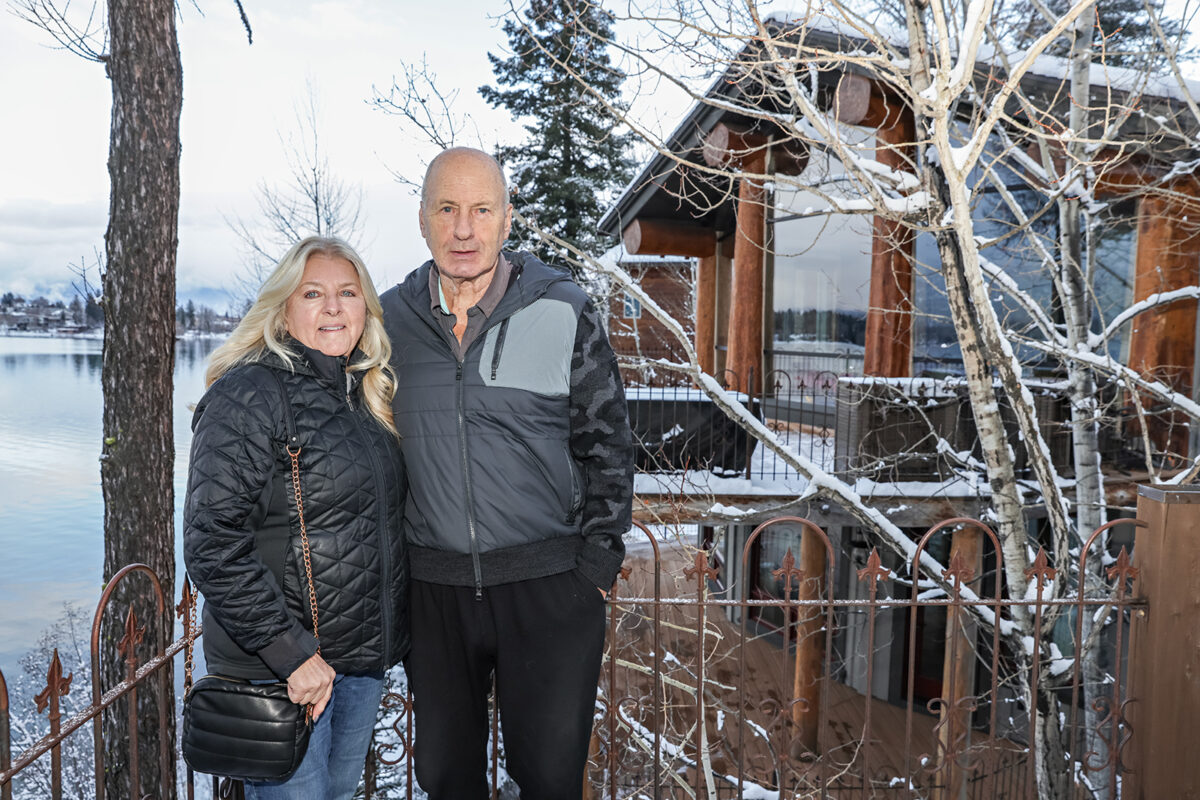
Those on Whitefish Lake are also feeling the squeeze. For 25 years, Rob and Janen Pero have owned a pair of properties on the lake. Located at the end of a long drive on the lake’s north shore, they live in one home year-round and use the other as a guest house, renting it out each summer. They own a smattering of other Whitefish properties, which they said they rent to long-term tenants.
Rob, a retired realtor, said he was shocked when he received his tax bills on the lakefront properties this year. On his guest home, he said he paid about $12,000 in taxes in 2024; and on the couple’s main house, Rob said the 2024 tax bill was around $16,000.
This year, Rob said the guest home’s tax bill tripled, for a total of $37,000. And the main home’s tax bill more than doubled. The Peros are on the hook for a $38,000 tax bill for their main home, they said. That home climbed in value by more than $2.5 million from 2024 to 2025. Grand total, the Peros said they owe $75,000 to the state this year for their two lakefront properties. That doesn’t count taxes on their long-term rental properties, though Rob said the tax bills on those properties didn’t climb as much as their lakefront ones.
After talking with their neighbors — some of whom received far lower tax bills and appraisals, according to the Peros — they filed an appeal on their home’s appraisal. Like Brien and Smith, Janen and Rob said they don’t mind paying their fair share. But they question whether they should have to pay $75,000 in a single tax year.
“These are the only two (properties) that we own on the lake,” Rob said. “And it seems like they went extra hard after anything on the lake. It’s so unfair.”
When they filed their appeal, they discovered the same Department of Revenue appraiser who’d given their home its higher appraisal would complete the appeal appraisal.
Slead, the DOR spokesperson, said the state conducts appraisals by developing models to value property, then applying those models en masse. If a property owner requests an informal review, an area appraiser conducts that review and makes any adjustments.
“If the property owner appeals the determination on to either a county tax appeal board or the Montana tax appeal board, that same appraiser will defend the value placed on the property,” Slead said. “The appraisers and their manager will work closely together in preparing for the county or Montana tax appeals.”
Slead added that practice is common across the state, and that “appraisers are assigned to work areas so they can become familiar with the market … to best determine the most appropriate values for their properties.”
Rob said if their appeal doesn’t go favorably, the couple could be forced to take legal action. Smith echoed those sentiments. Legal action is one of the avenues he’s considering, should his appeal to the Lake County Tax Appeal Board go sideways.
The Peros also said the tax bill has had a personal impact. They disagree about what to do should their taxes remain at the high level in the future. Janen said the home they built and have lived in for upwards of 20 years holds too much sentimental value to sell. Rob doesn’t think holding onto the home is worth the tax hassle and would rather downsize to something that fits better in their retirement plan.
“That’s another issue,” Janen said. “It’s creating a conflict here. Between us.”
The political predilections of those the Beacon spoke with for this story fall across the spectrum.
Smith, the retired lawyer on Swan Lake, said he doesn’t vote in Montana. He also said he doesn’t typically vote Republican. But he said some of his neighbors whose property tax bills have climbed do vote that way. Brien, the Somers property owner, described herself as a stalwart Republican — though after Republicans voted with Democrats to pass this year’s property tax reform, she questions whether she wants to continue voting Republican in the future.
Senate President Matt Regier, R-Kalispell, represents the Briens in the state legislature.
“I feel that sentiment personally too,” he said.
Brien’s concerns aren’t the first time Regier has heard constituents place responsibility for the tax restructure on his party. With Republicans in control of the state House, Senate and governor’s office during the session, he said he understands why people like Brien are pointing the finger at the party for the challenges they’re facing. But Regier’s party divided votes on the legislation. Both during the session and afterwards, Regier has remained an ardent critic of the tax reform.
The reform the legislature passed provided tax relief for a majority of Montanans. On average, tax cuts for residential property owners that have received them have been upwards of $500. Plus, the state gave eligible property owners $400 rebates, which aren’t factored into the bills’ impact. But Regier worries the legislation did so by passing the burden on to people like Brien, Smith and the Peros, as well as on to businesses and agriculture.
“I don’t think that Montana wanted to use the code as a punishment,” said Sharp, the freshman representative from Polson. “I just think that they’re trying to figure out how they can benefit their constituents and get an actual property tax cut. But this is not the way to do it, you know, because it’s too much on that old, older retired couple that happen to have a house on the lake.”
For Regier, though, the answer isn’t abandoning the Republican Party — it’s about vetting its members. Regier said as Montana becomes more right leaning, he views it as the party’s responsibility to legislate in line with that ideology, rather than siding with Democrats on issues like property tax relief. Many Republicans stood against the tax legislation, Regier points out. If two more in the Senate had voted along the party line, the reform wouldn’t have passed.
Sharp, who in addition to his position in the legislature serves as the chair of the Lake County Republicans, agreed with Regier. He said historically, the state GOP has taken a laissez-faire approach, supporting candidates who have an “R” behind their name. That approach has maintained a purple hue in the state — something Sharp said the last legislative session’s dynamics demonstrated.
But Sharp said the party’s mentality has shifted. If a candidate doesn’t support policies important to Republicans, he thinks they should be held accountable for it.
“It’s peoples’ livelihood,” Regier said. “And this is what some people in Helena need to figure out.”
That’s certainly true for Brien, who will continue to grapple with the possibility of losing a home she loves should her family face any adverse events — and blames it on the state’s new tax code.
“We know if a ritzy couple bought this place, you know the wife is going to go, ‘I’m not living in this house,’” Brien said. “And you know, we always jokingly cry about it, but they would mow it down. And there’s land enough right here in my gardens that they would just build a really big mansion, like you see around here.”
Clarification: The original version of this story improperly characterized the Swan Lakers as an unaffiliated group. Swan Lakers is a 501(c)3 nonprofit organization “devoted to preserving and improving the water quality and natural, cultural, and historical resources of Swan Lake, Montana, including its headwaters, its drainages, and appurtenant lands.”