Kalispell Business Owners Feel Disproportionate Tax Burden Following 2025 Reform
Some commercial property owners in Kalispell saw a 30% to 50% increase on their tax bills last year, with officials placing blame on the new tax formula lawmakers enacted last legislative session
By Maggie Dresser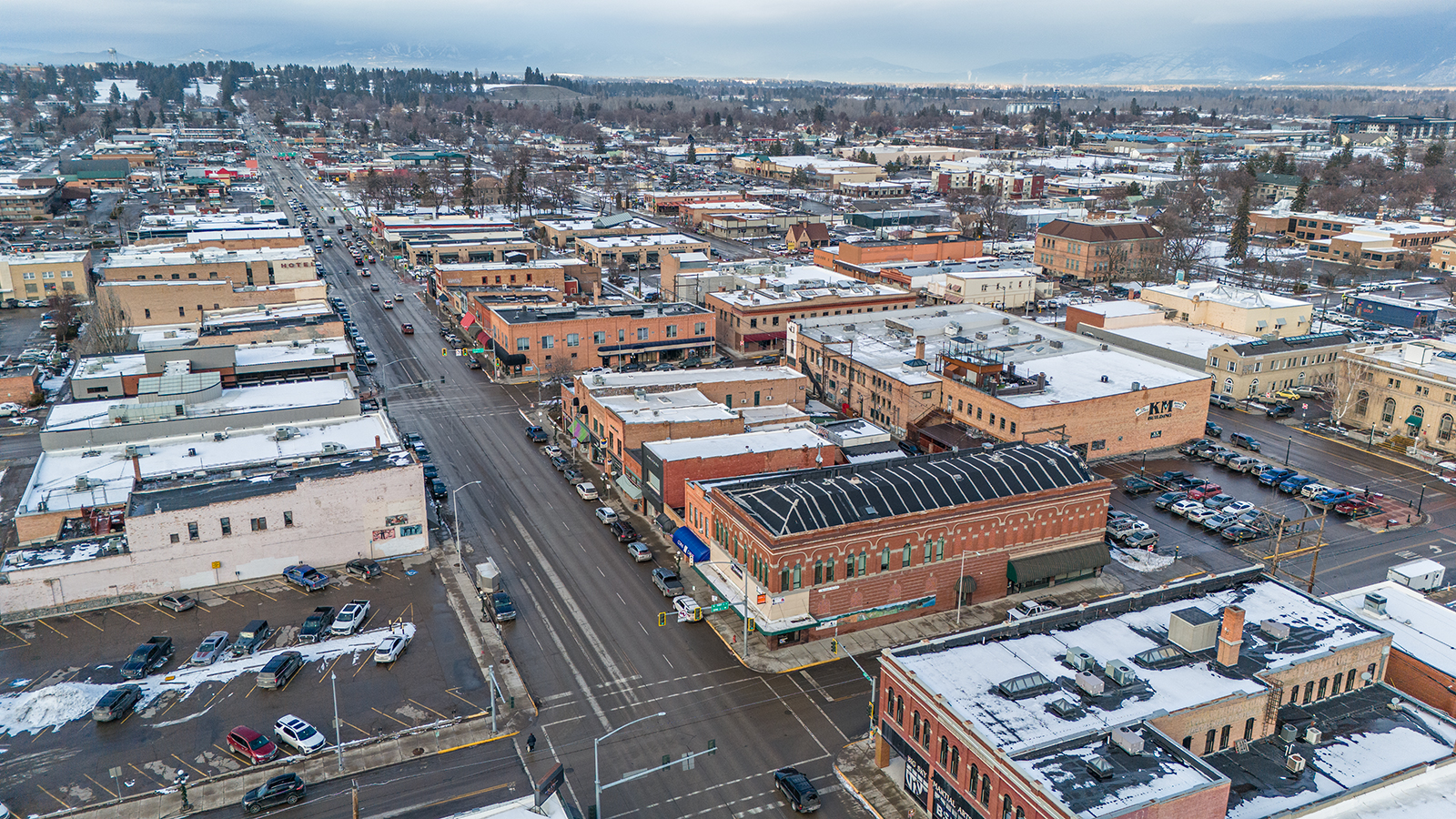
Last year when Bias Brewing owner Gabe Mariman received his tax bill for his commercial property on Main Street in Kalispell, he was surprised to see that he owed roughly 30% more than what he paid in 2025 even though the assessed value didn’t change. He had already planned his operating budget around what he thought would be a fixed cost comparable to the year prior.
“My taxes went up about 30% in one year – that’s $8,000,” Mariman said. “What that means as a business owner is I’ve got to find a way to make an additional $700 per month in profit.”
But Mariman hesitates to raise prices on his beer and food menu and he’s adamant about ensuring his customers can still buy a $10 meal after he recently dropped prices to offer more affordability.
“We did that under the assumption that our fixed costs weren’t going to increase this year,” Mariman said. “As a company that’s going to serve our blue-collar, middle-class community, we are committed to keeping prices affordable and we are not going to raise our prices, but it creates complexity in trying to figure out a way to keep them the same and absorb our exorbitant fixed cost increases.”
Mariman has done things like reduce the menu while operating more efficiently, but he said eating the cost is inevitable.
After the 2025 Legislature passed a tax reform package designed to lower taxes for most homeowners, Mariman blames those measures — House Bill 231 and Senate Bill 542 — for some of the unintended consequences posed to his business.

While taxes decreased on residential properties valued below roughly $1.5 million, the burden was shifted to high value homes, second homes, short term rentals and some business owners. Many landlords of multifamily apartment complexes, too, saw an increase on their tax bill, which will likely be passed on to their tenants.
In Kalispell, where the median home price hovered around $550,000 in 2025, city officials say the tax burden fell disproportionately on commercial property owners when compared to Whitefish, where the median home price ranged between $700,000 and $1.4 million.
“This year, the tiered rates are phased in which have lowered taxable values on moderately priced homes – which is things under a million bucks,” said Jeffrey Michael, the executive director of the University of Montana Bureau of Business and Economic Research (BBER). “In the Flathead, you’re going to see a big difference in how that hits. In Kalispell, you will have a lot more of those properties that have received those tax breaks and not as many on the [commercial] side, so the shift at the higher prices is commercial properties.”
Kalispell City Manager Jarod Nygren said because of the tiered tax system, some commercial properties saw a 30% to 50% increase “based on how the pie was broken out.”
“We just don’t have that tax base in Kalispell so commercial properties saw the larger increase,” Nygren said.
While some lawmakers have pointed to Kalispell’s tax increment financing districts (TIF) and recent levy passages such as the public safety levy in 2024 and the public schools levy last year, Nygren said they are not to blame for the dramatic spike.
“The City of Kalispell didn’t change anything – any change is a result of the new tax law,” Nygren said.
Because of the lopsidedness, Sen. Greg Hertz, R-Polson, Sen. Tom McGillvray, R-Billings, and former Sen. Keith Regier, R-Kalispell, filed a lawsuit against the Montana Department of Revenue. They argue the state constitution was violated during the legislative process.
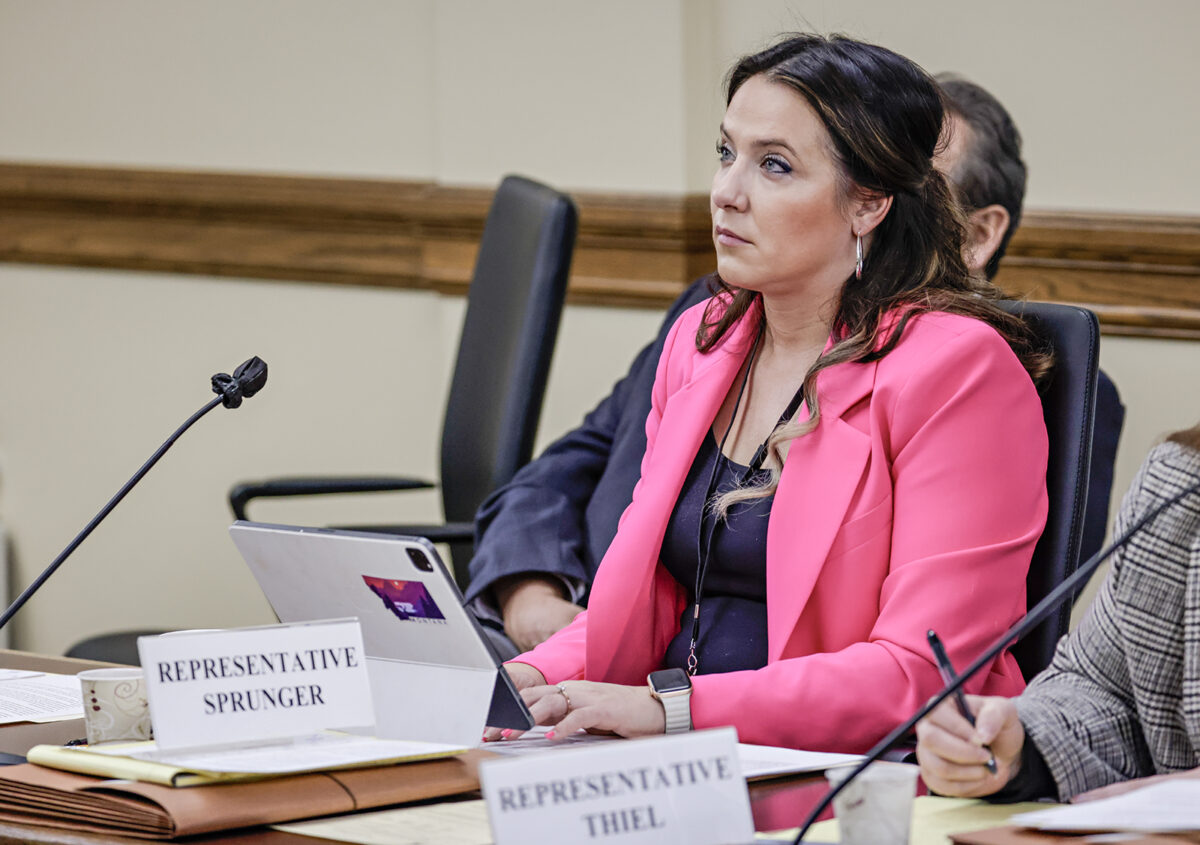
Rep. Courtenay Sprunger, R-Kalispell, who is also the CEO of Big Sky Public Relations and is a former chair of the Kalispell Chamber of Commerce board, said that while she voted for both SB 542 and HB 231, she’s committed to working with the business community to help minimize the impacts.
“I am going to be meeting with business leaders to see all the aspects that have created this amount of pain for our downtown and try to understand what can be looked at without creating more pressure,” Sprunger said. “Do we look at some form of relief out of the TIF funds? Are there places we can create more efficiencies? I think there is some time to work and really understand what’s happening.”
Business owner and former mayoral candidate Kisa Davison said the taxes on her Jiu Jitsu and Mixed Martial Arts gym in Kalispell increased by almost 30% in 2025, which is $400 more per month. In addition to another commercial property that houses Iron Star Construction on Second Avenue West, Davison also owns commercial property in Whitefish, Missoula and Bozeman. But she said her taxes in Kalispell went up far more dramatically even though the valuation stayed the same.
“The really frustrating part is that property taxes are based on valuations, and the valuations come out in June, and you’ve got 30 days to appeal – most of us did not appeal our valuation,” Davison said.
With the added cost, Davison is cutting back on spending and she’s pausing any improvements to her buildings while operating with a lean staff.
“We’re trying to figure out how to pay for things in the state and honestly, I think it was a swing and a miss on restructuring property taxes,” Davison said.
Montana Department of Revenue Communications Director Jason Slead said the state receives “only a small fraction” of property tax revenue with local jurisdictions absorbing 80% and just 20% going to the state.
According to Slead, the typical commercial property owner in Kalispell will pay taxes in jurisdictions that include the city, elementary and high schools, Flathead County, countywide education mills and the state equalization and university mills. This year, commercial property in Kalispell represented 42% of the tax base compared to 35% in tax year 2024, according to the Department of Revenue.
“It becomes a big complex math problem,” Michael, at BBER, said. “It’s all shifting in different ways, and it all adds up to a total valuation with some going up and some going down. It’s a big question and it makes the actual impacts harder to predict.”