Last-Minute Daines Withdrawal from Senate Race Sends Shockwaves Across State
The senator’s departure from the race minutes before Montana's filing deadline caused an outcry from some members of his own party — and beyond — who argued the move sets a “dangerous precedent”
By Mariah Thomas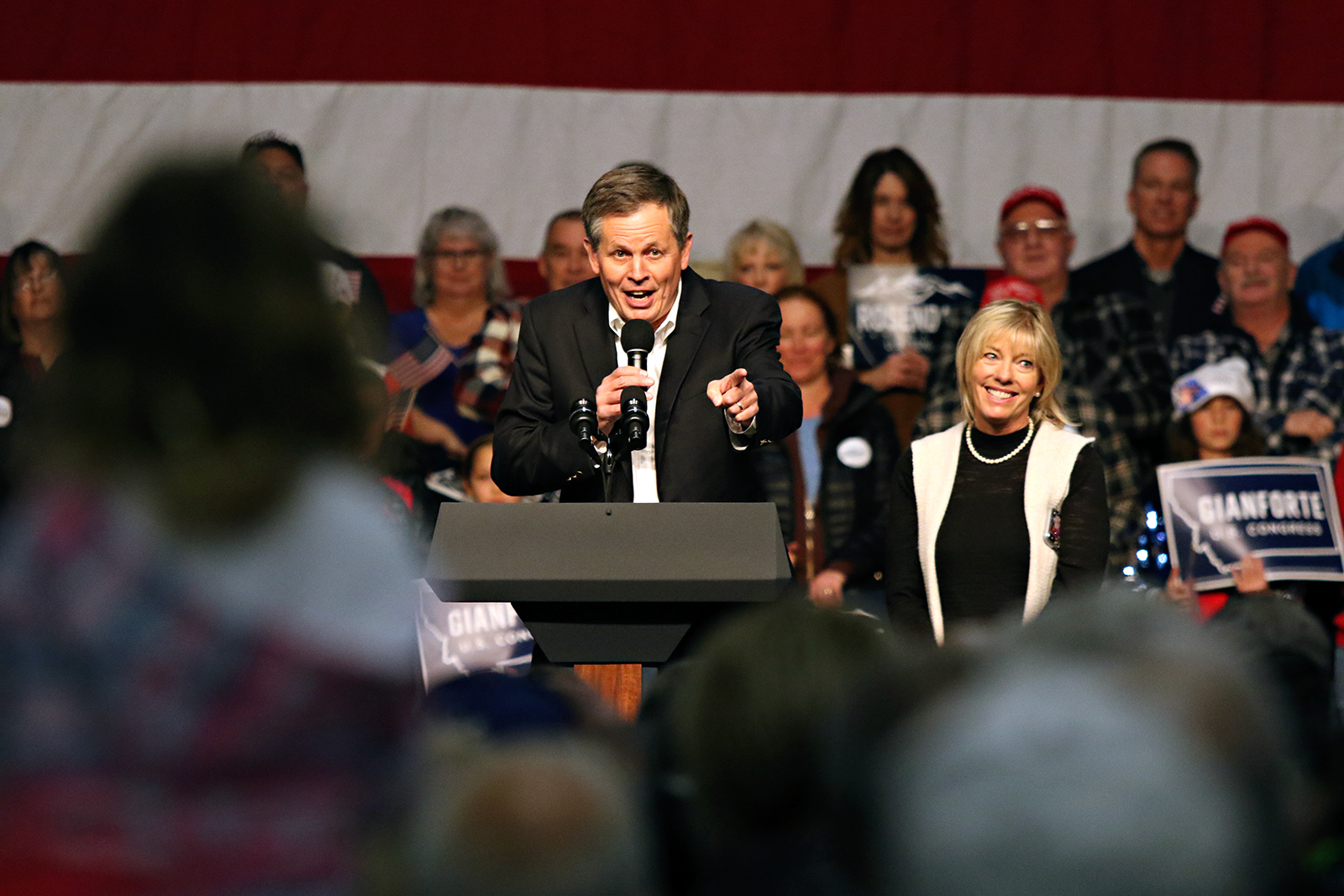
Sen. Steve Daines’ exit Wednesday from a re-election campaign he’d already filed for sent shockwaves across the state — including across the Republican Party he’s devoted himself to since college.
“After wrestling with this decision for months, I have decided I will not seek re-election,” Daines said in a release announcing the decision. “It is time for new leaders like Tim Sheehy to spearhead the fight for Montana in the United States Senate.”
A wave of accolades rolled in for the state’s senior senator, who was first elected to represent Montana in the U.S. House in 2012, and moved to the upper chamber in 2015.
“I’ve known Steve Daines for nearly 30 years,” said Gov. Greg Gianforte. “From growing a successful business together to serving Montanans together, I’m proud to call Steve a true friend and partner. Montana is stronger today because of Steve’s work to cut taxes, champion our agricultural industry internationally, and strengthen our national defense. He made a big impact and his leadership and service to our state will be missed.”
Sheehy, the state’s junior senator, wrote in a post on social media that Daines was “doing something we don’t often see in modern politics: stepping down at the height of his power to clear the way for a new generation of leaders.”
Several Republican incumbents around the country are not seeking re-election this year. Daines, 63, was the sixth Republican senator to announce he would be stepping away from his role. His departure from the race came alongside an endorsement of Kurt Alme — a U.S. Attorney Daines recommended for the job in 2017 — to take his place. Alme, 59, quickly clinched an endorsement from President Donald Trump as well.
Daines’ withdrawal from the race, and Alme’s entry, each came within minutes of the 5 p.m. filing deadline on March 4, leaving no room for other potential candidates to jump into the race. In part, that was Daines’ goal. In a Semafor exclusive, Daines, who ran the National Republican Senatorial Committee from 2023 to 2025, said he wanted to block potential big-name Democrats from jumping into the race.
But for some members of the state’s Republican Party, the last-minute switch sets a “very dangerous precedent” by not allowing for a competitive primary — something the state GOP affirmed its support for in a press release Thursday morning.
“The Montana Republican Party stands behind its deep bench of qualified candidates seeking to represent Montanans and supports a competitive primary process to let voters pick their preferred candidates,” the release said.
The party has seen two of its federal officeholders drop from their respective races this week, both in Daines as well as in U.S. Rep. Ryan Zinke, who announced he wouldn’t seek reelection Monday. Both of their departures set up primary challenges, though one has netted more high-profile candidates than the other.
On the Senate side, Alme faces Lee Calhoun of Whitefish and Charles Walking Child of Helena, neither of whom has held state office. And in the western House district, Zinke’s withdrawal cleared the way for a competitive three-way primary between conservative radio show host Aaron Flint, Flathead County Republican Central Committee chair Dr. Al Olszewski and Secretary of State Christi Jacobsen.
The state GOP’s press release came with a promise that the party wouldn’t endorse any candidates for federal office in the primaries.
Other Republican leaders were more forward with their thoughts on Daines’ departure.
Olszewski, the Flathead County Republican Central Committee chair who announced he’d run to replace Zinke Monday, referred to the move in a social media post as a “deceptive maneuver” that “betrayed the trust of all Montanans.”
State Rep. Braxton Mitchell, R-Columbia Falls, worried the move could alienate people, though he added he thinks the shock will wear off before the general election takes place in November.
“Again, I don’t think that party bosses or D.C. insiders should be selecting who the candidates are,” Mitchell said. “It should be we the people, we the people given the chance, the ability to run.”
And from outside the party, similar sentiments abounded. Former University of Montana president Seth Bodnar — who entered the Senate race as an independent hours before news broke that Daines had withdrawn — said the move was the “disgusting arrogance of Washington politicians and their party bosses who trade power back and forth like candy” in a statement after Daines left the race. And longtime Democratic operative Joe Lamson said the move should be “offensive” to Republicans, who won’t have a chance for other candidates to jump into the race.
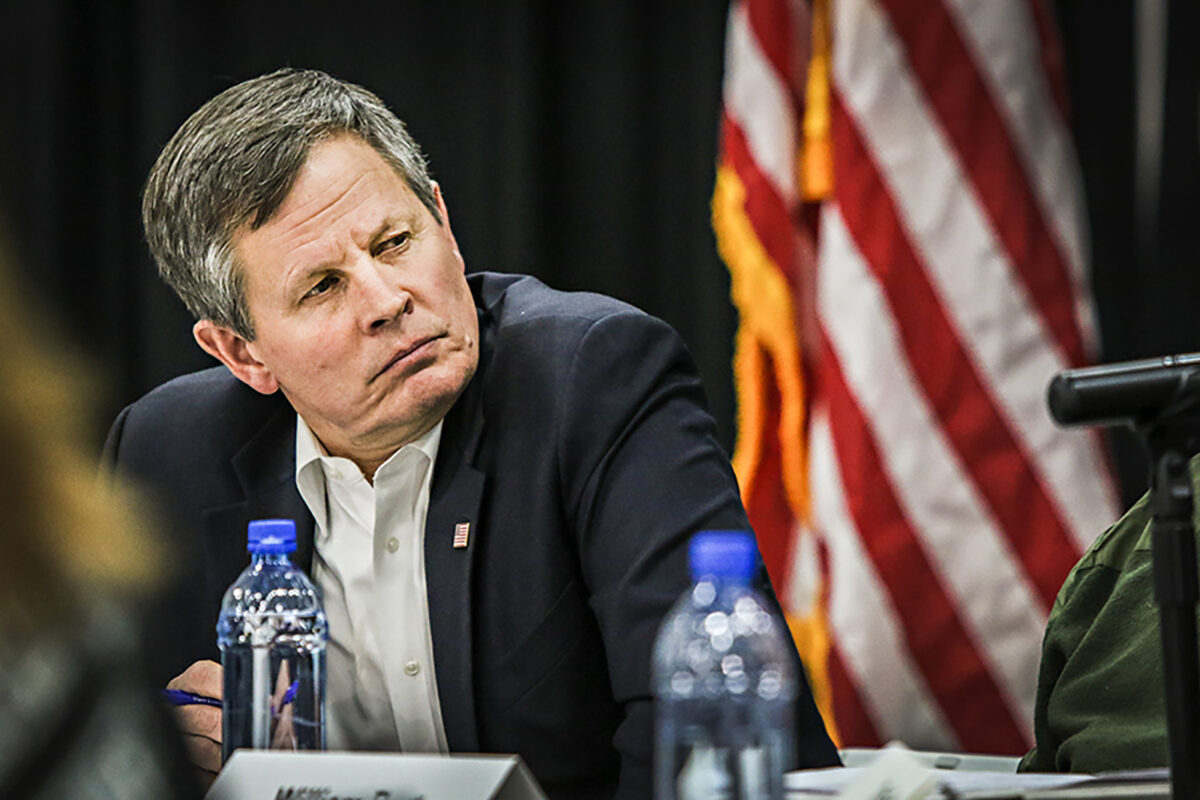
But the million-dollar question, according to Montana State University political scientist Jessi Bennion, remains how the move will play with voters in November.
“Someone can be mad that Daines decided to do this right at the very end, and to kind of not have that whole primary process,” Bennion said. “They can be mad about that, but at the end of the day, does that mean they’re going to vote for a Democrat now?”
For Mitchell, that answer is a resounding “no,” even if he worries the move could hurt grassroots support for Republicans in the primary cycle.
“At the end of the day, you know, especially in today’s political climate, stories in the news cycle move so quick that people are going to forget about what happened in November,” Mitchell said. “At the end of the day, they’re going to see the differences between Seth Bodnar, if and who that Democrat might be, and then Kurt Alme. And from my assumptions, Montanans are going to make a very clear and evident choice and the resounding choice to support the Republican nominee.”
Lamson sees things differently. The Democratic strategist who worked for former U.S. Rep. Pat Williams said he thinks the election is going to be “wide open,” given the lack of incumbents at-play. He also pointed to Democrats’ over-performance by wide margins in several recent elections as a potential harbinger of what could come to Montana this year.
For Bennion, the answer is layered.
Incumbency helps win elections, but without that factor, there could be more opportunity for a Democratic candidate to gain a foothold. At the same time, though, Bennion said people are more entrenched in their political positions than ever — and convincing them to switch parties, or to vote independent, is a hard sell.
“There’s probably a certain set of Republican voters that would have liked a primary that was open and wide and competitive,” Bennion said. “At the end of the day, though, when they go to the general election, to the voting booth if they still vote from their polling place, and the options are a Democrat, an independent and a Republican, I mean, I’m sure Republicans are gonna pick a Republican. That’s just what we do in our politics now.”