Public Stakeholders Release Natural Resource Damage Assessment Plan for CFAC Superfund Site
State, federal and tribal trustees are crafting a "baseline" restoration goal for natural resources damaged from exposure to hazardous substances at the shuttered aluminum plant along the Flathead River
By Tristan Scott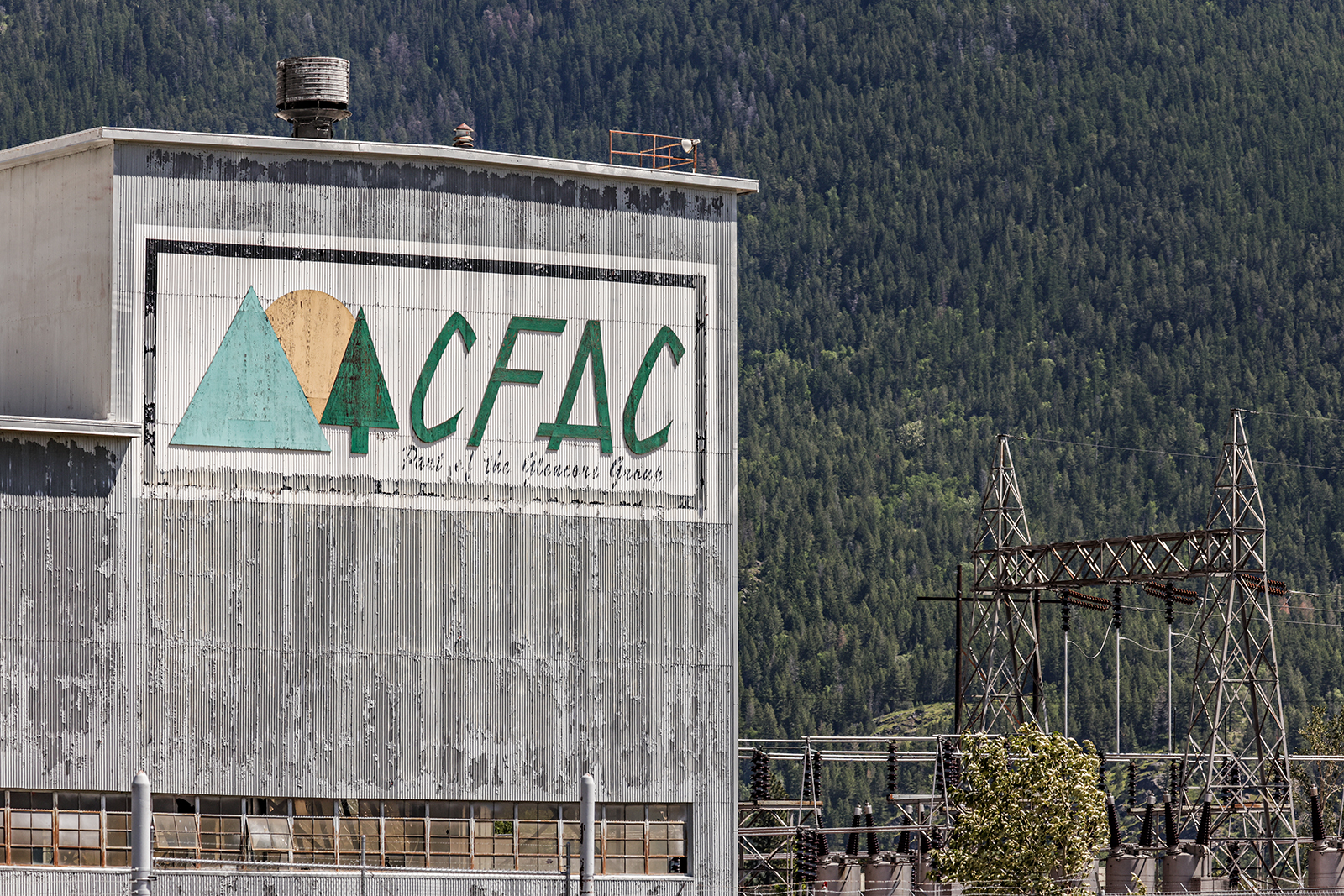
With remedial work underway to contain hazardous waste leaching into the groundwater at the Columbia Falls Aluminum Co. (CFAC) Superfund site, a separate process to take stock of damages to natural resources is unfolding at the shuttered facility near the Flathead River, where public stakeholders are entitled to compensation for decades of environmental exposure to the toxic contaminants released there.
First, however, the public “trustees” must appraise those damages, which range from quantifiable injuries to the environment to less tangible forms of impairment, such as the loss of cultural resources for Indigenous tribes.
Distinct from the U.S. Environmental Protection Agency’s (EPA) federal cleanup plan, the Montana Justice Department’s Natural Resource Damage Program (NRDP) functions as an apparatus for state, tribal and federal trustees to seek “baseline” restoration of a contaminated site and hold corporate polluters accountable for the damages — in this case, CFAC, which is owned by Glencore, the largest commodities trading group in the world; and the Atlantic Richfield Company (ARCO), which sold the plant in 1985. The goal of the Natural Resource Damage Assessment (NRDA) process is to “restore, rehabilitate, replace, and/or acquire the equivalent of injured natural resources and associated services lost because of the release of hazardous substances, on behalf of the public,” according to NRDP officials. Such compensation may take the form of environmental restoration projects or monetary payments to state, federal and tribal “trustees.”
“We are laying out a roadmap to quantify and determine the extent of the injured natural resources and then quantify the damages for restoring those injured resources to baseline,” Katherine Hausrath, chief legal counsel for the Montana NRDP, said in an interview. “We recognize that is sometimes not possible, such as when you have a situation where you have natural resources that are so injured you can’t restore them — for example, the groundwater at the CFAC site probably cannot be restored. So, you’re looking for replacement projects to offset those damages.”
Those could include a range of conservation projects, including work to restore an equivalent amount of groundwater elsewhere, or improve headwater storage upstream from the site, or even repair leaky water mains, Hausrath said.
“The end result of this process is hopefully to arrive at a dollar value,” Hausrath said. “You basically end up with a volume of contaminated groundwater that is supposed to make the public whole, and then a unit cost of implementing projects that should restore or replace that groundwater.”
Initiated in late 2023, the NRDP process reached a new milestone last week when the trustees finalized an 85-page Natural Resource Damage Assessment Plan for the CFAC site. In it, the trustees describe their formula for determining and quantifying injuries and damages to natural resources associated with hazardous substances at the Superfund site.
Acting on behalf of Montana Gov. Greg Gianforte, NRDP is working with the Confederated Salish and Kootenai Tribes (CSKT) as well as two federal natural resource trustees, the U.S. Departments of Interior and Agriculture, to “assess the severity and magnitude of natural resource injuries resulting from hazardous substance releases” at the CFAC site, as well as determine how to recover them.
While the process focuses on evaluating the impacts of the releases of pollution and carrying out restoration efforts, it doesn’t interfere with or affect CFAC’s requirements to complete remediation work under Superfund, which is subject to Environmental Protection Agency (EPA) oversight and consultation from the Montana Department of Environmental Quality (DEQ). Since its inception in 1990, the NRDP has recovered more than $275 million in natural resource damages for sites and trustees across Montana. In the case of CFAC, damages can be tangible, such as restoring a contaminated waterway, and harder to define, such as the loss of cultural and natural resources considered sacred by members of the CSKT.
“As a result of these differences, the services that natural resources provide to tribal members may be considered unique,” according to the NRDP assessment plan. “To ensure that the full range of natural resource services, and potential service losses, are investigated as part of this … the specific suite of services that natural resources provide to these tribal communities are being specifically considered and evaluated.”
Located two miles northeast of Columbia Falls on the Flathead River, the CFAC site was once home to an aluminum reduction facility. The primary contaminants of concern are fluoride, cyanide and various metals, including dangerous concentrations of them in a groundwater plume.
From its famous opening in 1955 through the boom years of the 1960s and ’70s, the facility fueled this rural corner of Montana with over 1,500 jobs — almost half the population of Columbia Falls in those days — and millions of dollars in new economic investment. The plant closed in 2009, putting hundreds of employees out of work. The EPA declared it a Superfund site in 2016.
In early 2025, the EPA issued its long-awaited record of decision finalizing a cleanup plan for the property. The 432-page document is the product of a years-long environmental remediation investigation, providing a detailed account of the EPA’s plan to contain pockets of toxic waste buried on the property by building a “slurry wall.” Although the former industrial site remains dormant, the groundwater plume containing unsafe concentrations of contaminants poses a risk to the environment and future water users. In 2025, fieldwork by CFAC contractors included surface, groundwater and soil sampling, as well as geotechnical drilling and test pitting.
“The information gathered through this investigative work is being analyzed and will be used to inform remedial designs moving forward,” according to EPA. The bulk of the remedial action — the design and construction of the slurry wall to encompass spent pot-liner waste buried underground — is still to come.
Once the EPA begins constructing its remedy, the NRDP has three years to complete its damages claim on the trustees’ behalf.
“Once EPA releases its ROD and CFAC starts implementing the plan, then a clock starts ticking,” Hausrath said. “These claims typically result in a settlement and aren’t typically litigated. The statute is designed to encourage settlement.”
But determining corporate accountability at the contaminated site has proven to be a difficult task.
Since 2018, the CFAC site has been at the center of a legal dispute over who should bear responsibility for its past and future cleanup costs under the federal Comprehensive Environmental Response, Compensation and Liability Act (CERCLA). The EPA added the former CFAC site to its Superfund program’s National Priorities List a decade ago, designating it for critical cleanup among the nation’s most contaminated sites.
CERCLA, as well as its state analog, the Montana Comprehensive Environmental Cleanup and Responsibility Act (CECRA), allow the corporate owners of a contaminated property to offset their liability by seeking recovery costs from previous owners. In this case, CFAC, which Glencore purchased in 1999 and closed in 2009, nearly 15 years after ARCO sold the plant to the Montana Aluminum Investors Corporation, has maintained that the former owner should be held financially accountable for its share of the cleanup costs.
For NRDP officials, completing their assessment work has involved coordinating with CFAC, ARCO and EPA to review sampling and monitoring data that will inform the cleanup. However, accessing that data has proven problematic, said Hausrath, who described encountering resistance from CFAC.
“It has taken an extraordinary amount of effort to get that data from CFAC and EPA, and whether or not we get it in a usable format has been a problem in the past,” Hausrath said.

According to a letter to NRDP officials from CFAC, company representatives met with the trustees in February 2024 to discuss the assessment process.
“At that meeting, it became clear that the Trustees intended to conduct the assessment and primarily wanted CFAC to ‘participate’ by funding the [Natural Resource Damage Assessment]. In return, CFAC would have the ‘opportunity to confer’ in the process.”
CFAC also learned that the Montana NRDP had already issued a contract to Industrial Economics, Inc. covering the preliminary assessment of damages, data gaps analysis, assessment plan, assessment report, and the restoration determination and compensation plan, according to company officials.
“To our disappointment, the contract was issued eight days before CFAC’s meeting with the Trustees, which had been scheduled prior to the contract’s execution,” the letter from CFAC states.
A separate letter from ARCO to NRDP officials explains that “Atlantic Richfield Company is not directly involved in the development or implementation of sampling work plans at the CFAC site, “so it is not in a position to accommodate NRDP’s request for coordination on sampling, work plans, and site visits.”
To learn more about the trustees’ proposal for determining and quantifying injuries and damages to natural resources associated with hazardous substances at the CFAC site, visit the NRDP website.