Tribes, Stakeholder Groups Join Forces to Oppose B.C. Coal Mine Expansion
This week's petition for an independent review panel comes as Indigenous leaders from Montana, Idaho and B.C. close ranks to resist a coal mine expansion proposal in the transboundary Elk-Kootenai river watershed until the decades-old pollution problem is resolved
By Tristan Scott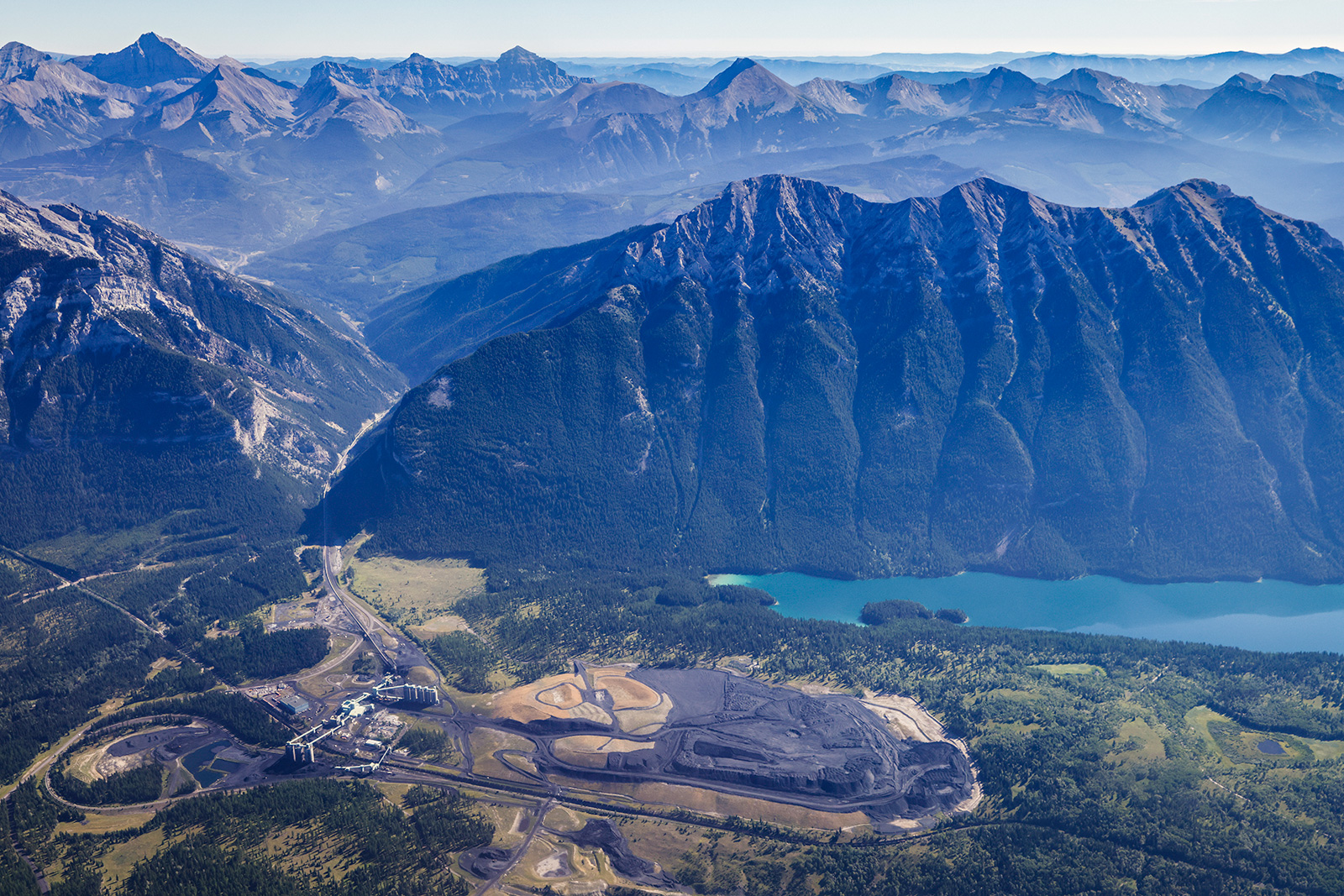
Tribal governments from Montana, Idaho and British Columbia (B.C.) are closing ranks to oppose a coal mine expansion project in the shared Kootenai River watershed, describing a proposal to build out the mine’s footprint as short-sighted in light of an ongoing international inquiry into a cross-border pollution problem that has persisted for decades.
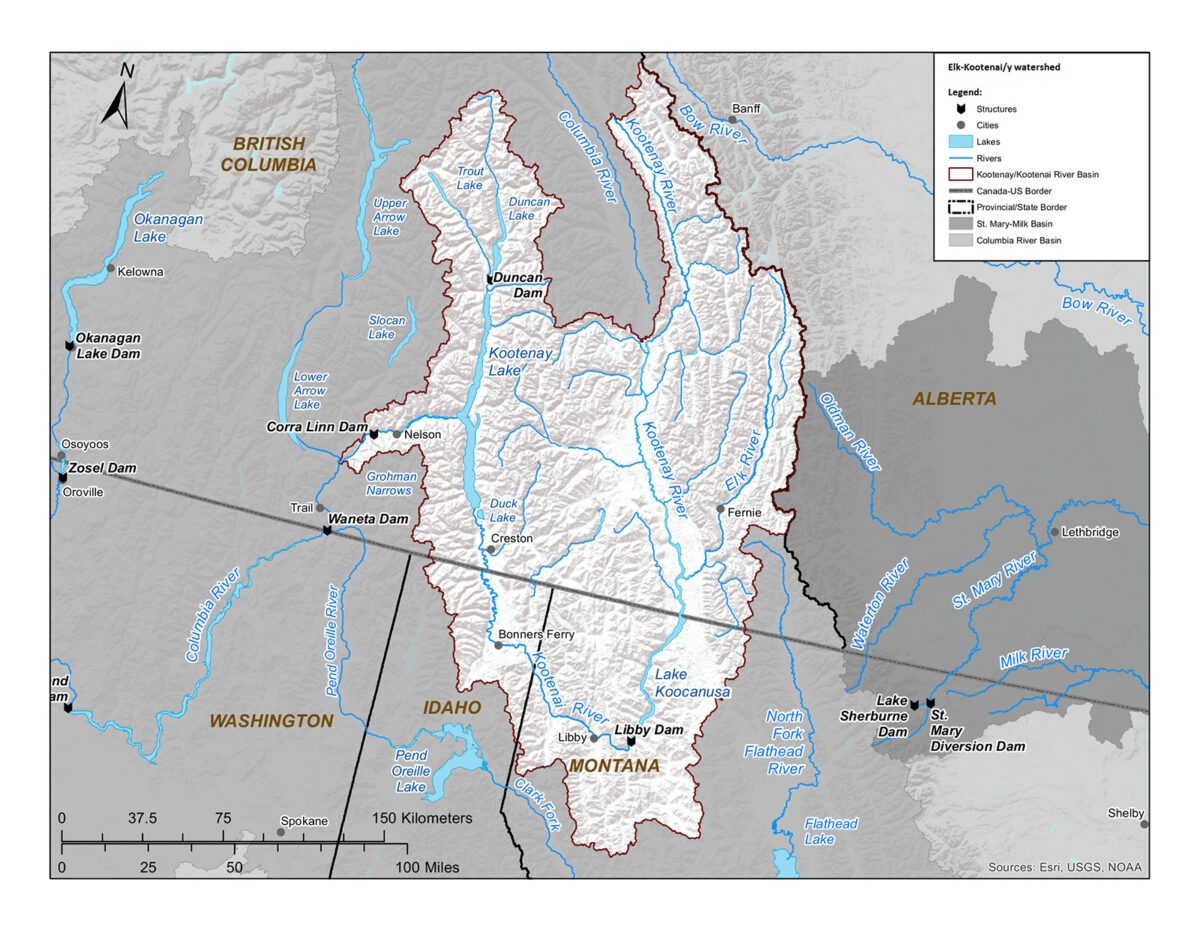
The league of Indigenous leaders includes western Montana’s Confederated Salish and Kootenai Tribes (CSKT), whose council last month called on B.C.’s provincial government to suspend its review of the project “until sufficient mitigations are in place to address the historical loads of mine-sourced contaminants in the watershed,” including selenium and nitrates — mining toxins that originate in B.C.’s Elk Valley mines and persist all the way to the confluence of the Kootenai watershed with the Columbia River.
On Thursday, CSKT’s council submitted a formal request to Canada’s Minister of Environment and Climate Change Julie Dabrusin, asking that an independent review panel convene to “more robustly analyze” the Fording River Extension (FRX) coal strip mine project “and its implications for both Canada and the United States.” The governments of the Kootenai Tribes of Idaho and the Ktunaxa Nation in Canada have also called the project’s review phase premature and were expected to sign on to the request for independent oversight.
Located in B.C.’s Elk Valley, the proposal to expand the existing Fording River mountaintop-removal coal mine by approximately 5,000 acres has long worried CSKT leaders, whose formal opposition to the project traces back years.
CSKT Chairman Michael Dolson reiterated those concerns on Thursday, saying the FRX proposal would exacerbate pollution downstream in Lake Koocanusa and the Kootenai River watershed (spelled “Kootenay” in Canada).
“The FRX Project is one of the largest coal mine projects ever proposed in the Elk Valley, and it is situated in the most impacted area of the region. The project will cause significant effects to water quality, aquatic habitat, and unique fish populations in Canada and throughout the transboundary watershed, undoing many Ktunaxa efforts to restore critical fish populations, including endangered Kootenai River white sturgeon and westslope cutthroat trout,” Dolson said, referring to B.C.’s Ktunaxa Nation. “The independent, federal Review Panel is the only appropriate approach for a project of this size that would be in place for decades and potentially have centuries worth of pollution impacts.”
Dolson also said the proposal is out of step with an international probe underway since March 2024, when the International Joint Commission (IJC) accepted a reference by the U.S. and Canadian governments, in partnership with the Ktunaxa Nation (which includes CSKT and KTOI), “to explore the impacts of water pollution in the Kootenai/y watershed to protect the river system.”
Although tribal governments have long called for a moratorium on new or expanded open-pit coal mines in the transboundary watershed until the effects of historic and ongoing pollution are understood and remedied, the recent groundswell of opposition to FRX includes resistance from a coalition of tribes as well as other stakeholder groups, whose ranks have grown in proportion to the scale of scientific evidence and social awareness that Canadian coal mines present long-term environmental consequences to downstream watersheds, adjacent communities and Indigenous cultures.
On Wednesday, an alliance of 34 businesses submitted a letter of its own to Environment and Climate Change Canada (ECCC) requesting that the Canadian government require a more rigorous review of the proposed FRX expansion.
Under Canadian law, the Minister has the authority to designate an independent review panel when projects pose risks to waters shared with the United States. An independent review panel could examine the proposed expansion and its implications for both Canada and the United States, and potentially recommend alternatives or mitigation measures to reduce the risk of further pollution.
“The coal mines in the Elk Valley of B.C. are causing possibly the worst case of selenium pollution in the world—right here in Montana,” said Derf Johnson, deputy director of the Montana Environmental Information Center. “We’re asking the Canadian government to take a harder look at the largest proposed expansion currently being considered, and to evaluate its impacts to the water quality and the fishery of our shared watershed. We hope Canada will do the right thing and appoint a review panel, because the consequences of allowing more pollution are significant for Montana.”
Michael Jamison, Crown of the Continent campaign director for the National Parks Conservation Association, one of the organizations that signed the letter, in an interview Wednesday said it was “inconceivable” that B.C. would consider a proposal to expand a mining footprint before it crafts a solution to remedy a pollution problem that experts believe will persist for decades or centuries.
“Until we see proof of concept that B.C. can clean up the mess it has already made, we are not willing to have a conversation about making more mess,” Jamison said. “At least until they can prove they’ve figured out how to mitigate the existing problems, we are not supporting new mines. The scope and scale of this problem demands a solution that is equitable in scope and scale. It’s an international problem that multiple governments are engaged in, and their response is to build new mines. So we’ve got to fight them. We don’t have a choice.”
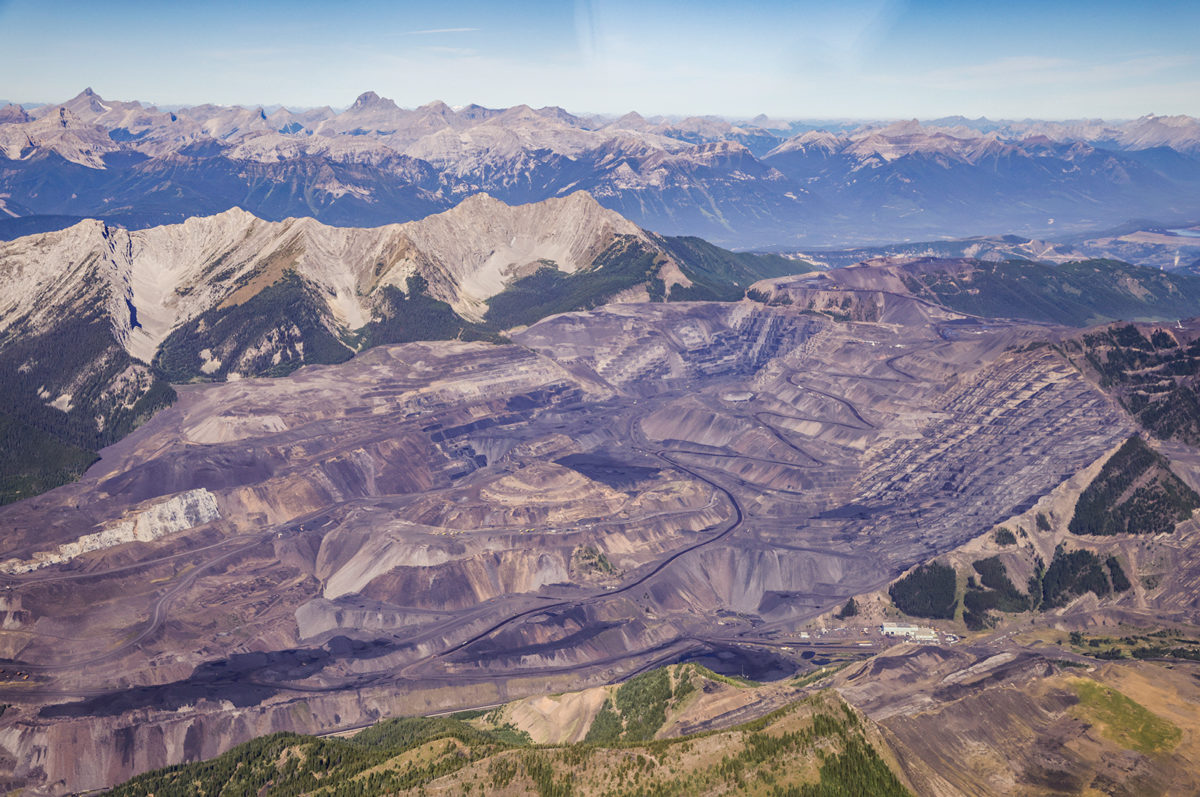
Elk Valley Resources (EVR), the Glencore-owned company (formerly Teck Resources) seeking approval of its expansion proposal, said the FRX project would maintain current production levels while expanding mining into a new area south of existing operations, extending the life of the Fording River Operations by about 35 years. The project is currently undergoing a coordinated provincial and federal assessment under the B.C. Environmental Assessment Act and Canadian Impact Assessment Act, which an EVR spokesperson described as “comprehensive.”
“The FRX project is a proposed extension of the current Fording River Operations (FRO) and plans to use existing equipment and infrastructure at FRO to reduce the footprint of new activities,” EVR Communications Manager Chris Stannell wrote in an email.
Stanell also said EVR continues to make “significant progress” implementing its Elk Valley Water Quality Plan, which was approved and enacted by the B.C. government in 2015, including “reducing selenium concentrations downstream of our Fording River Operations to levels” not seen since before the plan’s implementation.
Although tribal leaders acknowledge the success of the mitigation efforts at removing selenium from treated water, the treatment apparatus is still “not at the appropriate scale in which to meaningfully stabilize and ultimately reduce selenium in the streams and rivers.”
“The CSKT and KTOI firmly believe the approval of the Fording River Extension Project will cause irreparable harm to the Kootenai Basin ecosystem,” according to their March letter asking to suspend the project’s review.
The tribes also noted in their letter that B.C. has a track record of meting out “small fines for poor water quality and slow progress, while giving overly-generous discharge permits that are harmful to aquatic populations.”
“This has been noticed by Montana and Idaho, which have developed site-specific selenium standards at the border,” according to CSKT’s April 15 letter requesting an independent review. “The public deserves a rigorous, independent cross-examination of these water quality promises, which are relevant to wildlife, local communities, and everyone and everything downstream.”
In 2020, Montana finalized science-based, site-specific water quality standards meant to protect Lake Koocaunsa and the Kootenai River watershed. The U.S. Environmental Protection Agency (EPA) later approved the standards, affirming they were “based on sound scientific rationale and … contain sufficient parameters or constituents to protect the designated use.”
In allying their tribal councils to condemn the expansion proposal, the governments of the CSKT, the KTOI, and the Ktunaxa Nation also point to the unprecedented scope of the International Joint Commission’s investigation of the pollution problem that includes a first-of-its-kind inclusion of Indigenous groups.
“We do not believe that British Columbia should move forward with any new mines or mine expansions until the legacy and ongoing mine-sourced pollution that has accumulated in the Elk River, Koocanusa Reservoir, the Kootenai River, and Lake Kootenay has been adequately addressed,” according to the March letter from leaders of CSKT and KTOI to Tamara Davidson, B.C.’s Minister of Environment and Parks. The letter, which reiterates concerns over coal mining in the Elk and Kootenai river watershed that CSKT has been expressing to B.C. since 2012, describes how mining pollutants including selenium and nitrates originating from B.C.’s Elk Valley mines, persist all the way to the confluence of the Kootenai watershed with the Columbia River.
Research reveals the scope of the pollution is wide-reaching, and that contaminants jeopardize fish reproduction for species in downstream waters, including the westslope cutthroat trout. The mining byproducts can also upend aquatic food webs and threaten ecosystems in the Kootenai River watershed.
“Until sufficient mitigations are in place to address the historical loads of mine-sourced contaminants in the watershed, including substantive bonding to address pollutants that will leach from waste rock in the Elk Valley for centuries, no new mines or mine expansions should be considered through the Environmental Assessment process,” the letter states.
For decades, open-pit coal mines located in the Elk Valley have leached selenium, nitrate, and sulphate into the Elk and Kootenai rivers. The Elk River rises in the Canadian Rockies and flows into the U.S. at Lake Koocanusa, an impoundment of the Kootenai River. It then flows through the states of Montana and Idaho, and through transboundary Indigenous lands, including those of the CSKT and KTOI on its way back to the province of B.C., where it empties into the Columbia River.
In 2023, a peer-reviewed study from the U.S. Geological Survey found increases of selenium in the Elk River were the largest ever recorded.
In October, the federal Impact Assessment Agency of Canada (IAAC), which is coordinating the environmental review of the Fording River project alongside EAO, conducted its own assessment of the Fording River Extension Project and determined that “a further assessment is required” because the expansion project “may cause adverse effects within federal jurisdiction or direct or incidental adverse effects.”
“These effects include, among others, potential effects to fish and fish habitat including fish species at risk, migratory birds, to boundary waters, international waters, or interprovincial waters that would be caused by pollution, and changes to the health, social, economic, and environmental conditions of Indigenous Peoples,” according to IAAC’s notice of further assessment. “The project may also adversely impact the exercise of rights of Indigenous Peoples.”
An EVR spokesperson said internal monitoring by the company shows selenium and nitrate levels have stabilized and are decreasing downstream of four water quality treatment facilities it has constructed.
However, last fall Indigenous leaders of the Ktunaxa Nation stated in a letter that they did not endorse the Fording River Extension Project moving into the environmental assessment stage of the process, citing concerns with EVR’s water quality compliance and the “pace and quality of reclamation” among its top concerns.
“The amount of land that has been reclaimed to Ktunaxa standards and is ready to be returned is negligible compared to the land currently impacted by mining,” the letter states. “Again, contemplating additional disturbance without substantial progress on reclamation is unsatisfactory. The Upper Fording River is highly impacted by mining. As such, Ktunaxa rights in the area have been highly impacted [and] additional disturbance, including the loss of trails, hunting areas and habitation sites is impossible to support.”