Columbia Falls Planning Commission Approves 421-Unit Residential Development on Former Aluminum Company Land
The unanimous decision was made following outcry from roughly 20 residents who spoke against the project, which still must go to city council for a final decision.
By Lauren Frick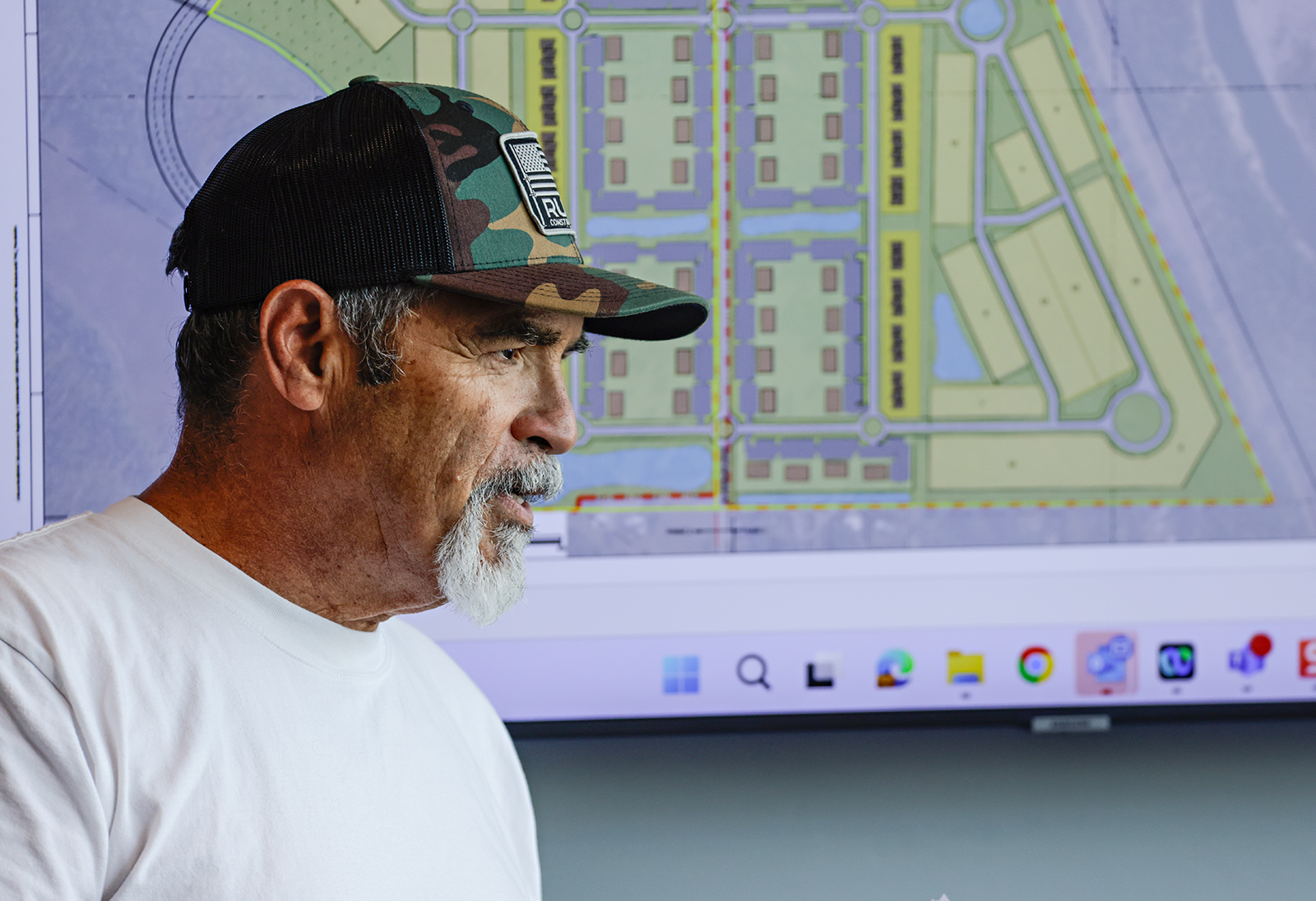
Columbia Falls planning commissioners late Wednesday night unanimously approved a series of three measures to begin clearing a path for the development of Teakettle Heights — a 421-unit subdivision on former Columbia Falls Aluminum Co. (CFAC) land being backed by local developer, Mick Ruis.
The decision came in the face of a city council chamber full of impassioned, frustrated residents, several of whom left the room as the affirmative votes were called out, murmurings of disappointment lingering as they walked out the door. The matter will now go to the city council for a public hearing on June 1.
The planned unit development calls for a total of 421 units, including 125 single-family residences on detached lots, 56 single-family townhouse sublots and 240 multi-family apartment units, on 78.05 acres south of Aluminum Drive. The subdivision, which will be completed in three phases, will have two access points — one to Aluminum Drive and the other directly to North Fork Road.
More than 20 residents during the project’s public hearing Wednesday expressed their opposition to the project, voicing a variety of concerns ranging from the subdivision’s proximity to an active U.S. Environmental Protection Agency (EPA) Superfund site, to the strain on city infrastructure, to the project’s high density disrupting the existing neighborhood’s way of life.
“They came in and cleared every single tree, not leaving one tree standing as we watched helplessly,” Marsha Kile, a resident who lives next to the proposed project site, said. “We stood and watched our whole way of life be turned upside down.
“We all bought homes out here because it wasn’t in a city … Now there will be, in essence, a whole city built right over our fence. We feel this was done with disrespect, callousness, and that we’re just considered collateral damage. Our privacy is about to be completely destroyed.”
After the nearly three-hour meeting, commissioners unanimously approved: the annexation of the 78-acre parcel located at 1800 Aluminum, rezoning the land from the current county zoning of Light Industrial to the city’s Two-Family Residential; the planned unit development for Teakettle Heights, which includes a deviation for apartment buildings to be 45-feet in height while all other buildings will be less than 35 feet; and the subdivision application for the project’s 185 lots.
The approval was also accompanied by 26 conditions, which included the 45-foot building height deviation for multi-family, a requirement for the developer to offer an “alternative financing package to qualified home buyers of a 2% down and a mortgage loan rate of 1%+ or less of the market rate,” and a requirement for the developer to be responsible for necessary upgrades to the sewer system if there isn’t adequate capacity.
Over the course of the planning commission’s discussion, the commissioners proposed four more conditions, which city staff will craft and add to the application before the matter goes to city council next month.
The four new conditions largely served to address resident concerns with the CFAC Superfund site. The new conditions proposed by the commission included preserving monitoring wells and providing easement for future access, adding information about the Superfund site to the homeowner’s association Covenants, Conditions, and Restrictions, and securing a letter from the EPA about the agency’s communication and relationship with the project’s developer. The fourth condition will explore adding more trees to the buffer between the apartment buildings and existing residential housing.
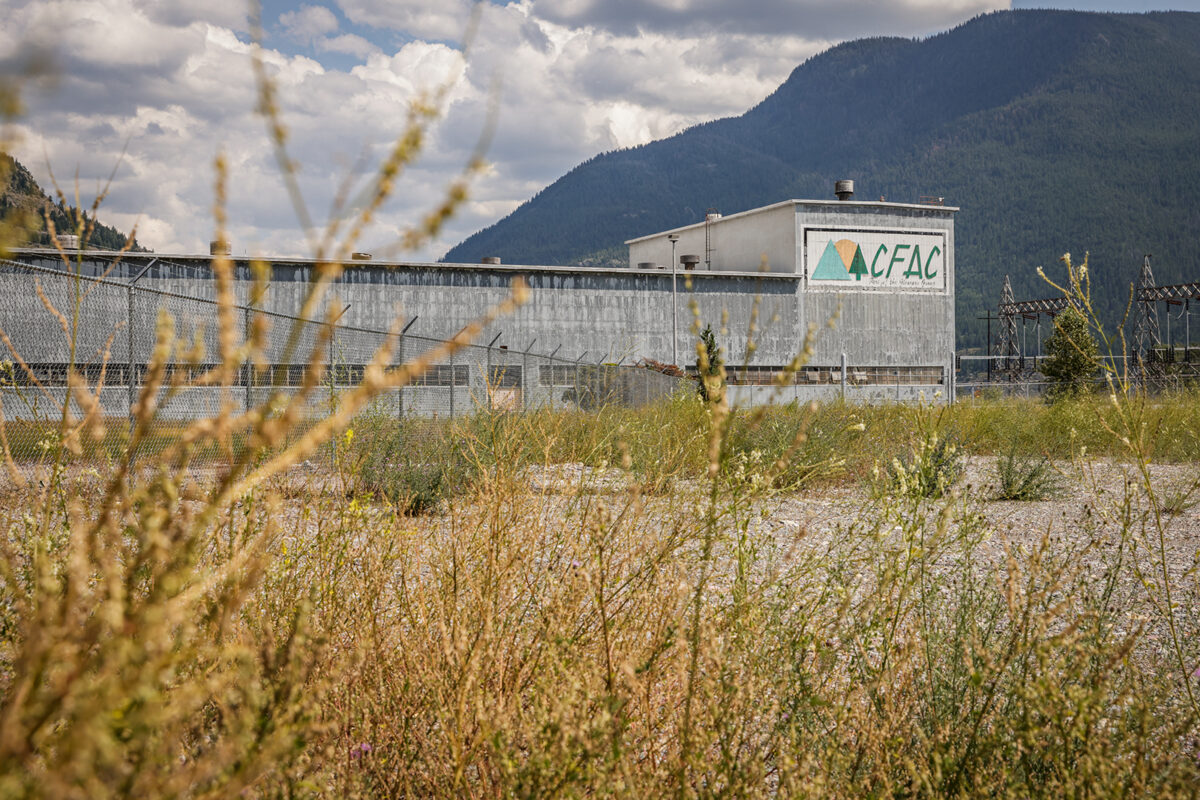
The CFAC Superfund site was a main concern voiced by most residents who spoke during the public hearing, with many asking the commission to postpone its decision on the development until remediation can be completed.
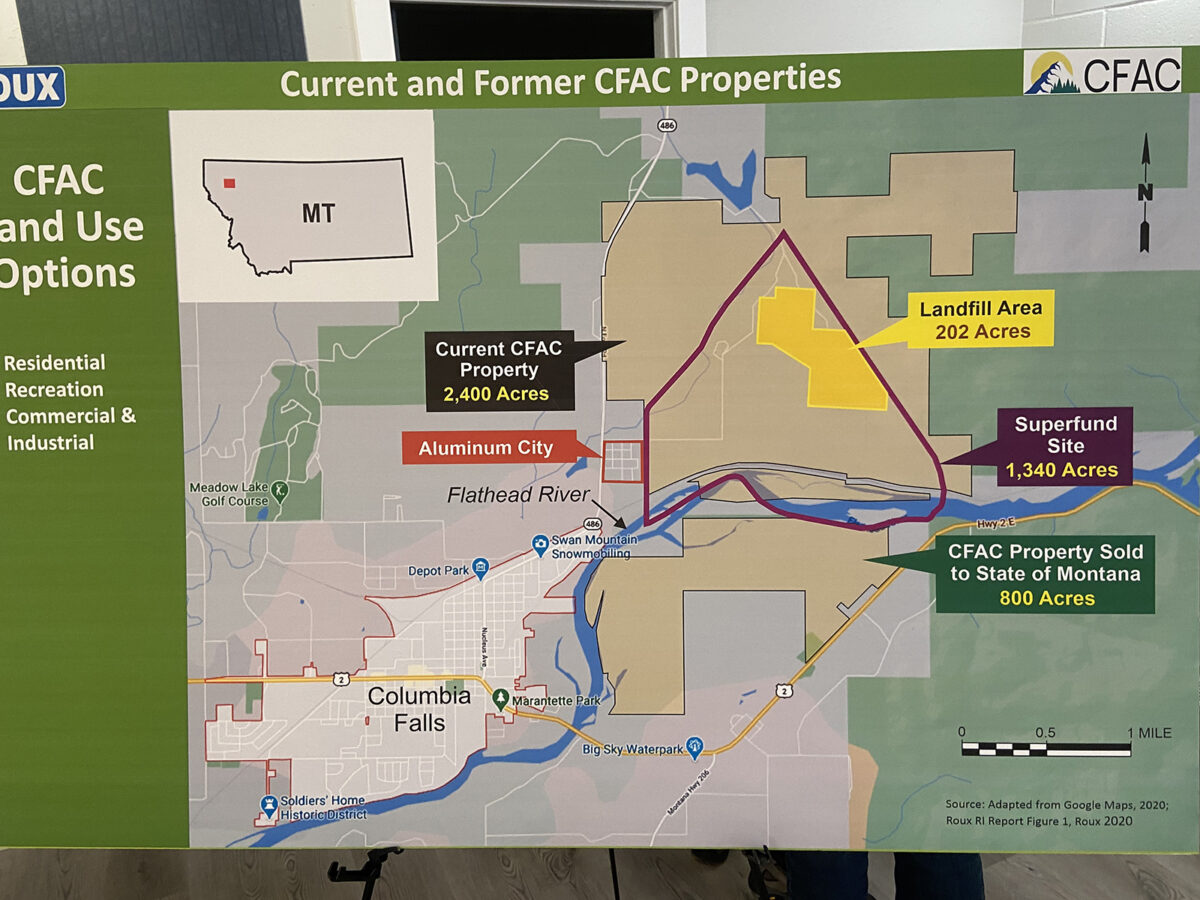
The property where the subdivision would be located used to be part of the CFAC Superfund Site, but was cleared and never identified as needing remediation.
During the public hearing, Peter Metcalf of Coalition for a Clean CFAC, warned commissioners of the potential complications of building a dense residential development while the site is in active remediation. Final remediation action is estimated to start in late 2026 or early 2027, according to the EPA website.
“Although we have a record of decision, we do not yet have a consent decree, nor do we have a remedial design that will say exactly how the work is going to be completed, nor which institutional controls are required, including long term monitoring to ensure that human health and the environment are protected,” Metcalf said. “It would be a shame to see rushing a subdivision in this site somehow complicate or undermine that process, one that many people, ourselves included, have invested a lot of time in.”
Several other residents also expressed an unease with developing so close to the Superfund site, saying there’s still more questions to be asked about potential long-term health risks.
“Would you purchase a piece of property there?” resident Allison Smeltz said. “Would you live with your family and your pets and your children on that land … before that remediation work is done? If you wouldn’t, I think that that helps you answer this question.”
In the project application, it highlighted that the Teakettle Heights portion of the CFAC property was cleared by the EPA’s CFAC Record of Decision, which determined that the area does not pose “an estimated lifetime cancer risk above de minimis levels or potential for non-cancer effects due to the presence of site related Contaminates [sic] of Concern (COCs)”.
“I mean, we have to rely on what the EPA tells us,” Eric Mulcahy, the city’s planner, said. “I’m certainly not an expert on Superfund sites or the contamination, but the documentation was provided in the application. But with that said, I think there were obviously good points brought up by the public, but I don’t think that our board or the city is able to override what is provided by the EPA in that decision.”
To address residents’ and his own personal concerns, Commissioner Sam Kavanagh suggested the three additional application conditions related to the Superfund site. Ultimately, Kavanagh pushed for more information from the EPA on the safety and impacts of this specific housing project, as opposed to a general assessment of the piece of land, advocating for a bit more reassurance.
“I have personal reservations, given the connection of this property to the Superfund site and not having had the EPA give us some feedback on that specific development,” Kavanagh said. “That being said, I also don’t know that I have grounds to make a determination on it because I don’t have that expertise, and it seems like what they’ve given us thus far is that it’s suitable.”
“That just feels a little uncomfortable to me without having that additional information, but … it does appear that the developer has, in good faith, made every effort to meet the requirements that we have published.”
Straining the city’s already aging infrastructure was another key concern from residents who spoke during Wednesday’s public hearing.
“There is no improvement to the city with this addition,” resident Samantha Milner said. “We keep shooting down levy after levy. How are we going to afford more infrastructure; the sewage; the schools? We can’t even afford to fix our high school. How are we going to add more sewage for that many people on our tiny strip?”
With the annexation of the land and extension of utilities, Aluminum Drive would become a city road, and Teakettle Heights would connect to the city’s water main, which runs through the Ruis’ property, according to city documents. The sewer main will need to be extended from south of the viaduct north and into the subdivision and a lift station will be needed at the west end of the development, according to city documents.
Prior to sewer connection, the developer will need to verify with the city public works department that there is adequate capacity in the mains and lift stations. If there isn’t capacity in the collection system, the developer will need to upgrade the facilities.
Infrastructure capacity has been a central discussion point as the city progresses through its state-mandated update to its growth policy, with local firms finding that the city will need to undertake a series of improvement projects across the water and wastewater systems in order to effectively keep up with projected population growth over the next 20 years.
The wastewater treatment plant was especially under the microscope after earlier this year, city staff, the planning commission and city council began working through the realization that the city’s current wastewater capacity for a population growth of roughly 1,894 people would be short of the more than 2,000 people accounted for in approved and current/near-term development applications. These calculations factored in the capacity metrics linked to Teakettle Heights.
City Manager Eric Hanks told commissioners on Wednesday that if the proposed subdivision is fully developed, the city right now would still have an “excess capacity available in a range of 600 to 700 people.”
“We’ve done extensive study on this,” Hanks said. “That’s one of the delays of why this application didn’t come when it was applied for in the fall…we were waiting on the study of this capacity. We had studied it in this capacity for this development.”
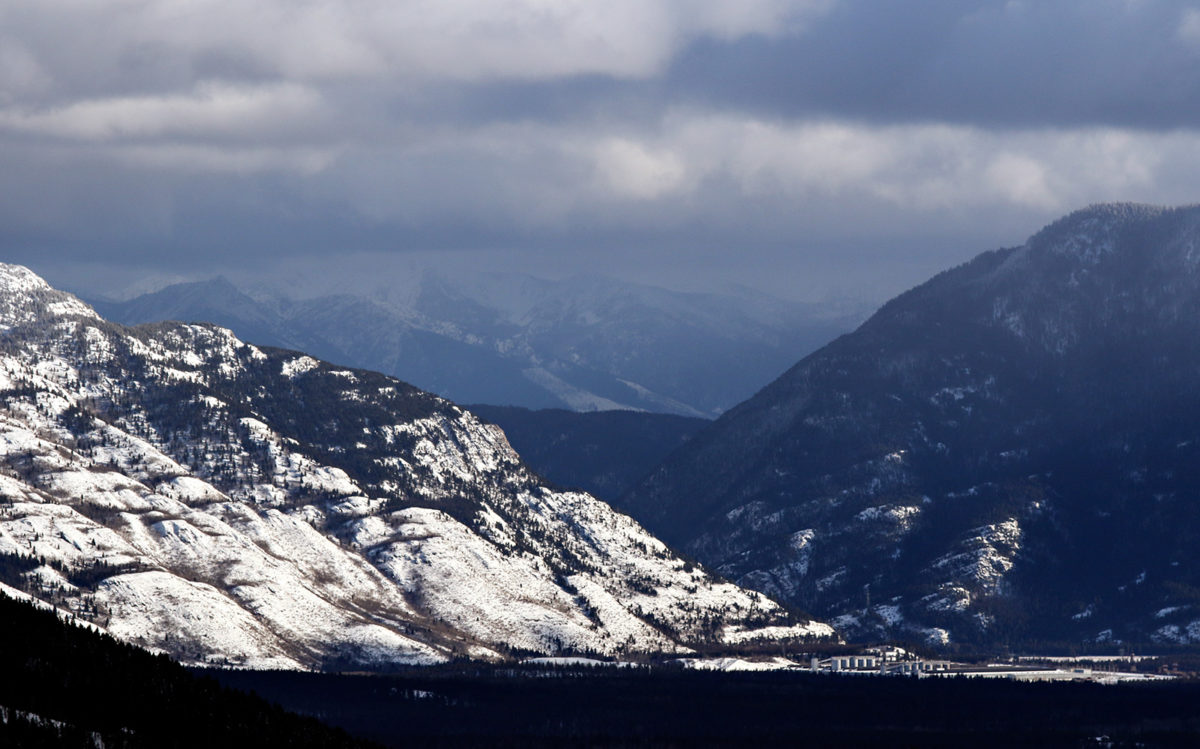
A sentiment shared by community members who voiced concern about the development, especially residents of neighboring Tracey’s Aluminum City, was that the subdivision will “radically change” the slower, nature-centric way of life built over decades by those living at the mouth of North Fork Road.
“All of a sudden, this property’s beautiful view, gone; totally gone,” resident Susan Thrasher said. “Now there’s going to be a huge, tall apartment building blocking the mountains.”
“There’s been so much disruption to the wildlife,” she added. “We used to sit on [my daughter’s] deck and watch the deer and the bears cross the road, and now we can barely see a goose fly by.
Many Aluminum City residents highlighted their frustration with the close proximity of the apartment complexes to their homes, and the increased building height allowance for them.
“Teakettle Heights’ application states that the subdivision would fit the character of the surrounding; scenic, small-town ambience, western town, outdoor lifestyle, historic and wildlife,” resident Tama Hader said. “I do not see how this high-density subdivision, 240 apartments, fits in that description.”
City staff explained that both the 2019 and proposed 2026 land use maps designate the development’s property as urban residential, which suggests densities of two to eight units per acre. The proposed project has a density of 5.4 dwelling units per acre, according to city documents. Additionally, the 45-foot height variance allows the apartment buildings to be consolidated into a three-story design. If they were limited to 35 feet, either the roofs would be flat or the footprint would need to be expanded to get the same number of units, staff said.
“I certainly am very sympathetic to folks who lived there a long time and don’t want to see changes in that neighborhood,” Commissioner Darin Fisher said. “But in this big scheme of the whole complex, they’re developing about 3% of that whole property. It just happens to be closest to where the developments are, which makes sense for infrastructure and everything else…you want that density close to the existing houses.”