Columbia Falls City Council Approves 421-Unit Residential Development on Former Aluminum Company Land
Some councilors emphasized the importance of providing housing for the city’s growing population and trusting the EPA’s guidance ahead of supporting the project, which was once part of the active CFAC Superfund site
By Lauren Frick
Nearly a month after the Columbia Falls planning commission gave the OK to a series of measures that began clearing a path for the development of Teakettle Heights — a 421-unit subdivision on former Columbia Falls Aluminum Co. (CFAC) land being backed by local developer Mick Ruis — the city council followed suit by giving its final approval to the project late Monday night.
Proponents of the project, which is one of the largest subdivisions ever approved in the city, emphasized its ability to address the community’s housing needs through a variety of unit options, from apartments to single-family residences. Councilors with concerns largely echoed what has been voiced by the public, including negative impacts to wildlife in the area, strain on city services and infrastructure and, namely, the health and safety concerns associated with developing on land adjacent to an active U.S. Environmental Protection Agency (EPA) Superfund site.
The planned unit development calls for a total of 421 units, including 125 single-family residences on detached lots, 56 single-family townhouse sublots and 240 multi-family apartment units, on 78.05 acres south of Aluminum Drive. The subdivision, which will be completed in three phases, will have two access points — one to Aluminum Drive and the other directly to the North Fork Road.
After about three-and-a-half hours of discussion and public feedback, the city council approved: the annexation of the 78-acre parcel located at 1800 Aluminum, rezoning the land from the current county zoning of Light Industrial to the city’s Two-Family Residential; the planned unit development for Teakettle Heights, which includes a deviation for apartment buildings to be 45-feet in height while all other buildings will be less than 35 feet; and the subdivision application for the project’s 185 lots. Councilor Kelly King voted against all measures and Councilor Christopher Semok was absent.
The approval was also accompanied by 30 conditions, some of which were edited or added by the city council on Monday night. New conditions pertained to homeowner’s associations and park maintenance, incorporating native and local trees, plants and grasses into landscaping and requiring the developer to state in the Teakettle Heights covenants, conditions and restrictions — and on the face of the plat — that the subdivision is located on the Anaconda Aluminum Co. Columbia Falls Reduction Plant Superfund Site.
In response to resident concerns during the planning commission meeting last month, city staff added a condition that requires the developer to provide a 10-foot-wide buffer along the western property boundary, between the proposed apartments and the Aluminum City neighborhood, which abuts the development property. The buffer must “consist of one tree and five shrubs for every 30-lineal foot, and the shrubs must reach a minimum five-feet height at maturity.”
City councilors took this a step further, requiring the developer to reorient the apartment buildings to create an even greater distance between the 45-foot buildings and the existing single-family residences.
“The apartments are on the west, and the parking for those apartments on the east, and what [Mayor Donald Barnhart] is talking about doing is swapping those, so that the apartments move further east, basically, where parking was, and parking goes where the buildings were,” Eric Mulcahy, the city’s planner, said. “What that would potentially do is create an about 120-foot setback between the property line and those apartments.”
Despite the added conditions, the roughly dozen people who spoke during the public hearing were largely against the project. As with the May planning commission meeting when more than 20 people voiced anxieties about the proposed subdivision, the Superfund site and remediation process was a top concern.
“The EPA makes mistakes all the time, just ask Libby,” said Scott Drury, a resident who lives next to the Superfund site. “Twenty-five years from now, God forbid, you could have a lot of sick people out there. I can’t see the problem of waiting until the DEQ and the EPA get their remediation completed and tested.
“Just remember what you decide tonight could have a major effect 25 years from now with people being sick, and that’s on you if you say yes.”
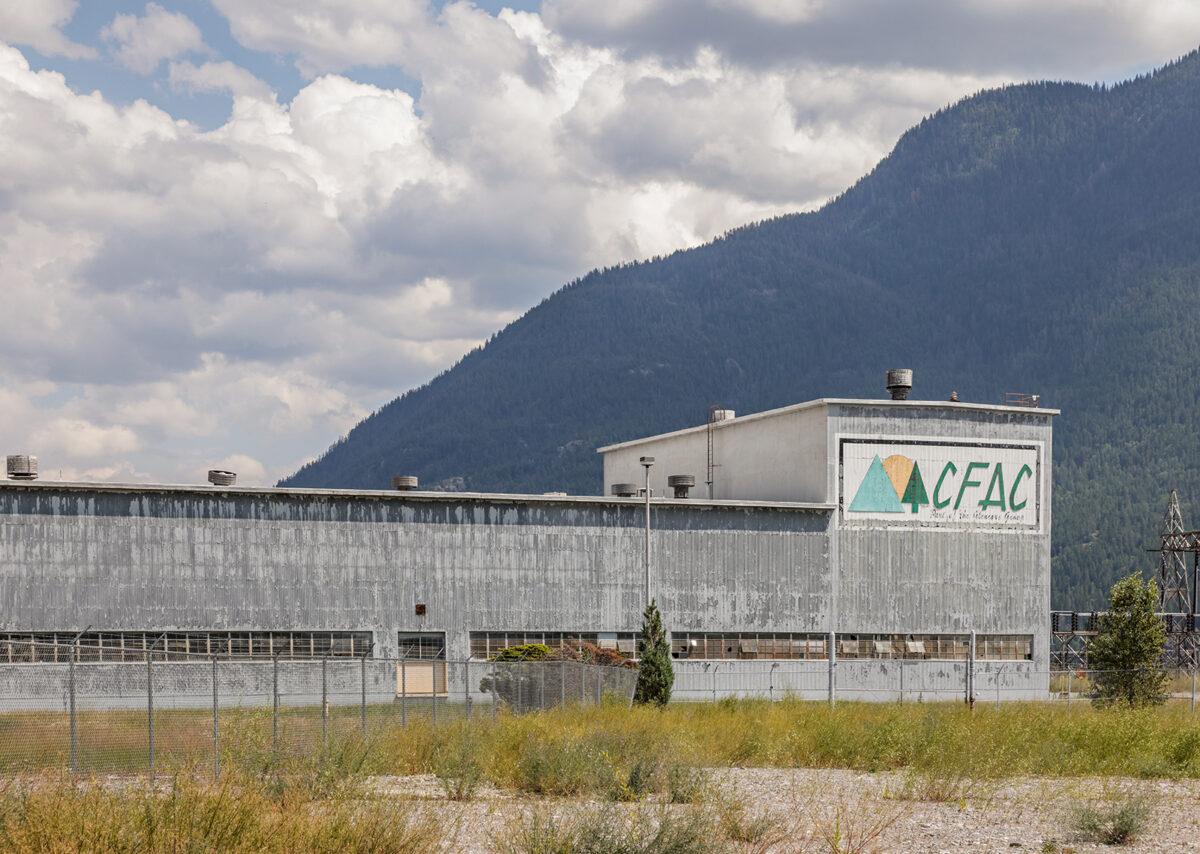
The property along Aluminum Drive where the subdivision would be located used to be part of the CFAC Superfund Site, but was cleared and never identified as needing remediation.
In the project application, it highlighted that the Teakettle Heights portion of the CFAC property was cleared by the EPA’s CFAC Record of Decision, which determined that the area does not pose “an estimated lifetime cancer risk above de minimis levels or potential for non-cancer effects due to the presence of site related Contaminates [sic] of Concern (COCs).”
Representatives from the EPA and the Montana Department of Environmental Quality (DEQ), who attended Monday’s meeting virtually, reaffirmed this statement to councilors.
“There are lots of examples where we do redevelopment or reuse throughout the Superfund process, so it can even happen earlier in the process or alongside cleanup or post-cleanup, so that can occur based on what the redevelopment is or what the cleanup is,” said Allie Archer, a Remedial Project Manager for the EPA. “For this part of the Columbia Falls Superfund boundary, there’s no cleanup required, so it’s good to go for redevelopment as is.”
Archer also assured councilors that when CFAC sold the property, there was an easement that allowed long-term access to all the groundwater monitoring wells that the EPA will need for continued monitoring of groundwater in the area.
“We don’t have a final monitoring network determined, but anything that we would need to continue monitoring we will have access to into the long term,” Archer said.
Councilor Kelly King and many residents in attendance, however, still weren’t fully convinced of the safety of constructing such a large housing development in lockstep with the remediation process.
Ahead of the council’s final vote, King motioned to create a condition for the project that required nothing be built on the property until the EPA and DEQ have completed a “satisfactory” remediation of the entire Superfund site. Final remediation action is estimated to start in late 2026 or early 2027, according to the EPA website.
With the timeline of the full remediation unknown and the property already cleared for construction by the EPA, Justin Breck, the city’s contracted attorney, asked King what her reasoning was for the motion.
“I think we’re poisoning the residents,” King said. “I base that on [chemical giant] DuPont, Flint, Michigan, PFAS [also known as “forever chemicals”] in the Kalispell water; things that have not been identified.”
Breck emphasized the EPA is the entity with the “absolute jurisdiction” to make determinations about the property as a health and safety risk.
“The only advice I would offer the council is that a decision to approve that motion will be seen most likely as a borderline regulatory taking, and you can count on being sued,” Breck said.
King’s motion failed with only two votes in support — hers and Councilor Marijke Stob. Mayor Donald Barnhart and Councilor John Piper voiced support for the EPA’s determinations throughout the meeting, with Piper saying, “we’ve got to trust the science at some point.”
“I think the concerns have been addressed to the level that I would feel comfortable with my family moving over there into a new house,” Barnhart said. “So that being said, I think that the testing that was done there was thorough.”
Ahead of the final vote, Barnhart and Piper also expressed support for the project’s ability to help address the community’s housing needs as it continues to grow.
“One of our council goals is trying to accommodate the growth and sustainable growth in this community and attainable housing,” Barnhart said. “I think this answers this to the best on our end. We can only do so many Habitat for Humanity houses. So far that has been as much of our outreach as we can get.
“So to be able to do something of this size and make this many housing units available to folks that want to live in our community, I think that is really cool and … has been a goal of this council and councils previously.”