Flathead Valley Spring Tourism is Strong Despite Economic Headwinds
Hotel occupancy and Glacier visitation are up, but travelers are being more selective, taking fewer trips and choosing road travel over flying
By Maggie Dresser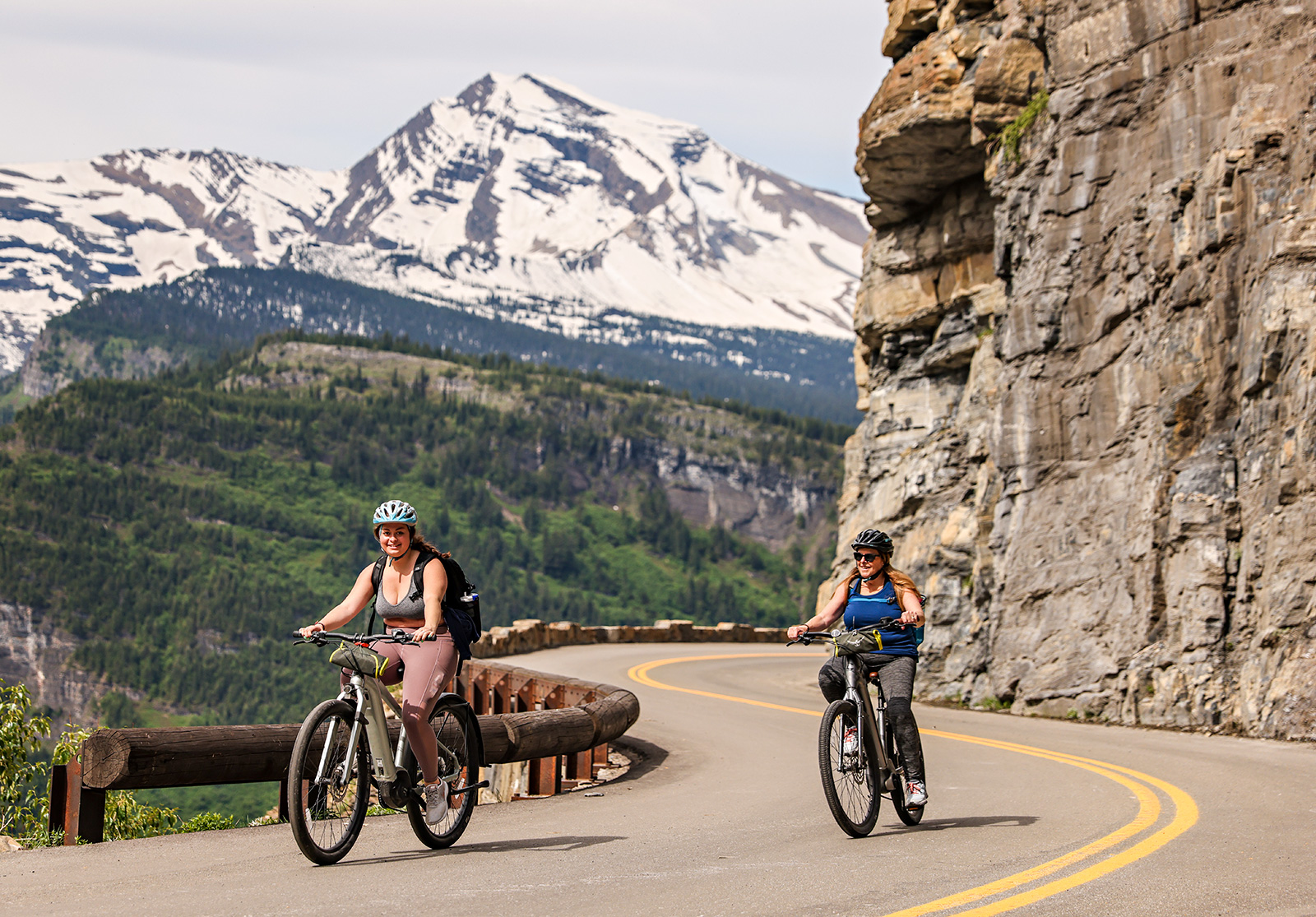
Despite high fuel prices, expensive airfare and declining consumer sentiment, visitation and travel demand is up compared to last year in the Flathead Valley, which remains an affordable destination for the domestic tourist.
Discover Kalispell Executive Director Diane Medler said hotel occupancy in the municipality rose 11% year-over-year in April and May while revenue saw an 18% increase, which she attributes to occupancy as rates did not increase. Short-term rental occupancy saw a 34% increase compared to last year in Kalispell.
While the uncertain economy has dampened expectations for consumer spending this summer, tourism experts are encouraged by the current data that highlights travel as a priority.
“There is just still so much uncertainty with so many things,” Medler said. “All of us want to travel – it’s just really hard to squash those desires to get out.”
During the first four months of 2026, Glacier National Park saw a 10% year-over-year increase in visitation with approximately 118,055 people entering the park and 51,266 visitors in April alone. The figures are comparable to 2021 when 124,959 visitors entered the park by the end of April of that year.
But Medler cautions the strong spring demand could fizzle as consumer sentiment remains low and discretionary spending could tighten if fuel prices remain high.
According to the Bureau of Transportation, U.S. airlines spent a total of $6.47 billion on fuel this April compared to $3.63 billion in April 2025.
Meanwhile, as of June 9, the average price of a gallon of gas nationwide was $4.16, according to AAA.

At Explore Whitefish, Executive Director Zak Anderson, too, said that people are prioritizing travel even as high costs persist.
“The overall outlook is solid, even with the higher airfare, fuel prices and general costs,” Anderson said at the Whitefish Community Town Hall on Tourism and the Local Economy last month. “But those concerns for costs are rising. What we’re seeing is travelers are being more intentional. They are taking fewer trips but spending more on the trips they care about.”
Anderson said local tourism demographics are trending older and more affluent with more than half of Whitefish’s visitors earning over $100,000 annually, representing a “K-shaped” economy, with wealthy consumers spending more and the less wealthy spending less.
Tourism officials are also noticing more people are traveling from top domestic visitor markets, which includes the rest of Montana, Spokane, Denver, Seattle and Salt Lake City, while Canadian travel has dropped dramatically amid a weak currency and tense border relations.
Last year, Roosville’s border crossings near Eureka was down roughly 25% year-over-year while spending has dropped 40% since 2024.
Medler said there’s been a slight year-over-year uptick in 2026 but described only a mild improvement.
The drop in international travel, however, has been offset by strong domestic travel in recent years, with most visitors to northwest Montana arriving by vehicle even before the rise in airfare.
According to the University of Montana Institute for Tourism and Recreation and Research data, 74% of visitors arrived by car in 2024, 11% in an RV or trailer and 14% by plane.
With vehicle travel already in strong demand, Medler said the tourism bureau is promoting a road trip campaign as airfares continue to climb.
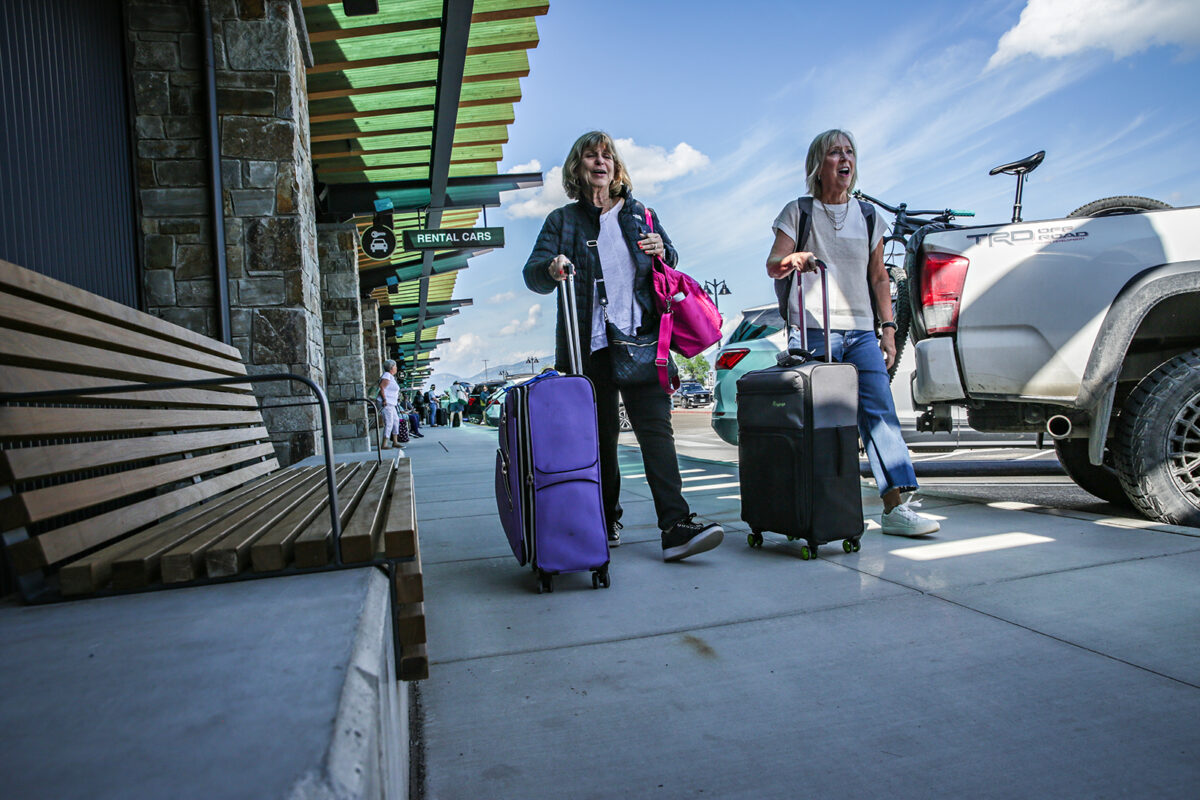
“The airfare prices are weighing on people’s minds,” Medler said. “What we understand through survey research is people are shifting plans for long haul travel to road trips closer to home where there are affordable activities. National parks play a good role in that.”
Road trip promotion also plays an important role this year in anticipation of Glacier Park International Airport’s (GPIA) runway project in July, which will involve a rolling schedule that will close the airport from Monday evening through Friday morning over four consecutive weeks.
Last rehabilitated in 2009, the critical project entails paving, grooving and striping the runway, which requires a window of dry weather and low temperatures above 50 degrees Fahrenheit, as outlined by the Federal Aviation Administration. After reviewing 20 years of weather data, July was determined to offer the most reliable conditions.
The project’s timing has drawn criticism from business leaders who estimate visitation could decrease by 20% in July.
In July 2025, there were 86,954 passengers at GPIA compared to its slowest month in November with 26,391 passengers, according to Montana Department of Transportation data.
“Our market will see impacts in July because of the airport, but we are doing all we can to mitigate that,” Medler said. “We are sharing information with people interested in traveling to Kalispell.”
Other changes that could impact travel behavior includes the discontinuation of Glacier National Park’s ticketed entry system, which began in 2021 to help manage congestion on the 50-mile Going-to-the-Sun Road. Instead, a reservation-based alpine transit system and a three-hour parking limit at Logan Pass will be implemented this year.
“It’s all calculated from maintaining the resource condition and the visitor experience on the trails,” Superintendent Dave Roemer said at the Whitefish Community Town Hall on Tourism and the Local Economy last month. “It’s never a game of how many people can we get into Glacier. Rather, it starts from there should only be this many people on the Highline and there should only be this many people at Avalanche Lake.”
But without the vehicle reservation system, some business owners say tourist behaviors may become more unpredictable with the added freedom to cherry pick times they want to travel to Glacier.
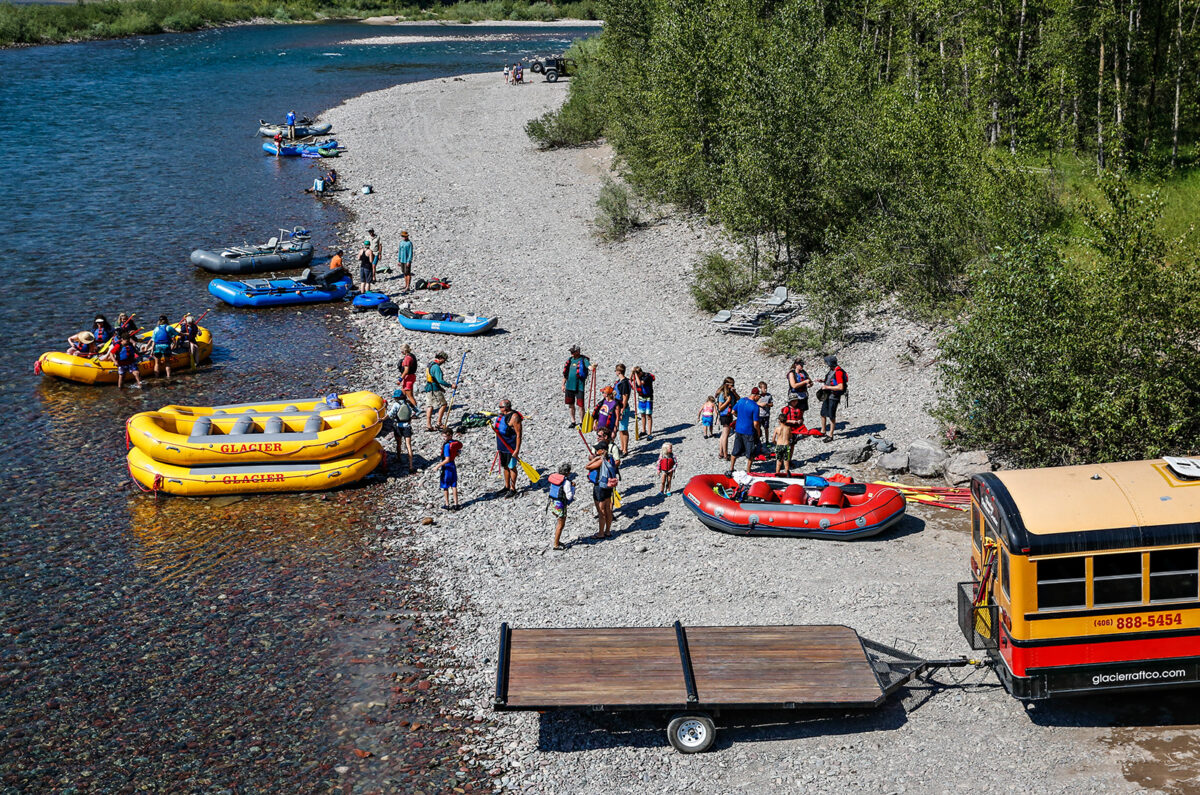
At Glacier Guides and Montana Raft, owner Denny Gignoux said the post-pandemic era traveler has become increasingly impulsive, planning last-minute trips and making decisions based on things like the weather instead of booking reservations far in advance.
“The season has been sporadic,” Gignoux said. “We have moments that are quite busy and we have moments that are not.”
For example, Memorial Day weekend saw warm, sunny weather, which triggered heavy park traffic as customer behavior trended more spontaneous.
“I think it’s the leftover mentality of Covid,” Gignoux said. “People are just hesitant to commit.”
While the outfitting season has only just begun, Gignoux said the spring is down 10% from last year and demand has been unpredictable.
Gignoux suspects that without a reservation system in the park to force visitors to commit, days with pleasant weather will see heavy congestion.
“I think if anything, it will continue to reinforce this sporadic nature,” Gignoux said. “The busier days are going to be busier. On the hot, sunny days, Logan Pass is going to be very difficult from 8 a.m. to 2 p.m.”