Boaters Describe ‘Best-Case Scenario’ to Swan River in a Potential Post-Bigfork Dam Future
After PacifiCorp announced its plans to decommission the Bigfork Hydroelectric Project unless a buyer steps forward, experts say a dam removal would result in a longer whitewater boating season on the ‘Wild Mile’ while the future of the 277 acres of public access remain less clear
By Maggie DresserWhen word started spreading through Bigfork that PacifiCorp had plans to potentially decommission the 124-year-old hydroelectric dam located on the Swan River, questions surfaced about how the dam’s removal would transform the iconic waterway. Changes to the hydraulics in the “Wild Mile” section, water levels in Bigfork Bay, public access and wildlife impacts quickly emerged as concerns as residents grappled with their community’s future.
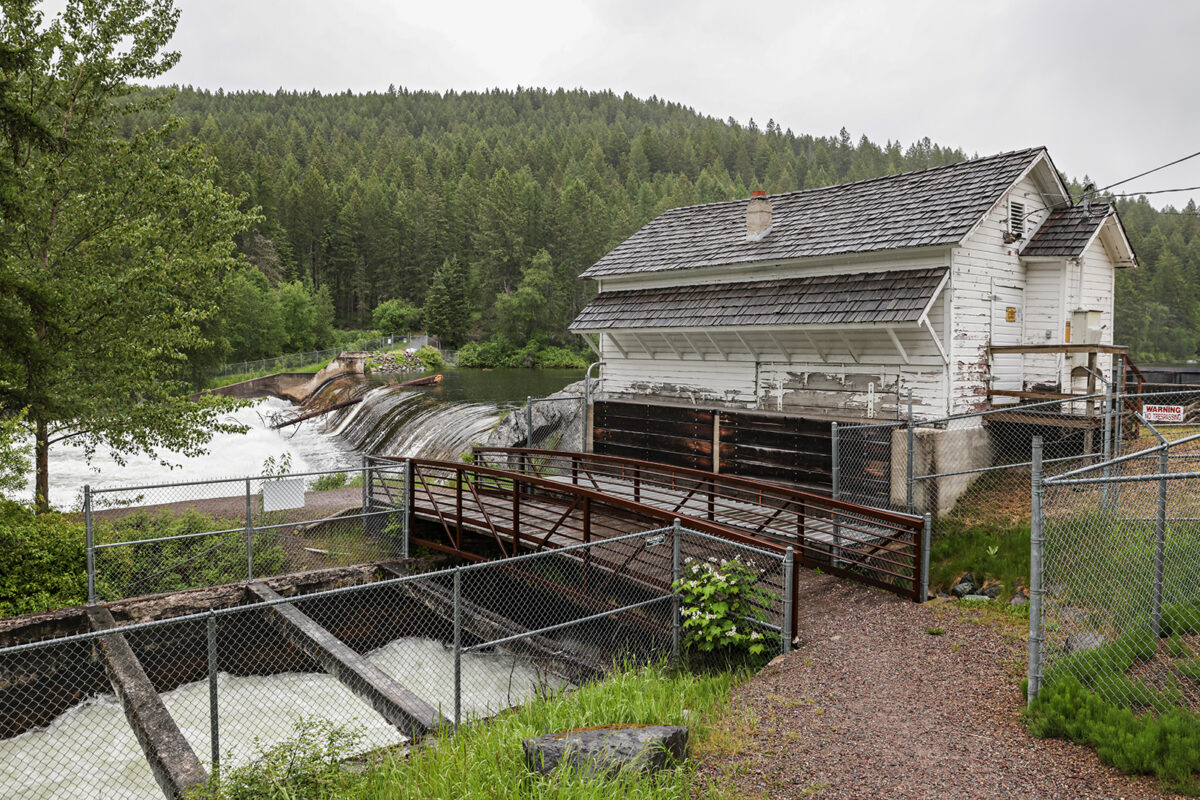
Built only a year after Everit Sliter platted the townsite in 1901, the Bigfork Hydroelectric Project has been embedded in the unincorporated community’s history ever since the diversion dam construction began at the turn of the century. In addition to the concrete structure, a flume and a brick powerhouse were built along with other improvements in its first few decades. The infrastructure has remained largely unchanged since the 1930s.
Today, the Bigfork Hydroelectric Project, which is also known as the Bigfork Dam, features a 12-foot-high, 300-foot-long concrete diversion dam with a 235-foot-long spillway generating 4.15 megawatts (MW) of electricity from the 1900s-era generator and turbine sets. The project operates a run-of-river facility, which diverts water from the Swan River and creates a one-mile-long bypassed reach, harnessing the river’s natural flow and elevation drop instead of flooding the area into a reservoir.
But as federal dam safety criteria become increasingly rigid and investment costs rise, PacifiCorp is pursuing the disposition of the Bigfork Hydroelectric Project, notifying the Federal Energy Regulatory Commission (FERC) of its plans to do so.
PacifiCorp spokesperson Drew Marine said in a statement to the Beacon last month that the required dam safety upgrades would not be cost effective for their customers and the company will pursue the project’s sale. However, if the sale is unsuccessful, the Bigfork Dam will undergo a years-long decommissioning process.
After learning of the dam’s uncertain future, residents wondered how a potential dam removal would change the river’s hydrology and who will acquire the 277 acres of PacifiCorp-owned and publicly accessible land.
With no living memory of a dam-less Swan River just outside of Bigfork, where Electric Avenue serves as downtown’s main artery, residents also wonder how the change would alter the community’s identity.
“I just think it’ll change the whole complexion of Bigfork,” resident Diane Kautzman said.
According to PacifiCorp, the current license conditions for recreation sites and access would remain in place under a new operator, which includes public access to the 2.5-mile Swan River Trail, Powerhouse, Pacific and Sliter parks and Kearney Rapids Boat Launch.
But it’s unclear what would happen to that access if the dam was decommissioned and the surrounding land was sold to an outside entity.
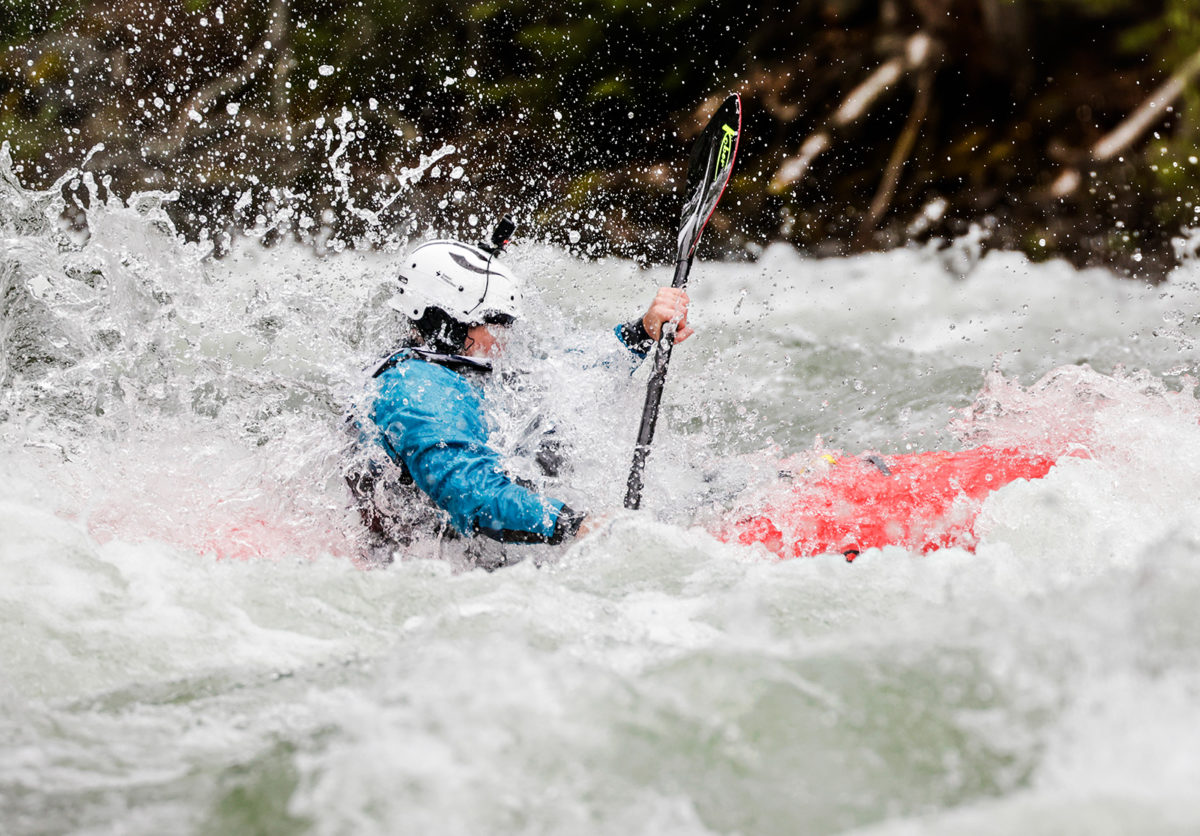
PacifiCorp also releases water flows capable of supporting whitewater boaters on the Swan River’s “Wild Mile,” a Class IV-rated section that has hosted the Bigfork Whitewater Festival for more than 50 years. Under the federal license, the power company is required to release flows for boaters from 5 p.m. to 9 p.m. in July and August.
Since the Wild Mile begins below the dam and flows are controlled by PacifiCorp, many residents worry the rapids known for their challenging hydraulics would disappear if the hydropower structure was decommissioned.
However, because the Bigfork Dam diverts water instead of using a traditional reservoir impoundment like the Hungry Horse Dam, experts say the Wild Mile would remain world-class whitewater while the season would lengthen.
“The Wild Mile is wild because it has gradient — it’s dropping from elevation just below the dam,” said Ryan Richardson, a fluvial geomorphologist based in Whitefish. “It’s a run-of-river project, which utilizes that natural gradient to divert flows. It holds waters up high and returns flows at the bottom of the reach.”
Richardson said the river flows are transferred into hydropower when they enter the flume and are released back into the Swan River before the powerhouse. That process only impacts the water in that mile-long section, while Bigfork Bay’s water levels are entirely driven by Flathead Lake elevations.
“The only place where hydrology is changed is in the Wild Mile itself,” Richardson said. “So concerns about the removal of the dam impacting the bay area — there’s not really a mechanism for that. The water is diverted from the dam and is already back into the river before it comes to the bay.”
As a whitewater paddler, Richardson said he’s been running the Wild Mile for more than a decade and assured both boaters and spectators that the rapids will still exist if the dam is removed. The whitewater festival’s timing over Memorial Day Weekend is scheduled during a period during peak runoff.
Richardson said during the month of July, hydrograph data reveals there is still water flowing into the dam, meaning PacifiCorp is not using stored water. Instead, dam operators are simply stopping the diversion process.
“In a post-dam removal scenario, you’re going to have flows boatable not just in the evenings of the recreational releases,” Richardson said. “Now you’re having boatable days extending into July. For Bigfork, that could mean a lot. At that point in the year in July, flows are low throughout the Intermountain and Northwest. It could be an attraction for boaters that are looking for Class IV or V whitewater that is scarce on the landscape.”
Since 2002, the Bigfork Whitewater Festival has partnered with various organizations and the nonprofit American Whitewater, signing a settlement agreement with PacifiCorp, which implemented the first scheduled water releases in 2004.
Minimal flows for the whitewater festival, improvements to the Kearney Rapids boat launch and other public access owned by PacifiCorp were established as part of the agreement.
David Meyers, the organizer of the Bigfork Whitewater Festival and executive director of Montana Kayak Academy, said the organization renews its permit for the event every five years. To that end, insurance coverage would likely be the only issue in a scenario where the dam property changed ownership.
“I just don’t see the Whitewater Festival going away,” Meyers said.
With the dam intact, Meyers said the Swan River typically dwindles below the minimum stream flow of 800 cubic feet per second (cfs) by late June. But if the dam was removed, the season would likely extend another six weeks.
“There are so many variables that are uncertain and it’s hard to say the future of that property,” Meyers said. “But as for the river, it’s the best-case scenario. It would offer us a longer season. That 800 cfs that is getting diverted would extend our season and we would get more water in the spring, and it would extend into the summer.”
While Meyers isn’t too concerned about changes to the river’s hydraulics, he said it’s unclear what would happen to the 277 acres of publicly accessible land owned by PacifiCorp.
“We hope it wouldn’t go to a private land sale,” Meyers said. “Hopefully the community of Bigfork could work with [a land trust] — my dream would be to turn it into an easement.”
Like Meyers, Bigfork Chamber of Commerce President Rebekah King is primarily concerned about the future of public access if the dam is decommissioned and, with it, alterations to the community’s identity.
“The dam is just part of Bigfork,” King said last month. “It’s the Wild Mile. It’s Sliter’s Park. It’s the nature trail. I think we’ve just sat here naively, not reckoning the impact PacifiCorp has on the community.”
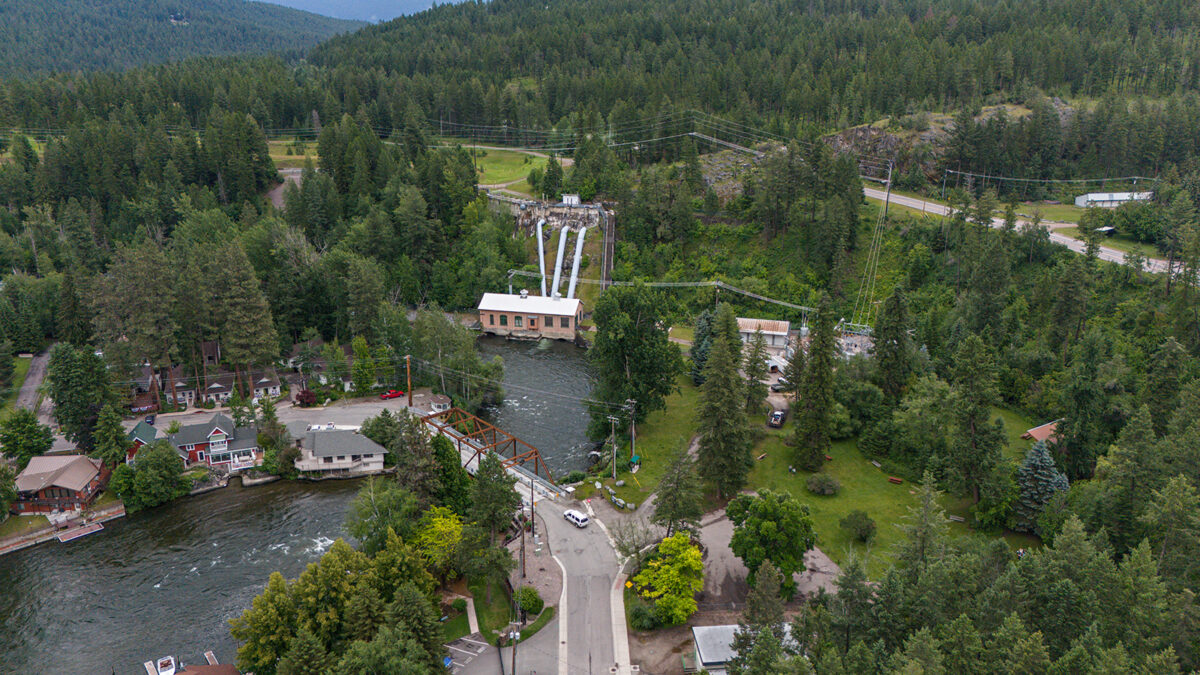
Before a dam removal happens, it must go through a rigorous process that includes a pre-feasibility assessment, a period to gauge stakeholder support and the consent of the dam owner, which takes several years and requires FERC approval, according to American Rivers, a nonprofit conservation organization.
“Dam removal is a very large and arduous process,” said American Rivers Northern Rockies Dam Removal Specialist Rachel Schmidt, who is based in the Flathead Valley.
As part of the Bigfork Hydroelectric Project Disposition process, PacifiCorp will launch a request for interest, seeking potential buyers for the FERC-licensed hydroelectric project, which includes 277 acres of land around the dam.
“PacifiCorp anticipates it will take some time to first explore selling the project,” Marine, the PacifiCorp spokesperson, said. “If a sale is not attainable or appropriate for our customers, the company can then consider decommissioning the project.”
According to Drew, a decommission process would follow FERC criteria involving public input and a specific set of proposed actions during a time frame that would take at least five years to complete.
Disposition of the property would take place after federal regulators approve the decommissioning plan, the company completes site restoration, and the commission signs off on completed actions in accordance with the plan.
Schmidt said dam decommissioning is becoming more common as infrastructure ages and upgrades become economically unfeasible while dam owners nationwide continue to evaluate the future of hydropower projects.
“We are only going to see more of this as these massive structures are aging beyond their use,” Schmidt said.
As a fluvial geomorphologist, Richardson has participated in the removal of several dams in Wyoming and Montana, including the Rattlesnake Dam in Missoula, and described a lengthy process involving stringent criteria.
“Dam removals can look really different across a lot of different types of projects,” Richardson said. “There’s the potential to restore those flood plain surfaces and habitat.”
Richardson said studies like sediment buildup must be conducted, which he said likely won’t be problematic at the site of the Bigfork Dam because of the few sources between the structure and Swan Lake.
The roughly two-mile section upstream of the dam is currently filled with backwater, he said, which would drop upon a removal and expose floodplain surfaces that were inundated when the dam was constructed, while aquatic life would be reconnected.
According to Montana Fish, Wildlife and Parks, the Swan River below the Bigfork Dam consist of rainbow, cutthroat trout and lake trout from Flathead Lake while bulltrout and brook trout in addition to rainbow and cutthroat exist above the dam.
Montana Fish, Wildlife and Parks spokesperson Malia Freeman said the timing was too early for biologists to comment on any potential impacts to fisheries in the aftermath of a dam removal.
As the uncertainty surrounding the dam looms and residents wonder how a future removal would impact their community, Richardson is hoping to clear up confusion surrounding the decommissioning process.
Unlike the Hungry Horse Reservoir, which holds 3.5 million acre feet of water while the dam has a maximum generating capacity of 408 MW, the Bigfork Dam operates on a dramatically smaller scale and offers little to no flood protection.
“All dams have a lifespan,” Richardson said. “You can either maintain them or continue to extend their lifespan, you could neglect them and they become more at risk of failure, which is a danger to the public, or you can decommission and remove the dam. No dam removal happens overnight and right now PacifiCorp is going through the processes that any hydropower operator would go through before officially considering that. There are a lot of different offshoots that don’t end in the removal. Somebody else could buy it.”