Visitors Jockey for Shuttle Reservations as Glacier Park Debuts Three-Hour Logan Pass Parking Limit
The park’s pilot program to manage visitation and transportation is being put to the test. The reviews are mixed.
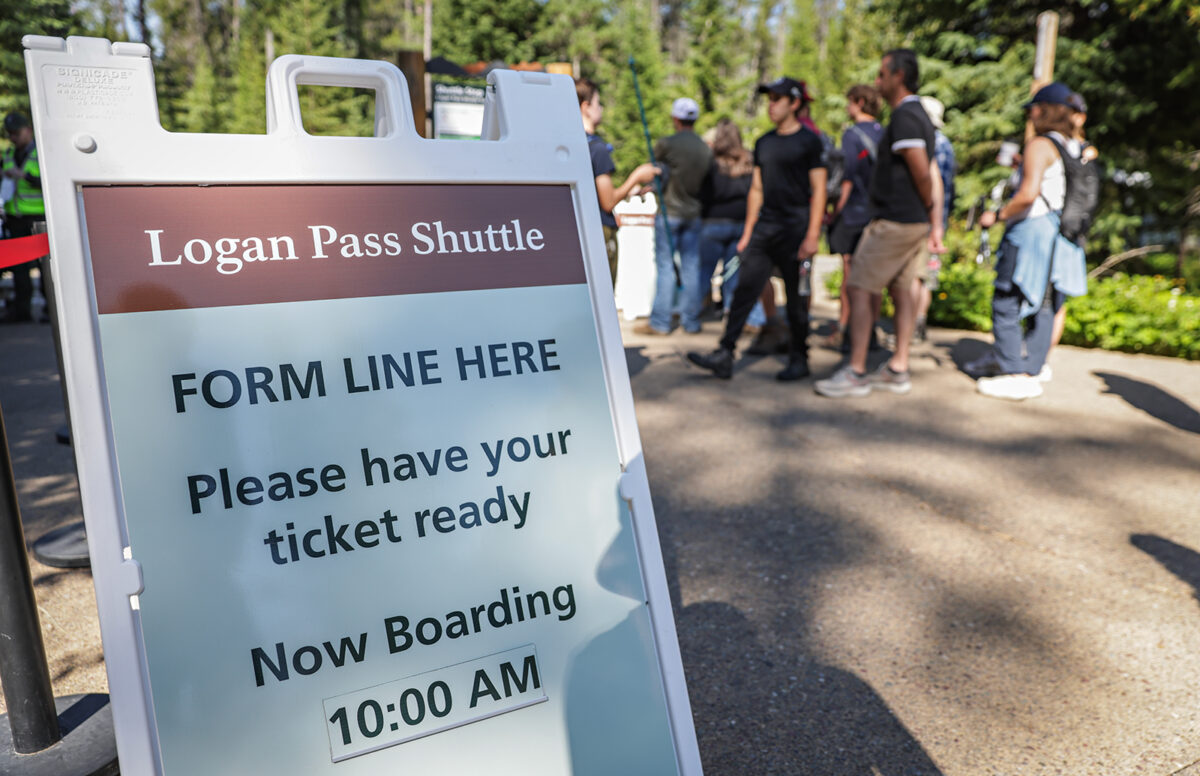
By Jules LingenfelterOutside the Apgar Visitor Center on Thursday morning, a small stand-by line had formed beside the shuttle stop. Among the visitors, Greg Vanderpool and his two sons shared hopes of making it onto one of the 10 a.m. shuttles. Technically, the family didn’t actually have the needed reservation tickets, but Vanderpool had heard that park rangers were letting on non-ticket holders should there be any no-shows.
Would-be passengers who had the misfortune of not securing the highly sought-after tickets decided to try their luck anyway, queuing up behind a sandwich board designating the “stand-by ticket line.”
Though not a guarantee, it was one strategy Vanderpool and the others around him were willing to attempt in order to reach their destination of Logan Pass.
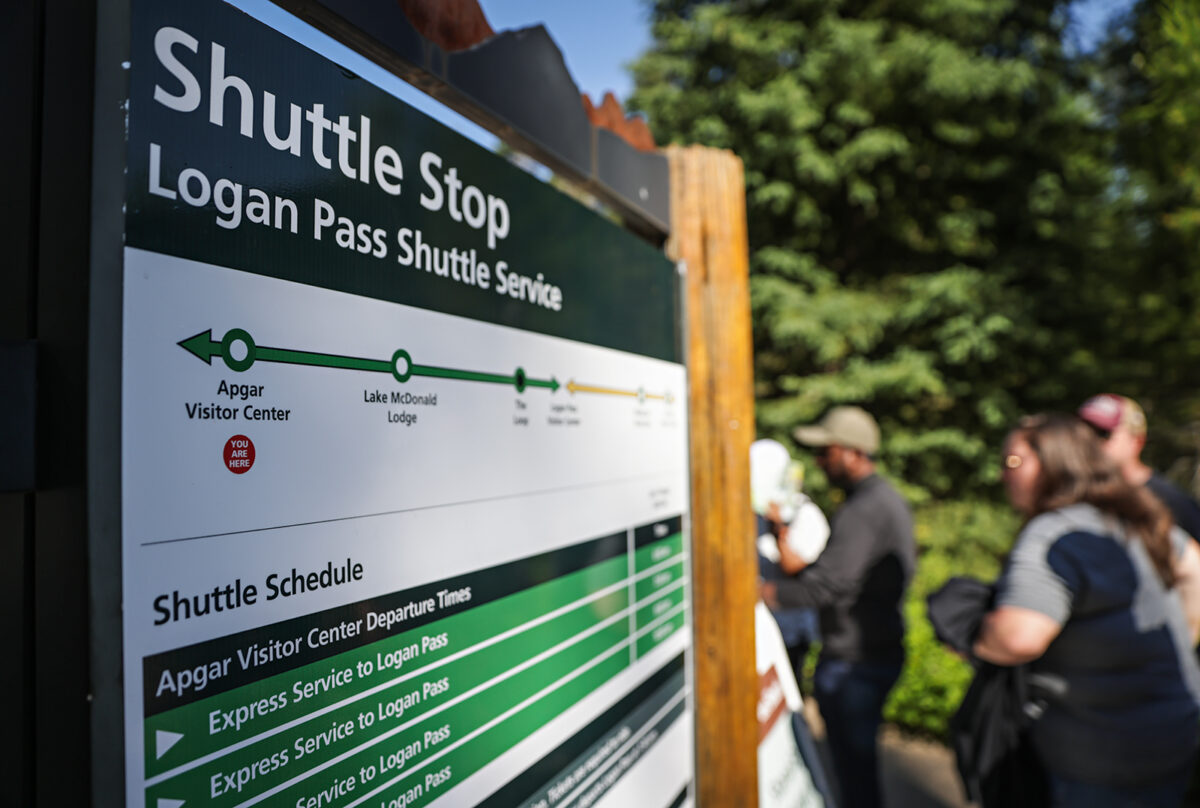
On July 1, Glacier National Park launched its new reservation-only shuttle service. The express system serving Logan Pass departs from two locations at both the east and west sides of the Going-to-the-Sun Road: Apgar Visitor Center, Lake McDonald Lodge, St. Mary Visitor Center, and Rising Sun Picnic Area. Tickets are required for boarding — replacing the first-come, first-served shuttle system from previous years — and go on sale at recreation.gov either 60 days in advance or the night before beginning at 7 p.m.
Vanderpool and his sons had attempted to score three tickets their first night in the park for the following day to no avail. He expressed frustration at the system; the tickets had sold out within “10 seconds,” he said, and the limited internet service in the park made it particularly difficult for him to reserve online. They switched their plans around, spending the next day hiking the Grinnell Glacier trail instead. But on their third day they were determined to hike the entirety of the Highline Trail which necessitated shuttling to Logan Pass.
Vanderpool and his sons, as well as the rest of the stand-by line, were successful in their mission; all of them made it onto one of the 10 a.m. shuttles; all of them made it onto one of the 10 a.m. shuttles.
In an effort to prevent no-shows, Glacier National Park spokesperson Autumn Sifuentes explained that a majority of tickets are reserved to go on sale the night before. “Ticket use data from previous years has shown that tickets and reservations purchased the night before are the most likely to be used while tickets and reservations purchased months in advance are the least likely to be used,” Sifuentes wrote in an email. “Given this trend, the park is limiting advanced tickets while maximizing night before tickets.”
Raquel Ranieri and her husband had successfully reserved four tickets 60 days out for themselves and their two young kids. Ranieri, who grew up in the Flathead Valley before moving away, visits the park frequently with her family whenever they return to the area. While they waited for the shuttle from Logan Pass back to the east side, she described her husband as a “reservation expert,” who prepared for the ticket launch by having three devices loading the site.
“If you’re not him, it’s hard,” Ranieri admitted. “But for him, it’s just another reservation.” Nearby, another couple waiting in line chimed in that they had practiced the process of reserving tickets for four days before they actually needed them. Once through the ticket process, they found the shuttle an efficient way to get to and from the east side.
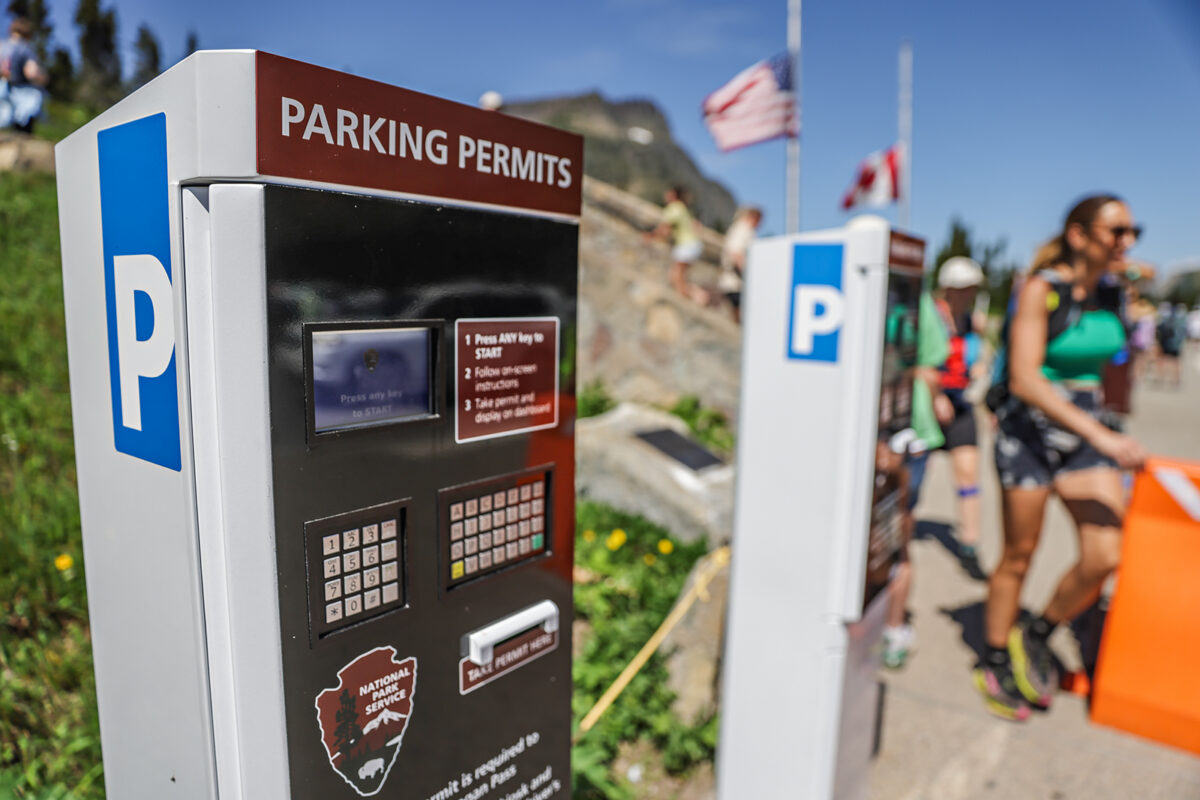
In tandem with launching the new shuttle system, Glacier National Park also rolled back vehicle reservations at all park entrances and instituted a three-hour parking limit at Logan Pass. Upon entering the Logan Pass parking lot, visitors are required to receive a parking pass from one of the kiosks and display it on their dashboard. Newly installed signs warn that all violators will be ticketed. On Thursday, a group of park rangers surveilled the parking lot as a means of enforcement. One ranger actively directed traffic as cars circled in the hopes of finding a spot in the nearly full lot.
Though Ranieri and her family opted for the shuttle on Thursday, they had driven to Logan Pass earlier in the week. Ranieri said that they took around 20 minutes to find a spot, but attributed the relatively short wait time to the weather. She joked that visitors might have better success parking if they also came on a rainy day.
The goal of the three major changes implemented this summer is to address overcrowding at Logan Pass, create a higher turnover in the parking lot, and mitigate long wait times; the shuttle is intended for those who plan on spending the day hiking the popular Highline Trail, while the three-hour parking limit is designed to usher other visitors in and out of the pass in a timely manner.
The pilot program, which was officially announced back in February, is part of a broader proposal to address increasing concerns of congestion — the park has seen record-breaking visitation numbers with the past two years alone exceeding 3 million people annually. The proposal represents a shift away from the vehicle reservation system the park has been tweaking since first implementing it in 2021, in favor of a more extensive shuttle system and additional parking spots at popular areas.
Sarah Lundstrum, the Glacier Program Manager with National Parks Conservation Association, expressed concern over the direction the park is taking in terms of managing visitation and transportation. The main complaints the park has been hearing since it first began managing access to the Going-to-the-Sun Road corridor, she explained — and long before that as visitation surged into uncharted territory — is that the “shuttle system doesn’t work and you can’t park at Logan Pass.” However, in shifting all its resources to address these specific problems, Lundstrum worried the park may reopen other issues they previously were working toward solving.
Lundstrum expressed further worry over the park’s long-term plan to “double down” on the pilot program they’re running this summer, which would involve significant budgetary investments to grow its fleet of shuttles. “The big concern there is that it will require millions of dollars of investment in order to make that happen, and there’s no guarantee of that,” she said. “So we’ve been pushing the park to have a plan B, in case they don’t get, you know, the $35 or $40 million dollars they need to invest in the shuttle system and parking lots and and all of that.”
In the meanwhile, the park is testing the waters with this pilot program as they pivot strategies.
Susan Higgins, co-owner of Two Sisters Cafe located near the east entrance, expressed surprise over the lack of traffic into the park. Before the vehicle reservation system, she often saw wait times up to three hours at Many Glacier, which is detached from the Sun Road thoroughfare. “I fully expected to see that,” she said.
“I look at the park cameras in the morning just to see what the west entry looks like. How bad is the stack up? And I will say, I haven’t even seen the kind of stacking I typically would see this time of year,” she added. Despite her own anecdotal evidence, Higgins believes it’s too early to know the cause of the decreased congestion into the park.
She was cautiously supportive of the new transportation system, agreeing that the three-hour parking limit and express shuttle would prevent hikers from occupying parking lots for extended periods of time. However, as she put it, “the Logan Pass is not the only place that is packed with hikers.” She hoped to see a more expansive shuttle system that will make popular east-side spots such as St. Mary Falls, Sunrift Gorge, and Jackson Glacier more accessible, particularly to visitors uncomfortable driving on narrow mountain roads.
“In execution,” Higgins said, “they’ve got a long way to go.”
Ranieri similarly echoed that she wished to see more stops added to the shuttle system, and that they would run more frequently. Currently, shuttles only run on the hour between 6 a.m. to 10 a.m. and 6 a.m. to 11 a.m. from the west and east sides, respectively. Departing from Logan Pass, shuttles run about every 30 to 90 minutes, starting at 7 a.m. and ending at 7:30 p.m. to the west and 8 p.m. to the east. With the return shuttles operating on a first- come, first- served basis, visitors are not guaranteed a place on the shuttle for when they desire to leave.
In the emailed statement, Sifuentes stated that it was too early to gauge the success of the shuttle and parking system. However, she wrote that “the park is actively collecting and validating shuttle ridership data,” and that “while some vehicles exceed the limit, most visitors are following the new system.”
The shuttle will run through to Sept. 7 with the possibility of continuing after Labor Day depending on operating funds. The three- hour limit is set to end on Sept. 7.