Flathead Valley ‘Holding Our Own’ So Far in 2026 Wildfire Season, But Drying Conditions on the Horizon
Key moisture events during the first half of the year have put the valley in a good position midway through July, but with quickly drying and warming conditions, community members should remain alert and prepare for potential wildfire activity
By Lauren Frick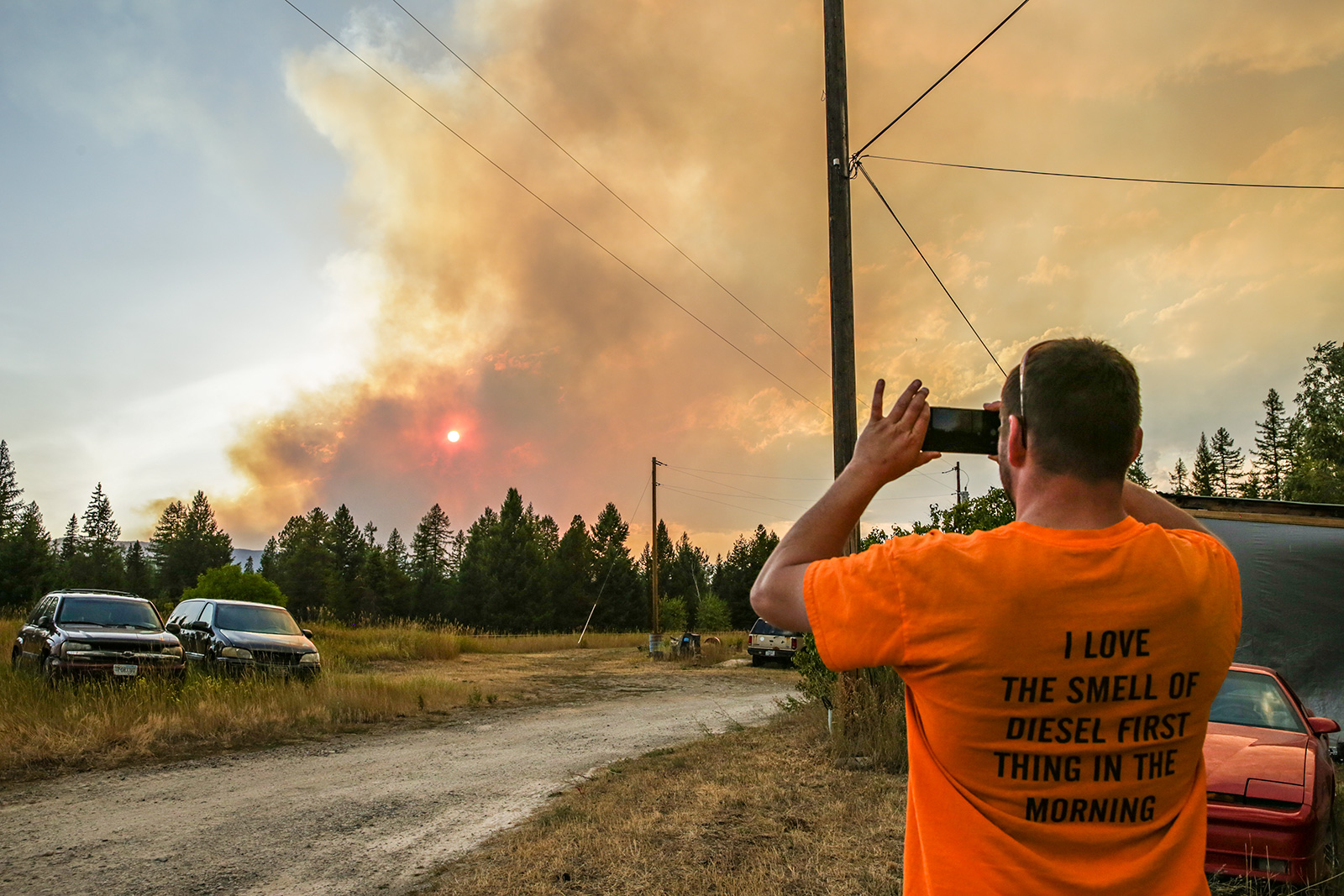
Beneficial moisture events sprinkled throughout an otherwise dry and warm first half of the year have possibly bought the Flathead Valley a couple weeks of buffer in a wildfire season that’s already in full swing in neighboring states such as Oregon, Washington and Colorado.
Communities across the valley, however, should remain alert as recent weather patterns have begun a “significant drying process over northwest Montana,” and increased fire activity could be in the “near future,” Dan Borsum, a meteorologist at the U.S. Wildland Fire Service, told the Beacon in a statement on Wednesday.
Local fire officials have concurred with Borsum’s assessment, saying that some of the pockets of rain in late June and July have put the valley in a “pretty good position,” but noted that as soon as things start drying and winds start picking up, the situation can change fast.
With the slowed fire season, it’s critical homeowners and community members in the meantime do their part to prepare, Flathead County Fire Service Area Manager Lincoln Chute said.
“I think we have a little time,” Chute said. “Historically, our wildfire fire season is August and September in northwest Montana, so yes we’re looking good, but I’ve been around the valley for a lot of years — the spigot can turn off and you get no rain for 30 days. I don’t care how much snow or how much rain you got in the spring and even early summer.”
“I think people need to take it seriously,” he added. “Let’s prep like we’re gonna have a bad fire season. It is much better to prepare than to try to play catch-up.”
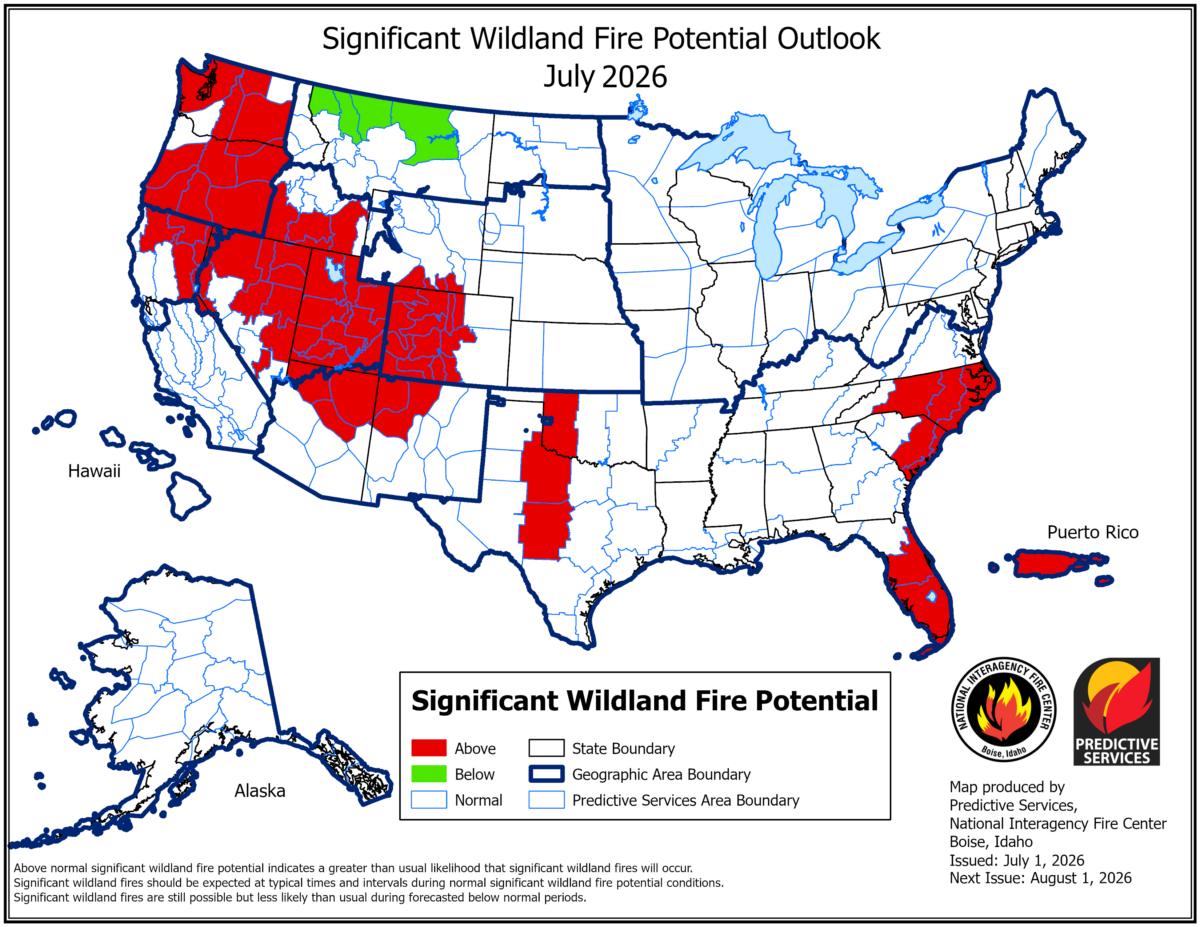
A Summer 2026 Montana Drought and Water Supply Outlook released by the Montana Department of Natural Resources and Conservation (DNRC) on July 8 reported that many regions of Montana were entering their sixth consecutive summer with moderate to extreme drought, while northwest Montana was currently drought-free. About 75% of the state was in moderate to extreme drought, while another 10% was abnormally dry, according to the outlook.
Additionally, streamflows in the northwest part of the state were closer to average and are indicative of better snowpack and above-average precipitation in April and May, and surface water storage levels at state reservoirs in the west were near- or above-average, according to the report.
While northwest Montana has collected a decent amount of moisture over the last year, especially compared to the rest of the state, warm temperatures throughout the winter and spring still serve as a roadblock, Borsum said.
“Fall was wet in northwest Montana and there were wetter periods in the early Spring with a beneficial rainfall event at the end of June,” Borsum said. “The winter and spring were top-five warmest all time for the Flathead Valley, and snowpack was limited throughout the winter, which is normally a buffer against summer heatwaves. Recent weather patterns have begun a significant drying process over northwest Montana.”
Data from the Drought Data Dashboard indicates a “significant departure from normal precipitation” during the month of July, with temperatures running 3 degrees above normal — a weather pattern generally expected to continue through the end of the month into early August, which will drive annual grasses towards curing, Borsum said.
Combined with projected above-normal wind and below-normal humidity through the weekend into next week, more of the landscape will likely become receptive to fire as July becomes August, he added.
“Normal drought conditions have slowed fire season in the Flathead Valley, but current conditions could lead to increased fire activity in the near future,” Borsum said.
SUPPORT THE WHOLE FUTURE OF THE FLATHEAD VALLEY
Bolster your Flathead Beacon newsroom as we follow stories past the headlines and into the impacts on our communities by making a donation of any amount. With you, we can stay resilient, focused on solutions and committed to the future of the Valley.
As people milled around the Big Mountain Fire Station during the community’s annual Firewise picnic to discuss wildfire procedures and evacuation plans, Fire Chief Ben DeVall took note of the welcomed mid-July overcast sky, ushering in the cool of an evening marked by summer rain earlier in the day.
“This kicks our fire season, unless we get 90 degree weather and a bunch of wind, it moves it two weeks from now, literally,” DeVall said at the July 14 event.
The key to maintaining the valley’s good wildfire standing will be intermittent rain throughout the remainder of July into early August, DeVall said.
“If we get rain, a little bit of rain once a week, we’re good,” DeVall said. “Usually, if that happens, it’s the second week of August before, and again, it’s all weather related, before things really kick up. And by then, September, usually, not always, we start seeing rain again.”
Although Flathead Valley is “holding its own” at the moment, conditions, especially without any additional rain, will continue to dry out, meaning homeowners and community members need to take steps to prepare for wildfires as soon as possible, Chute said.
“If there is an evacuation, know ahead of time what you’re gonna grab and what you’re gonna take,” Chute said. “It can greatly reduce the stress if you’ve already spent the time in the next couple weeks preparing your structure.”
Some key fire mitigation practices for homeowners include cleaning leaves, needles, and debris from roofs and gutters; removing flammable items from decks, porches and under stairs; storing firewood away from structures; and clearing limb trees near structures and along driveways. Mowing and weed whacking grass is also critical, with Chute saying cutting grass from two-feet high to one-foot can reduce fire behavior from 16-feet to three-feet.
“In northwest Montana, I don’t care if you’re in the valley floor or you’re up in the timber, you should prepare yourself for a wildfire,” Chute said. “It’s the little things. It’s cleaning up around your house, thinning along your driveway, taking a weed whacker, that makes all the difference whether the house survives or whether it doesn’t. It makes an unbelievable amount of difference.”
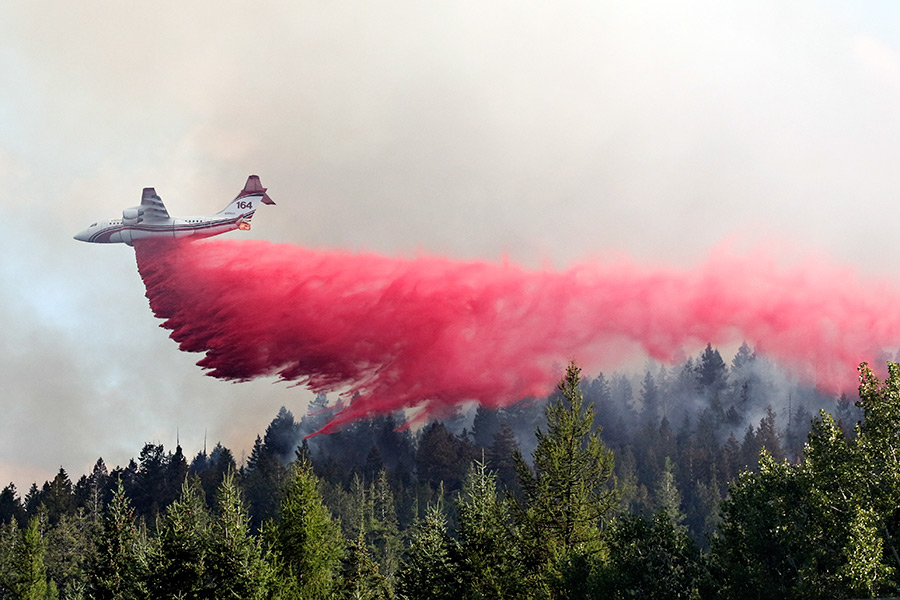
Individuals doing their part when it comes to mitigation will be key to helping local fire departments in their response if a wildfire occurs, especially as other fires in the region have opened the drain on national resources for the season, Chute said.
Roughly 500,000 acres are currently blazing in Washington and Oregon, while Colorado’s Aspen Acres fire southwest of Pueblo has grown to be the seventh largest in the state’s history at 101,546 acres. It is estimated to be 61% contained — an effort Chute and other Flathead County officials have had a part in.
“The amount of resources nationally are getting stretched with fires right now, so when we order things they’re unavailable. If we do get into a bad fire season, there’s not as much resources, so it’s even more critical to prepare.”
While Chute said he’s confident in the long-standing mutual aid relationships built between local fire departments and agencies, he is concerned if a significant fire event takes hold in the valley.
“Our initial attack we’re very good at,” Chute said. “My concern is if something gets established and starts trying to get big, the availability of those national assets to come in are becoming harder to get.”
For tips on wildfire prevention for homeowners, click here. To sign up for emergency alerts from the Flathead County Office of Emergency Services, click here.