Developer Withdraws 97-slip Bigfork Bay Marina Application with Plans for Resubmittal
Polson-based developer Michael Maddy of Cougar Ridge Development cited a failure to complete a requested engineering report before a July deadline to the Flathead Conservation District
By Maggie Dresser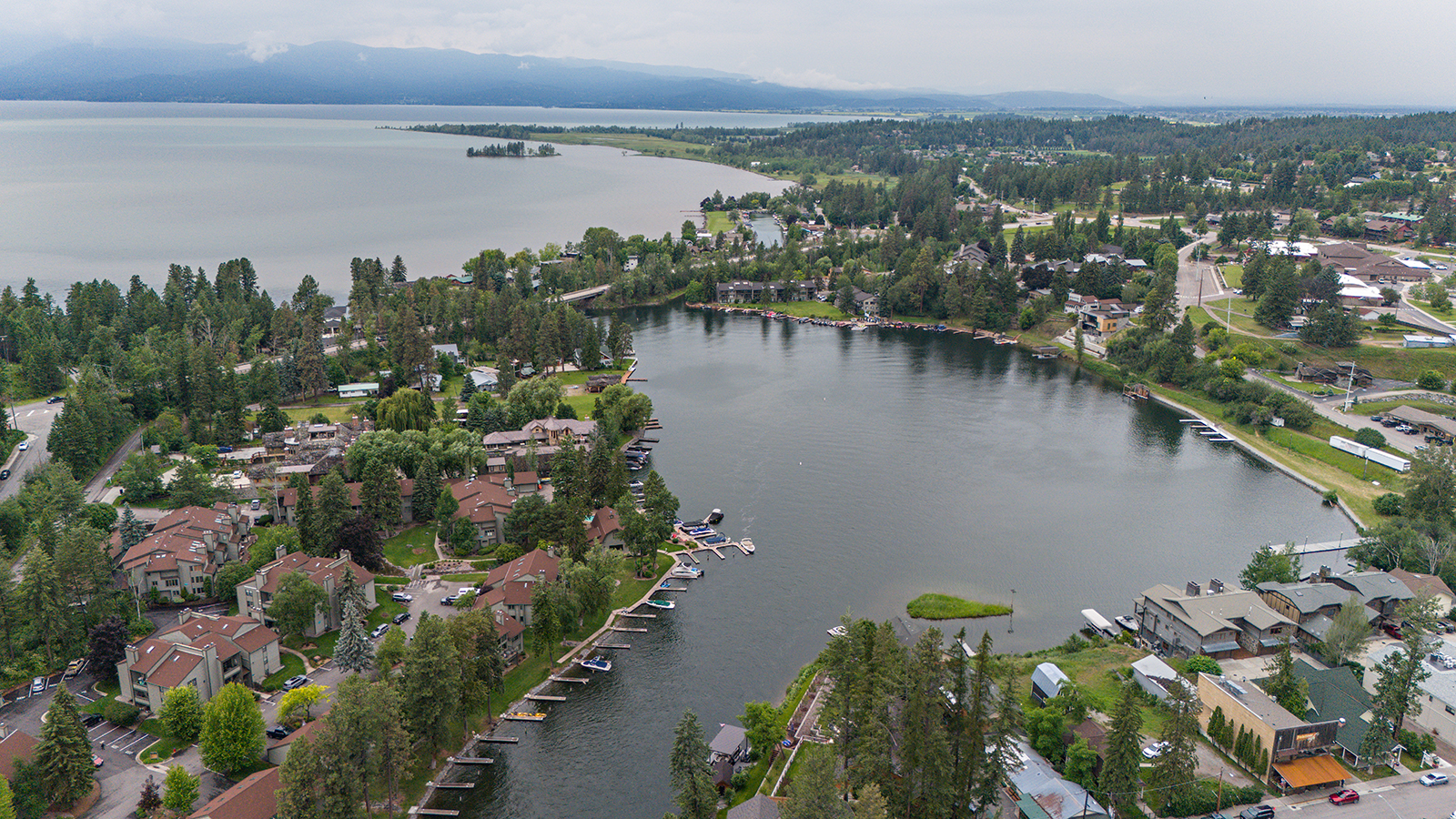
A Polson-based developer who this summer has been seeking a permit for a 97-slip marina located in Bigfork Bay has withdrawn their application, citing a failure to complete a requested engineering report by the July deadline while laying plans for resubmittal in the future.
Developer Michael Maddy in April submitted an application for a Natural Streambed and Land Preservation Act (NSLPA) permit, also known as a 310 permit, from the Flathead Conservation District (FCD) for the Bigfork Bay Marina. The board of supervisors tabled the application until the July 6 deadline, requesting additional required information including specific geotechnological details and a hydrologic report that had not been submitted in time.
After failing to meet the deadline, Maddy wrote in an Aug. 3 email to FCD that he was withdrawing the current application “for a multitude of reasons.” While engineers did not finish the report needed to complete the application, the developer also wanted to address public concerns during future meetings.
According to the application submitted by Cougar Ridge Development, LLC, and Water Source, LLC, Maddy plans to build a floating dock facility with boardwalk access to the Flathead County Public Dock, a large-scale project proposed in the northeast area of Bigfork Bay on the Swan River.
FCD Resource Conservationist Samantha Tappenbeck said the organization received the developer’s email requesting a withdrawal one week before the regularly scheduled 310 permit meeting on Aug. 10, when Maddy was scheduled to present the requested information.
Tappenbeck said that despite the withdrawal, the meeting was packed with public members who opposed the project. The board approved the request to withdraw the application and formally closed the file, meaning the developer must submit a new application for any future consideration.
“Overwhelmingly, the community of Bigfork is opposed to that project,” Tappenbeck said. “There are lots of concerns about how a project of this scale would influence access to the community of Bigfork and access to the Swan River in Bigfork Bay.”
There was also a high volume of concern over congestion in the bay, which Tappenbeck said is outside of the FCD’s scope.
“Frankly, there were a lot of concerns about boat safety and traffic congestion in the bay, which we really don’t have jurisdiction over,” Tappenbeck siad. “When it comes to the 310 permit, any impacts of the proposed project relate to the physical modification to beds and banks.”
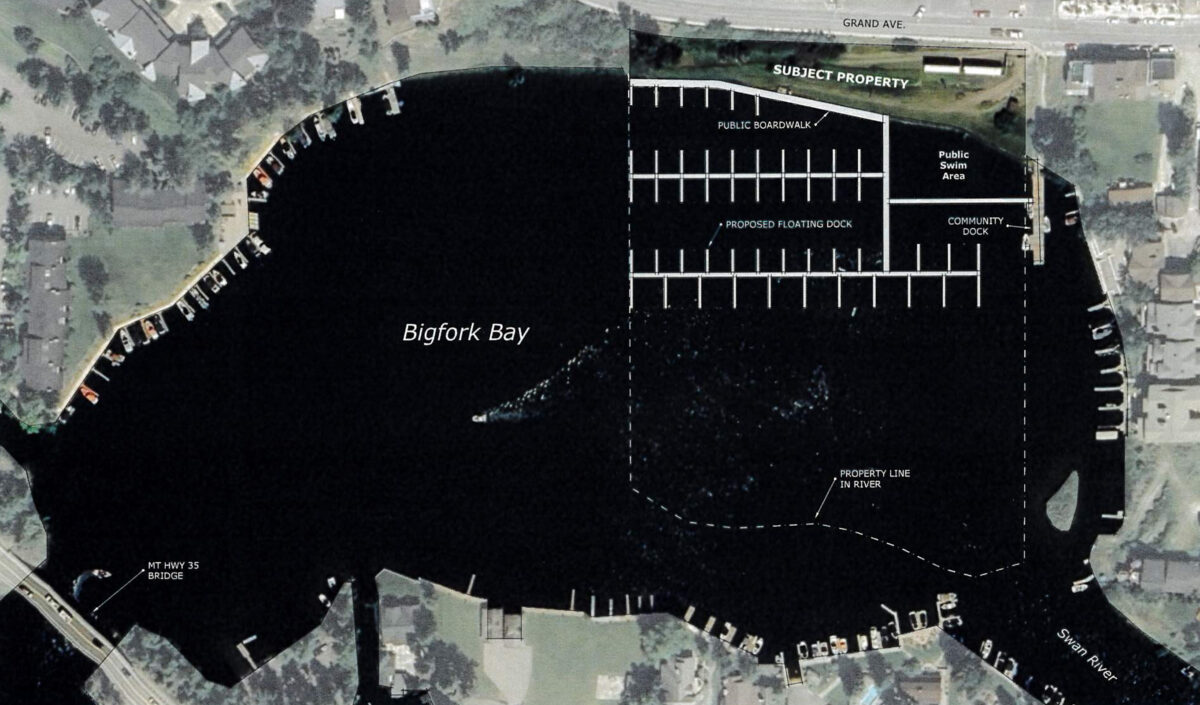
Other jurisdictional disputes include the Bigfork Bay’s location at the intersection of the Swan River and Flathead Lake, raising the question of whether the developer receives a 310 permit from FCD or a Lakeshore and Lakeshore Construction Permit from Flathead County.
In 2004, the Montana Supreme Court upheld a district court ruling that the FCD had statutory authority to determine property owners’ rights to construct a waterfront project where another agency had concurrent jurisdiction.
Following this ruling, Tappenbeck said the Montana Highway 35 bridge became the marker for the jurisdictional delineation between Flathead Lake and the Swan River, with everything upstream to the east of the bridge requiring a 310 permit and everything downstream and west requiring a Lakeshore Construction Permit, Tappenbeck said.
Issues such as watershed jurisdiction have complicated FCD’s role over the years as developments have become more complex, leading to a misunderstanding of the organization’s responsibilites, according to Tappenbeck.
Prior to the Aug. 10 meeting, the FCD received a letter from Mayre Flowers, executive director of the watchdog group Citizens for a Better Flathead. She proposed the organization adjust its process, citing “procedural, technical and public participation issues.”
However, Tappenback said the FCD follows a standardized process when reviewing 310 permits, which is outlined in their adopted rules.
“We are very consistent in the application of our rules,” Tappenbeck said. “I think that is a strength of our conservation district, and it presents some misinformation to the reader that we can make those sorts of adjustments. We have an established process.”
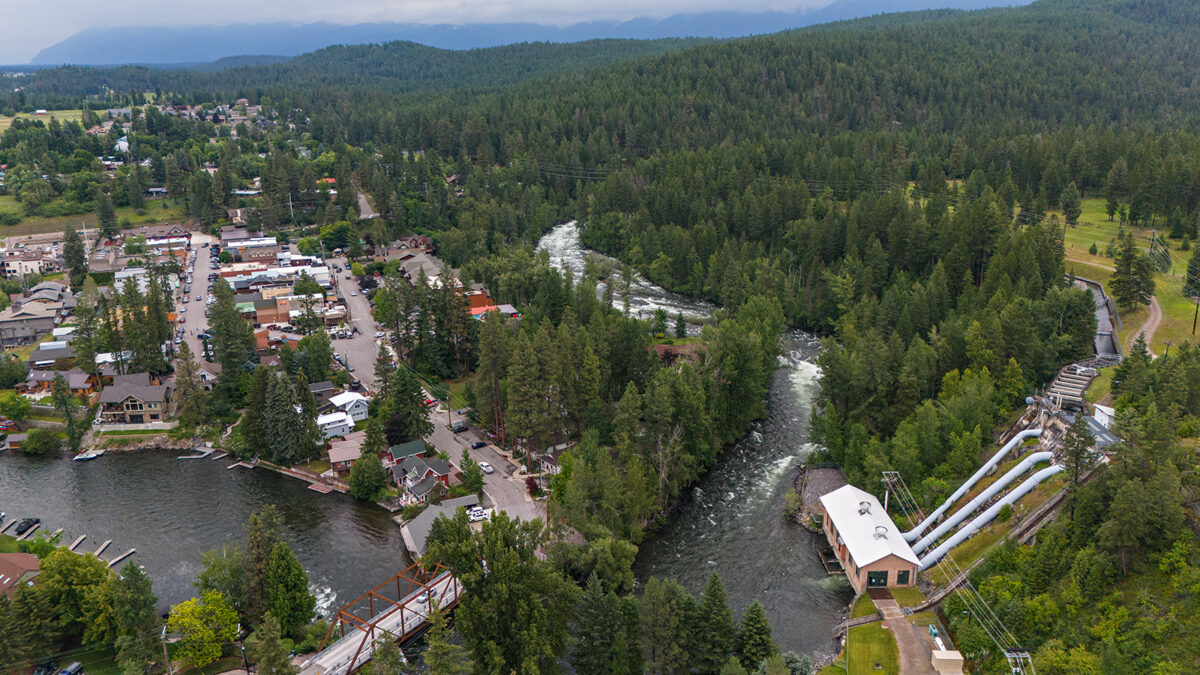
In the letter, Flowers also outlined concerns about the potential removal of the Bigfork Dam, which lies a mile upstream from Bigfork Bay, after PacifiCorp recently announced plans to dispose of the dam from its assets. The yearslong process will begin with the power company first pursuing its sale followed by its decommissioning if there are no interested buyers.
Tappenbeck, however, noted that since there are no official plans to remove the dam, the district cannot base its decision on speculation.
“A lot of people asked if the board will consider the potential removal or future removal of the dam when reviewing the application for the marina,” Tappenbeck said. “I understand why they ask that question, but the answer is no. We cannot consider it. We have no specifications or information about any of that — it’s way too early to know.”
Tappenbeck is hoping to educate the public about the FCD’s role in watershed conservation, which she said has evolved since its origins in 1945 after statewide conservation districts were formed in 1939 to conserve soil, water and natural resources in the aftermath of the Dust Bowl.
In 1975, FCD began issuing 310 permits under the NSLPA, which is now their primary responsibility. The permitting process has become increasingly complicated and time consuming in a growing region with 600 perennial flowing streams.
“Over that time period, there have been massive changes to the number of people living here and the patterns of development in the Flathead,” Tappenbeck said. “It is leading to more and more complex and complicating and largescale permitting matters for the conservation district, which is comprised of a volunteer board of supervisors. We are doing our best and of course we have a standardized process.”