As Record-low Wheat Crop Boosts Prices, Montana Farmers Barely Break Even
Commodity prices are up despite drought and the geopolitical climate contributing to the lowest U.S. wheat production since the 1970s. But Montana farmers say it’s not enough as input costs rise and tight margins persist.
By Maggie DresserOn a mid-August day off Rose Crossing in north Kalispell, Heritage Custom Farming co-owner Tryg Koch drove his combine through a 70-acre field directly northeast of Costco where he harvested one of his healthiest wheat crops on record. The previously owned machinery he bought for $160,000 drives 10 acres and cuts up to 900 bushels per hour, requiring about 100 gallons of fuel and costing $400 per day during harvest season.
“That’s a lot of loaves of bread to pay for this,” Koch said.
While a historic drop in wheat production has boosted commodity prices to roughly $6.45, up from about $4 per bushel a year ago, input prices continue to outpace the rise in commodities as tight margins persist in the agriculture industry.
“The cost of production is about six bucks, so that’s kind of what we need to break even and that’s the struggle with wheat,” Koch said. “That’s the struggle with farming right now is can we actually make money? Or are we just paying for this stuff? There isn’t much extra, and so it’s very defeating. You go out and you do all this work, you pay your bills, and there’s not much left. You’re like, ‘Huh. Well, that was interesting.’”
After June delivered 6 inches of rain and cool temperatures, Koch said the season is shaping up to be his best wheat crop to date and he’s already seeing high yields as harvest season continues.
“This year will be significantly better than last year because last year, for us, we had low prices and we had just a mediocre crop. It wasn’t real great. So, this year is shaping up to be a lot better than last year,” Koch said.
“Our inputs are also more,” he added. “But it will still be better.”
Despite the rise in wheat prices, commodity prices are generally low for the fourth consecutive year and, according to economists, they are still below the peak in 2022.
At a June American Farm Bureau Federation (AFBF) conference in Kalispell, AFBF Vice President of Public Policy and Economic Analysis Dr. John Newton told an audience of producers the American farmer was facing historic inflation even before the war in Iran closed the Strait of Hormuz and cut off supplies like fuel and fertilizer.
“All of these crops are well below the highs that we saw in recent years, yet the input costs have not improved — they’re still very, very elevated and that’s what’s created this challenging economic environment that we’re in today,” Newton said.
Grain prices last year dropped to $4 per bushel — the same price that wheat was in the 1970s when global demand triggered a commodity price spike, causing American wheat exports to increase dramatically.
But today’s inflation has sent labor costs up 74% and fertilizer is up 54% since the last United States Department of Agriculture (USDA) Farm Bill was passed in 2018. Farm production costs have surged 40% as input costs rise while commodity crop prices remain low, according to AFBF data.
While commodity prices have gone up this year, agriculture industry officials say it’s not enough to keep up with the inflation.
“Grain prices have been higher than what we’ve seen in the last couple of years,” Lance Wilson, a market consultant based in the Flathead Valley, said. “We’re sitting on a low production year for us compared to last year. Since 2021, there have been concerns that wheat prices are too low.”
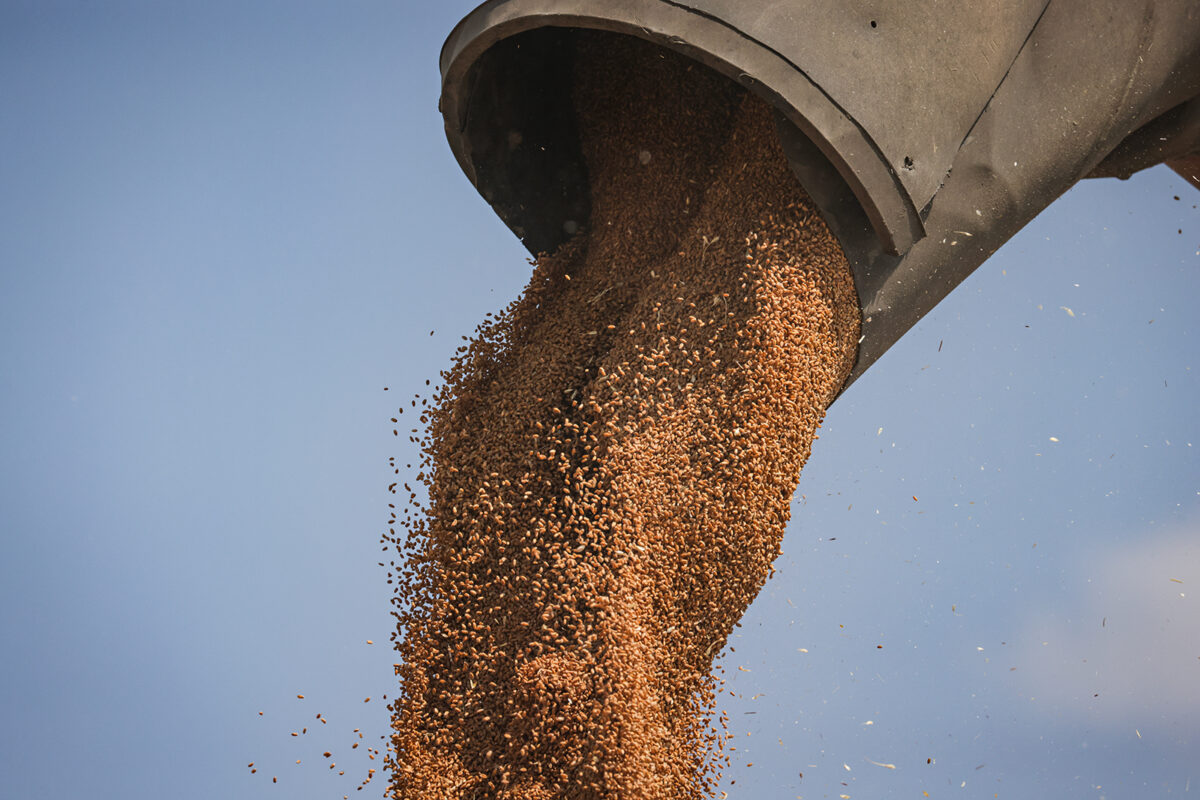
This year’s higher prices are correlated with a drop in grain production in both the global and domestic markets as the conflict between Russia and Ukraine continues while severe drought in the southern United States led to poor yields.
“Domestically, we’re sitting on a really tight supply,” Wilson said. “In Texas, Oklahoma, Kansas and Nebraska, there are fewer suppliers. It started with fewer acres being planted with both winter wheat and spring wheat due to prices.”
In the Great Plains, winter wheat was cut by 29% this year and is contributing to a historically low production in the United States. Total wheat supplies are forecast to decline by 13% from last year, with wheat production dropping to 1,531 million bushels, the lowest since 1971, according to the August USDA wheat market outlook.
Meanwhile, in the Black Sea, the Russia-Ukraine war has disrupted wheat shipments and has caused a 40% drop in exports. The two countries last year accounted for about 32% of global wheat trade, most of which shipped out of Russian Black Sea ports, according to USDA.
Drought in the European Union, too, has reduced wheat yields while Canadian production is estimated to decline by 15% as farmers plant crops that require less fertilizer, leading to further volatility.
“I would caution to producers that there’s potential for a lot of risk in these prices,” Wilson said. “We’re still up high and everybody is concerned about U.S. production being down.”
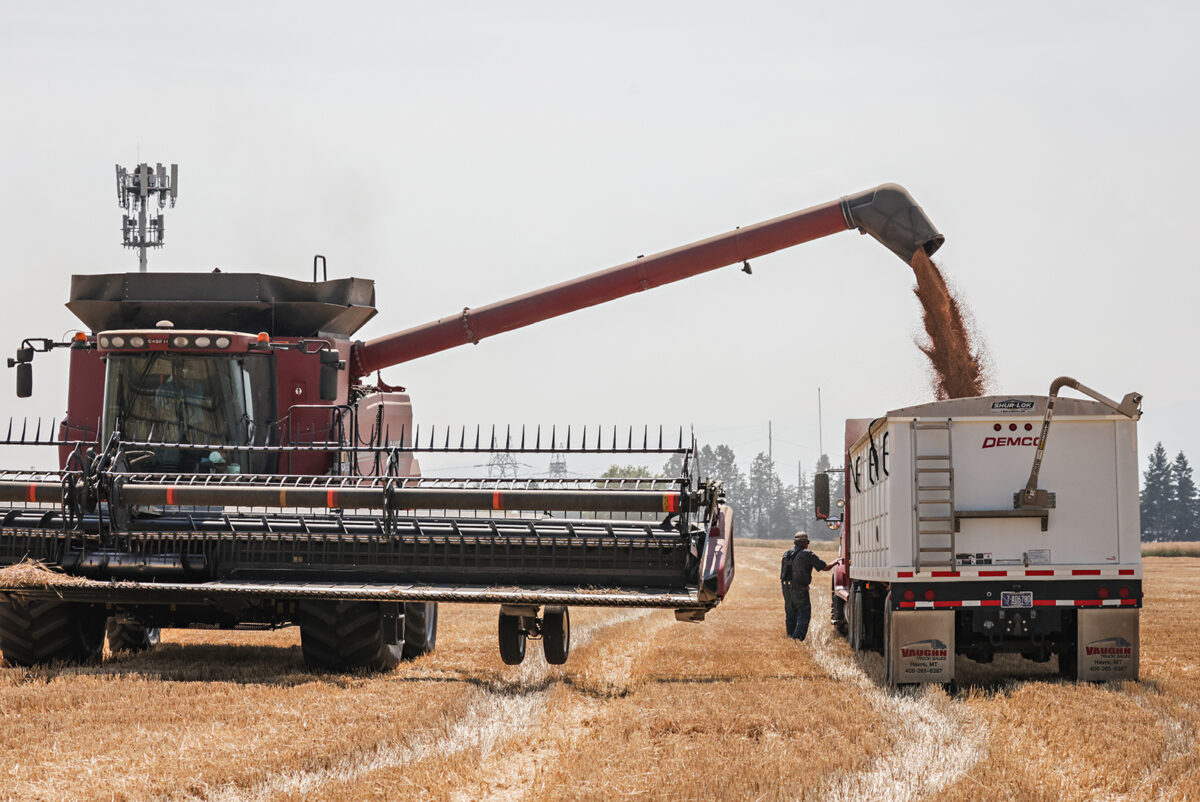
In mid-August, when Montana Farm Bureau Federation President and farmer Cyndi Johnson was halfway through harvesting her grain and pulse crops straddling Chouteau, Pondera, Toole and Liberty counties in the high desert on the east side of the Continental Divide, her wheat harvests were averaging 40 bushels per acre.
“It’s respectable, for dry land and considering the lack of moisture,” Johnson said.
Like other producers, Johnson is relieved that commodity prices have gone up, but it doesn’t distract her from the high input prices she’s paying as geopolitical conflicts continue to spike costs.
Johnson said fuel and equipment repairs are eating up most of her cash right now as she uses a minimum of 300 gallons of diesel per day while she just bought new combine sensors.
After the U.S. doubled tariffs on Canadian steel and aluminum to 50%, Canada’s newest retaliatory package, effective Sept. 8, matched it with 50% tariffs of its own. Meanwhile, fertilizer prices remain high due to bottlenecks in the Strait of Hormuz.
Johnson recently spent $850 per ton on urea fertilizer, a roughly 25% increase compared to before the war in Iran began.
According to AFBF, countries tied to the Persian Gulf export nearly half of the global urea supply and 30% of its ammonia, both of which are used in nitrogen fertilizer. Urea, which contains about 46% nitrogen, is the most widely used solid nitrogen fertilizer.
SUPPORT THE WHOLE FUTURE OF THE FLATHEAD VALLEY
Bolster your Flathead Beacon newsroom as we follow stories past the headlines and into the impacts on our communities by making a donation of any amount. With you, we can stay resilient, focused on solutions and committed to the future of the Valley.
Fertilizer prices, however, have come down slightly since peaking earlier this year while producers are also adapting their plans to include things like peas and lentils, which use less fertilizer and are cheaper to produce.
“The pulse crops have been flooded,” Wilson said. “Lots of supply resulted in very low prices because of the reduced fertilizer usage. Our prices will struggle to rebound.”
Johnson planted chickpeas and green peas this year while Koch planted 600 acres of yellow mustard and 150 acres of green peas in the Flathead Valley.
Eric Belasco, the department head of agricultural economics at Montana State University, said high fertilizer costs are prompting more farmers to diversify crops and find alternatives to wheat.
“It’s just an environment where you are finding ways to keep your costs down and finding markets to sell,” Belasco said. “With wheat prices being what they are, some markets can be more volatile.”
In addition to fertilizer and machinery expenses, labor is another top-ranking cost, and when producers do find employees, payroll takes up a significant chunk of their production costs.
While Johnson’s daughter is willing to succeed her parents, farming the family’s 4,800 acres, younger generations are increasingly leaving their hometowns to pursue other careers.
Although Koch was fortunate to find laborers through his connections in Flathead County, which has a denser population compared to regions like the Hi-Line and eastern Montana, he said it’s always a struggle.
“Labor is always very hard to find, and the hardest part of farm labor is the hours,” Koch said. “Finding people that will literally go to work six days a week from eight or nine in the morning until nine or ten at night — that’s the biggest challenge because this is the time of year that we make our money. We’re not in construction. We don’t get to control our prices of our commodities, except for hay, and that becomes the biggest problem. Our guys need a raise, and I’d love to give them one. All my guys should be making 100 grand a year; they’re worth that. But I can’t pay them that.”
Agriculture experts say labor is one of the industry’s most significant challenges right now and has caused many farmers to utilize the federal H-2A visa program, which allows U.S. employers to hire foreign nationals to fill temporary or seasonal agriculture jobs.
Montana Department of Labor and Industry (DLI) Commissioner Sarah Swanson said at the AFBF conference that the agency is working to guide producers through the steps to fast-track the H-2A visa program as the waitlist stacks up.
However, the heavily audited program adds barriers like documentation and housing requirements for the farmers and workers. With more than 3,200 H-2A visa workers currently in Montana, there is a waitlist of 2,800 producers who have applied and are awaiting authorization for foreign labor, according to DLI data.
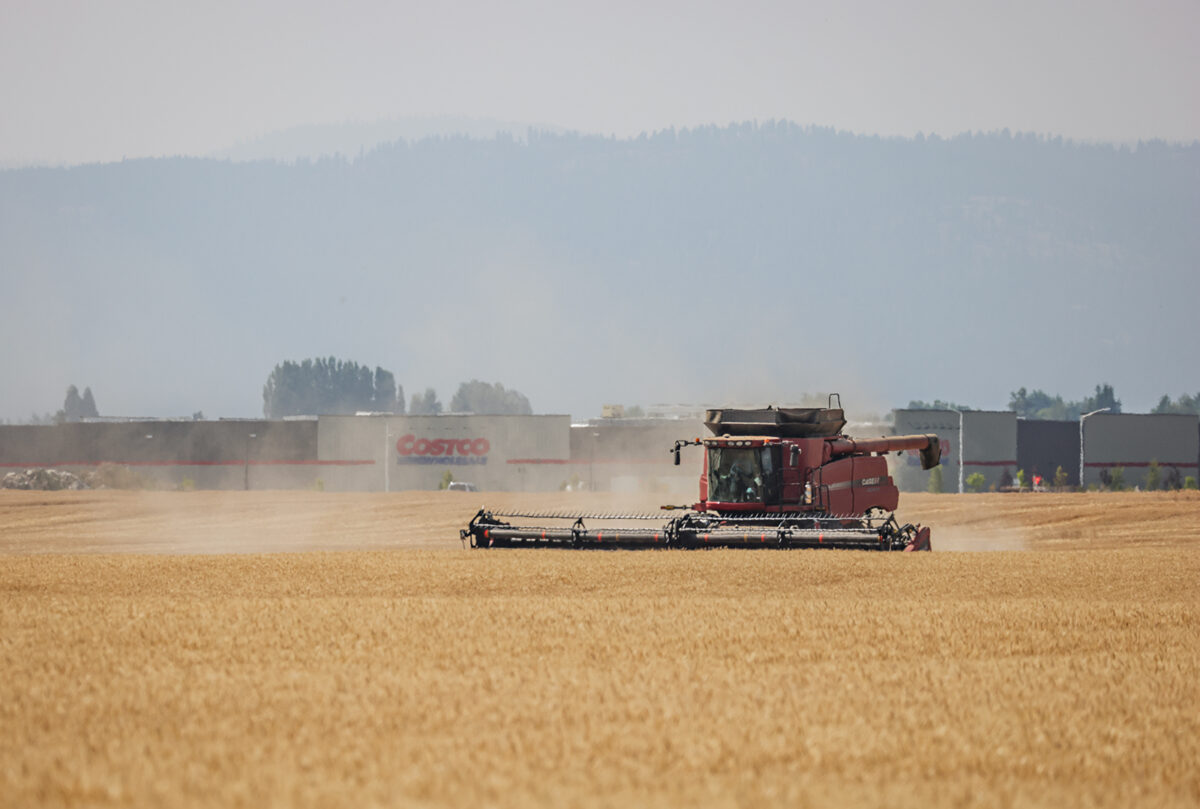
Directly west of the wheat field Koch has been farming for several years, construction crews continue moving dirt at the 400,000-square-foot Kalispell North Town Center where the new Costco was erected last year. A fleet of Toyota vehicles this month suddenly appeared at the new dealership to the west, which is the latest addition to the property that has seen 22 commercial lot sales along with a slew of housing developments.
Roughly a decade ago, Koch leased and grew grains on the same plot where shoppers now stock up at Costco. It’s only a matter of time before the wheat field off Rose Crossing that just produced his best crop on record will sell.
“Our biggest battle right here farming in Flathead County is infrastructure and people,” Koch said. “It’s kind of full circle though; I’m cutting the wheat, and they’re selling it right there.”
And while Flathead Valley farmers have adapted to this reality over the years, the lack of control over so many aspects of the industry takes its toll.
One of Koch’s neighbors, for example, recently spent days harvesting peas when the plot he leased was sold. The new owner promptly paved a road.
“All his peas were in piles and dirt and it’s like, really?” Koch said. “That’s what we deal with here. The mental health, I would say, is probably one of the biggest things on farmers and producers because the margins are very, very tight and with the workload, the family takes the brunt of it generally. You miss graduations, you miss birthday parties because your farm always takes precedence over your family, and it shouldn’t. But that’s what happens because we have such a short window.”