Forest Service Approves Granite Moccasin Logging and Fuels Project Along Highway 2
Decision clears way for work to begin immediately, without a full environmental impact statement
By Tristan Scott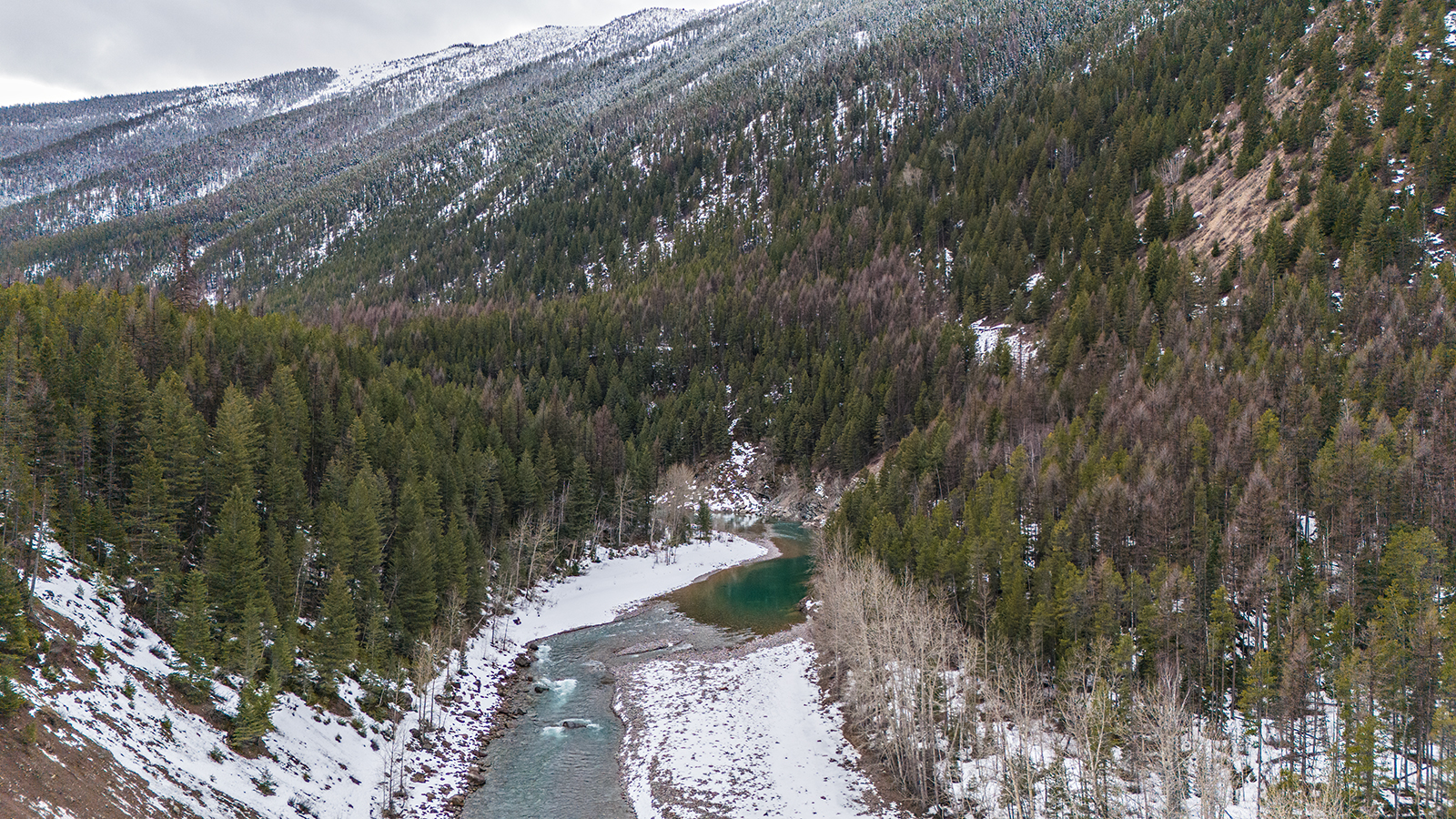
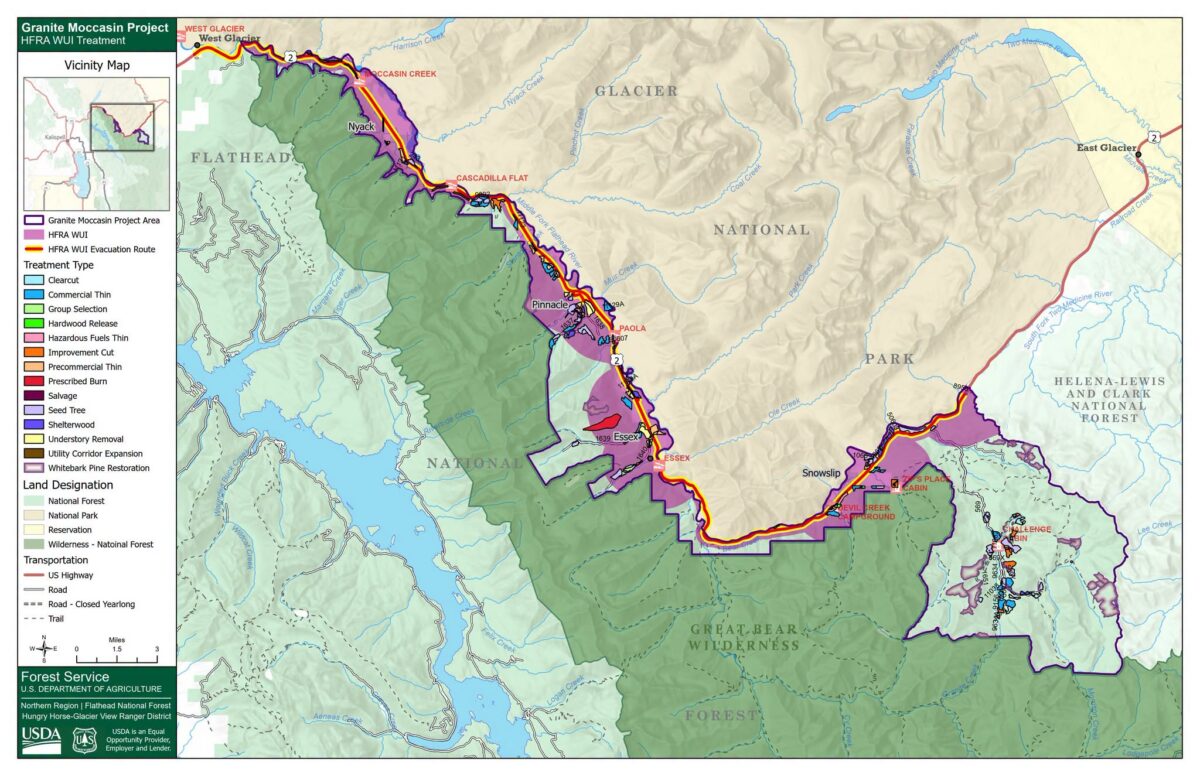
The Flathead National Forest has signed a final decision authorizing the Granite Moccasin Project, a logging and fuels-reduction effort covering 4,930 acres along a 40-mile stretch of U.S. Highway 2 south of Glacier National Park. Work can begin immediately.
Hungry Horse-Glacier View District Ranger Rob Davies signed the decision and a finding of no significant impact on Oct. 6, concluding that the project does not require a full environmental impact statement. The project qualifies for an emergency action determination issued by the Secretary of Agriculture under the Infrastructure Investment and Jobs Act, which exempts it from the Forest Service’s pre-decisional objection process. In his decision, Davies said he intends to implement the approved activities immediately and expects the first timber sale and supporting road work in late 2026 or early 2027.
The project area spans 67,536 acres through the John F. Stevens Canyon, including the communities of Essex, Pinnacle, Snowslip and Fielding. The decision approves 2,397 acres of commercial treatment, 2,402 acres of noncommercial treatment and 131 acres of utility corridor expansion. About 54% of the treatment acres are in the wildland-urban interface.
To reach the units, the Forest Service will use about 80 miles of existing roads for hauling and add 7.6 miles of new system roads, which will be placed in impassable status after the work is done, plus 0.75 miles of temporary roads. The decision says public access will not change for any type of use.
Officials say the work is aimed at reducing wildfire risk in a narrow, steep canyon where Highway 2 is the only evacuation route for communities along the Middle Fork Flathead River.
“What makes the Granite Moccasin Project stand out is the multifaceted approach to accomplish important fuels reduction work and trend towards forest health management objectives across so many different types of land designations,” Davies said in a press release. “This project is navigating an assortment of important management parameters to deliver the vegetation management needed along the U.S. Highway 2 corridor.”
The environmental assessment (EA) notes that most forested areas within the interface have gone unburned since before 1929, leaving dense stands and ladder fuels. It cites the 2015 Sheep and 2018 Paola Ridge fires, which each burned in the area and together consumed more than 5,000 acres. The corridor also contains the BNSF Railway, utility lines and Montana Department of Transportation facilities.
The project reaches into several sensitive land designations:
- Inventoried roadless areas: About 2,250 acres of treatment, including roughly 300 acres of commercial thinning. No road construction would occur in roadless areas, and the Forest Service says the work complies with the 2001 Roadless Rule, which limits timber removal there to generally small-diameter trees. More than 70% of the treatments in roadless areas focus on restoring whitebark pine.
- Middle Fork Wild and Scenic River corridor: About 401 acres of treatment in the segment classified as recreational, including about 102 acres of utility corridor expansion. The decision notes that all work occurs in the uplands, outside the riverbanks and channel, and says the project would maintain the river’s free-flowing condition and outstandingly remarkable values. About 620 feet of new system road is proposed in the corridor.
- Puzzle Creek Recommended Wilderness: Disease-resistant whitebark pine will be planted by hand.
In the decision notice, Davies made one modification to the proposal, dropping a 20-acre seed tree unit near Marias Pass in response to public concerns about compatibility with the adjacent Helena-Lewis and Clark National Forest.
The Forest Service acknowledged adverse effects on wildlife, including short-term disturbance to grizzly bears and Canada lynx and long-term reductions in dense forest cover that grizzlies and lynx use for hiding, denning and hunting at the site scale. The agency concluded those effects fall below the threshold of significance and are limited by design features and seasonal restrictions. The decision also anticipates minor short-term sediment increases in bull trout and westslope cutthroat streams, and it includes three culvert replacements.
The commercial harvest is expected to yield about 25,000 hundred cubic feet, or 12.5 million board feet, of timber, generating an estimated $393,979 in revenue before noncommercial costs. The Forest Service projects up to 83 direct and 69 indirect jobs and up to $11.09 million in labor income.
The project’s work in the Wild and Scenic corridor fits into a broader debate over how to manage forests along protected rivers. A report this spring from American Rivers, which reviewed 50 years of management on the Flathead National Forest, concluded that Wild and Scenic designation “tempers, though does not prevent, forest management within protected river corridors.” Granite Moccasin is one of the projects the report cites as an example.
The project drew opposition during the planning process. In June, Keith Hammer, chair of the Swan View Coalition, argued that the emergency determination bypasses a more rigorous analysis and urged a full environmental impact statement. The timber industry supported the project.
Davies’ office can be reached at (406) 387-3801. The decision, EA and supporting documents are on the project webpage.