In Western Congressional District Race, Republican Aaron Flint and Democrat Sam Forstag Are Locked in a Dead Heat
Widely seen as the biggest ticket item in the state this fall, the race is likely to be defined by topics like cost-of-living and healthcare that have hit voters’ pocketbooks hard — though culture war issues could still play a role.
By Mariah Thomas
Aaron Flint appeared in fired-up form outside Whitefish’s Border Patrol station on a Friday in early October, as the candidate running for U.S. Congress called for support for law enforcement officers, flanked by Flathead County Sheriff Brian Heino.
“The real reason we’re here is to stand up and show our support for common sense over crazy,” Flint said. “We back our sheriff, we back our local police officers and law enforcement, and heck yes, we back our Border Patrol agents and the incredible work that they’re doing out here.”
The demonstration, attended by a group of local Republicans, served as a chance for Flint, a veteran and radio talk show host, to home in on what has historically been a winning issue for GOP candidates: presenting themselves as the party of law and order, while hitting their opponents for not being tough enough on crime. Flint tried to paint his Democratic opponent, Sam Forstag, as radical for his opposition to bills that banned sanctuary cities in Montana and allowed for local law enforcement officers to arrest and hold individuals if they have federal immigration detainer requests from Immigration and Customs Enforcement.
It’s a strategy several Republicans caught in tight races are turning toward as they face a difficult national environment this fall, one largely defined by voters’ frustrations over a cost-of-living crisis. The impacts of that crisis have been keenly felt in western Montana, where Flint is running. Flint has focused part of his campaign on the slogan of “making the Montana dream affordable again,” in addition to hammering Republican talking points on immigration and transgender issues, where he has tried to cast Forstag, a smokejumper and union leader, as out of step.
Forstag has also homed in on the cost-of-living crisis facing Montanans, placing the blame on the Trump administration and attempting to tie Flint to the president, whose endorsement helped carry Flint across the finish line in the Republican primary this spring.
“I mean, there’s so much to be angry about in this country right now when a small slice of people are getting incredibly rich, and so many Montanans are struggling to get by,” Forstag said in a recent interview with the Beacon. “But being angry is not enough, and it’s never been enough. We’ve got to actually organize. So, we’ve been having five campaign events, at least, for every one you’ll see Aaron Flint having.”
The pair are neck-and-neck in polling and fundraising in their race for Montana’s western congressional district, widely seen as the biggest ticket item in the Treasure State this fall. Polls conducted throughout August and September show the pair within one to four points of each other — a tight margin with a slim percentage of voters undecided. During the last quarter of fundraising, both candidates showed relatively even fundraising hauls, with Forstag edging out Flint, raking in $688,303.71 to Flint’s $619,142.90. Flint, however, has been boosted by more than $1.2 million in outside spending flowing in to support him; far outpacing the $250,000 in independent expenditures that has backed Forstag.
Most predictors give Flint, outgoing U.S. Rep. Ryan Zinke’s handpicked successor, the edge given Republicans’ stronghold in Montana and the electorate’s recent predisposition against split-ticket voting.
But federally, the landscape favors Democrats as the president and Congress battle dropping approval ratings amid a war with Iran that polls show most Americans oppose, and voters’ continuing pocketbook woes. If Forstag can eke out a win in the district, an outcome that remains a distinct possibility, it will mark the first time a Democrat has held a U.S. House seat in Montana in nearly three decades — and could contribute to a Democratic House majority.
Jessi Bennion, a political scientist at Montana State University, said at this point, both candidates are in the position of fighting for a small slice of persuadable voters who haven’t yet made up their minds. It’s those undecided voters who are likely to decide the race’s outcome.
A third candidate in the race, Libertarian Nick Sheedy, is a long shot. But his candidacy could siphon votes from either Forstag or Flint, potentially making a difference in what is likely to be a close race. Sheedy did not respond to multiple emailed requests for an interview for this story.
“This is a clear D and R race. They’re hitting Sam with all the traditional stuff, and it’s just whether people are gonna be tired of hearing that same old stuff and want a change,” said Joe Lamson.
Lamson, a Democratic operative who managed the campaign machine for former U.S. Rep. Pat Williams, the last Democrat to represent Montana in the House, suggested the outcome is likely to come down to turnout. Who shows up at the polls and which candidate has done a more effective job at garnering enthusiasm among their supporters will serve as a critical factor.
As the race grips western Montana, Bennion said it’s topics like affordability, healthcare and housing most likely to define this election cycle — though “culture war” issues could still play a critical role.
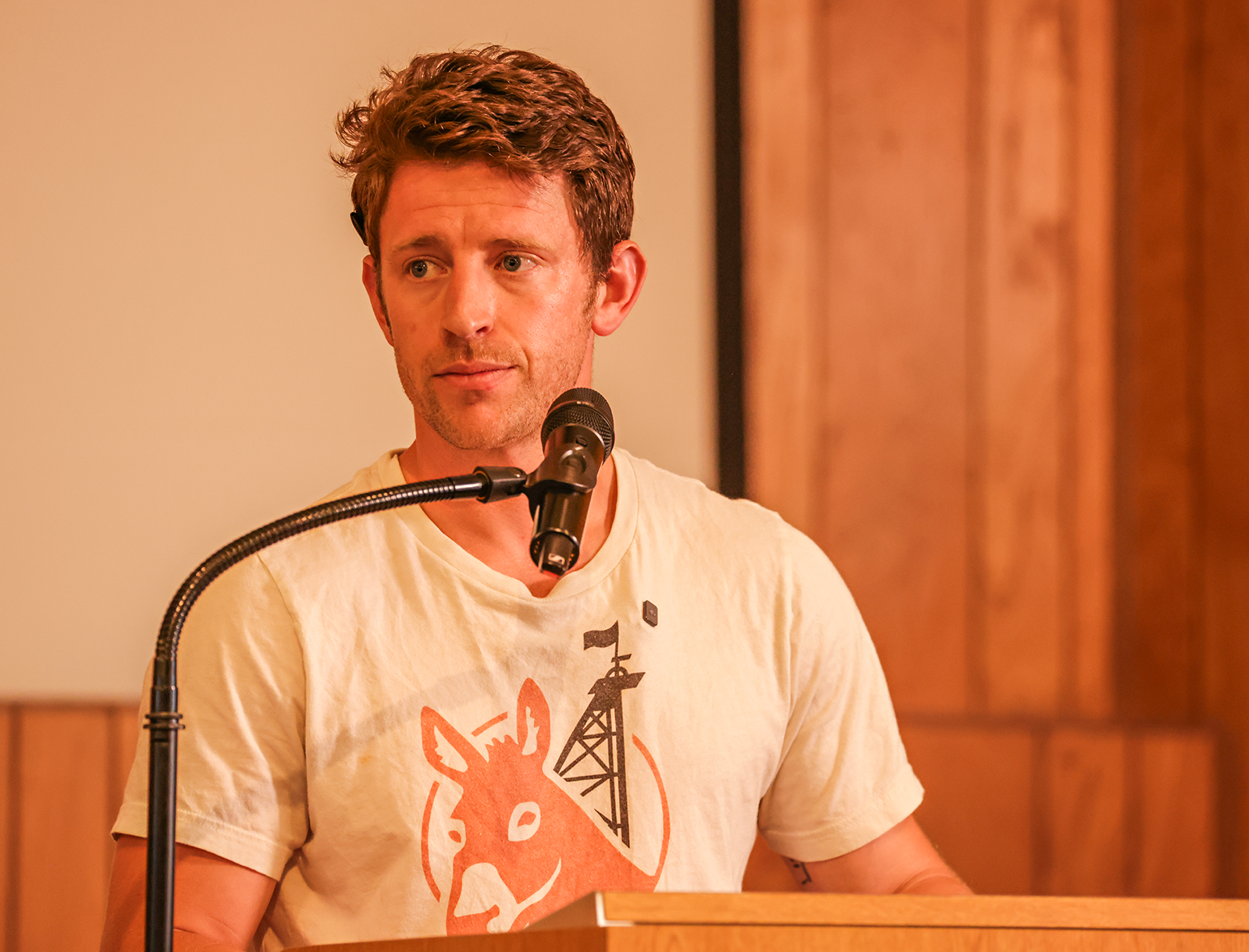
Forstag’s entry into the U.S. House race in January was precipitated by cuts from the Trump administration’s Department of Government Efficiency — cuts which Forstag said hit his coworkers in the U.S. Forest Service hard.
Forstag, 32, came out swinging against those cuts, speaking at the side of U.S. Sen. Bernie Sanders, I-Vt., and U.S. Rep. Alexandria Ocasio-Cortez, D-N.Y., when they stopped in Missoula on the Fighting Oligarchy tour in 2025. Both have since endorsed Forstag, who also spent time as a lobbyist at the Montana Legislature.
Flint, his opponent, has tried to use the endorsements and Forstag’s lobbying background to land attacks on the Democrat, aiming to paint him as a radical figure and hitting him on culture war topics. Flint has run ads about Forstag’s lobbying efforts against legislation barring transgender women from women’s sports and ones calling him a “liberal lobbyist” from Portland.
But for Forstag, who has more often heralded his union background and working-class roots on the campaign trail, the attacks have missed the mark.
“Quite frankly, I think that sort of tactic — it’s despicable, because people are really hurting right now, and things are really bad out there if you actually get out and have campaign events and actually knock on some doors,” Forstag said. “It’s hard for me to imagine how someone who wants to serve Montanans would want to talk about nothing but that, instead of actually talking about how we fix the housing crisis or get people the healthcare that they need, you know, how we actually make sure elderly people aren’t living on the street in record numbers in this state. That’s what I’m fighting for. That’s what I hear people talking about.”
The Missoula Democrat said his top priority in Congress, should he win election to the seat, is jumping into the fray on housing policy. He described the issue as a “crisis” and said it’s incumbent on Congress to act as such and make investments in building homes. He pointed to programs like community development block grants and community land trusts as options he’d promote funding in the effort to quickly build homes people can afford.
And much of his campaign material has focused on the cost of living, public lands and talking across political differences.
On the last point, Forstag has received a boost: a slew of former Republican officeholders have lent their endorsements to Forstag’s campaign. Some of the Republicans supporting Forstag, like former Gov. Marc Racicot and more locally, former state Rep. Brian Putnam, have held joint events with him, where they’ve appeared together to talk to their communities about the challenges the country faces.
Putnam and Forstag held one such event in Columbia Falls in August. Putnam, who served in the Montana Legislature’s 2021 session, said he first met Forstag in the hallways of the state capitol. At the time, Putnam recalled Forstag working as a lobbyist to defeat a bill about the death penalty in Montana. While Forstag didn’t successfully change Putnam’s mind, Putnam walked away from the interaction impressed at how measured Forstag was in talking about the issue.
“I feel like he’s got the ability to take more nuance to look at things,” Putnam said.
Putnam reconnected with Forstag at a campaign event earlier this year. While he’s a lifelong Republican, Putnam expressed frustration at the current state of affairs. He’s also been frustrated watching Zinke, in his estimation, fail to push back on things like tariffs, the war against Iran and the growing national debt.
“Zinke’s gone through the Montana Legislature. It’s frustrating because he knows how to compromise and get bills passed,” Putnam said. “I know he loves Montana, but he’s not acting in the best interest of Montana.”
With Zinke blessing the campaign of Flint, Putnam worries Flint will be more of the same, acting as a “rubber stamp” for the president’s actions. Forstag, on the other hand, is someone Putnam thinks could act as a check.
He added he found through their conversations that he and Forstag share common ground on issues like management of public lands and decreasing the national debt. And while the state GOP has seen an internal reckoning over its members’ adherence to the party and its positions, Putnam has no qualms about backing a Democrat this fall.
“It’s more about having the right person for the job versus what letter is behind their name,” Putnam said.
To Forstag, bringing people together is important — and that extends beyond the campaign trail. Should he win, he said he understands he’ll be working within a divided government and pointed to finding compromise as a critical part of his job.
“We are still a country that can solve big problems,” Forstag said. “And I think when candidates like Aaron [Flint] just traffic in this fear and anger and division, what they’re really saying is we can’t solve the big problems, so we’re gonna focus on these ones.”
Those problems, Forstag said, are about meeting people’s basic material needs. And they’re problems that can be solved, in his view, by sending working people to Congress.
“We do it by sending people to Congress who actually know what it’s like and are going to fight that much harder for us and are not going to let some petty partisan label get in the way of that,” Forstag said. “That’s what I’m working to do here, and I’m going to need all the help I can get doing it because we’re up against just obscene amounts of money in this fight, but money doesn’t win elections. People do.”
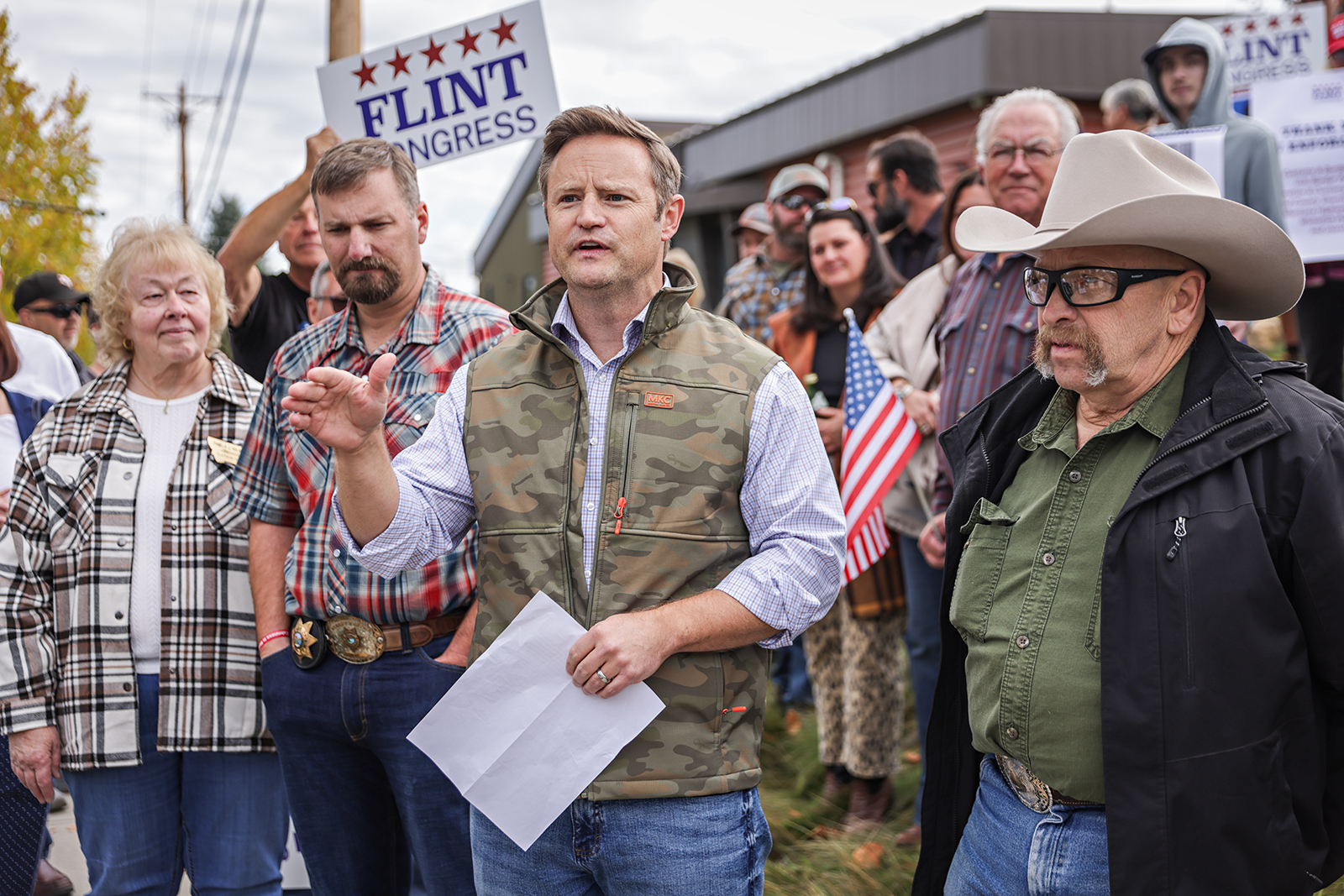
Flint’s official campaign announcement rolled out right after Zinke’s announcement that he wouldn’t run again — and Flint immediately enjoyed backing from most of Montana’s statewide elected officials, along with President Trump. Along the way, he has also picked up support from a slew of some trades unions and sheriffs, like Heino, whom he appeared with in the Flathead in early October. In a release about the event, Heino lauded the importance of leaders who will support the efforts of law enforcement, pointing to Flint as one of those leaders.
“In our communities, law enforcement agencies have always relied on one another to protect the public, especially when resources are limited and a crisis occurs,” Heino said. “Border Patrol is an important partner to local law enforcement, assisting with search and rescue, supporting drug investigations, and protecting our northern border. We need leaders who understand the importance of those partnerships and will ensure law enforcement and Border Patrol have the resources they need to keep our communities and nation safe. Aaron Flint understands that mission and has demonstrated his support for the men and women who serve. I am proud to support Aaron Flint for Congress.”
The 46-year-old Army veteran’s foray into electoral politics comes on the heels of his more than two decades as a radio talk show host. His show, Montana Talks, was based in Billings and focused on state and national politics through a conservative lens.
Whether that background serves as a boost for the Republican is a matter up for debate. Some, like Putnam, have been turned off by Flint’s radio persona. But for Flint himself, one of the highlights of the campaign has been connecting with radio callers and listeners in real life.
“I had a lady, class of 1955, Belgrade High School. She came to a meet and greet we had at the Rockin’ R Bar, in Bozeman, and I went and shook her hand, and she held onto my hand for probably five minutes while we talked,” Flint said in an interview with the Beacon. “And it was so sweet, because she’s the same age as my grandma, and my grandma played a big role in raising me. You know, my parents were hard-working single parents, so that was just incredible.”
Her daughter, Flint said, told him her mom had never been to the bar before, but came out specifically to meet him because she was an avid listener of his radio show.
“There’s stuff like that,” Flint said. “There’s so many fun stories like that and the people that you run into that you helped while being on the radio.”
Lamson, the Democratic operative, said Flint is a tough opponent who boasts a combination of financial resources and strong personal skills, in part because of his radio background.
“I mean, he’s a radio shock jock. He knows how to turn a phrase,” Lamson said. “You made your living by getting people excited, so that’s there, and what they choose to pick out as issues and how much money they put behind that is absolutely critical.”
For Flint, many issues define this year’s congressional race. The cost-of-living crisis is high on the list, but he sees issues like that as intertwining with broader “culture war” topics like transgender issues and immigration.
The combination of issues to focus on has given Flint a chance to home in on the struggles voters are facing, while also playing to the Republican base on popular issues. It has also provided the Republican with a way to highlight distinctions between himself and Forstag as both are talking about affordability.
His campaign has spent from its war chest to level attacks against the Democrat over his lobbying background, which includes stints working for the American Civil Liberties Union and the Montana Coalition to Solve Homelessness, among other groups. Flint has specifically hit Forstag for his efforts to stop several anti-transgender bills going through Montana’s statehouse, along with Forstag’s lobbying efforts on property tax reform and for a sales tax. He has painted those issues as out-of-touch with Montana’s electorate, and as examples of Forstag being a “socialist.”
“He’s pretending to be this poor, working-class guy, and he never says anything about the fact that he was a high-paid lobbyist, lobbying for all this crazy stuff,” Flint said. “… So, I think once that word starts to get out there with folks, I think we’re going to very quickly see the dynamic shift in this race.”
Forstag, for his part, said Republicans have picked up the mantle to talk about affordability as it became a buzz word in the last year, even though it has long served as a persistent challenge for working people.
But even if it’s a recent talking point for Republicans, for Flint, whose campaign motto is to “make the Montana dream affordable again,” the issue does serve as a cornerstone of his run for office. He has promoted an agenda that includes revitalizing the timber industry, bringing mining and manufacturing jobs back to Montana and “unleashing” American energy.
If elected, Flint said his top priority would be championing legislation to promote trades education. It’s been a common calling card for his campaign, as Flint has said he hopes to bring good-paying jobs to Montana.
He pointed to a piece of legislation Sen. Steve Daines, R-Mont., has worked on with the International Union of Painters and Allied Trades as one he’d hope to help across the finish line if elected. That bill, the Supporting Apprenticeship Colleges Act of 2025, has earned bipartisan support. It would provide federal grant funding from the Department of Education to higher education institutions that sponsor registered apprenticeship programs.
“I think trades education has to be first and foremost, because those are the jobs that need to be filled in this economy,” Flint said. “Those are the jobs that China can’t steal, and AI can’t replace. Those are the jobs that will provide high-wage opportunities for young people to stay and work and live, not just here in Montana, but in rural parts of Montana as well.”
While Flint and Forstag each make their pitches in the final run-up to Nov. 3, Bennion said ultimately, what it comes down to for voters is how they see their circumstances.
“They go into the voting booth and they ask themselves: how am I doing?” Bennion said. “Like, how am I doing? How do I feel about the direction of things? And do I feel like I’m doing better economically? Is this a hard time for me? Is it worse? Are we worse off? How do we feel? Just, like, the overall direction. For a policy issue, that’s number one right now.”
It’s the citizens in the 16 counties that make up Montana’s western congressional district who will have the final word.
Ballots were mailed to absentee voters Oct. 9. Election Day is Nov. 3. Voters can check their registration status and the status of their ballot here: https://voterportal.mt.gov/WhereToVote.aspx. To register to vote, voters can either bring their completed voter registration application to their county election office or visit their county elections office to fill out a voter registration application and receive a ballot there.