Montana Attorney General Sued Over Ballot Language Changes to Judicial Election Initiatives
Local Supreme Court candidates say the decision to enshrine nonpartisan judicial races into the state's constitution lies with the residents of Montana
By Mariah Thomas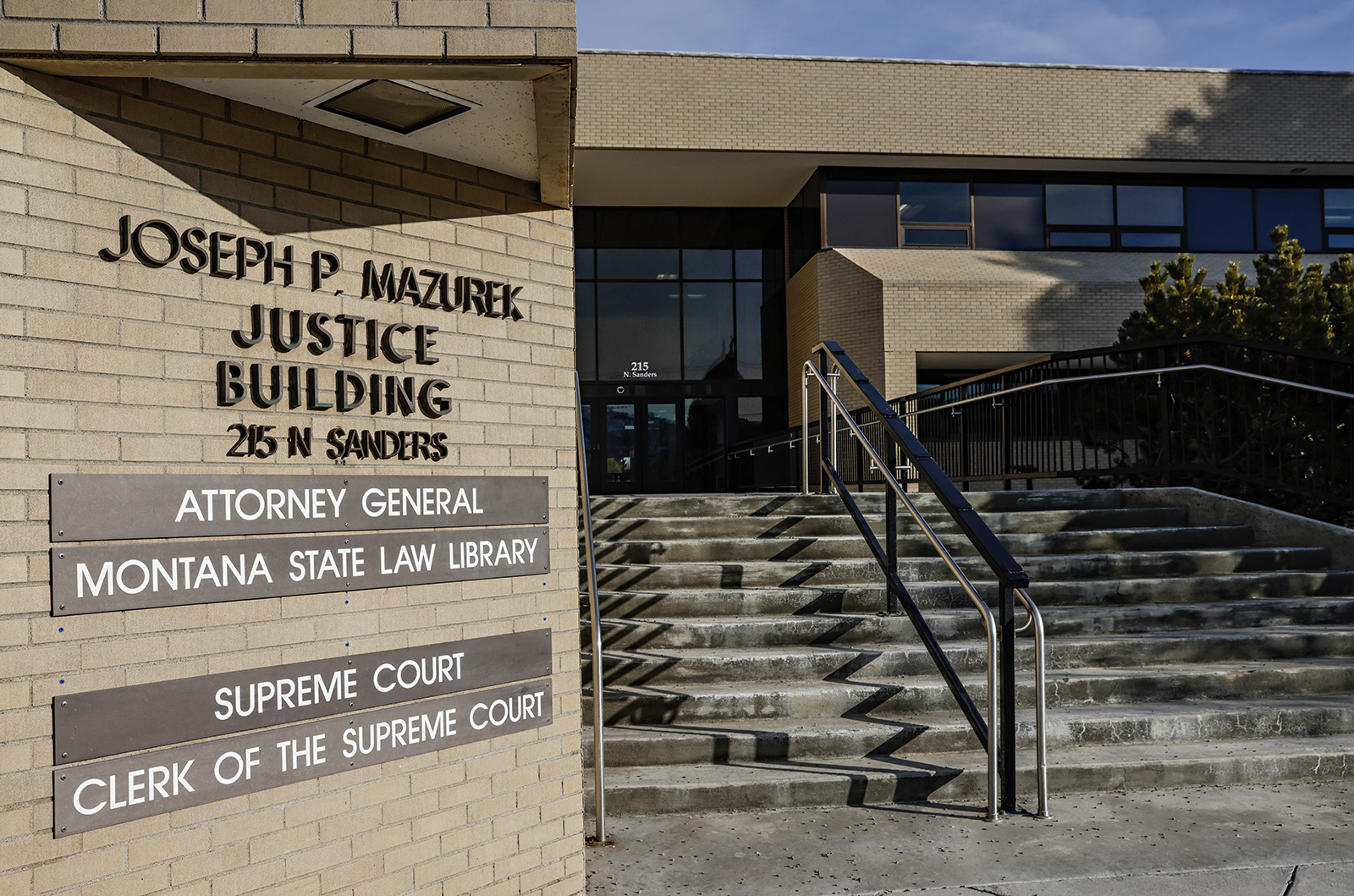
Three lawsuits have been filed against the attorney general over his legal reviews on three potential ballot issues aiming to keep judicial races in Montana nonpartisan. The efforts to maintain nonpartisan judicial races follow on the heels of a legislative session where lawmakers considered several bills aimed at doing the opposite.
Constitutional Initiative 131 and Constitutional Initiative 132 are two similar, but separate, ballot initiatives which qualified to begin collecting signatures for the 2026 election. CI-131, submitted by Montanans for Fair and Impartial Judges, would mandate Montana Supreme Court and district court elections be nonpartisan if passed. CI-132, submitted in August by Montanans for Nonpartisan Courts, would create a new section in the state’s constitution mandating all judicial elections to be nonpartisan.
Those groups — Montanans for Fair and Impartial Judges (MFIJ) and Montanans for Nonpartisan Courts (MNC) — filed the lawsuits. MFIJ filed one, which MNC signed onto, on Oct. 3, challenging a rewrite to the language on CI-131. MNC filed one of its own Oct. 17, challenging a rewrite to ballot language on CI-132.
In the process of a legal review to both initiatives’ ballot language, Attorney General Austin Knudsen changed the wording and added a line to both initiatives: “A nonpartisan election prohibits labeling candidates on the ballot according to the political party the candidate aligns with including labels like independent.”
MNC submitted a third ballot issue, Ballot Issue 6, for consideration. It would aim to both enshrine nonpartisan judicial elections in the state’s constitution and prevent the legislature from creating any new courts unless judges are subject to nonpartisan elections. Knudsen found it fails the state’s “separate-vote” test, which requires ballot initiatives to focus on a sole issue.
In addition to the first two lawsuits, MNC filed a third one Oct. 17, asking the state Supreme Court to deem Ballot Issue 6 legally sufficient.
“These lawsuits are frivolous,” said Amanda Braynack, the attorney general’s communications director. “The Attorney General merely added language to inform voters of what a nonpartisan election is. Liberal activists appear to be worried that Montanans will see the facts of what makes an election nonpartisan rather than their own opinion on the ballot.”
For Caitie Butler, a spokesperson for MNC, the attorney general’s rewrite of the ballot language was unsurprising. Butler said the group has seen a “trend” of Knudsen using the legal review process required for ballot initiatives to rewrite or strike initiatives he disagrees with.
“Voters are very sensitive to ballot language,” Butler said, adding that sensitivity makes it important to ensure the language of a constitutional initiative is as clear as possible.
The lawsuits were filed because, Butler said, Knudsen’s rewrite muddies the intent of the initiatives. Thanks to that, MNC is holding off on collecting signatures for CI-132 until the court makes a decision regarding Knudsen’s rewrite. MNC has asked the court to expedite the process, so it can begin collecting ballot signatures as soon as possible. She said the organization has until June 19 to gather more than 60,000 signatures if the issue is to make it onto the ballot in 2026.
Butler argued the ballot initiatives are important for maintaining Montana’s long-held tradition of nonpartisan courts — a tradition she said has come under attack in recent years.
“We’ve seen public polling over the last several years that has confirmed that nonpartisan judicial elections are extremely popular,” Butler said.
But the state legislature has the power to decide how judicial elections run in the state, explained Amy Eddy. Eddy is an 11th District Court Judge who works in the Flathead. She’s also one of two candidates who have filed for a state Supreme Court seat coming open in 2026.
In an op-ed earlier this summer, she wrote that during the era of the Copper Kings, corporate interests ran the state’s court system. Nonpartisan judicial elections in the state were a response to that and have remained in place for 90 years. But should the ballot initiatives gather the necessary signatures and make it onto the 2026 ballot, Eddy is curious what Montana voters will say. It’s a question of whether they’ll vote to take that power from the legislature.
Her opponent in the Supreme Court race, Flathead County District Court Judge Dan Wilson, similarly said the authority to decide the structure of Montana’s judicial elections lies with the people of Montana.
“A judge’s role is simple,” Wilson said. “Follow the Constitution and the laws that the people and their elected representatives make and adopt. The ultimate authority to decide the structure of Montana’s judicial elections, whether they be partisan or nonpartisan, rests with the people of Montana.
“During the debates in 1972 that produced our Constitution, the Founders chose to have elected Supreme Court justices rather than appointed ones, fully recognizing that political parties would naturally support one candidate or another. Their greater concern was the influence that lawyers and other groups would have on judicial elections and the money these groups would insert into the electoral process. Whether we have partisan or nonpartisan judicial elections does not solve the Founders’ main concern of preventing special interests from having too much influence over judicial elections.”
Neither Eddy nor Wilson commented on the lawsuits about the ballot language. Eddy said given her campaign for the Supreme Court and potential future rulings on similar topics, it would be “inappropriate” to comment on the pending litigation.
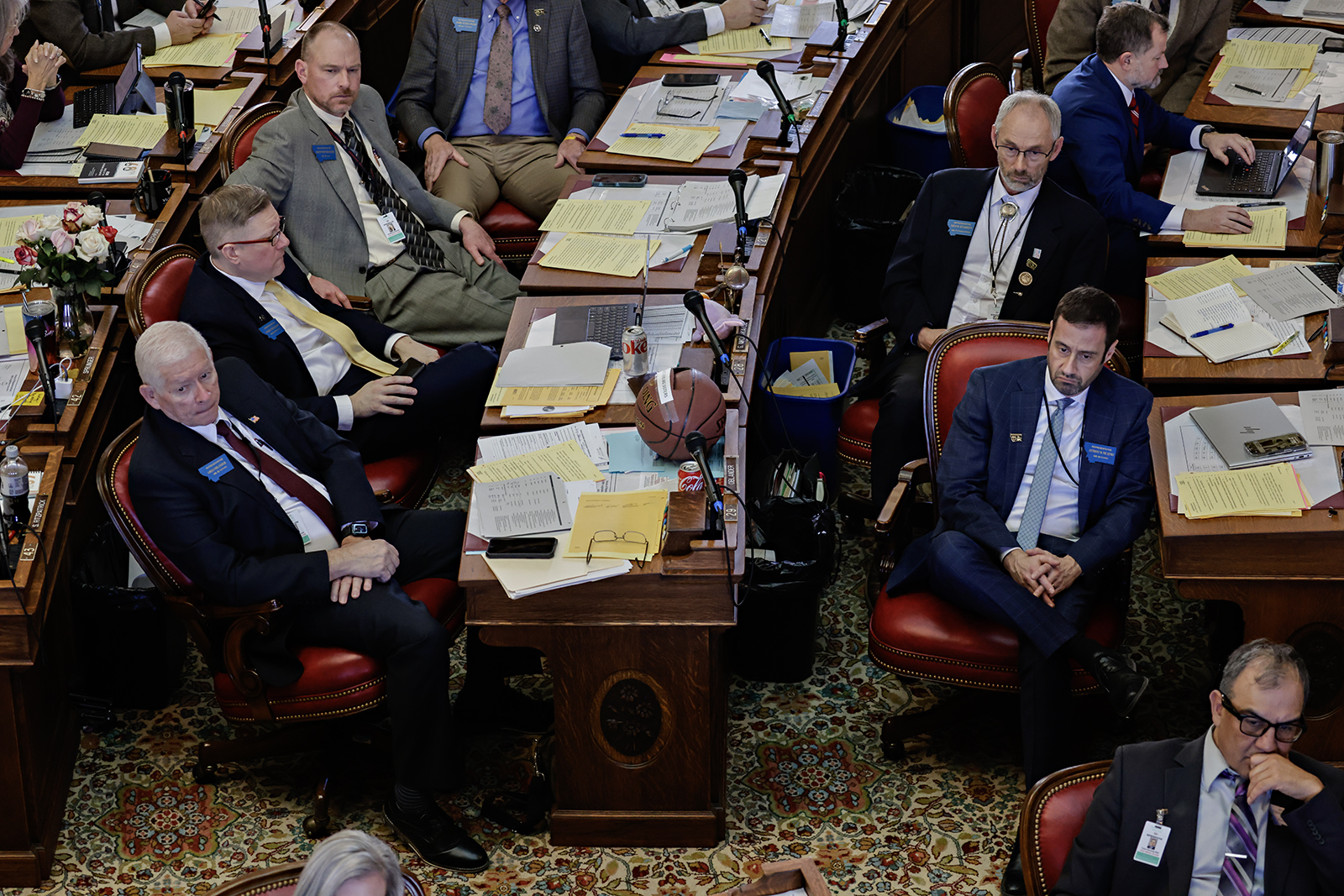
The 2025 legislative session saw several Republican-led efforts to allow judicial candidates to run under a partisan umbrella. In recent years, Republican desires to attach a party to judges’ names have built, largely because some district courts and the state’s Supreme Court have struck down several bills passed by the majority-GOP legislature. The GOP has raised concerns about judges having a liberal bias as a result. They argue judges’ party affiliations should be public for voters. None of the efforts to make judicial races partisan during the 2025 legislative session passed muster.
A bill repealing the law that banned political parties to contribute to judicial campaigns did earn approval from the legislature in 2025. Flathead-area legislator Tom Millett carried House Bill 39. It means political parties can legally throw their financial weight behind judicial candidates.