With Growth Policy Deadline Looming, Whitefish Planning Group Aims to Overcome Differences
As Whitefish enters the final stretch of a state-mandated overhaul of its 2007 growth policy, long-simmering tensions have spilled out. While city leaders acknowledge the community's frustrations with the process — as well as the difficulty of the commission's task — they remain optimistic about the end result.
By Lauren Frick
The city of Whitefish will soon be entering its third calendar year of work on the state-mandated overhaul of its growth policy — a document that will guide the city through its next 20 years of growth and was last updated in 2007.
The milestone, however, will be marked by one of the busiest and most critical times of the multi-year process.
A marathon series of meetings lies ahead for both the planning commission and city council, which has yet to review any portion of the growth policy draft, as the city pushes forward to meet the state’s May deadline to adopt both the growth policy and new zoning regulations.
Before the end of January, the planning commission must complete its review of city staff’s draft of two of the most important elements in the growth policy — housing and land use — before swiftly switching gears to discussion over zoning, which will give the policy legal bite.
Simultaneously, the city council will begin work sessions to start reviewing the 200-page growth policy — a process that will force city council members to decide between some conflicting recommendations from city staff and the planning commission.
While commission members, city councilors and staff have expressed confidence in their ability to complete the state’s requirements by the spring deadline, they also haven’t minced words: it’s going to be a lot of work.
“I think the time schedule is really challenging when you look at the breadth of what has to be accomplished and the timeframe that we have to do it,” said city council member Ben Davis, who also sits as a city council alternate on the planning commission.
“I think that it requires everybody to work really hard and be really focused on the outcome and the timeline to accomplish this,” Davis said. “I think we’re fortunate that people are willing to do it.”
This time crunch and bottleneck of deadlines, however, may be self-inflicted, some community members and officials have said.
As the planning commission began reviewing the city staff’s growth policy draft over the past year, some residents and city council members expressed a range of concerns, including hours-long meetings to approve minimal pages of text; disregarding city staff recommendations; ignoring relevant feedback from the community; and lobbying from special interest groups.
Concerns about the planning commission reached a fever pitch in early October when a handful of residents took to the lectern to voice their frustration with the planning commission’s trajectory during the growth policy draft review process.
“Most commission members are fine,” resident Marti Brandt said to city council members at their Oct. 6 meeting. “They might vote in ways that I don’t like, but I’m okay with that. I’m okay with feeling disappointed in the outcome.”
“What I’m not okay with is people who seem so rigidly obsessed with implementing their vision that it feels like they’re undermining the integrity of the process as a whole,” she added.
Brandt, a dedicated growth policy meeting attendee, was selected earlier this month from eight candidates to serve a two-year term on the planning commission, beginning Jan. 1. The planning commission, which features six residents appointed by city council, will see two new faces and one reappointment, Whitney Beckham, in the new year as it tackles the crowded schedule ahead.
Despite those tensions, city officials were optimistic the new commission could overcome the time constraints and expressed gratitude for the two years of dedication from its outgoing members.
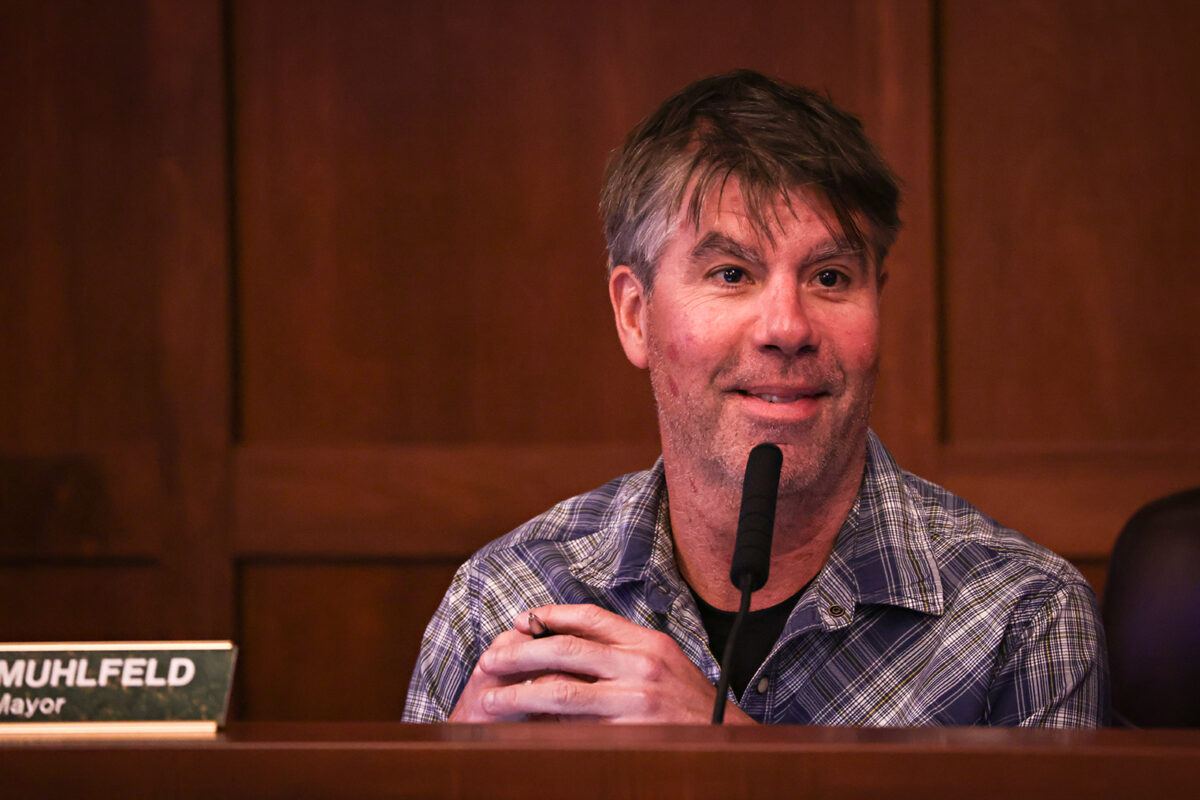
“I just really appreciate the work that the prior commission did to get us to this point, and I’m confident in this new commission … they have a lot of work out ahead of them, but I’m confident that they’re gonna put the hard work in and have an appropriate number of meetings in order to get this over the finish line and ultimately get the solid draft that they’re comfortable with to the council by March,” Mayor John Muhlfeld said.
In May 2023, the Montana Legislature adopted Senate Bill 382, which created the Montana Land Use Planning Act (MLUPA). Under the statute, 10 cities across the state, including Whitefish, Kalispell and Columbia Falls, are required to adopt a new land use plan to replace their existing growth policies and update local zoning and subdivision regulations in accordance with both MLUPA and the land use plan.
The goal of MLUPA is to “front-load” public input for development by shifting major community discussion and approval to the initial, broad plan and zoning creation phase — the process Whitefish is currently in — moving approval of individual projects to a faster, more administrative staff level with less public notice, aiming for faster housing development by making site-specific rules predictable. These administrative development approvals will be dictated by the growth policy being created through public participation, both now and as it’s updated every five years.
Because the legislation aimed to address the state’s housing crisis by easing development standards, it garnered support from a wide range of stakeholders, including the Montana Chamber of Commerce, realtors, builders, government and planning officials, and advocacy groups, including the Frontier Institute and Shelter WF.
But Muhlfeld said MLUPA has put a “fairly unrealistic” deadline on municipalities statewide, with city council member Steve Qunell saying the state’s “one-size-fits-all” approach is inflexible and encroaches on Whitefish’s best interests.
“They’ve cut us off at the knees many times and this is another example,” Qunell said of the state lawmakers who adopted MLUPA. “We were gonna be updating our growth policy anyway, but having to do it in this fashion and for the reasons that they have us doing it is, you know that part is I think unfortunate.
“I don’t think that the state of Montana, the state Legislature at least, really has the best interest of small towns like Whitefish that has a lot of unique characteristics.”
Whitefish kicked off its MLUPA process in August 2023, with the first year largely driven by the community’s involvement in visioning sessions — events for residents to give feedback to be implemented in the growth policy. The city’s dedication to public participation has routinely been promoted and applauded by community members and officials alike.
“We’ve taken a very robust public participation approach to this new update and we’re committed to ensuring that the public has a fair shake informing how this growth policy is ultimately adopted,” Muhlfeld said.
Once the planning commission started to review the city’s draft of the growth policy, however, tensions started to simmer.
Beckham, the chair of the planning commission, said the commission’s review of the economic development draft chapter — which took place in May but was revisited in August — is when she noticed differences arise, she said.
“Coming out of those visioning sessions, I think that every person who was there kind of heard different things,” Beckham, who was reappointed to the commission this month, said. “Our job as the planning commission is to take that in totality, but also to look at the data … “
“I think some of the road blocks that we hit in the beginning and especially during the economic element of this growth policy was due to people hearing different things at those meetings … so when we went into the economic development phase, that’s sort of what highlighted our differences and opinions,” Beckham said.
By October, residents came to city council to voice their concerns about the commission’s draft review conduct, including representatives from Shelter WF, an affordable housing advocacy organization whose members have been heavily involved and vocal throughout the growth policy process.
“We’re now a pretty significant way into the growth policy process, and the city has done quite a bit of work to make sure that a broad swath of the public is engaged, but over and over, the voice of both the city and the community is just being rewritten by the planning commission’s narrow interests,” Shelter WF Executive Director Keegan Siebenaler told city council on Oct. 6.
“The planning commission, pretty clearly, has shown disrespect for the time and work of city staff, for public comment and public visioning sessions, and their process isn’t timely or efficient.”
At the close of the Oct. 6 meeting, Qunell — whose involvement with the planning commission totals about 14 years, including leadership stints — acknowledged the residents’ concerns, saying he too saw them firsthand.
“Yes, it’s very difficult work, but it goes beyond what is just being difficult versus what somebody characterized as a very personal viewpoint that is not let go of when it is clear that the professionals in the room have concerns about pushing forward viewpoints that don’t belong in the growth policy,” Qunell said. “That has been the major problem with this process from the very beginning.”
“I had a front row seat at the beginning, and I had to step away because the board was clearly not functioning under my leadership as the chair, despite my continuous warnings of this is out of bounds,” he said.

Since the October meeting, there have been mixed reactions from community and council members as to whether the conduct and review process of the planning commission has improved.
“I think the planning commission has done an excellent job listening to the public and incorporating public comment and feedback into the process, personally, and I think some of those concerns are not very well grounded in fact,” Muhlfeld said.
Davis believes criticisms of the commission’s early missteps “have definitely been heard,” especially by the planning commission, he said.
“If you look back at what the planning board was doing several months ago, and then you look at how they are operating today, I think they’ve found a better groove of getting things done and in a way to deal with disagreement that doesn’t bog it down forever,” Davis said.
In contrast, Siebenaler, who was one of the applicants for commission appointment earlier this month, is encouraged by two new appointments, but doesn’t think the commission has “significantly changed the way they operate,” noting that it now “selectively incorporates public feedback in subtle ways.”
Qunell said his concerns from the meeting are “still valid” and that there’s been quite a bit of “behind-the-scenes” actions taking place.
“I think some of that work has been put into the growth policy … has been lobbied by certain groups,” Qunell said. “That’s perfectly legal in this process. That’s the way it goes.
“Is that what’s in the best interest of the city? I’m not so sure about that. I’ve never seen this much of that kind of stuff in all of my years on the planning board.”
An undisputed change in the planning commission’s anatomy will arrive in January with the addition of two new members: Marti Brandt and Mike Hein.
Hein is currently a member of the city’s Impact Fee Advisory Committee and is a board member at the North Valley Food Bank serving as treasurer. During his career, Hein worked in the banking industry and industry sector, according to city documents.
Brandt manages a bookstore in downtown Whitefish, along with serving as a council member for Flathead County’s Agency on Aging Advisory Council. She also served as board president for Rainbow’s End, a local daycare.
“I look forward to bringing a working-class perspective to the planning commission,” Brandt said. “Historically, that’s the demographic my family was a part of, so I just hope that we can continue to protect the working class in Whitefish because I think that’s a really big part of our town’s identity. I hope we can stay true to that.”
Since her public comment about the planning commission in October, Brandt said she’s felt a shift within the commission, and she’s ready for the challenge of balancing everyone’s perspectives and working toward compromises.
“It’s hard to articulate what has changed, but the feeling has changed and it felt really professional, and I have good feelings about where we’re headed and the process moving forward,” she said.
Moving forward as one — in a timely manner — was a top concern for city council members when deciding between the applicants, which Muhlfeld described as the most qualified group in his 19 years in Whitefish government.
“In this case, given the timelines and that we have seen some delays in the process, we felt that the selections we made will ensure that we execute the plan in a timely manner and in a manner that best reflects vision of Whitefish and its residents,” Muhlfeld said.
Davis said he wasn’t necessarily looking for a “specific ideological bent,” but instead selecting people who could see all sides and make the best decisions possible.
“There’s a tendency to try to make this into some sort of an ideological battle,” Davis said. “I’m not really sure that’s actually accurate. It’s more of, you’re neighbors working with neighbors to try to come up with a good product.”
While commission appointments were made with the intention of carrying out the vision of Whitefish, a central point of contention — one likely to continue in the new year — is defining exactly what that vision is.
Much of the tension is derived from unpacking what it means to maintain Whitefish’s “community character.”
Many on the commission have expressed the need to honor residents’ wish to keep the city’s small-town spirit alive and at the forefront, often meaning a stricter approach to where commercial and residential development can coexist. Others, especially dedicated meeting-goers from Shelter WF, have pushed back on that antiquated standard, saying an increase in density and housing supply is essential in commercial centers to ensure the city is affordable and accessible to its residents and its workforce.
“We’re still kind of working through those preconceived notions; ideas of what the true hardships are and obstacles that are facing Whitefish, and we all have different ideas of those,” Beckham said. “We’re still kind of trying to go back to those visioning sessions at each corner that we turn and look back to that.”
These different interpretations of the visioning session and distilling what the community wants have increasingly led to rifts within the commission, as evidenced by its discussion of the transportation element draft earlier this month.
During the review, Beckham proposed the elimination of the term “mixed-use,” in reference to types of development, throughout the chapter.
“I know that we have talked about this before, and, to me, this screams commercial and residential,” Beckham said at the Dec. 3 meeting. “If mixed-use in some places means adding residential where there’s already commercial, I think that’s a great addition and improves transportation. But overwhelmingly from the public I’ve heard: Do not add commercial into residential.”
Many commission members agreed with Beckham, either on the basis that platforming mixed-use could run counter to Whitefish’s long-term goal of preserving a small-town feel, or simply because the topic belongs in the land use section of the policy.
Mallory Phillips, a planning commission member and Shelter WF board member, rejected that assessment, however, saying that removing mixed-use would hinder the policy from being multimodal and restrict access for many young and low-income people seeking a better quality of life.
“When you take out mixed-use from this document, you are saying that the only people that should have a quality of life in which they can walk to get a coffee, to go to the grocery store, to do some of those basic needs, are people who can afford downtown neighborhoods along Wisconsin,” Phillips said on Dec. 3.
After being largely outnumbered to approve the removal of mixed-use and similar amendments in the draft, Phillips delivered an impassioned plea to the commission at the end of the four-hour meeting.
“We do the visioning session for 250 to 300 people, so that more people in our community are represented, and I’m really, really concerned, and I continue to be really, really concerned, about the ways in which the voices of the five or six people that show up to every meeting tend to be uplifted over those people who are not able to be in the room,” Phillips said to commission colleagues.
“Many people I grew up with in this community can’t live here anymore, so there’s a reason there’s not a bunch of people who are low income or younger who aren’t here right now. You guys are supposed to be representing the community as a whole, not just the loudest voices,” she said.
As further evidence of the widening gulf over fundamental planning differences, disagreements about the visioning sessions and the language city staff used in its growth policy draft cropped up even before the document made it to the planning commission for review.
Before the draft of the housing chapter was shared with the community and planning commission, the Whitefish Community Housing Committee reviewed the document. During one of the committee’s two work sessions to review the chapter, some members advocated for the removal of the term NIMBY — “not in my backyard” — from the document, particularly in relation to the visioning session summary.
The city staff’s draft of the chapter included this sentiment summarizing comments from the visioning session: “Ranking nearly as high as home affordability for what participants believed were the biggest threats to Whitefish were second and seasonal home ownership, short term rentals, and not in my backyard mentality (NIMBYs) stopping housing projects — all concerns related to what the participants perceived as contributors to an increasing deficit of affordable housing.”
During the housing committee’s review, the section referring to NIMBY was stripped completely, leaving only second and seasonal homeownership and short-term rentals as residents’ gravest concerns, second to affordability and affordable housing.
Committee members expressed a distaste for the term, acknowledging that there is some housing opposition in Whitefish, but said the term itself is divisive.
Alan Tiefenbach, a longe range planner for the city who is also the case manager for the growth policy update, noted city staff’s “strong objections” to the edit but maintained it was essential that opposition to housing projects is noted in the document. He said the phrase “NIMBY” can be replaced with “housing resistance” or “opposition,” but noted the acronym appeared several times in public participation.
“If you look at the word clouds, it’s one of the larger words,” Tiefenbach said at the Dec. 8 meeting. “I’ve got a lot of discussion and online stuff about people stopping housing projects, and the word NIMBY was used many times.”
The final staff draft presented to the planning commission on Wednesday read “resistance to housing projects stopping housing projects” as opposed to “not in my backyard mentality.”

Although the planning commission has been revising the city staff’s growth policy draft throughout the year, the ultimate decision on what makes the cut before the May deadline lies with the city council.
The city council’s review process, though, will be more intensive than originally planned because of the number of changes made to the city’s draft throughout the review process.
Tiefenbach, who has a more than 20-year career in city planning, mostly in mountain communities, has worked on a few comprehensive plans similar to the growth policy.
Tiefenbach has never seen so many “red marks,” or changes, made to a document before this growth policy draft, he said.
“We write a certain amount and then it goes out and then the commission or the public makes comments, and if the planning commission makes changes, staff cannot, I cannot, speak to whether the integrity of the plan has been compromised,” Tiefenbach said. “If somebody else is making changes that we’re not recommending, that’s not our decision. We make recommendations, but they may or may not listen to us.”
As city council begins reviewing the roughly 200-page document, city staff has been directed to present the discrepancies between the planning commission and city staff in their growth policy drafts. The final decisions on what makes it into the final version will be up to councilors.
While Siebenaler welcomes the chance to go back and address points of policy contention, he is worried the clock will run out before councilors can address the most pressing changes, especially related to affordable housing, he said.
“My worry is that they’ve delayed this process so effectively that by the time it gets to city council, they won’t have much time to reverse some of the most egregious decisions of the planning commission,” Siebenaler said. “I don’t know if that’s intentional, but its effect is absolutely putting time pressure on the city council to reverse a lot of unrepresentative decisions that the planning commission has made.
“I’m hopeful because there is a tremendous opportunity for people who have seen this process go awry to make their voice heard in January.”
Qunell said it will be important for the city council to do its homework and “unwind” the draft to ensure everything in it is in the best interest of Whitefish — a process he knows will take time.
“I had hopes to kind of be able to maintain my position in running a lot of interference for that stuff for the city council, but it became clear that I wasn’t the best person for that job and that’s why I kind of stepped aside,” Qunell said. “I am fully committed to making sure that whatever we come up with is in the best interest of Whitefish as a whole and not in the best interest of any special interest group …it’s gonna take some work to make sure that we get that right.”