As Interior Dept. Spikes Reservation Requirement at Glacier and Other Destination Parks, Local Stakeholders Weigh Pros and Cons
For the first time in five years, vehicle reservations will not be required anywhere in Glacier in 2026. Although tourism leaders generally support the new strategy, conservation groups describe aspects of the plan as short-sighted.
By Tristan Scott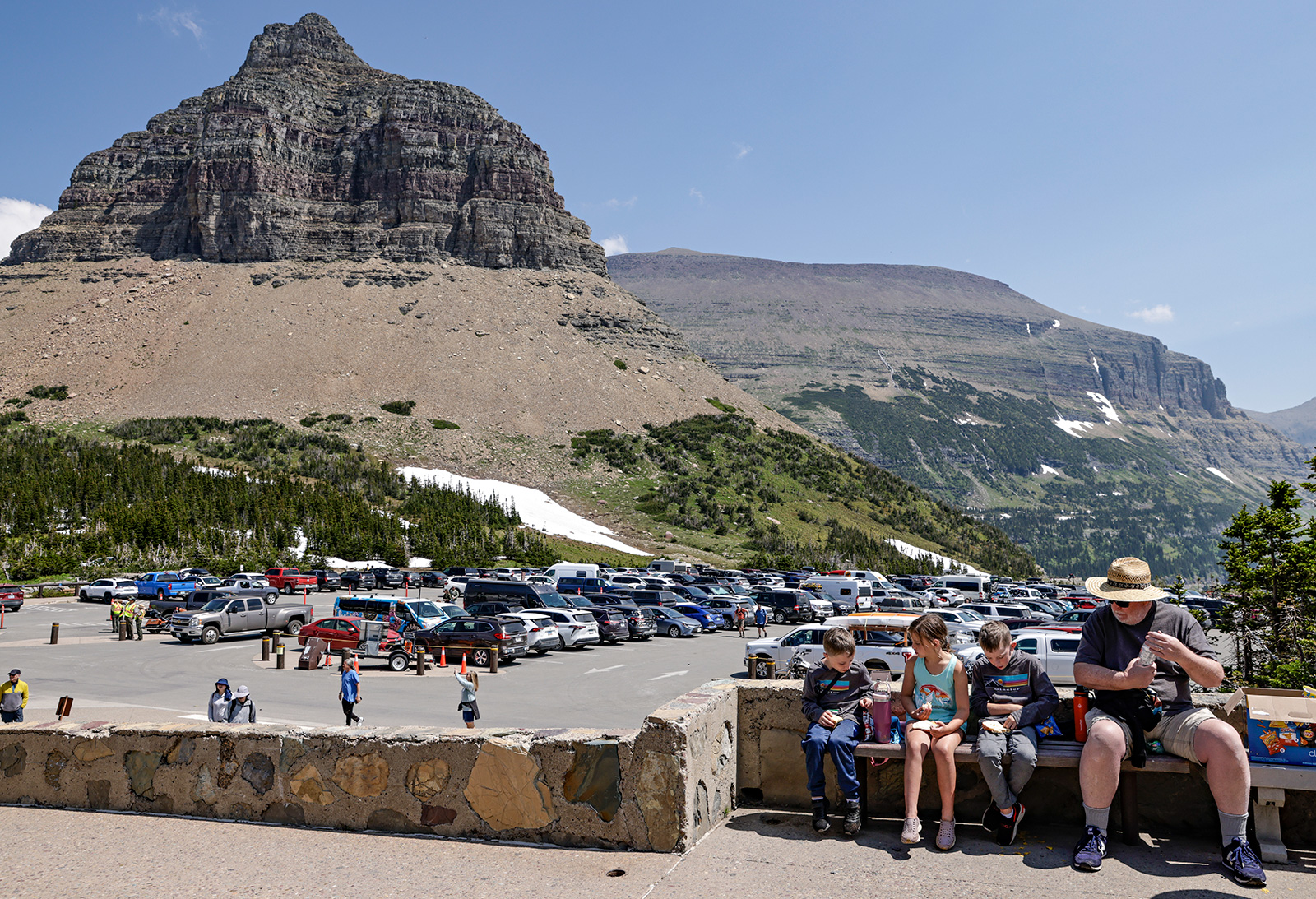
The Interior Department’s decision to eliminate the reservation requirement for visitors driving into Glacier, Arches and Yosemite national parks this summer has drawn mixed reviews, with advocacy groups and some elected leaders accusing the agency of “choosing chaos over conservation” even as local business leaders say the new system delivers greater consistency.
For tourism-dependent economies near Glacier, where park administrators have for the past five years targeted congestion in high-demand corridors by modifying a vehicle-entry reservation system on a seasonal basis, the new plan’s reliance on a ticketed shuttle system and three-hour time limits for parking at Logan Pass softens the demands of a fixed reservation requirement. It also clears up some confusion for visitors and visitor centers, who both had to relearn the basics at the start of every summer.
Describing the pros and cons of the park’s pilot reservation program, Diane Medler, executive director of Discover Kalispell, said that while it improved some aspects of the visitor experience inside Glacier, it has failed to resolve a “critical pain point” at the Logan Pass Visitor Center, where crowding is most acute, while adding to the burden of communicating the logistics to the public.
“It’s a highly complex issue, and I commend the park for gathering this data over the past five years to learn what aspects of the vehicle reservation system were most effective, and which didn’t work,” Medler said. “But we all know that Logan Pass has been a bottleneck for many years, so we’re very hopeful that this new plan solves some of those issues.”
Although Medler said conveying the details of a reservation system that shifted on an annual basis “has been complicated and confusing,” she acknowledged that it’s provided relief at the park’s primitive North Fork region, where post-pandemic overcrowding and congestion became unmanageable in 2021. She said Discover Kalispell is crafting a messaging campaign to prepare people for inevitable closures and restrictions at park entrances that aren’t designed to accommodate surges in visitation.
“I am concerned about the North Fork and how it’s going to be impacted with no reservation requirement up there,” Medler said. “People will just have to be aware that they might drive all the way up there only to be turned around. We’re encouraging visitors to be informed, be aware and have alternative plans.”
While the reservation system didn’t guarantee visitors a parking spot at Logan Pass or anywhere else along the popular Going-to-the-Sun Road corridor, it did afford a measure of certainty for motorists accessing the park at West Glacier or St. Mary, as well as other busy entrances that tested out the requirement, including at the North Fork, Two Medicine and Many Glacier. Still, even with the reservation requirement in place, those entrances have continued to reach capacity at the height of summer, with park officials swinging the gates to temporarily divert visitors during periods of heavy congestion. Similar to previous years, visitors with lodging, camping or outfitter reservations will be permitted entry in 2026 even when the temporary closures are in effect, but they “may experience delays,” according to Glacier officials.
Zak Anderson, executive director of Explore Whitefish, gave Glacier’s higher-ups credit for their efforts to communicate with tourism bureaus on a year-to-year basis, particularly about changes to the evolving strategy for managing visitor access. But even with the advance notice, Anderson described encountering a range of challenges when messaging those changes to the business community, from outfitters to front-line hospitality workers.
“Everyone needs to be fluent in communicating changes to the entry requirements, and when there’s uncertainty heading from one season into the next, that becomes more challenging,” Anderson said. “Whether we’re talking about changes to park reservations or tariffs or our workforce, the word ‘uncertainty’ has become too common in our vocabulary.”
The shifting sands of the park’s reservation system did little to resolve that uncertainty, Anderson said, drawing comparisons between the park’s pilot reservation system and the overcrowding that’s persisted at Logan Pass to a restaurant without any available tables.
“It’s like the park was inviting everyone through the front door, but they didn’t have a table for them,” Anderson said. “Everyone who entered the park with a reservation still had to fight for a table because the parking lot at Logan Pass was still always full.”
“I look forward to seeing it in action,” Anderson said of the new plan. “My hope is that this solves some of the problems at Logan Pass, improves the visitor experience and improves the experience for locals as well, because it should serve everyone.”
Glacier isn’t alone in its decision to lift vehicle reservation requirements. The National Park Service on Feb. 18 announced park-specific visitor access plans for summer 2026 “designed to expand public access while maintaining safe and responsible management during peak visitation” at Arches, Glacier and Yosemite national parks.
According to Kevin Lilly, the Interior Department’s acting assistant secretary for fish, wildlife and parks — a new hybrid position responsible for overseeing both the National Park Service and the U.S. Fish and Wildlife Service — the “tailored approaches reflect each park’s unique infrastructure, visitation demand and coordination with state and local partners.”
“Our national parks belong to the American people, and our priority is keeping them open and accessible,” Lilly said in a prepared statement that accompanied the Interior Department’s announcement. “We’re expanding access where conditions allow and using targeted tools only where necessary to protect visitor safety, maintain emergency access and preserve these extraordinary places for future generations.”
One park with plans to continue its reservation requirement this summer is Rocky Mountain National Park in Colorado, which will continue its timed entry reservation system during peak visitation months, from late May through mid-October. Similar to Glacier, Rocky Mountain instituted its reservation system on a trial basis in 2021 due to intense congestion.
All four parks are working to strengthen seasonal staffing and operational readiness to support strong visitation in 2026, according to the announcement. When parking areas or roadways reach capacity, “parks may implement short-term traffic management measures to maintain safe conditions and protect park resources,” the release states.
At Glacier, vehicle reservations will not be required anywhere in the park in 2026. Instead, a new express shuttle system and Logan Pass parking restrictions are set to begin July 1, assuming the upper reaches of Going-to-the-Sun Road are cleared of snow by then. The shuttle, which includes early morning express routes, will ferry visitors to the Logan Pass Visitor Center from both the east and west sides of Going-to-the-Sun Road, while the three-hour parking time limit is “intended to increase parking turnover and provide more visitors the opportunity to experience the area.”
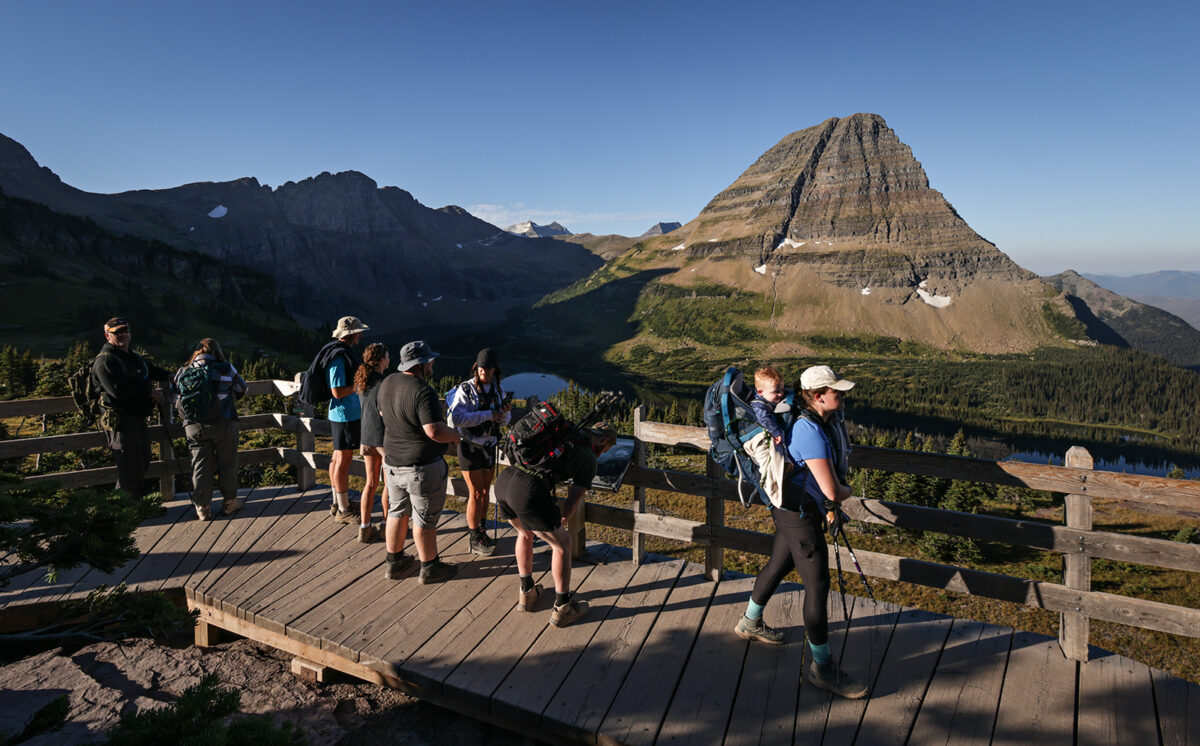
“Three hours allows time to hike to Hidden Lake Overlook, visit the Logan Pass Visitor Center or attend an interpretive program, visitors planning longer hikes that begin at Logan Pass, including the Highline Trail to Granite Park Chalet or to the Loop Trailhead, must obtain a shuttle ticket,” according to the park’s Feb. 18 news release.
Superintendent Dave Roemer, who had previously described the park’s pilot reservation system as homing in on “a sweet spot” after five consecutive summers, last week expressed support for the “new trial measures,” which he said “aim to improve the public’s ability to visit Logan Pass for short durations and allow the shuttle system to perform more reliably for a more specific purpose.”
“This initiative reflects our continued learning and listening as we refine park transportation and access to better serve the public and safeguard the integrity of the park’s resources,” according to a statement from Roemer.
The news prompted a torrent of questions from the public and the local news media to which park officials have been slow to respond. Among the most pressing questions centered on how the time limits for parking at Logan Pass will be enforced; how hikers are meant to ensure they have adequate time to complete their route without violating the parking restrictions or missing their shuttle; details on shuttle routes, stops and times; and the challenge of procuring reservations from inside the park, where internet and phone service is limited.
As of Monday afternoon, a park spokesperson had not responded to questions the Beacon emailed them on Feb. 19.
The National Parks Conservation Association (NPCA) condemned the Interior Department’s move to do away with reservations at Yosemite and Arches, with the advocacy group saying the changes ignores National Park Service “leadership and expertise and fails to address years of unsustainable visitation patterns at the parks.”
NPCA softened its messaging on Glacier, however, despite having consistently supported the vehicle reservation system. The 2026 changes “raise serious concerns about the park’s ability to manage increasing traffic during peak days and hours,” according to a statement from NPCA, which encouraged the park to continue building on its foundation of visitor-use data to refine a system for managed access that corresponds with visitation patterns.
“The pilot programs proved that reservation systems work and multiple seasons help parks adapt, refine their systems and build visitor awareness,” according to NPCA.
“This decision eliminates the opportunity to finalize long-term strategies for visitor use management at some of our busiest parks — especially as visitation to parks across the country continues to soar,” according to an NPCA press release.
Sarah Lundstrum, the NPCA’s senior Glacier program manager, said the past five seasons has proven that “managing access to some of our most visited national park sites makes a positive difference, improving visitor experiences and protecting the views, wildlife and the very reasons people seek out our parks.”
Although the new strategy focuses on two recurring problems — namely, persistent gridlock at Logan Pass and an inefficient shuttle system — she cautioned that a blanket rollback of reservation requirements threatens to undo years of work.
“Vehicle congestion within Glacier can dominate the visitor experience and take away from the work rangers are meant to be doing,” she said. “Traffic, long lines and blocked views can ruin a once-in-a-lifetime trip to Glacier. While we are eager to see how shuttle reservations and time-limited parking at Logan Pass will address long-standing visitor use challenges, we encourage the Park Service to apply what they’ve learned from the last five years of vehicle reservations that have successfully reduced entrance station lines and congestion on the Going-to-the-Sun Road.”