Memo Reveals Forest Service Could Open Recommended Wilderness to Off-road Vehicles
Local conservationists say the potential U.S. Agriculture Department secretarial memorandum is part of the latest effort to roll back regulations and undermine years of collaboration in managing motorized and non-motorized use in the Flathead National Forest
By Maggie Dresser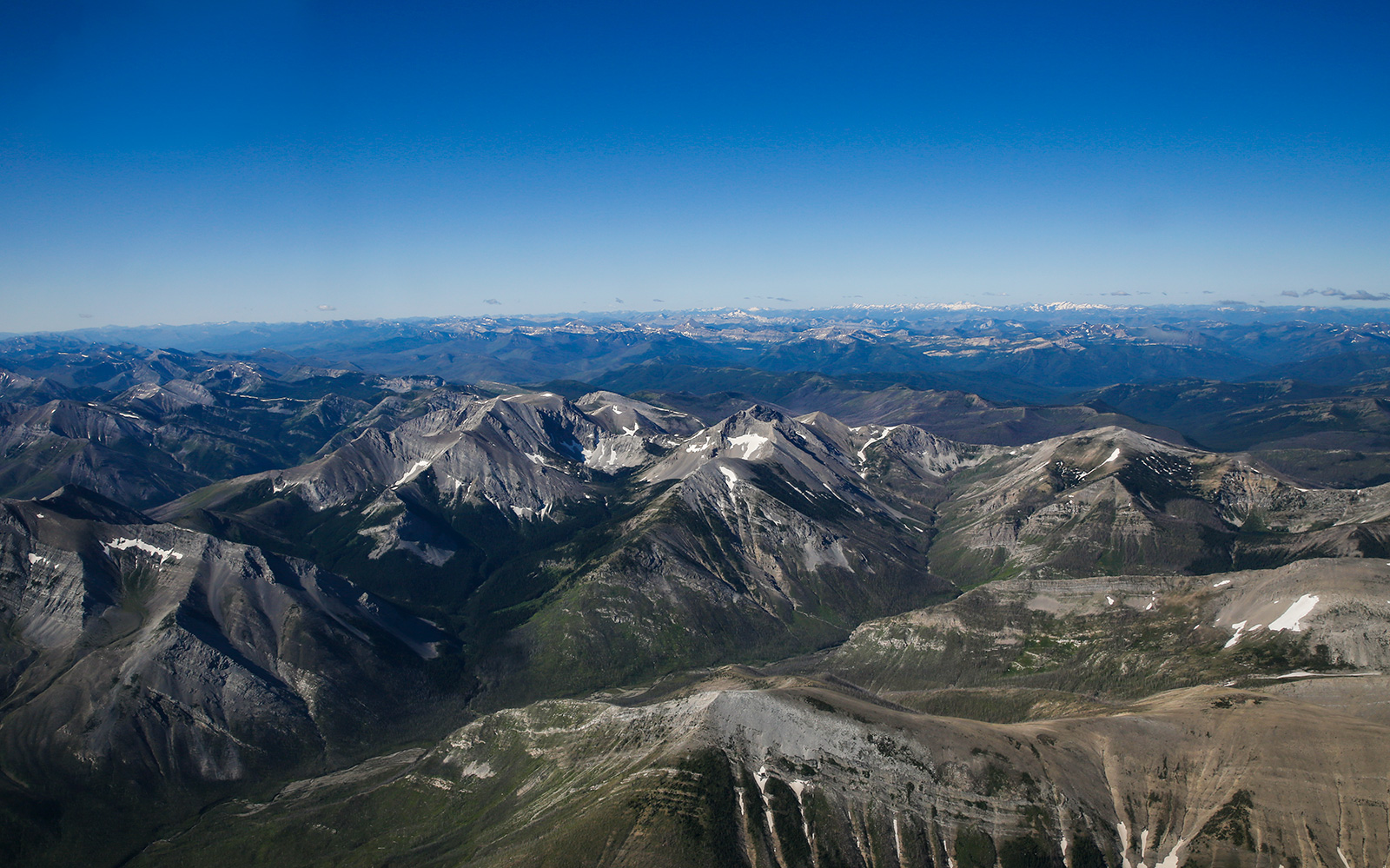
More than 190,000 acres of recommended wilderness in the Flathead National Forest could be opened up to off-road vehicles (ORVs), according to a U.S. Department of Agriculture secretarial memorandum that leaked earlier this month. The memo, which laid out federal officials’ plans to unwind protections that have been in place in northwest Montana since 2018, prompted local and national advocacy groups to rush to action.
Following four years of interagency collaboration, environmental analysis and an extensive public participation process, the Flathead National Forest’s Revised Land Management Plan was officially adopted in 2018, designating 193,403 acres of land as recommended wilderness, including areas in the northern Whitefish Range, the Swan Range and land bordering the Great Bear Wilderness and the Badger-Two Medicine.
The New York Times earlier this month reported that a leaked memo directed the use of ORVs on 5 million acres in Montana and Idaho, 193,403 acres of which are within recommended wilderness areas on the Flathead National Forest. Local stakeholders say the directive would unwind years of collaborative work if it comes to fruition.
“The secretarial memo — should it be released — would be a pretty drastic change in management direction for areas recommended as wilderness by the Forest Service,” Glacier-Two Medicine Alliance Executive Director Peter Metcalf said. “The Forest Service has been directed by Congress — going back decades — to inventory all the lands under its management for eligibility for inclusion for wilderness.”
Under the memo, that eligibility would be eliminated and the U.S. Forest Service would be ordered to open areas of recommended wilderness across those 5 million acres to ORVs.
Agencies and public members involved in the Flathead National Forest’s 2018 Revised Land Management Plan spent years identifying lands with specific wilderness characteristics and designating areas as motorized and non-motorized.
“What we could see on the Flathead National Forest, if this all comes to bear, is basically undermining years of public work including motorized users, backcountry skiers, and horseback riders working to come to some sort of agreement of which areas should be open for motorized,” Metcalf said. “And of course, the Forest makes the final decision. That public input as well as the professional judgement could be undermined and done frankly without any public process, and that is fairly insulting.”
Metcalf is particularly concerned about the Badger-Two Medicine, which is considered sacred ground by the Blackfeet Nation due to its deep cultural and historical significance. It is also an ecologically and jurisdictionally complex region, bordering the Great Bear Wilderness in the Middle Fork Flathead River drainage.

For example, the Slippery Bill-Puzzle Creek recommended wilderness area would be absorbed into the Great Bear Wilderness under the current recommended wilderness designation and would add protection for Granite and Morrison creeks, which are tributaries feeding into the Middle Fork and serve as bull trout habitat.
However, this wilderness recommendation has been controversial among motorized users because it would close a mile-and-a-half of existing snowmobile route beyond the Challenge Cabin on Skyland Road, Metcalf said.
Metcalf also identified as critical the Bunker Creek area, which feeds into the South Fork Flathead River and borders the Bob Marshall Wilderness while connecting roadless areas to the Swan Crest.
Land in the northern Whitefish Range, too, is identified as recommended wilderness and serves as important grizzly bear and lynx habitat. It was also part of the Whitefish Range Partnership Agreement, which in 2013 recommended the Hefty-Tuchuck, Thompson-Seton and Nasukoin areas for wilderness protection while also setting aside a motorized-designated area near McGinnis Creek as well as mountain bike trails to the south.
“That area came through the Whitefish Range Partnership and recommendation passed through a multi-year process involving citizens from across the spectrum from mountain bike, logging and conservation advocates,” Metcalf said. “Not only is it important for wildlife, but how communities can come to an agreement.”
Sarah Lundstrum, the Glacier field representative for the National Parks Conservation Association, said Montana has a long history of stakeholder collaboration to ensure all user groups have access to public land. Meanwhile, the process for unwinding recommended wilderness is unclear.
“Rolling back something like travel management planning that essentially gave certainty to ORV and snowmobile groups is just bad policy,” Lundstrum said. “It creates confusion — especially where there’s been certainty for so long.”
Lundstrum is unsure of what that process would look like for Glacier National Park, where snowmobile access has been prohibited for a half-century.
“Who would have thought that 50 years after Glacier was closed to snowmobiles theoretically someday that would [be lifted]?” Lundstrum said. “That decision was made in 1975, and it was partially based on an executive order from the Nixon era. What does that mean?”
Flathead Snowmobile Association President Todd Durado, too, is unsure of what the rollback would mean for snowmobilers using federal land. He told the Beacon he couldn’t comment until he learned more about the situation and spoke with Montana Snowmobile Association members across the state.
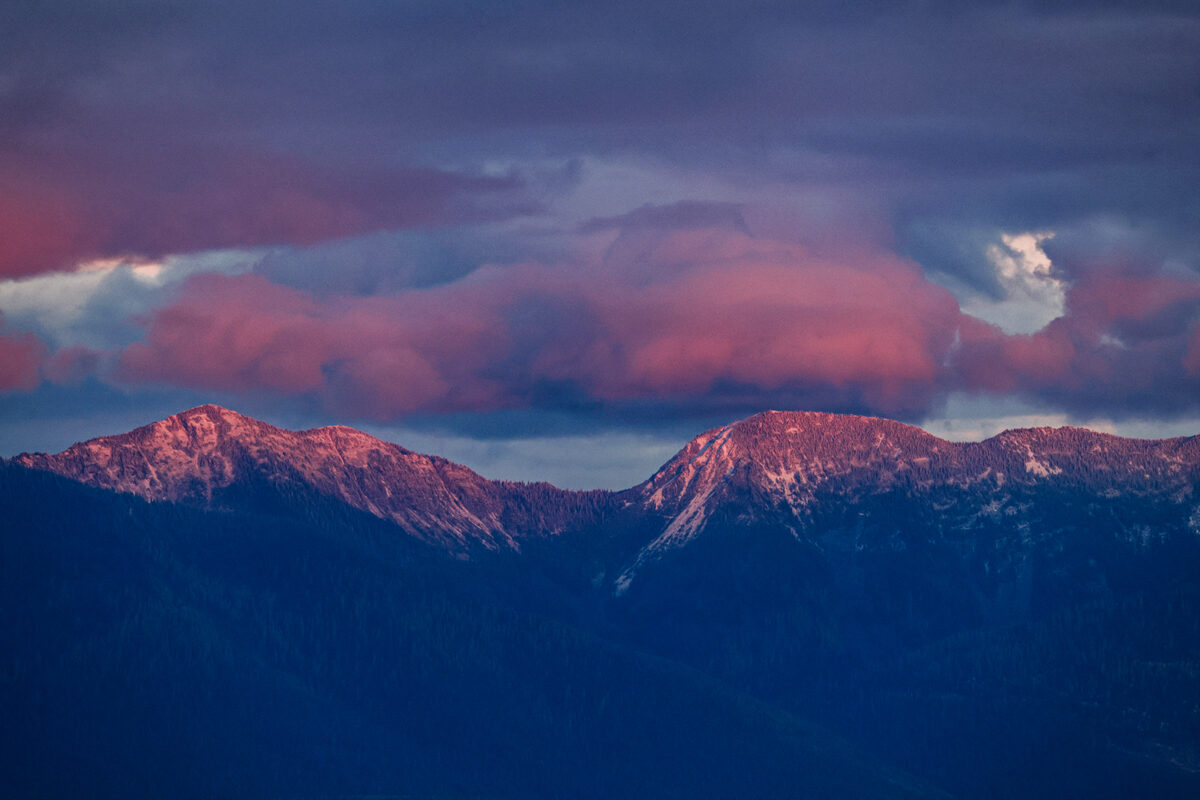
As public land advocates try to make sense of what a potential unwinding of recommended wilderness would look like on Flathead National Forest land, conservationists point to this as the latest effort to unwind protection.
“The concern here is the memo as we understand it is basically telling the Forest Service to stop managing this area as having wilderness characteristics and to allow or manage a variety of non-conforming uses, and that’s opening it to off-road vehicle use,” Metcalf said. “It’s part of a broader effort right now to open as much of our public lands as possible to off-road vehicle use.”
Last month, the Trump administration repealed two orders from the 1970s that restricted ORV use on public lands, establishing strict criteria on federal lands and another that authorized the agencies to shut down off-road driving if it was causing ecological damage.
U.S. Department of Agriculture Secretary Brooke Rollins is also in the process of rescinding the 2001 Roadless Area Conservation Rule, saying it hinders land managers from conducting “responsible forest management” to mitigate wildfire risk.
The Roadless Rule generally prohibits road building and logging in all 58.5 million acres of national forest roadless areas with access exceptions like logging, vegetative treatment and prescribed burns.
Earlier this month, Steve Daines, R-Mont. voted to advance the bill during a Senate Energy Natural Resources hearing, which now moves to the Senate for a full vote.
Barb Cestero, the Montana State Director of The Wilderness Society, said the leaked memo is just the latest action taken to “sow chaos.”
“The proposed radical budget cuts, relocating the agency headquarters, the staff cuts – it’s all part of a package of dismantling the agency and it results in less access to national forest, less capability to address wildfire risk and manage recreation and it adds more threats to clean water, air and wildlife.”
Cestero said the potential memo would unwind management efforts, leading to ecological impacts and detracting from unmotorized activities that will create more user conflict.
“Once those kinds of uses get established in place, it becomes almost impossible to restore them back to wilderness,” Cestero said.