Cross-border Coalition Ramps Up Pressure for Independent Review of B.C. Mine Expansion
Tribal governments and environmental groups in Montana and British Columbia say Canadian regulators cannot be trusted to impartially judge the proposal
By Tristan Scott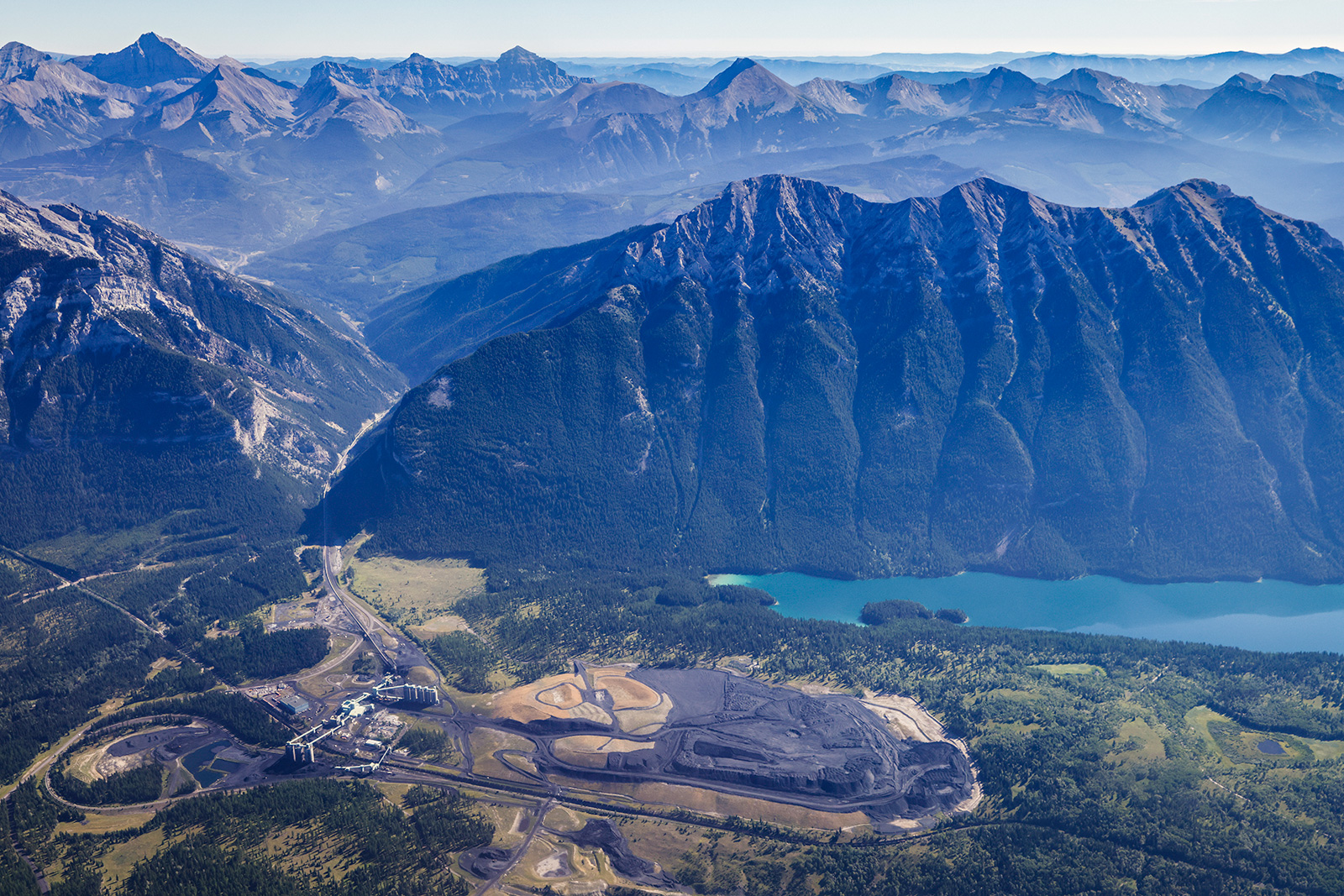
A widening coalition of environmental organizations, U.S. tribes and Canadian First Nations is escalating calls for an independent panel to review Glencore’s proposed expansion of the Fording River coal mine in British Columbia’s Elk Valley, arguing that federal and provincial officials have already tipped their hand in favor of approval.
The Fording River Extension (FRX) would add nearly 5,000 acres (2,000 hectares) to what is already Canada’s largest metallurgical coal mine, extending its operating life by roughly 30 to 35 years while generating over 3 billion cubic meters of waste rock — the primary source of the selenium contamination that has plagued the transboundary watershed for decades, leaching contaminants downstream into Montana and Idaho.
“We are extremely concerned that the actions and comments of the B.C. and Canadian governments indicate they have already decided to find a way to rubber-stamp the huge mine expansion no matter what the cost to the environment and public,” said Derf Johnson, deputy director of the Montana Environmental Information Center (MEIC), one of dozens from B.C., Montana and Idaho who signed a joint letter to Federal Environment Minister Julie Dabrusin calling for an independent review of the FRX proposal.
The fight over the scope of the FRX regulatory review has been building since March, when Wildsight, a B.C.-based conservation group, first asked federal Environment Minister Julie Dabrusin to invoke her discretionary authority under the Impact Assessment Act to send the project to an independent panel rather than the standard joint federal-provincial process. That request was folded into a broader April letter signed by dozens of organizations spanning B.C., Montana and Idaho, including the MEIC, MiningWatch Canada, the Idaho Conservation League, and state and provincial chapters of Backcountry Hunters and Anglers.
The campaign has since drawn in Indigenous governments on both sides of the border. In April, the Confederated Salish and Kootenai Tribes (CSKT) in Montana submitted their own formal request to Dabrusin, asking that an independent panel “more robustly analyze” the project’s implications for both countries. The Kootenai Tribes of Idaho and Canada’s Ktunaxa Nation have added their support for an independent review. The Ktunaxa Nation has opposed the project for years — its objections were central to B.C.’s decision to reject an earlier version of FRX back in 2023.
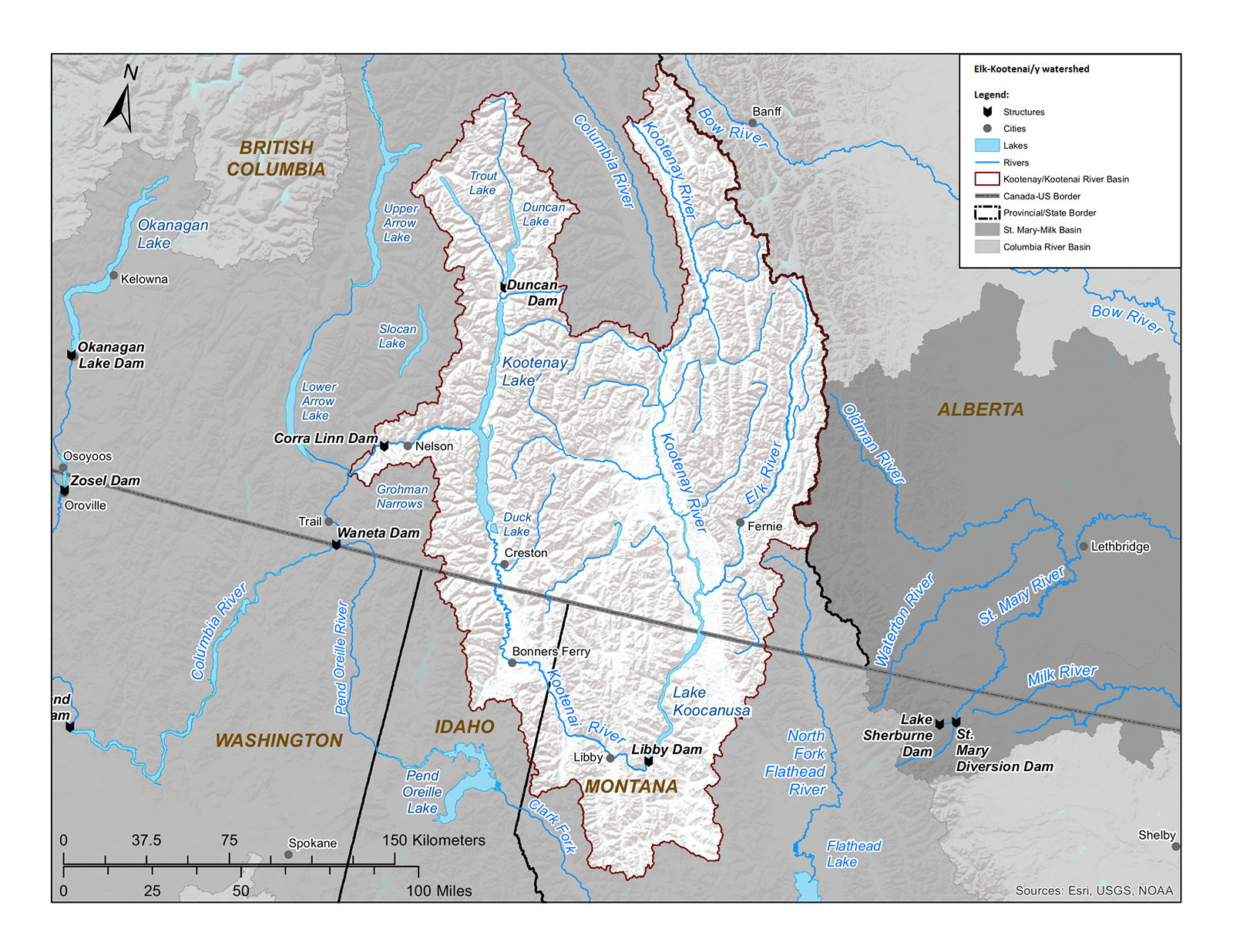
CSKT Chairman Michael Dolson said tribal leaders are concerned the FRX proposal would exacerbate pollution downstream in Lake Koocanusa and the Kootenai River watershed (spelled “Kootenay” in Canada).
“The FRX Project is one of the largest coal mine projects ever proposed in the Elk Valley, and it is situated in the most impacted area of the region. The project will cause significant effects to water quality, aquatic habitat, and unique fish populations in Canada and throughout the transboundary watershed, undoing many Ktunaxa efforts to restore critical fish populations, including endangered Kootenai River white sturgeon and westslope cutthroat trout,” Dolson, referring to B.C.’s Ktunaxa Nation, told the Beacon in April. “The independent, federal Review Panel is the only appropriate approach for a project of this size that would be in place for decades and potentially have centuries worth of pollution impacts.”
Although tribal governments have long called for a moratorium on new or expanded open-pit coal mines in the transboundary watershed until the effects of historic and ongoing pollution are understood and remedied, their resistance to FRX has grown in proportion to the scale of scientific evidence and social awareness that Canadian coal mines present long-term environmental consequences to downstream watersheds, adjacent communities and Indigenous cultures.
Meanwhile, a spokesperson for Glencore’s Elk Valley Resources (EVR), which owns and operates the company’s four steelmaking coal mines in B.C.’s Elk Valley, said the FRX project would maintain current production levels while expanding mining into a new area south of existing operations. Provincial and federal assessments of the project under the B.C. Environmental Assessment Act and Canadian Impact Assessment Act have been “comprehensive,” the spokesperson said.
“The FRX project is a proposed extension of the current Fording River Operations (FRO) and plans to use existing equipment and infrastructure at FRO to reduce the footprint of new activities,” EVR Communications Manager Chris Stannell wrote in an email.
Stannell also said EVR continues to make “significant progress” implementing its Elk Valley Water Quality Plan, which was approved and enacted by the B.C. government in 2015, including “reducing selenium concentrations downstream of our Fording River Operations to levels” not seen since before the plan’s implementation.
Still, pointing to a growing body of scientific evidence, groups argue the stakes go well beyond the mine’s footprint. Existing Elk Valley operations have pushed selenium levels in local waterways to more than 30 times established aquatic-life safety thresholds, according to Wildsight, and independent studies have traced the contamination hundreds of miles downstream into Montana, Idaho and the Columbia River.
Despite the mounting pressure, neither government has budged. Dabrusin responded to the coalition in May, stating she was confident that the coordinated review already underway — led jointly by the federal Impact Assessment Agency and B.C.’s Environmental Assessment Office — would be sufficiently rigorous, effectively declining to exercise her authority to refer the project to an independent panel.
B.C., meanwhile, has moved in the opposite direction from what critics were hoping for. Weeks after the coalition’s April letter, Premier David Eby named FRX to a list of 17 projects the province intends to fast-track. B.C.’s minister of mines subsequently joined the Mining Association of B.C. in Ottawa to promote the region’s metallurgical coal alongside critical mineral projects — a pairing environmental groups say undercuts any claim of neutrality in the province’s review.
“It is pretty certain that B.C. will use the assessment process to find a way to justify FRX no matter what,” said MEIC’s Johnson. “The Province already knows about the pollution and other problems with EVR’s existing operations, and it is doing everything it can to get this expansion approved.”
Neither Dabrusin’s office nor B.C. Mining Minister Jagrup Brar’s office has offered detailed public responses to the specific pollution and liability concerns raised by the coalition.
WHAT DO THESE CHANGES MEAN FOR NORTHWEST MONTANA?
We’re committed to highlighting our great outdoors and the policies and conversations shaping it. And you can help! Become a member to support more reporting on public lands and keep you and your neighbors in the loop and on the trails.
Underlying the dispute is a separate, independent process that critics argue governments are choosing to sidestep. In 2024, after more than a decade of pressure from the Ktunaxa Nation and allied tribes, Canada and the United States jointly referred the Elk-Kootenai watershed’s pollution problem to the International Joint Commission (IJC) under the Boundary Waters Treaty of 1909. An 18-member governance body and an independent study board — made up of experts and knowledge holders from both countries and the Ktunaxa Nation — were struck to investigate.
That study board delivered an interim report to both governments in late 2025. Its final report and recommendations, originally due in September 2026, have since been pushed back to December 2026, an extension attributed partly to a U.S. federal government shutdown and B.C. labor disruptions late last year.
The timing gap is significant: B.C.’s environmental assessment of FRX is expected to conclude well before the binational commission finishes weighing in on the transboundary pollution question the mine expansion would deepen. Critics say the sequence of that timing all but guarantees the province’s decision will be made without the benefit of the independent watershed-wide findings.
Meanwhile, financial accountability has become as central to the fight as the environmental review itself. A 2024 analysis commissioned by Wildsight put the cost of cleaning up selenium already released into the watershed at $6.4 billion — more than triple the $1.9 billion reclamation bond the mine’s previous owner, Teck Resources, had posted with the province at the time.
When Ottawa approved Glencore’s roughly $7 billion acquisition of Teck’s coal operations in July 2024, a spinoff that resulted in the creation of a Glencore-owned company called Elk Valley Resources (EVR), the deal came with a condition requiring Glencore to maintain a reclamation bond of $4.7 billion, which critics say still falls short of the estimated cleanup cost, and only accounts for the selenium problem specifically.
“B.C. and Canada have a long history of paying to clean up mining messes,” said Simon Wiebe, Mining Impacts and Policy Lead for Wildsight, which made its own request for an independent review. “B.C.’s bonds have been shown to be inadequate, and we are all being exposed to billions of dollars in risk, not to mention decades of environmental impairment.”

Days after Glencore’s acquisition closed, federal prosecutors filed new Fisheries Act charges against the operation over continuing pollution violations, layered on top of a record $60 million fine handed down in 2021. Those charges remain unresolved.
“Frankly, it is mind boggling that the poster child for transboundary mining pollution in North America is still in consideration for getting mine expansions,” Wiebe said.
Groups opposing the expansion say the pattern of inadequate bonds, mounting fines, unresolved violations, and the expanding scope of the transboundary pollution problem is reason enough to slow down the approval process rather than accelerate it, particularly as global demand for metallurgical coal is projected to soften with the rise of lower-emission steelmaking. They warn that if the market turns before cleanup costs are fully secured, B.C. taxpayers could be left covering the gap, as has happened with other mining liabilities in Canada, including the Giant Mine remediation in the Northwest Territories, which is expected to cost more than $4 billion.
For now, the FRX proposal continues through the standard joint assessment process, with no indication that either Ottawa, the seat of Canada’s federal government, or Victoria, the capital of B.C., intends to reroute it to an independent panel — even as the coalition pushing for one continues to grow.
“If this major coal mine expansion does not meet the criteria to require an assessment, there is something very wrong with the criteria — or the way it is being interpreted,” said Jennifer Ekstrom, who leads the Kootenai River Campaign for the Idaho Conservation League.