Good afternoon, Beacon readers. It’s your local cops and courts reporter here, bringing this newsletter to you from Flathead County District Court where a busy day of proceedings in two separate homicide cases began at 9 a.m.
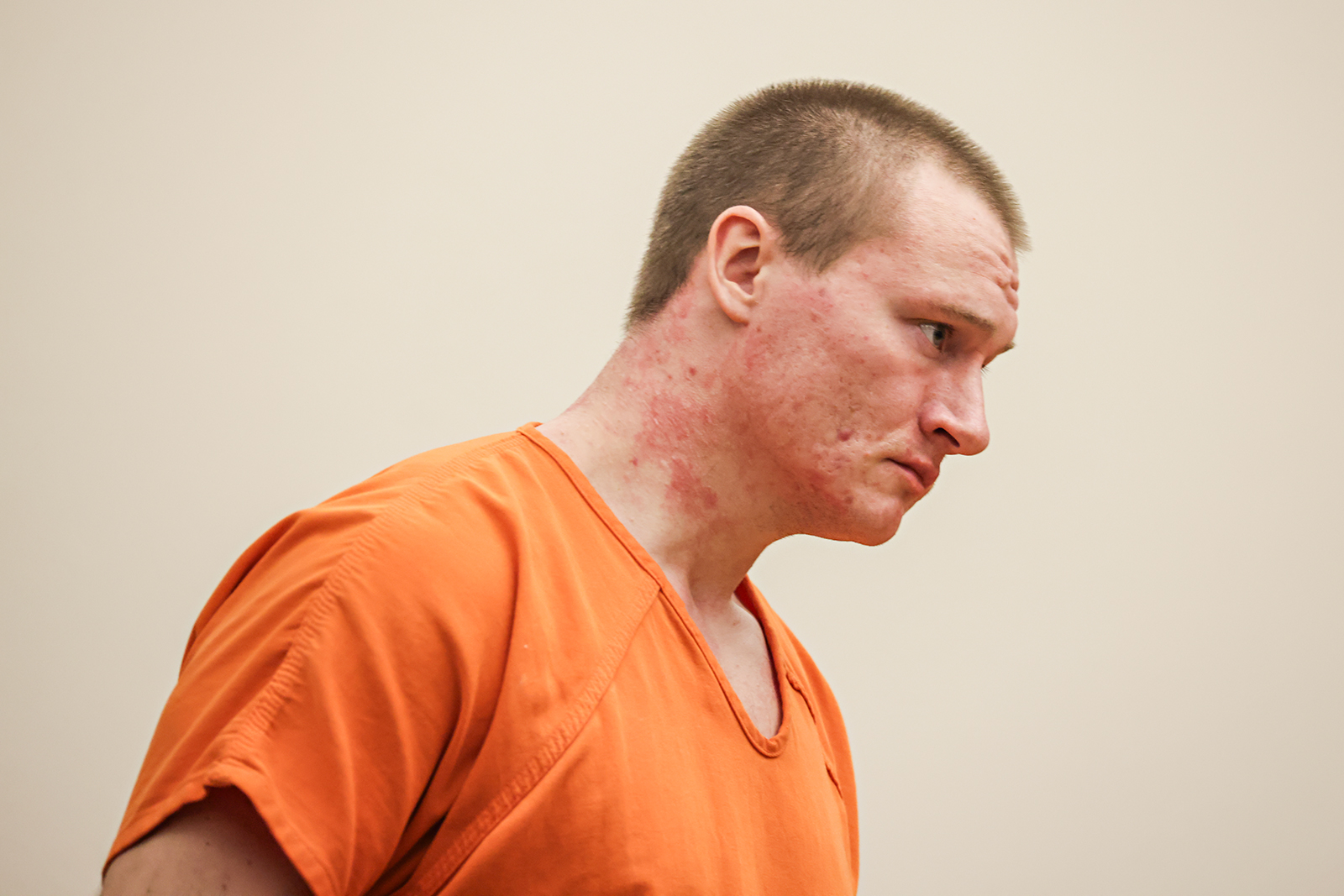
The defendant is accused of running over 67-year-old Raymond Maurice “Mory” Grigg last August in the Fritz Corn Maze after trespassing multiple times on the victim’s property located next door.
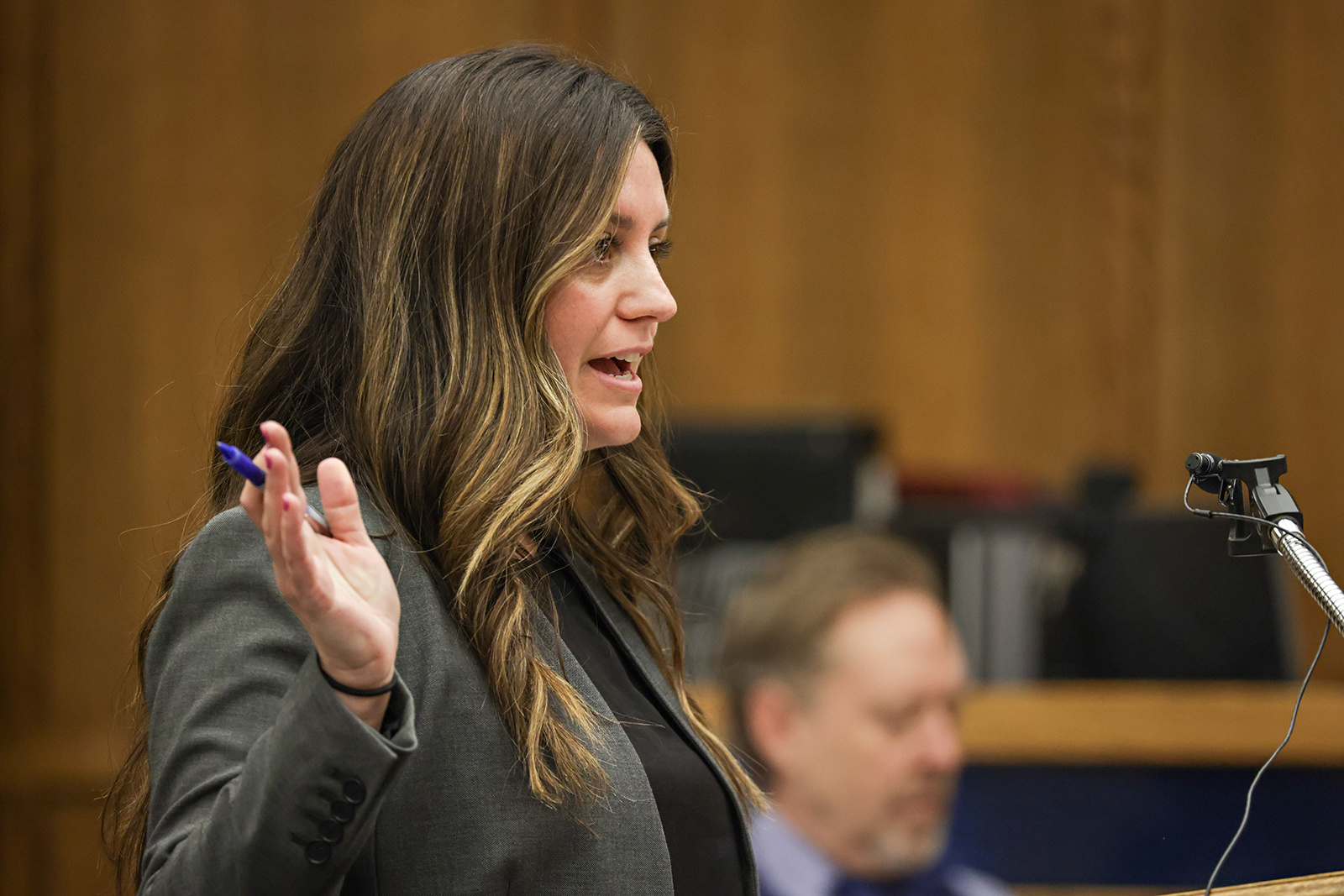
Prosecutor Ashley Frechette (pictured below) described an evening that began with a pizza party hosted by Grigg on the evening of Aug. 19, 2025 and ended with the defendant dragging him 40 feet through a power box, two barbed-wire fences and into the corn maze with his Toyota Sequoia.
However, Serio’s public defender, Alisha Rapkoch, described her client’s actions as a fight-or-flight response after Grigg fired gunshots at his vehicle, acting in self-defense and unintentionally striking the victim.
The 14-person jury, which includes two alternates, has heard testimony from pizza party attendees, neighbors, a state medical examiner who performed the autopsy, and law enforcement as the trial continues.
Additionally, the jury heard from a Michigan tourist, who was renting one of Grigg’s vehicles through the rental service Turo, and happened to be returning that vehicle to his property at the time of the incident.
Fred Kobler told jurors he and his wife were visiting the area last summer in celebration of their anniversary to reenact their honeymoon.
“I went over to my wife and said, ‘He’s dead, whoever it is, he’s dead,’” Kobler told jurors on the first day of trial. “I knew in my heart that somebody had just died. I have no evidence of that — I just knew it.”
I’m Maggie Dresser, here with all the courtroom news in this Thursday edition of the Daily Roundup.
The trial began Monday with voir dire, which consumed an entire day as attorneys selected a panel of jurors who will deliver a verdict once the trial concludes.
Yesterday, Flathead County District Court Judge Heidi Ulbricht instructed law enforcement to escort jurors in and out of the justice center throughout the trial after attorneys observed members of the public engaging with them.
As during any trial, jurors are ordered to not discuss the case or consume media regarding the case to maintain the integrity of the trial and prevent jury contamination or biases.
While the law enforcement escort is a far cry from jury sequestration, during which jurors are isolated from the public and the media to prevent outside factors from influencing their verdict, it led me down a rabbit hole of famous jury sequestration cases.
High-profile cases like the trials of Bill Cosby and Charles Manson involved jury sequestration while the 1995 O.J. Simpson trial ranks No. 1 as the longest, with jurors isolated for 265 days.
For nearly nine months, the jurors resided in a hotel five blocks from the courthouse and were forbidden from locking their rooms, going on solo walks or talking on the phone without a deputy listening. Meals were cafeteria-style and jurors couldn’t even have a cocktail at the end of the day to take the edge off. There were only two televisions in their hotel, and only court-approved movies could be viewed.
The first time an American jury was ever sequestered was in the 1907 trial of millionaire Harry Thaw, who murdered famed architect Stanford White at Madison Square Garden in a “jealous rage” over Thaw’s actress wife in what was dubbed the “Murder of the Century.”
After the jury in the first trial was deadlocked and a new trial was ordered, the second jury found Thaw not guilty by reason of insanity. He was committed to a mental institution from which he later escaped and fled to Canada. He spent the next decades in and out of incarceration and mental institutions before vanishing after a New York jury indicted him on kidnapping charges. He was found 25 years later in a Philadelphia hotel after a suicide attempt, committed to another mental institution and his charges were eventually dismissed. Thaw was released and wrote a memoir called, “The Traitor.”
Whitefish Planning Commission Approves New Zoning and Subdivision Regulations
The new regulations, which were tailored to comply with state legislation taking effect this year, will now go to the city council for review on May 18
Whether you’ve been here for decades, or you’re new to the Flathead Valley, our reporting is here to help you feel smarter and in the loop about the issues most important to Northwest Montana. With your support, we can build a more engaged, informed community.