Stakeholders Close Deal to Conserve 53,000 Acres of Timber Forests Near Libby
With both phases complete, the Montana Great Outdoors Project ensures working forests between Kalispell and Libby remain in timber production while allowing permanent public access
By Tristan Scott
State wildlife officials, loggers and conservation leaders on Dec. 15 celebrated the completion of a project to permanently protect 53,000 acres of private timberland in Flathead and Lincoln counties, closing out a multi-year deal that drew plaudits from a diverse alliance of stakeholders, including leaders in the wood products industry, the conservation community, sportsmen groups, and Montana’s entire congressional delegation.
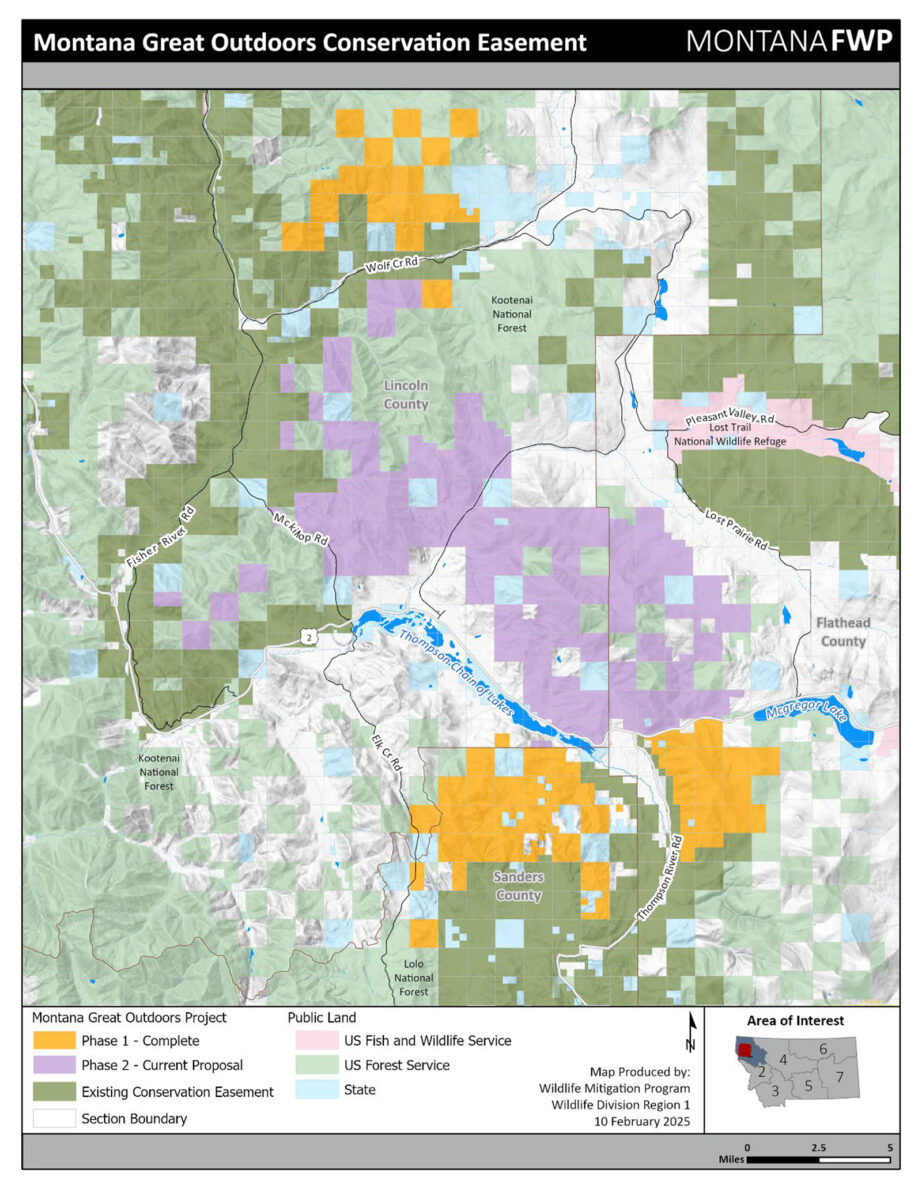
Called the Montana Great Outdoors Conservation Easement, the project in its entirety encompasses 85,752 acres of private timberland owned by Green Diamond Resource Company. The first phase of the project, which protected 32,981 acres in the Salish and Cabinet mountains, received final approval from the Montana Land Board in December 2025. The second phase of the easement, which would encompass forestlands in the Cabinet Mountains between Kalispell and Libby, received final Land Board approval in October.
Despite the broad support for the project, it was never a sure thing; with both phases now complete, advocates of the project hailed it as a triumph in legacy landscape conservation that will endure for generations to come. Not only will it prevent development, promote sustainable timber management, protect wildlife habitat and landscape connectivity, but it also supports wood-product jobs and provides permanent public access for recreation.
“This project is Montana at its best — it protects our outdoor heritage, supports our rural economies, and ensures these forests remain open and productive for generations,” said David Weinstein, Northern Rockies Director for Trust for Public Land (TPL), in a prepared statement.
The project is the culmination of a multi-year effort by the Montana Department of Fish, Wildlife and Parks (FWP), the nonprofit TPL and landowner Green Diamond Resource Company, which in 2021 purchased 291,000 acres of private timberland from Southern Pine Plantations (SPP), the real estate and investment company that in 2019 bought 630,000 acres from Weyerhaeuser Co., which acquired the land in 2016 from Plum Creek.
Despite the succession of private ownership, public access to the property is currently allowed through short-term block management agreements and voluntary open land policies, under which the land has been managed for de facto public access for more than a quarter century.
In separate statements, Montana’s U.S. Sens. Steve Daines and Tim Sheehy each characterized the project as delivering on top conservation priorities.
“Phase 2 of the Montana Great Outdoors Project protects over 53,000 acres of working forest for rural jobs, public access, and wildlife conservation,” according to Daines. “It’s a tremendous win and I look forward to seeing the impact it makes in our great state.”
U.S. Rep. Ryan Zinke, R-Mont., who grew up in the Flathead Valley, said the project is a credit to the region’s outdoor heritage.
“These are the landscapes where we hunt, fish, raise our families, and make a living. Montanans expect them to stay open and accessible, and I’ll always fight to keep it that way,” Zinke said. “The newly protected lands will stay open to the public year-round so folks can continue to enjoy the outdoors the way they have for generations, and the ground will remain a working forest that supports local mills and forestry jobs. Conservation easements protect access, keep working lands working, and ensure Montana doesn’t lose what makes it special. I’m proud to support them here in the Flathead and across the state.”




Gov. Greg Gianforte, who marshaled support for both of the project’s phases even as other members of the Republican-led Land Board expressed a reluctance to back the deal, said that the project’s completion is further evidence that “protecting and increasing public access remains our top priority.”
“This project does just that while preserving wildlife habitat and ensuring the timber industry remains a critical part of Montana’s economy,” Gianforte said. “This easement builds confidence for further investment in Montana.”
Representatives of Green Diamond said it’s in the Seattle-based company’s best interests to remove the development interests on its land and allow the trees to regenerate in a region that’s still recovering from the effects of legacy logging. That’s why Green Diamond donated 35% of the land’s value to the state’s purchase of the conservation easement.
“At Green Diamond, we believe sustainably managed working forests are essential — not only for providing vital forest products, but also for delivering clean air, clean water, and valuable wildlife habitat,” said Douglas Reed, Green Diamond’s president and chair.
Under the terms, Green Diamond will maintain ownership of the land while FWP will own the easement. The easement would allow Green Diamond to sustainably harvest wood products from these timberlands, preclude development, protect important wildlife habitat and associated key landscape connectivity, and provide permanent free public access to the easement lands.
“This is conservation the Montana way — practical, voluntary, and rooted in stewardship. It balances private ownership with public good, ensuring that the land continues to work, provide, and inspire,” FWP Director Christy Clark said in a prepared statement. “This is the type of project folks in Northwest Montana expect from FWP to maintain their way of living.”