Gianforte Moves to Speed Up Property Tax Lawsuit, Asking Supreme Court to Step In
The governor’s ask, if accepted by the state Supreme Court, would bypass a potentially lengthy legal process to rule on the constitutionality of a bill that provided Montanans with property tax rebates.
By Mariah Thomas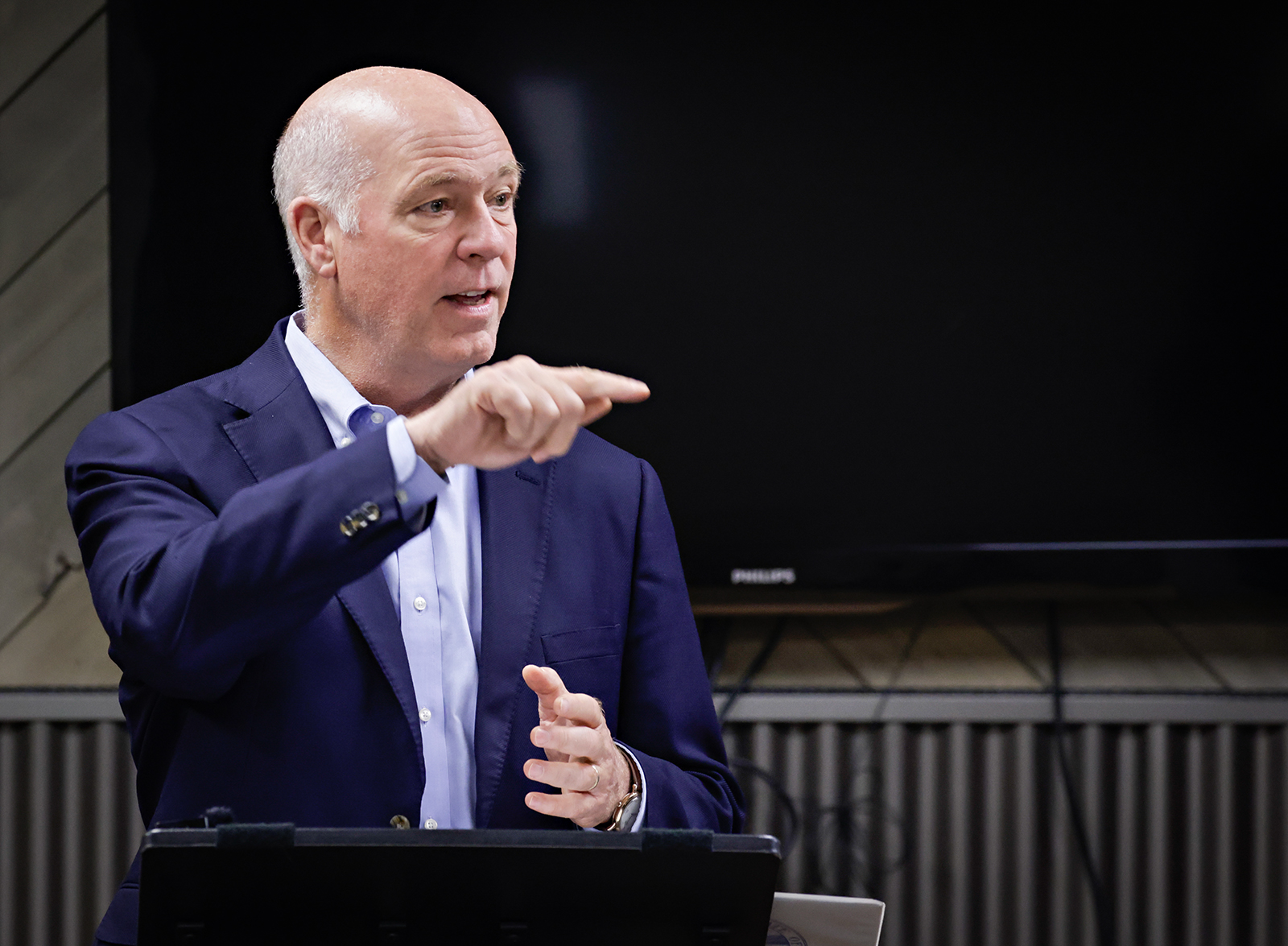
Montana Gov. Greg Gianforte’s office filed a petition Monday for the state’s Supreme Court to step in and exercise jurisdiction in a property tax lawsuit filed by a group of Republican lawmakers — a move that marks yet another chapter in the GOP infighting on the issue.
The lawsuit was originally filed in state District Court in Bozeman in January. Gianforte’s ask for the Supreme Court to take up the case would sidestep a potentially lengthy legal process, providing definitive answers to key constitutional questions the lawsuit raised about 2025’s Senate Bill 542. Namely, the major question at play is whether the legislation violates the state constitution’s single-subject rule. That rule requires legislation to focus on a lone subject that aligns with the bill’s title.
Gianforte also wrote that the bill has had a hefty impact across the state. Property owners have already received rebates SB 542 provided; the bill was used by the Department of Revenue to provide guidance on taxes statewide; and local governments have issued 2025 property tax bills. Those changes are all at risk, should the lawsuit fail to go in the state’s favor. And lawmakers will need to know whether the legislation is constitutional ahead of the next legislative session, slated to begin in January 2027.
The changes the lawsuit could cause, along with the looming next legislative session, “create urgency and emergency factors making the normal litigation and appeal process inadequate,” according to the governor.
Sen. Greg Hertz, R-Polson, one of the lawsuit’s plaintiffs, disagrees.
“If the State’s attorneys do not delay filings or request extensions, we should be able to work this lawsuit through the court system prior to the 2027 legislative session,” Hertz wrote in a Tuesday morning email.
Just because the governor asked the state Supreme Court to look at the legislation doesn’t mean it must take up the suit. While the Supreme Court considers the governor’s request, litigation will continue in the lower court.
SB 542, the legislation at the lawsuit’s center, was part of a property tax relief package that served as one of the governor’s priorities in the 2025 session. It passed the state legislature by garnering bipartisan support from the Democratic caucus, alongside a handful of Republicans who voted outside the party line to approve the measure.
SB 542 provided for $400 property tax rebates to be issued to homeowners. It also established a tiered tax rate that effectively lowered taxes for lower-value homes, simultaneously raising them on high-value ones and other types of property. Its companion bill, House Bill 231, set to take effect this year, will raise taxes on second homes.
The bills have been at the center of Republican infighting for much of the past year — including now playing a role in some competitive GOP primaries around the state, as some legislators and challengers who oppose the bills take aim at those who voted yes.
The three former lawmakers who originally filed the suit took issue with the process of amending the legislation. In the process, proposals from a separate bill were absorbed into SB 542. In the text of the suit, plaintiffs claim lawmakers were forced to either “accept the controversial permanent rate restructuring if they wanted to support the popular temporary rebate or reject the popular rebate if they opposed the controversial restructuring.”
Hertz doubled down on those claims Tuesday.
“Logrolling, or ‘buying’ legislators’ votes by inserting multiple unrelated items and appropriations of money into a single bill is prohibited,” Hertz said. “… If we do not put a stop to these unconstitutional legislative tactics, we will lose the Montana system and see it replaced by the Washington, D.C., way of doing business.”
The trio of lawmakers — Hertz, Sen. Tom McGillvray, R-Billings and former Sen. Keith Regier, R-Kalispell — also said their property tax bills rose under the legislation.