DEQ Extends Public Comment Period for Phase Two of Lakeside Sewer District Project
At a public hearing Thursday, opponents of the project said there wasn't enough time to conduct a separate review of DEQ documents, while proponents argued that “time is of the essence” to increase septage capacity in Flathead County
By Zoë Buhrmaster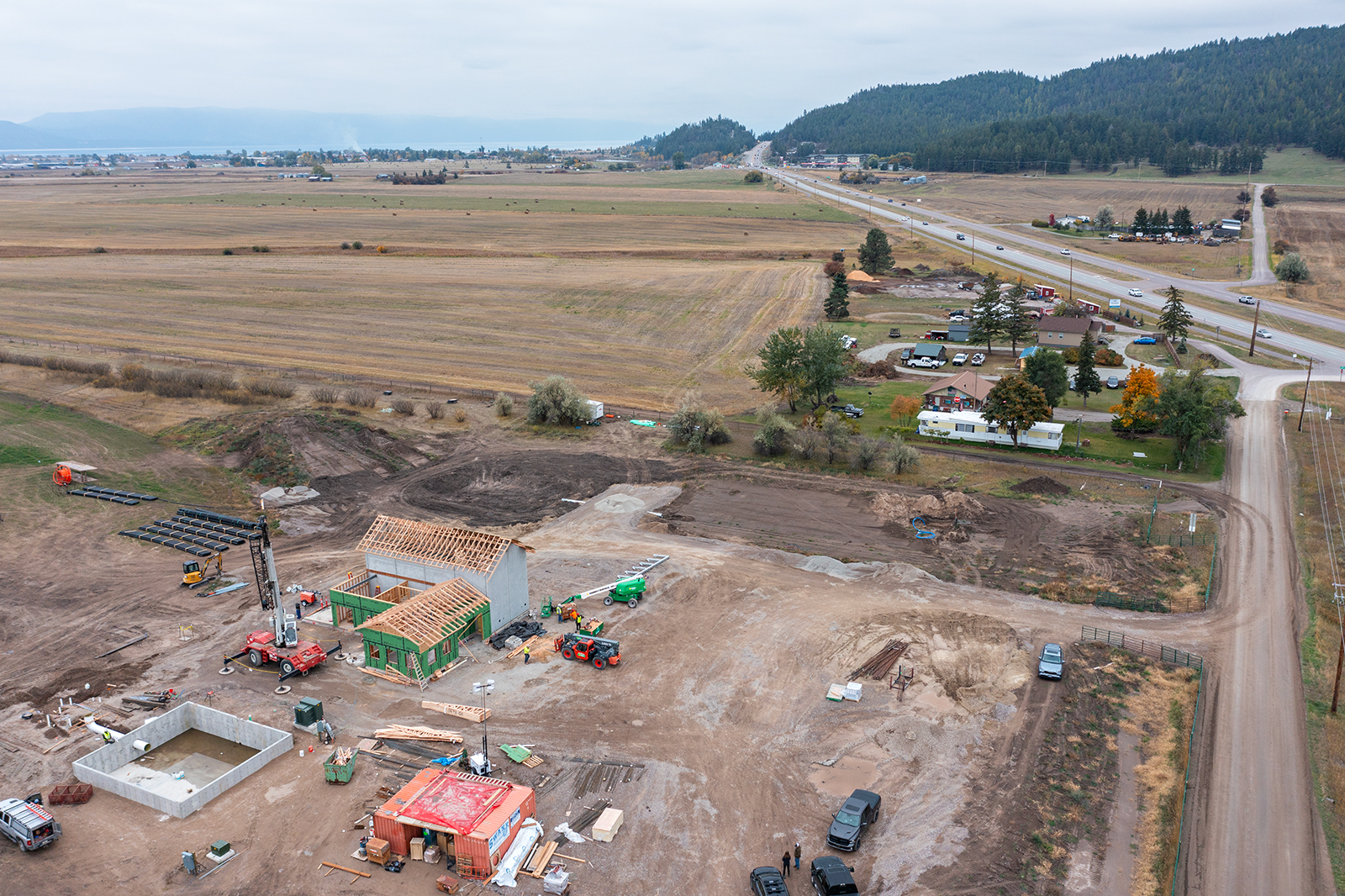
As officials with the Montana Department of Environmental Quality (DEQ) review the second phase of an expanded wastewater treatment facility just north of Flathead Lake, residents from across the valley gathered alongside environmental groups Thursday night to share their thoughts in a public hearing hosted by the state agency.
The Lakeside County Water and Sewer District (LCWSD) Improvement Project is anticipated to take on the district’s growing wastewater and septic needs, accept septage from tanks in Flathead County, and take on capacity for the Flathead Lake Club, a 359-home subdivision the Discovery Land Company has planned for Lakeside.
DEQ approved phase one of the improvement project last year, including the district’s Montana Ground Water Pollution Control System permit to allow treated wastewater into groundwater via rapid infiltration basins (RIBs). The district began work on the new septage receiving facility and headworks facility last year.
Phase two would permit construction of the treatment plant and the three RIBs. It lays out how the district plans to treat the wastewater before it is transferred into groundwater.
DEQ opened up a public comment period for phase two on April 9, set to close on April 23. After receiving several requests to extend the comment period for 60 days and to reschedule the public hearing, DEQ officials notified the public on April 23 that they would extend the comment period for seven days, until 11:59 p.m. on April 30.
Lindsey Krywaruchka, administrator for the water quality division, said that after considering the requests, “some additional time for public comment is warranted but that the request for an additional 60 days and a rescheduled hearing is not appropriate given the scope of the proposed action.”
At Thursday’s hearing inside the Lakeside QRU community room, representatives from the Flathead Lakers, North Shore Water Alliance, and Citizens for a Better Flathead said they were concerned about long-term environmental impacts due to the project site’s proximity to Flathead Lake.
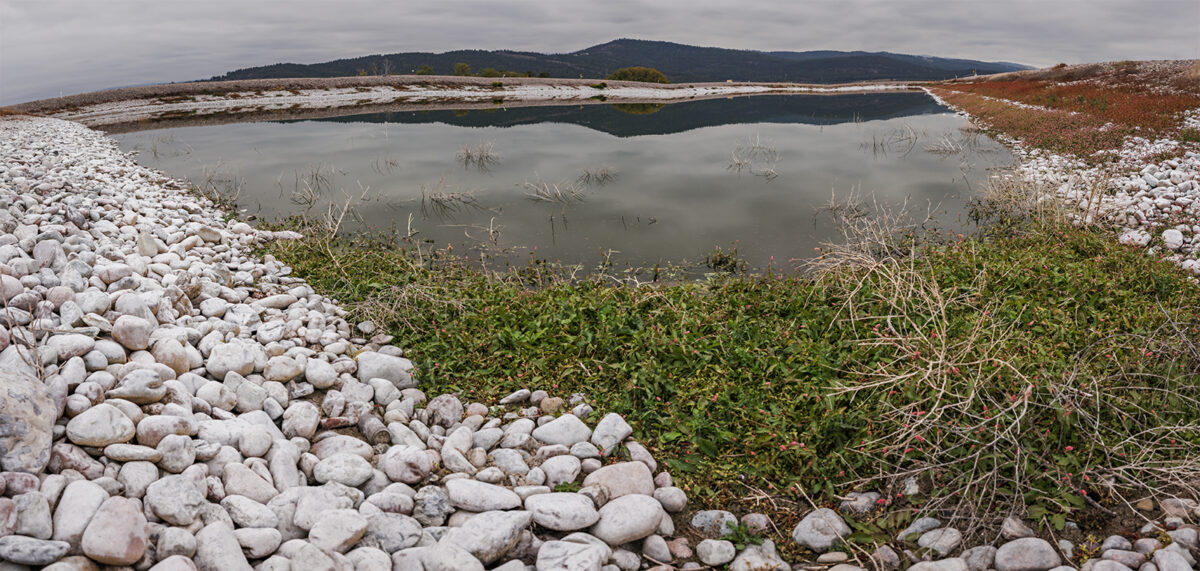
“Your own study points to a 50-year phosphorus loading event, and you say it will not be a significant impact,” Coby Gierke, executive director of the Flathead Lakers, said. “It’s a deferred, potentially irreversible impact to Flathead Lake. And this is a water body we’ve been studying for over 100 years, with one of the most long-established research facilities for a freshwater lake anywhere in the country. It just doesn’t make any sense.”
In the fact sheet for phase one of the project, DEQ engineers note that “for phosphorous, a surface water breakthrough time of greater than 50 years is a nonsignificant change in water quality.” A site analysis shows that effluent from ground water mounding will “breakthrough” (when phosphorous has the potential to reach surface water) from the three RIBs in 60, 90 and 300 years, respectively.
Mayre Flowers, co-director of Citizens for a Better Flathead (CBF), called for DEQ to request the sewer district release a rate study it commissioned in 2025. She pointed out that DEQ’s documents still estimate the project at $13.4 million, despite the district’s acknowledgement last year that the cost for the total project will likely be somewhere around $58 million.
“These are questions, not absolutes,” Flowers said. “Maybe there’s something I’m not getting here, but when you withhold information and when it’s not part of the public process, we have to raise questions and make assertions that unless they’re refuted, you need to address them in your analysis of the economic impact of this, which is required under (Montana Environmental Policy Act).”
Chris Stark, a staff scientist on the Confederated Salish and Kootenai Tribes’ (CSKT) legal team, said the Tribes did not receive notice of the public hearing until Flowers notified them the day prior. CSKT is currently a co-plaintiff alongside CBF in a lawsuit challenging DEQ’s approval of the groundwater permit in phase one.
“We didn’t receive notice of this going down besides just yesterday,” Stark said. “I’m on the state’s list of ‘should have got the notice,’ didn’t get it. A little better clarity would be great.”
A few proponents of the expansion project spoke, including representatives from Evergreen Water and Sewer District and Pop A Squat Portables, which contracts outhouses around the county. Both emphasized that “time is of the essence” as the respective septic receiving facilities they use are nearing capacity.
Jeff Larsen, a civil engineer representing the Montana Environmental Consultants Association, said that after reviewing the DEQ’s documents, the group strongly supports phase two. He cited the stronger protections the treatment plan is poised to provide compared to the current treatment as the basis for the group’s support, and said the plant doesn’t discharge directly into surface-body water, which he described as an anomaly compared to other wastewater districts around the state. He referenced two peer-reviewed studies that CBF commissioned last year to analyze DEQ’s documents, noting that they didn’t contain site-specific data.
“I really urge you guys to make sure if you get opposition … that there be on site-specific data that they obtain on their own,” Larsen said.
To submit public comment on phase two of the project, visit DEQ’s project website here.