Inside Seth Bodnar’s Declaration of Independence
In a state that has historically heralded its independent streak, Bodnar's candidacy for the U.S. Senate sets up an experiment about whether a candidate running outside the two-party system can stave off Montana's one-party rule
By Mariah Thomas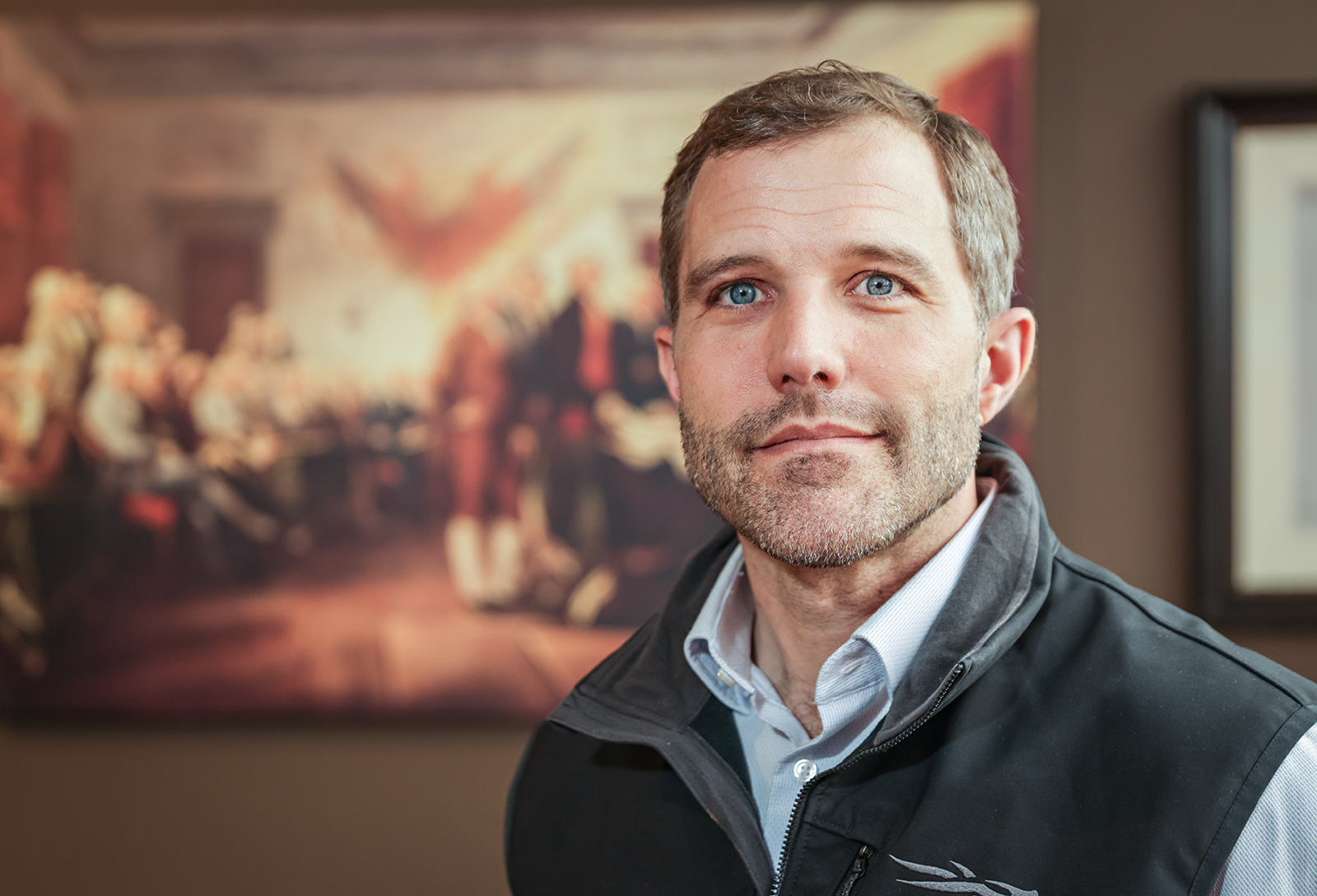
As Seth Bodnar settled into conversation with a small group of veterans at Patriotic American Brewery in Evergreen, the men traded stories about their experiences, both during and after their military service.
The men, some of whom were part of the Veterans Coalition of Northwest Montana, told Bodnar about their advocacy efforts on issues like the PACT Act and combating the epidemic of veteran suicide. One made three tours to Vietnam, and said that since returning from the war he has fought several bouts of cancer. He’s actively in the throes of battling prostate cancer, he told Bodnar on the cloudy April afternoon. Still others spoke about the challenges service posed for their family members, particularly when they returned home with injuries or PTSD.
While the meeting served as a chance to share anecdotes and discuss the challenges facing veterans, the undercurrent of politics remained clear.
“I’m gonna tell you to your face: our politics — I don’t know where the hell we’re headed,” one Vietnam War veteran said. “There has to be middle-of-the-road Democrats, but they’re hiding. And middle-of-the-road Republicans — they’re hiding. I’m tired of the extremes, and it’s all of them.”
“That’s exactly why I’m running [for the U.S. Senate] as an independent,” Bodnar replied.
The 47-year-old Bodnar is a veteran himself — a West Point grad who won a highly competitive Rhodes Scholarship and attended the University of Oxford before serving as a Green Beret in Iraq. Following his military service, he worked as a West Point faculty member teaching economics, before becoming a senior executive at General Electric.
Along the way, Bodnar married his wife, Chelsea, a fellow Rhodes Scholar and pediatrician with deep Montana roots. Bodnar and his wife moved their family back to the Treasure State in 2018, when he took over as president at the University of Montana. His tenure there had rocky moments, including a pair of lawsuits alleging gender discrimination (one was settled out of court, while the other resulted in a ruling in favor of the university). But during Bodnar’s presidency, the university also turned around a nearly decade-long enrollment decline, earned R1 research status and won recognition as the top university in the country for community and national service and as the most military-friendly university in the country.
In many ways, his is a résumé tailor-made for politics. But in his run for the Senate, Bodnar is taking a road rarely traveled in a state that has historically elected candidates from both major parties.
Rather than running as a Republican or a Democrat, he’s competing for the seat as an independent.
“That’s authentic to how I’ve led,” Bodnar said in an interview with the Beacon. “It’s who I am. I feel like I’m like many Montanans in the sensible center, where both of the national parties have gotten more extreme and I think many Montanans are right where I am. And I think it’s also the type of change that we need in this country: somebody who is for Montanans. They deserve a senator who doesn’t answer to anybody other than them, right? Doesn’t answer to party bosses, doesn’t answer to political insiders, knows that I have one boss and one boss only — the people of this state.”
Meanwhile, a complex set of circumstances has buoyed his profile in the Senate race. As frustrations with the economy mix with Republican angst at the last-minute switch that took place when incumbent U.S. Sen. Steve Daines dropped his bid for reelection to clear the field for his handpicked successor, the seat could be in play. Bodnar’s independent bid puts him in a unique position to pick up votes from Republicans and Democrats alike.
As he grapples with what could become a three-way race should he collect the signatures to qualify for the ballot, Bodnar is confident his message is one that will resonate with Montanans. So far, it has, he said, pointing to positive conversations with voters across the state and the first quarter of campaign finance reports, which showed Bodnar outraising both his Democratic and Republican opponents in the race.
Even so, according to Montana State University political scientist Jessi Bennion, Bodnar likely has an uphill climb. But in a state where citizens have a history of “loving that independent label,” Bennion said his candidacy sets up a novel experiment: can an independent stave off one-party rule as Montana has become dominated by Republicans? The answer to that question will likely be up to voters in November.
While the number of U.S. citizens identifying as independents is on the rise, runs from independent candidates are uncommon in Montana. General elections in the state usually include Democratic, Republican and Libertarian affiliated candidates. Bennion said no independent candidate has ever won a general election in the state.
Montana’s last independent candidate to qualify for the ballot for a federal office was Gary Buchanan, a Billings businessman who ran in the eastern congressional district in 2022. The moderate, who worked as an adviser for both Democratic and Republican governors, finished second in the race for the eastern seat.
He earned 22% of the vote, beating out Democrat Penny Ronning, who earned about 20% of the vote. Republican U.S. Rep. Matt Rosendale ran away with 56% of the vote. Along the way, Buchanan drew ire from Democrats when he clinched some endorsements from organizations that typically lean into Democratic candidates in two-way races, including the backing of the Montana Federation of Public Employees and the Montana AFL-CIO.
When asked about his run for the seat, Buchanan is quick to admit there were challenges — collecting signatures chief among them.
Rather than winning a party’s nomination, independent candidates must collect signatures equivalent to 4% or more of the “total vote cast for a successful candidate for the same office at the last general election,” per Montana law. For Bodnar’s campaign, that total equates to around 13,000 signatures, a figure he said his campaign is on track to collect.
Buchanan described a loosely organized volunteer-powered effort to gather those signatures during his 2022 campaign.
But Bodnar’s campaign is different. Buchanan views it as a well-oiled machine, and thinks of the former university president as a formidable candidate. Bennion, the political scientist, agreed with Buchanan’s assessment of Bodnar’s campaign, citing the institutional and financial support Bodnar has received so far.
“His résumé is second to none,” Buchanan said. “I got to know him running the University of Montana, and just really respected what he did there. But, I mean, he’s 30 years younger than me. He’s gonna appeal to a hell of a lot [more] younger people than I did.”
Buchanan also pointed to a slew of factors that might make an independent run more successful for Bodnar than it was for him.
For example, Bodnar’s running in a statewide race. Buchanan said that may offer more areas of support for an independent than he found in the heavily Republican eastern district. The last-minute switch-up on the Republican side of the aisle created intra-party frustrations, which could provide a chance for Bodnar to gain ground with Republican voters, Buchanan said. And in Buchanan’s estimation, people are frustrated with Trump’s tariff policies, which he said hit Montana hard without pushback from the state’s current congressional delegation.
“The campaign’s a different beast,” Buchanan said. “And I just think the environment is much better for an independent.”

Bodnar said he first started considering his own entry into the Senate race at the beginning of the year, making a final decision in late February. But the dynamics at play in the race are drastically different now than when he initially began considering his run.
When Bodnar filed his candidacy on March 4, it was to run against incumbent U.S. Sen. Steve Daines, a two-term statesman who won both his bids for the job by wide margins. But Daines’ last-minute dropout from the race now pits Bodnar against former U.S. Attorney Kurt Alme of Billings on the Republican side of the aisle. Alme had a strong showing in the first quarter of fundraising, bringing in nearly $925,000. His haul dwarfed both his Republican competitors in the three-way primary.
Alme’s candidacy has contended with Republican frustrations, however, as the party’s internal divisions widen over a debate about whether voters want to allow party bosses to pre-select their candidates following Daines’ departure.
“I think that Bodnar’s team had to have been thrilled when Daines got out,” Bennion said. “Because to unseat a sitting senator, that would be impossible. So now, going up against someone people don’t know, Alme … I’m sure the Bodnar campaign was like, ‘okay, this is good.’”
Bodnar’s campaign called Daines’ last-minute switch an example of the “disgusting arrogance of Washington politicians and their party bosses who trade power like candy” in a release the day it happened.
Still, Bennion said siphoning votes from Republicans will remain a tall task. It’s also a necessary one if Bodnar is to see any path to victory in a general election.
To gain ground with those voters, Bennion said Bodnar will likely have to home in on some policy positions that may speak to that base. While topics like the economy are easy fodder, she said Bodnar’s positions on “culture war” issues, like transgender participation in athletics, will likely have to fall to the right of Democrats in order for Bodnar to appeal to Republican voters.
Those issues are ones Republicans have already hit Bodnar on. The day he left his post at the University of Montana, for example, a conservative PAC put up an ad blaming Bodnar for tuition hikes, allowing transgender athletes to participate in university athletics and accusing him of using his office to campaign. The state GOP has also referred to him as an “INO.” The title means Independent in Name Only, proclaiming him a Democrat in disguise. It comes even as Bodnar has publicly taken the position that he won’t caucus with either party if elected — a posturing that will be difficult to maintain in practice should Bodnar win the seat, as party leaders dole out Senate committee assignments.
Plus, even though voters may self-identify as independent, Bennion said ticket-splitting is uncommon in today’s electorate. Despite the GOP infighting that has defined much of the primary cycle, Bennion remains uncertain whether it indicates how Republican voters will act come the general election in November.
“People are so connected to their political party right now. That’s what I know, from all of the research, people feel so connected either to the Democrats or Republicans,” Bennion said. “It’s really hard for them to split their tickets, to vote outside of their normal pattern. Usually, they vote for Republicans or Democrats up and down their ballot.”
While Bodnar has found some support in Democratic circles (perhaps most notably in the form of a text sent by former U.S. Sen. Jon Tester proclaiming support for the university president’s run), his candidacy has cleaved the state’s Democratic Party, Bennion said.
“Democrats are big mad about this,” she said. “And this is a big internal fight going on.”
In his purported January text message, Tester wrote that the party was “poison” to his own unsuccessful reelection campaign in 2024, an assessment Bennion said is spot-on.
“The problem is the Democratic brand. It is just so unpopular,” Bennion said. “Not for Democrats — you know, if you’re a strong Democrat, you love the party, but if you look at the polling … it just shows that especially in these red states, that Democratic brand is so unpopular and it’s caustic.”
So, the line of thinking in some Democratic circles goes: coalescing behind an independent may be the best shot at beating a Republican for the seat in a state with single-party dominance.
Montana is not the only state testing that theory. Independent candidates are similarly mounting bids for the U.S. Senate over the protests of local Democrats in the red states of Idaho and South Dakota this year.
And in Nebraska, Democrats in 2024 threw their support behind independent candidate Dan Osborn. Osborn won nearly 47% of the vote against incumbent Republican U.S. Sen. Deb Fischer in a state President Donald Trump carried by 20 points. Osborn is running again in Nebraska this year. Again, the Democratic candidate who won the primary, Cindy Burbank, reportedly plans to drop out of the race to help boost Osborn as he aims to unseat Nebraska’s other Republican senator, Pete Ricketts, come November.
“I’m running to serve, you know, Montana, and address the things that people are concerned about in this state, so by its nature, it’s different from other races,” Bodnar said about the trend. “What I would say, though, is I think a recent Gallup survey found that, I think, 47% of Americans identify politically as independents right now. So, we shouldn’t be surprised to see a trend of people running outside the traditional party structures, because the majority of Americans aren’t happy with what we have and we need new approaches.”
It’s a smart strategy, Bennion said. But key to deploying it is the Democratic candidate exiting the race, as has happened in Nebraska. A Bodnar win would be possible without a Democrat in the mix, though it’d be a heavy lift, Bennion said; with a Democratic candidate in contention, however, she views Bodnar’s path to success as a near impossibility.
That strategy is one that Montana’s Democratic Party, at least publicly, has said it will not participate in, promising to support Democratic candidates “full stop” in March. A five-person field of candidates has lined up to compete for the Democratic nomination to run for the Senate seat. Reilly Neill, a former state legislator from Livingston, led the pack with $129,861.10 in receipts during the first quarter. Bodnar raised more than ten times that sum. Still, Neill, who filed her candidacy the day after Tester lost in November of 2024, has promised to run hard against Bodnar should she earn the nomination. Another candidate in the mix, Alani Bankhead, has publicly pledged to do the same.
That dynamic creates concerns Bodnar’s candidacy will split the Democratic vote in the potential three-way race.
Neill, the Democrats’ fundraising leader, sees a path for a Democrat to win the race, but doesn’t see a path to victory for an independent candidate. She based her analysis off Montanans’ rejection of a pair of constitutional amendments in 2024 which would have reshaped the state’s elections. Constitutional Initiative 126 would have moved from party primaries to a single multi-party primary ballot that would advance four candidates to November’s general elections; and Constitutional Initiative 127 would have required a vote of more than 50% for a candidate to win a general election, with the state Legislature tasked with handling a no-majority situation.
“I mean, Montanans vote Republican and Democrat. We don’t have an independent party,” Neill said.
Instead, she points to what Montanans did vote for in 2024: women. The top vote-getter on Montana’s 2024 ballot was Republican Secretary of State Christi Jacobsen. She also pointed to Constitutional Initiative 128’s passage, another top vote-getter, which enshrined abortion into the state’s constitution.
“I’m a proud Democrat because I’m a woman, and Democrats are the party that respects women,” Neill said.
She sees Montana’s recent trend of voting for women as part of her pathway to victory as she runs for the U.S. Senate. (Montana has only ever elected one woman to federal office: Jeannette Rankin, in 1916 and again in 1940.) Neill also heralds the work she has done traveling the state for the past year and a half to understand what Montanans are saying on the ground.
Even so, the thought has abounded that it’s Democrats who serve as the upsetting force, rather than Bodnar, given the stature of his campaign and fundraising machine in comparison to the party’s candidates. It’s an assessment Bennion shares. While she said Bodnar’s battle for the seat without a Democrat in the mix would be difficult, it could yield success if done correctly. As for a Democrat’s chance at the seat?
“I just don’t see a Democrat winning statewide anytime soon,” Bennion said. “Maybe in the western congressional, that race, maybe. But man, it’s just, Montana has gotten so red that they would just need to have the most fantastic set of circumstances to win.”
But Joe Lamson, a longtime Democratic operative who ran the campaign machine for former congressman Pat Williams, said once a candidate buttons up the nomination on the Democratic side, they’ll be part of the conversation in a way the party hasn’t been in the primary season so far. And while many left-leaning voters may self-identify as independents, bolstering the argument for one, Lamson and Bennion both said data shows they don’t usually vote that way.
“Despite the appeal and the press coverage and things like that, you just don’t see a lot of independents elected when it’s a three-way type of a contest,” Lamson said.
In Lamson’s eyes, it’s Alme who’s in the strongest position coming out of primary season, given Montana’s recent electoral history and the possibility of a three-way race — though he admits Bodnar has impressive resources and seems to be running a strong campaign.
For Bodnar, the criticism he has experienced from both sides of the aisle is simply another factor indicating the importance of his independent run.
“I’m focused not on what’s good for one party or the other. I’m focused on what’s good for Montana,” he said. “And, you know, when you’re trying to create change, you’re gonna have people that don’t like that. You’re gonna have people that push against you. You’re gonna have people that make stuff up and say bad things about you, and is that fun to be criticized? No. But I care too much about this country not to push for the type of change that we need.”
He continued: “I heard an estimate this morning that the approval of Congress is 10%. And, you know, my question to that is, well, who are these 10% that think Congress is doing a good job? It’s not working, and we have the extremes in this country that are training us to hate our neighbor, to fight with each other. You know, we have politicians that are working to distract us and divide us while they enrich themselves. Meanwhile, costs for housing continue to soar, we have diesel that costs $5 a gallon, we see farmers struggling with fertilizer prices that are 35 to 50% higher than they were just a few months ago, and who is out fighting for them?”
Bodnar hopes Montanans will give him that chance.
And rather than spending time worrying about critiques, Bodnar said he plans to keep his head down and continue pushing forward with his run for the Senate. As Bodnar continues campaigning, he said he will keep traveling the state to make inroads with those who will listen to his message, like the veterans he met with in the Flathead.
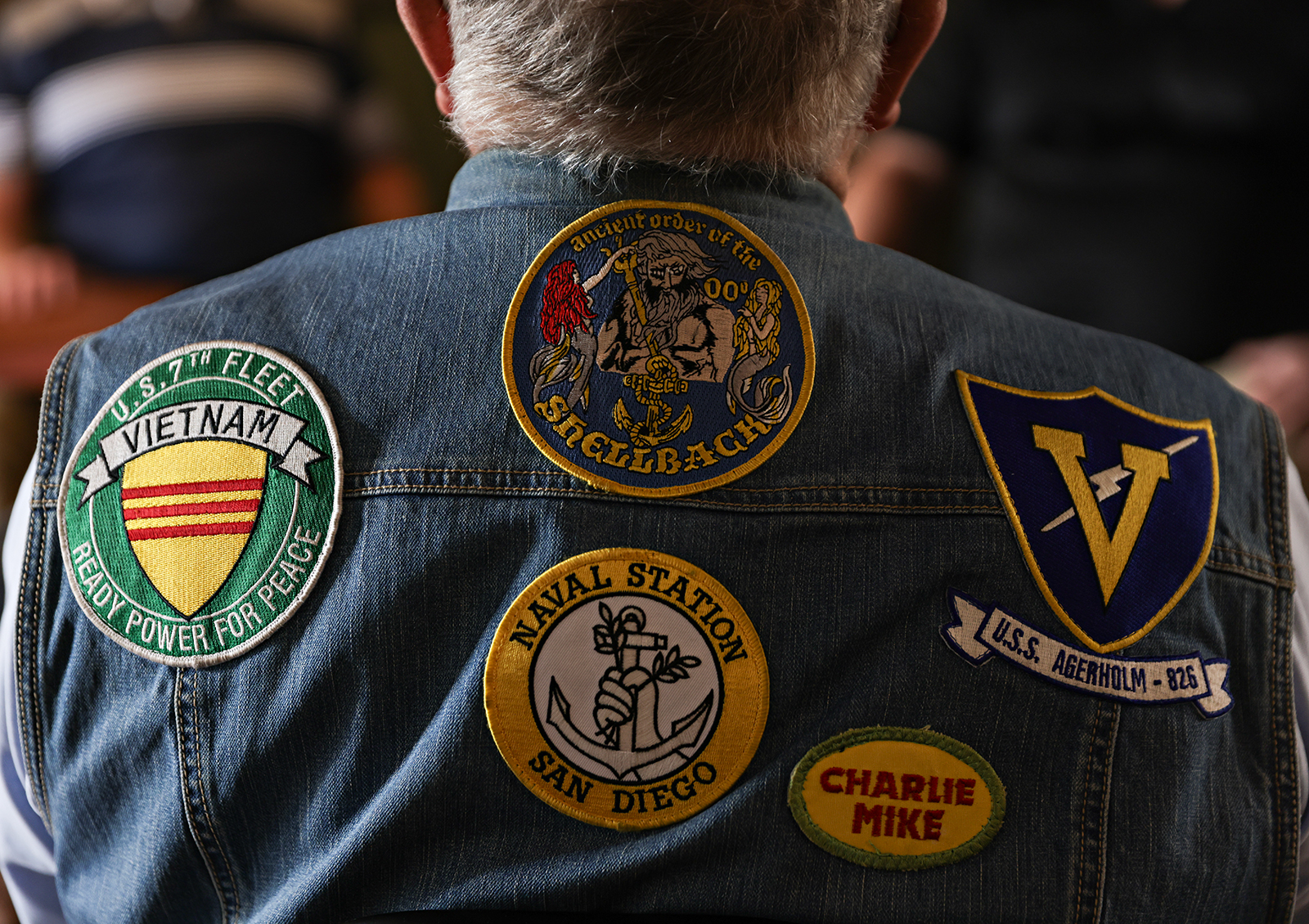
For the veterans who gathered to speak with him, the idea of a senator who will help them counts. They said former Sen. Tester was a key ally as they worked on legislation on issues like Agent Orange.
When the PACT Act, which addressed the impacts of Agent Orange, went through Congress in 2022, Tester, the chair of the Senate Veterans’ Affairs Committee, was a major advocate for it. He took Republicans to task for changing their votes on the bill in the middle of the legislative process. (Daines, Montana’s other senator at the time, voted against the bill in July 2022, before flipping his vote on the final passage of the bill in August 2022.)
Tester, the veterans said, had several issues he planned to work on for veterans had he won reelection in 2024. But he didn’t win, and the Flathead veterans said his loss left a gap.
When Bodnar asked the members of the Veterans Coalition what they wanted from their next senator, the answer was simple: don’t leave us behind.
“I would never use veterans as a prop, like a lot of ‘em do,” one member of the roundtable said. “We’re all aware, and it’s just — it’s old. I mean, we’ve all had, especially during primary season … senators from both sides pretend to care. They show up, they want to, you know, hear everything, they want to experience everything. And then they get elected, and you never hear anything. Everything that you talked to them about didn’t pass the legislature. They listen to the needs, and you put a lot of faith in them for change for the better, and then it just never happens.”
Bodnar replied by highlighting his work to make the University of Montana the most military-friendly school in the country. If he wins the Senate race in November, he said he hopes to remain personally involved with veterans’ issues and groups in the state.
“That’s the whole mantra here: Montana first,” Bodnar said.