Bodnar, Alme Lead Federal Candidates in First Quarter Fundraising
The quarterly reports to the Federal Election Commission span the period from Jan. 1 to March 31. After a month of shakeups to the state’s federal races, the reports offer a first glimpse at where candidates may stand in the newly shaped primaries for the western congressional district and U.S. Senate.
By Mariah Thomas
As the dust settles in Montana following a month with several shakeups to the state’s high-profile federal races, the latest round of Federal Election Commission quarterly filings offers a first glimpse at where candidates may stand in the newly shaped primaries for the western congressional district and the race for the U.S. Senate.
The filings, due Wednesday, span the period from Jan. 1 to March 31. For some candidates, that time frame is less, as they jumped into the race after the start of the year.
The campaign of former University of Montana president Seth Bodnar, whose long-anticipated run for the U.S. Senate as an independent came to fruition on a loaded final day of filing, proved a strong fundraiser during the first quarter. Bodnar raked in $1,358,574.95 in receipts for his campaign between March 4 and March 31. The majority of those funds came from individual contributions.
The Bodnar camp celebrated that figure in an April 2 press release. The release highlighted it was the highest amount an independent candidate had raised in the state’s history.
“Montanans of all political stripes are rallying behind Seth’s campaign because they want an independent voice in the Senate who will work to restore the American Dream and put Montana First,” said Tully Olson, Bodnar’s campaign manager. “As an Independent, Seth is the only candidate who will answer to us, not national party bosses or DC insiders, and who can operate outside of the broken two party system to find solutions and lower costs for Montana families.”
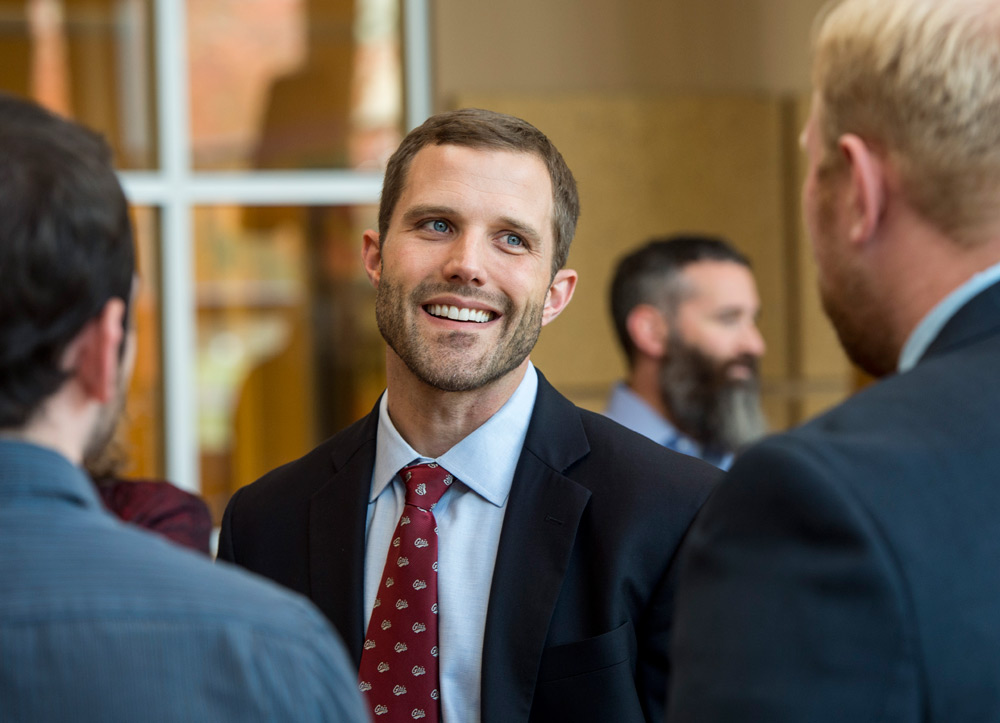
Bodnar’s entry into the race wasn’t the only prominent headline to emerge as the filing deadline closed in on candidates. Incumbent Sen. Steve Daines, who had filed to run for reelection for a third term, withdrew his name from the race in the final 10 minutes of filing on March 4.
Daines was replaced on the Republican side of the aisle by former U.S. Attorney for Montana Kurt Alme. Alme immediately clinched endorsements from Daines, President Donald Trump and a slew of other statewide elected officials, though the last-minute switch rankled some members of the GOP, who voiced frustrations with what they perceived as party bosses rigging the system to ensure their preferred candidate would win the primary.
Alme’s FEC filings show his campaign directly drew $924,643.51 total in receipts during the first quarter. The sources of those funds were split, with $355,576.11 coming from individual contributions. Another $62,000 came from party committee contributions; $345,000 from other political committees; and $162,067.40 were transfers from other committees.
Two other committees connected with Alme, Alme Victory and Team Alme, also had money poured into their coffers. Team Alme showed $206,100 in receipts from the beginning of the reporting period to the end of March. Most came from individual donors. And Alme Victory showed one $350,000 receipt from Daines’ Steve Daines for Montana committee.
Alme and Bodnar far outpaced the rest of the candidates in the Senate race in terms of fundraising.
Reilly Neill, a former state legislator from Livingston, emerged as the top Democratic fundraiser in the Senate race. Neill raked in $129,861.10 from Jan. 1 to March 31.
Only one other Democrat in the five-way primary reported raising more than $10,000 during the first three months of the year. Michael Blackwolf, a tribal preservation officer from Hays, brought in $11,046.
Libertarian candidate Kyle Austin raised $262,094.97 during the first quarter. Nearly all of that money came directly from the candidate. Tom Jandron, another Libertarian who jumped into the race near the end of the filing window, reported earning less than $5,000.
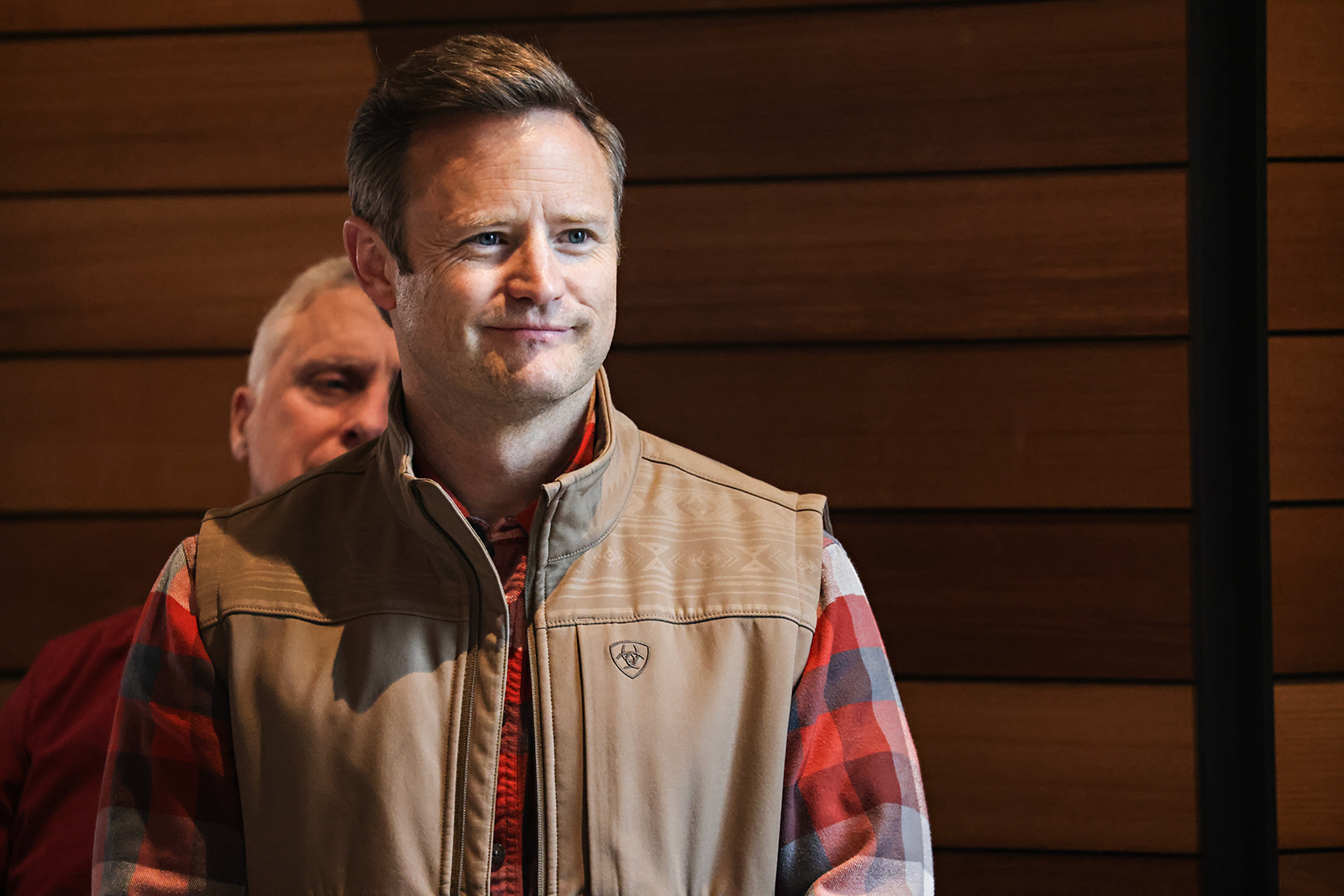
Like the Senate race, the race for Montana’s western congressional seat is without an incumbent after the late-in-the-game announcement by U.S. Rep. Ryan Zinke, a Republican, that he wouldn’t seek reelection.
Upon Zinke’s announcement, talk radio host Aaron Flint quickly unveiled a campaign launch video and rolled out a website. He clinched endorsements from Zinke, both of Montana’s U.S. senators and President Trump. Flint officially entered the race March 2. During the month, he brought in $453,652.78, ending the quarterly filing period with $429,399.45 cash on hand.
That funding included $144,500 in other political committee dollars, coming from several political action committees (PACs) connected with ideological groups, corporations and other members of congress. PACs that donated to Flint included Jim Jordan for Congress; Koch Industries, Inc. PAC; the Scalise for Congress PAC; Steve Daines for Montana; Tim Sheehy for Montana; and Zinke for Congress.
But Flint isn’t a lock for Zinke’s replacement. He first must make his way out of a competitive four-way primary, which includes Secretary of State Christi Jacobsen — a historically strong vote-getter for Republicans — and Al Olszewski, a former orthopedic surgeon and the chair of the Flathead County Republican Central Committee who lost to Zinke in the 2022 primary by less than 2,000 votes.
Olszewski reported $282,406.59 in receipts during the first quarter, which includes a $100,000 loan to his own campaign. Jacobsen, for her part, raised a total of $260,061 during her first month in the race, including $115,000 in a loan to her own campaign. They have $282,121.94 and $253,387.39 in cash on hand, respectively.
Of all the candidates in the race to replace Zinke, however, it’s Democrat Ryan Busse who has raked in the largest amount of cash since he jumped into the race in January. His early entry gave him a two-month fundraising edge on Flint, the Republican fundraising frontrunner in the race.
Busse, a former firearms executive who ran for governor in 2024, raised $530,043.18 in the first three months of 2026, and ended the quarter with $368,145.39 cash on hand. He released a poll earlier this month showing he led the Democratic field of four candidates by a comfortable margin. The poll, completed by Tulchin Research, included 400 likely voters in the western congressional district.
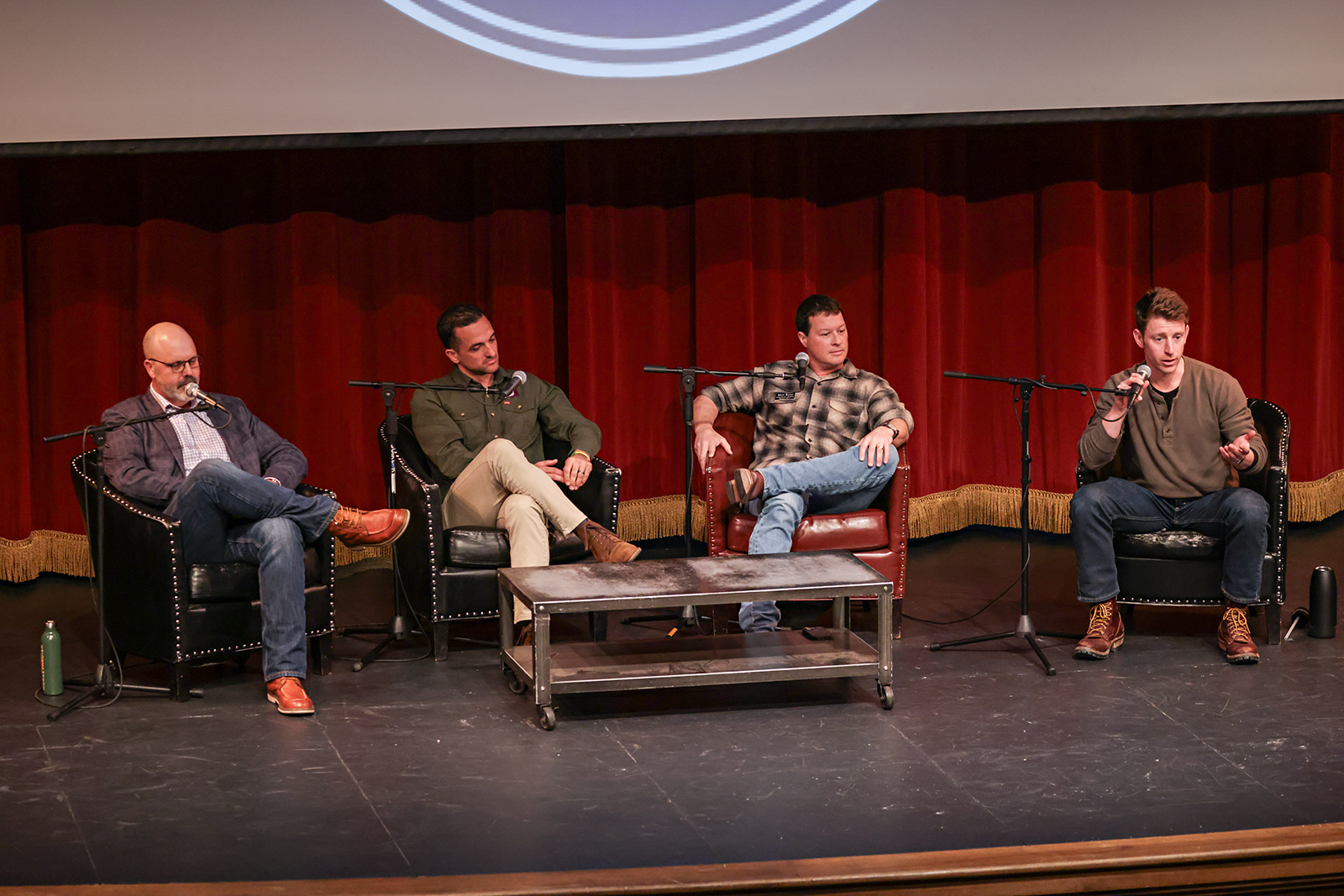
One topic Democrats in the primary have debated over is the question of accepting corporate PAC dollars. Busse, as well as candidates Russell Cleveland and Sam Forstag, all said at a Whitefish roundtable last month they won’t accept corporate dollars, American Israel Public Affairs Committee dollars, or dark money.
The only one of the three candidates whose filings showed no PAC dollars at all was Cleveland. Both Busse and Forstag had money in their coffers from PACs affiliated with associations or ideological interests, but no corporations.
Busse’s filings show he received $10,250 from political committees. His itemized receipts show he received funds from Juntos PAC, the Congress Majority PAC and the Lobo PAC.
And Forstag received $45,050 from political committees, per his FEC filing from the first quarter. That includes funding from the Beat the Odds PAC, Common Good PAC, Congressional Progressive Caucus PAC, Democracy Summer Leadership PAC, Justice League PAC, and the Machinists Non Partisan Political League of the International Association of Machinists and Aerospace Workers, among others.
Matt Rains, the fourth candidate in the Democratic primary, has drawn a separating line on the issue. In Whitefish last month, he said he would accept PAC dollars in the name of winning the election.
“We have to win, and by doing that, we have to use the rules on the table,” Rains said. “… If these guys aren’t gonna take PAC money, I’ve got no problem with that. I’m gonna do whatever it takes for all of Montana to make sure we win this … race.”
His filings show no money came into his campaign coffers from political committees during the first quarter of the year.
While Busse emerged as the early fundraising frontrunner among Democrats, there remains possibility for other candidates to gain ground on Busse as primary season continues.
Forstag, a smokejumper from Missoula whose entry into the race came with fanfare from several national news outlets, ranked a close second to Busse in fundraising on the Democratic side of the aisle. He raked in a total of $449,612.13 from his entry into the race in January through March 31. He ended the quarter with $212,542.37 in cash on hand.
Cleveland, a rancher and Navy veteran from St. Regis, raised $129,968.98 during the first quarter of the year. That brings up his total receipts to just over $325,000 in the year he’s been running. He has $65,102.28 cash on hand.
And Rains, a former Blackhawk pilot from Simms who most recently was chief of staff at the Montana Farmers Union, brought in $101,565.30 during the beginning of 2026. Rains, another earlier entrant into the primary, has raised a total of $215,344.45 since October, and ended the quarter with $107,129.68 cash on hand.