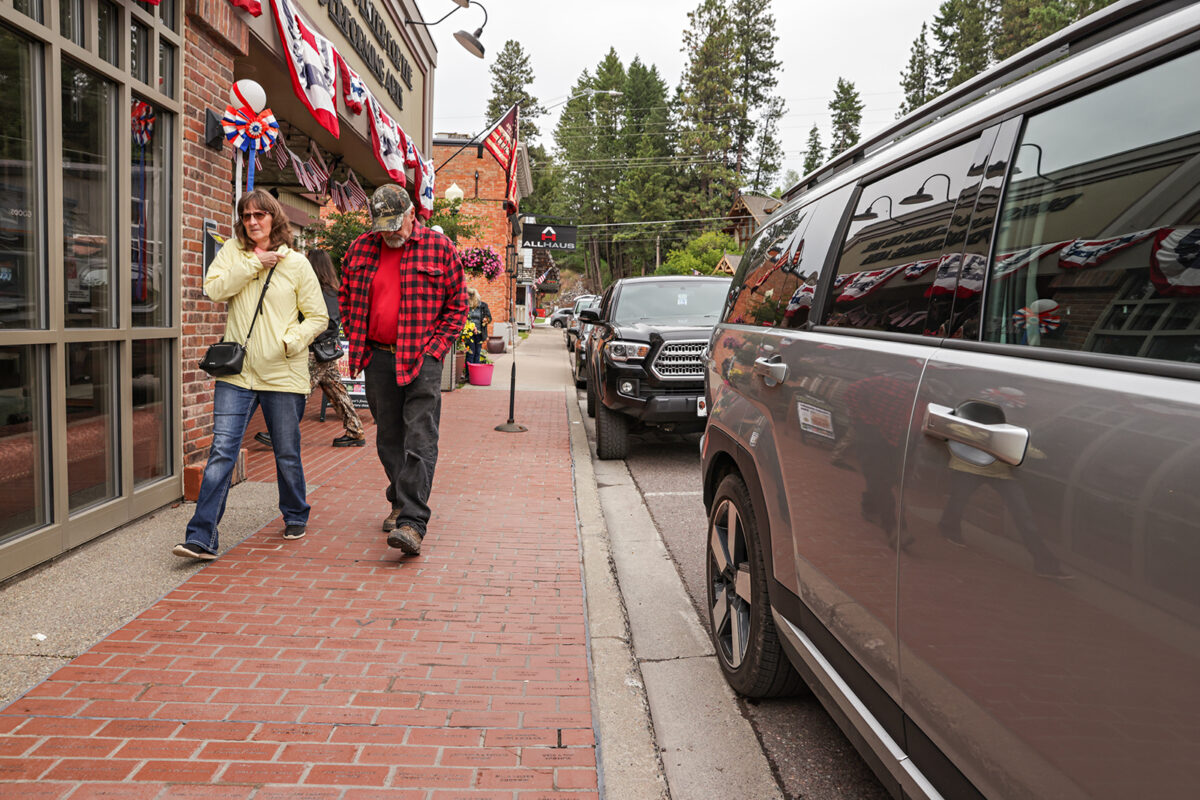
As Development Threatens Bigfork’s Character, Residents Grapple with Lack of Local Control
The unincorporated community faces growing pressure over land use while aging volunteers question whether forming a local government is the answer
By Maggie Dresser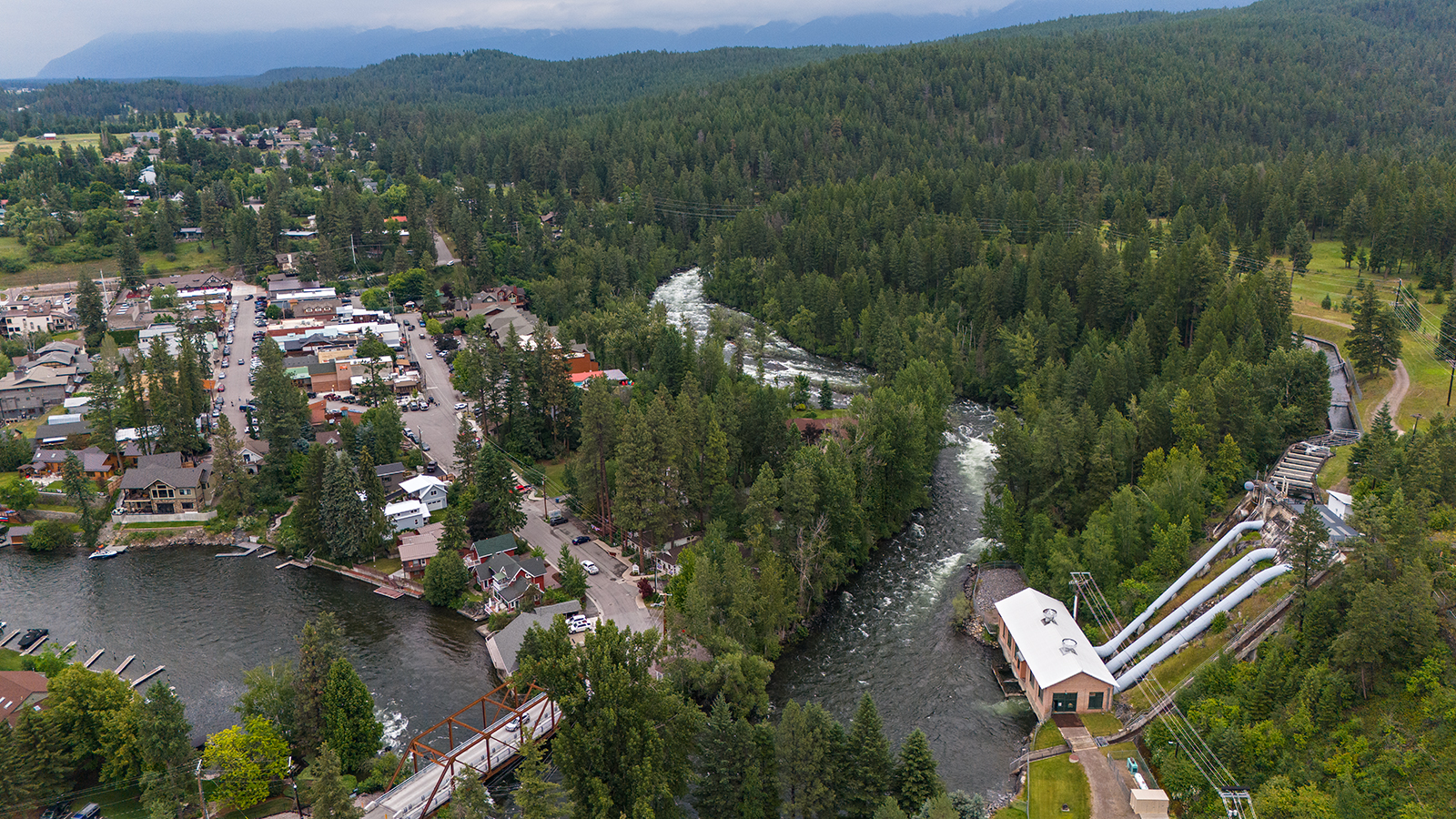
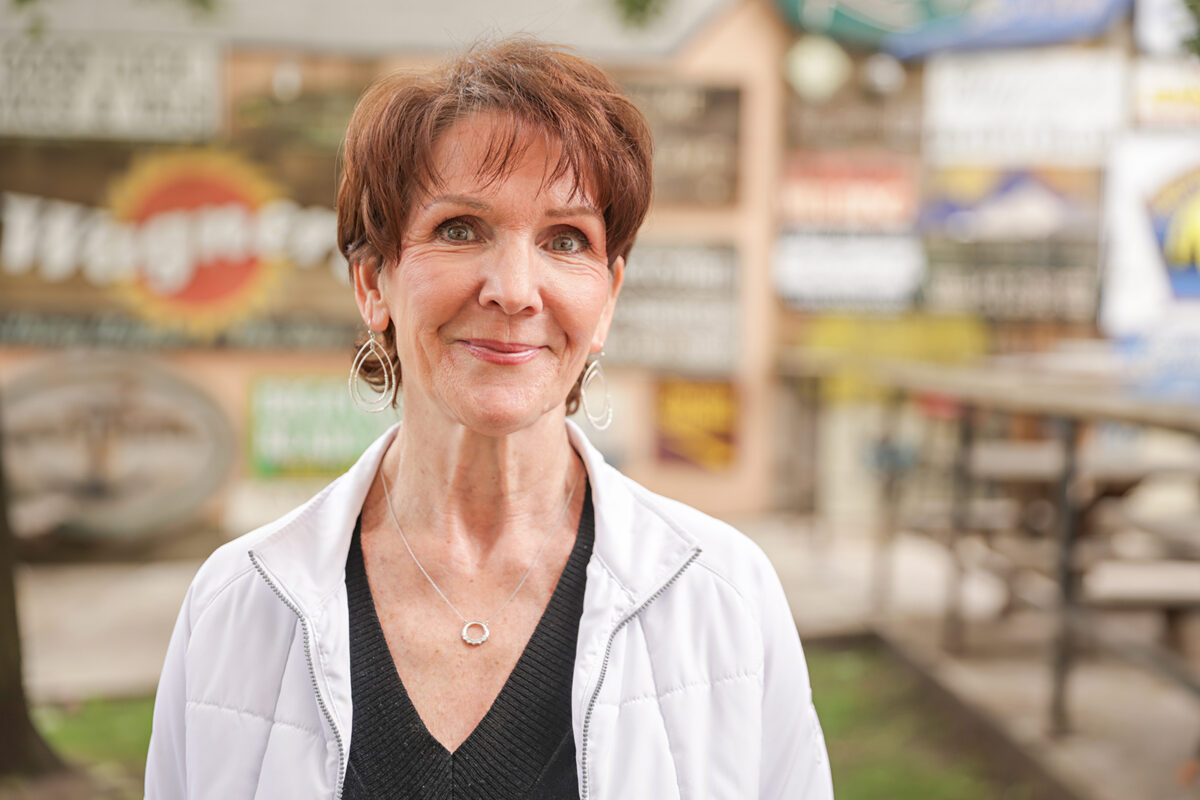
When Diane Kautzman moved to Bigfork full time in 2004, she started serving as the chamber of commerce treasurer and has been involved with the board of directors in some capacity over the past two decades. During that time, she has served on so many additional boards that she’s lost count, including the Swan Lake Chamber of Commerce, the Friends of the Bigfork Fire Department and the Rotary Club. She also directs traffic at the Fourth of July parade and helps install Christmas lights on Electric Avenue every year.
“It just makes my heart full,” Kautzman said. “I get way more out of volunteering than I give to the organizations.”
As an unincorporated community straddling two counties with no municipal government, Bigfork is heavily reliant on volunteers who dedicate their time to ensure events like the Festival of the Arts and the Christmas parade happen. Projects like repairing the Bigfork Bridge and opening the newest branch of the Flathead Country Library were expedited because of the residents’ passion and support.
But while most locals agree the community is high functioning without a city council or its own roads or police departments, some have grown concerned that consequential decisions are breezing through Flathead County boards.
In the community of roughly 5,500 people covering 37 square miles northeast of Flathead Lake, where the median housing price hovers around $800,000, some locals feel underrepresented at the county level.
Bigfork Chamber of Commerce President Rebekah King said that although wait times for Flathead County Sheriff’s Office response times can be slow and Bigfork’s county roads aren’t prioritized, most of the people who live there are primarily concerned about land use.
“I think the concerns are just how quickly the entire Flathead Valley is changing and because Bigfork is so small, the changes feel even bigger,” King said. “Because Bigfork doesn’t have a distinct voice, a lot of people feel helpless.”
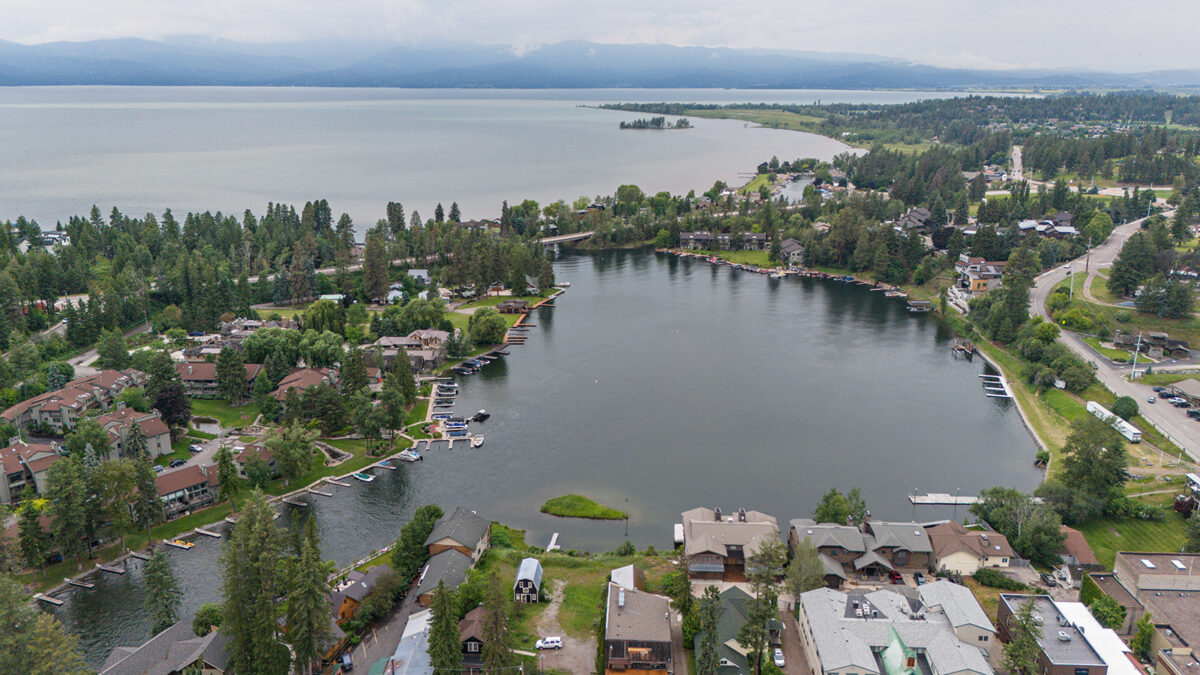
For example, Flathead County commissioners in 2024 approved the first phase of the Northshore Woods development, a 51-lot subdivision on 102 acres, a project that was widely opposed by the community. Known as “Village by the Bay,” the project located between Bigfork Stage Road and Highway 35 will have one-and-a-half-acre lots starting at $300,000. Additional phases of the project have not yet been approved but plans include dozens of more homes.
Although the Flathead County Board of Commissioners in 2023 denied the project, the Jackson Hole-based developers resubmitted a proposal a year later after filing a lawsuit against the county and it was subsequently approved.
More recently, the 97-slip Bigfork Bay Marina proposal has drawn widespread opposition from residents as a Polson-based developer goes through the process of seeking a permit from the Flathead Conservation District.
After learning this spring that PacifiCorp plans to potentially decommission the Bigfork Dam, residents saw the potential change as another threat to their community’s identity and one more force beyond their control.
Without a municipal government, some residents worry about Bigfork’s future in the absence of representation on county boards, while others are working to bolster relationships and awareness.
“We just need to build a good relationship with our commissioners and not feel quite so much like we’re removed,” Kautzman said. “Part of it is we’re an afterthought, so being incorporated would change that.”
While Kautzman sees the potential benefits of forming a municipal government, she says Bigfork operates smooth without one.
“We have such a great core with the community foundation and the chamber and our rotary club and fire department,” Kautzman said. “We have so many great organizations that we kind of fulfill that without having to be a government.”
Since the 1960s, the nonprofit Community Foundation for a Better Bigfork (CFBB) has been “dedicated to improving the quality of life” and filling the “gap left by the absence of traditional municipality.”
In 1990, Walter Kuhn moved to the area and quickly became involved with the organization and started helping Bigfork fundraise for everything from sidewalks to park maintenance.
“It’s the quasi-government agency of Bigfork,” Kuhn said. “They help maintain the nature trail. They subsidize the lease at Sliter Park, and now they’re working on taking over that lease. That’s something the city or government agency would normally do. They pay to have all the sidewalks plowed downtown. It’s all volunteers and it’s all fundraising.”
After watching Bigfork evolve over the years, he sympathizes with his neighbors who oppose increased development and fear their community will change for the worse, but he says perspective is important.
“I think if somebody came to Bigfork today who had never been there, they would feel the same way I felt 36 years ago,” Kuhn said. “I moved here from San Diego, and it was like I entered paradise. The people that come here today still feel the same way I did.”
Megan Shoultz, the current president of CFBB’s board of trustees, was born and raised in Bigfork and describes her hometown as a generous and proud community. But even with significant donor support, she said it would be beneficial to have more money funneled through taxes instead of relying on fundraising.
For example, Flathead County commissioners in May voted to terminate the lease at Sliter Park after 45 years of management after the Weed, Parks and Recreation Board recommended against extending the lease.
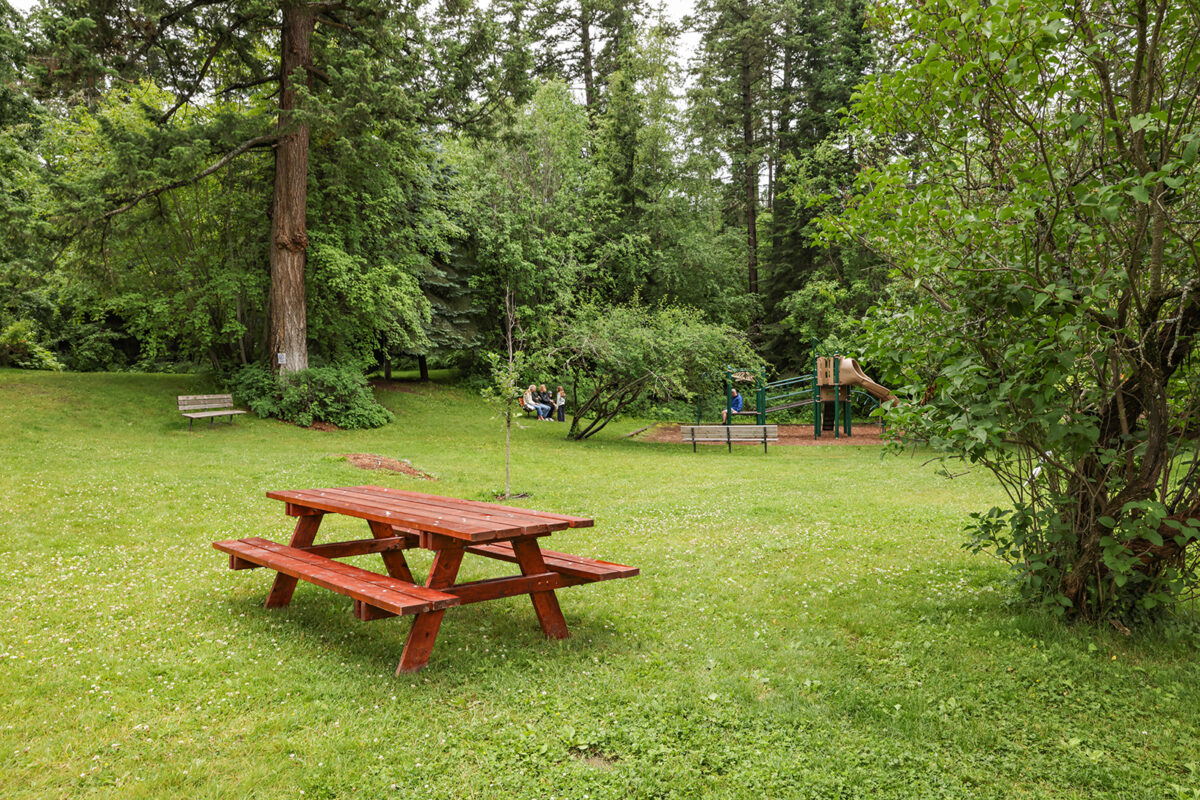
Owned by PacifiCorp, the power company has leased the park to Flathead County since 1981 and CFBB has served as its management partner while the parks and recreation department has maintained the property.
Citing a staffing shortage, board members said terminating the lease would “allow the parks department to better serve the county as a whole,” allowing employees to reallocate resources and care for county-owned properties.
Shoultz said CFBB has the first right of refusal to the property from PacifiCorp and the organization is in the process of taking over the lease. In addition to the trash cleanup and bathroom maintenance the nonprofit is already tasked with, it will now be responsible for lawn and general maintenance, which includes vandalism cleanup.
“There’s always the worry of donor fatigue,” Shoultz said. “We all pay taxes in Bigfork and people contribute very graciously to organizations like ours to make it better. It would be nice to have extra funding for this as opposed to tapping into donors and have people who are paid to be doing this type of work. Most of our board members have full-time jobs. We love doing it, but I think we would benefit from being incorporated and having a government agency with more funds.”
But Shoultz acknowledged the complexities surrounding incorporation, such as Bigfork’s small size and its location straddling both Flathead and Lake counties.
“From my understanding, Bigfork isn’t well-defined,” Shoultz said. “Taxes would go up, which would be an issue for the people who live here.”
According to Montana law, a municipality is defined simply as “an entity that incorporates as a city or town.” The state’s first 10 municipalities were incorporated by an act of Territorial Legislature starting with Virginia City in 1864 and ending with Billings in 1885. After this timeframe, all other municipalities that met the statutory criteria for incorporation underwent a local election.
To incorporate, the board of county commissioners orders an election when it receives a petition from two-thirds of electors residing within an area of at least one square mile. If approved by voters, municipal governing officials are elected and a city is formed.
The City of Kalispell was incorporated in 1892, while the most recent incorporations took place in Colstrip in 1999 and Fort Peck and Pinesdale in the 1980s, according to the Handbook for Montana Municipal Officials.
“My opinion is that it’s something well worth investigating,” Flathead County Commissioner Randy Brodehl said, referring to incorporating Bigfork. “If the people are interested in that, it’s an opportunity for them to have more local control and the county would certainly be in a spot where we would do everything we can to support them.”
While Bigfork residents’ taxes would rise, Brodehl said incorporation would allow the community to have its own departments while the citizens would have a voice.
SUPPORT THE WHOLE FUTURE OF THE FLATHEAD VALLEY
Bolster your Flathead Beacon newsroom as we follow stories past the headlines and into the impacts on our communities by making a donation of any amount. With you, we can stay resilient, focused on solutions and committed to the future of the Valley.
“It has its own personality because many Bigfork citizens are retired,” Brodehl said. “Many are part-time citizens and many of them just want a certain flavor to the community. Every community has a personality — Bigfork, Kalispell, Columbia Falls and Lakeside — all of these communities have a unique personality and that’s why it’s so important the citizens have a voice in that.”
Former longtime Republican legislator and Bigfork resident Bob Keenan said the idea of incorporation has emerged periodically over the years, but when property owners learn their taxes would increase by roughly one-third, the idea becomes less popular.
“The devil is in the details,” Keenan said. “If you read the statute about incorporating a community and the requirements of having a municipal court, a police department and all the services required, then it becomes a dollars and cents thing.”
While incorporation would speed up law enforcement response times and funnel tax dollars toward projects, he said Bigfork is highly functioning without a local government because of its volunteer base.
“We’ve always been able to get things done,” Keenan said.
Kautzman, the longtime volunteer, said creative partnerships between various organizations and nonprofits have helped Bigfork jump over bureaucratic hurdles over the years such as using the Rotary Club’s insurance to cover tree removal for maintenance in Sliter Park.
And while the unincorporated community has a strong army of volunteers to get things done, Kautzman said most of the volunteers are well over age 40 and she hopes to recruit younger generations to keep Bigfork operating as it has for decades.
“It’s hard to see the whole sweater when you’re just a thread, but that’s true — because we’re all just a thread in this great sweater of Bigfork,” Kautzman said.