Groups Petition Montana FWP for Mandatory Bear Spray, 24-Hour Trap Checks
Advocates cite rising grizzly deaths and animal welfare concerns; critics call the rules unnecessary regulation. The Fish and Wildlife Commission has 60 days to respond.
By Jules Lingenfelter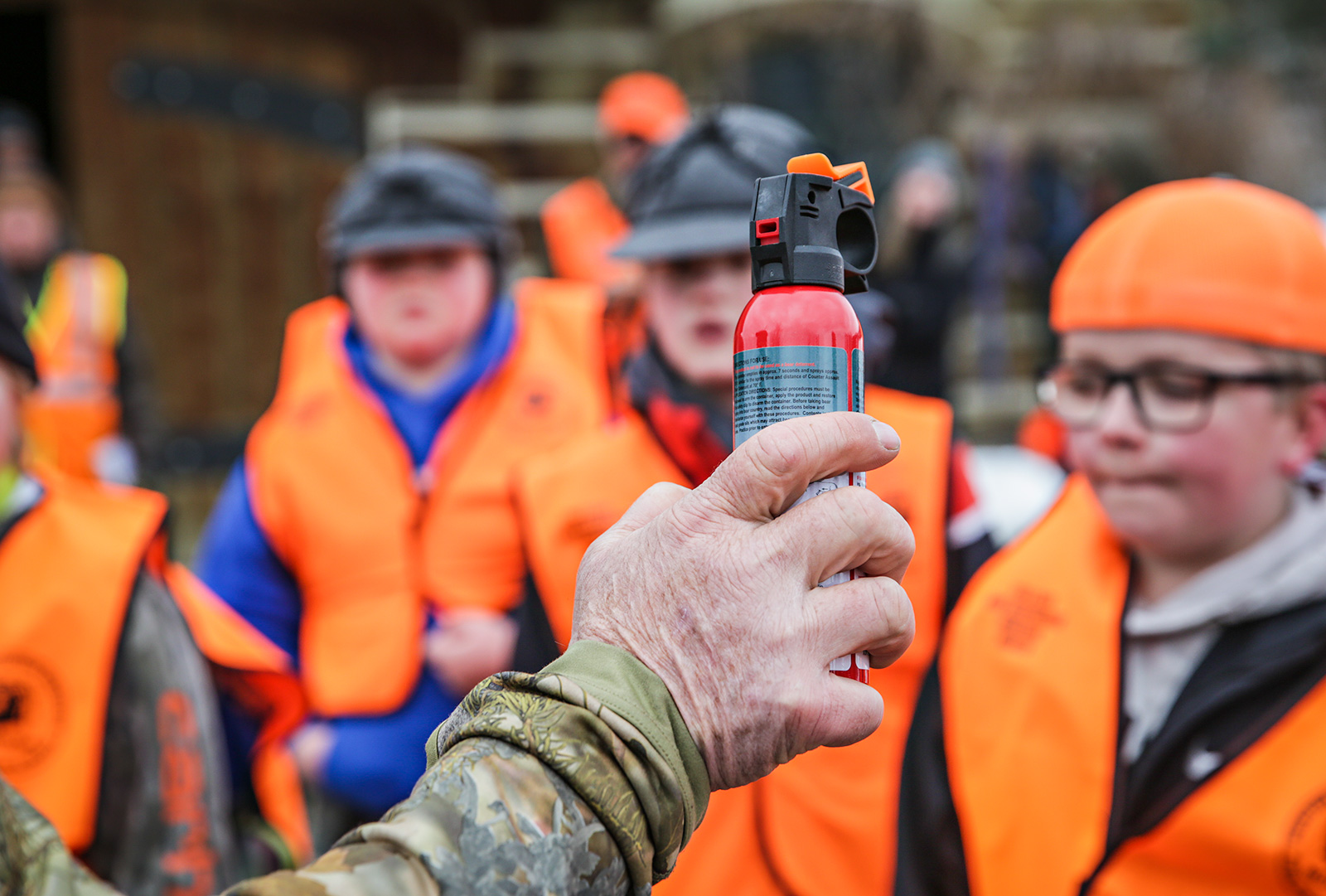
With the start of hunting season on the horizon, wildlife conservation groups have petitioned Montana Fish, Wildlife and Parks (FWP) to implement stronger regulations for hunters and trappers in the state. One would see hunters and trappers required to carry bear spray, and the second would institute a mandatory 24-hour trap check.
The proposed rule for bear spray was first submitted to FWP on July 21 as a joint effort among 19 groups. According to FWP Communication and Education Administrator Greg Lemon, petitioners were advised to submit to the Fish and Wildlife Commission, whose members oversee game regulations. The petition was resubmitted on Aug. 5.
Under the proposed rule, all hunters and trappers would be required to carry, and have accessible, bear spray. “The main purpose of the petition is, it’s a public safety issue and nobody wants to see anybody get hurt,” said Mike Bader, an independent natural resource consultant based in Missoula. “And the second is to protect grizzly bears.”
Hunting in grizzly territory comes with inherent risks — the act requires people to engage in behavior normally warned against such as going out during dusk and dawn and making little noise, unless elk bugling. “Hunters are often alone. They’re stalking quietly through thick brush and forest. They’re associated with dead animals, whose scent can attract bears,” Bader said. Trappers, he said, risk a grizzly finding their traps and defending it as a food source or trapping a cub, both of which can lead to defensive behaviors in bears.
FWP offers resources for hunters and trappers to be “bear aware.” The agency recommends carrying bear spray and to deploy it should there be an aggressive encounter with a bear. “If physically attacked, still use your bear spray. Bear spray has ended attacks,” reads the 2023 brochure “How to Hunt Safely in Grizzly Bear Country” administered by FWP.
The petition proposes to codify that recommendation. A violation of the rule would result in a minimum $25 fine for individuals and a $100 fine for outfitters and guides. A second offense comes with a steeper price and the potential for a license or permit suspension at the game warden’s discretion.
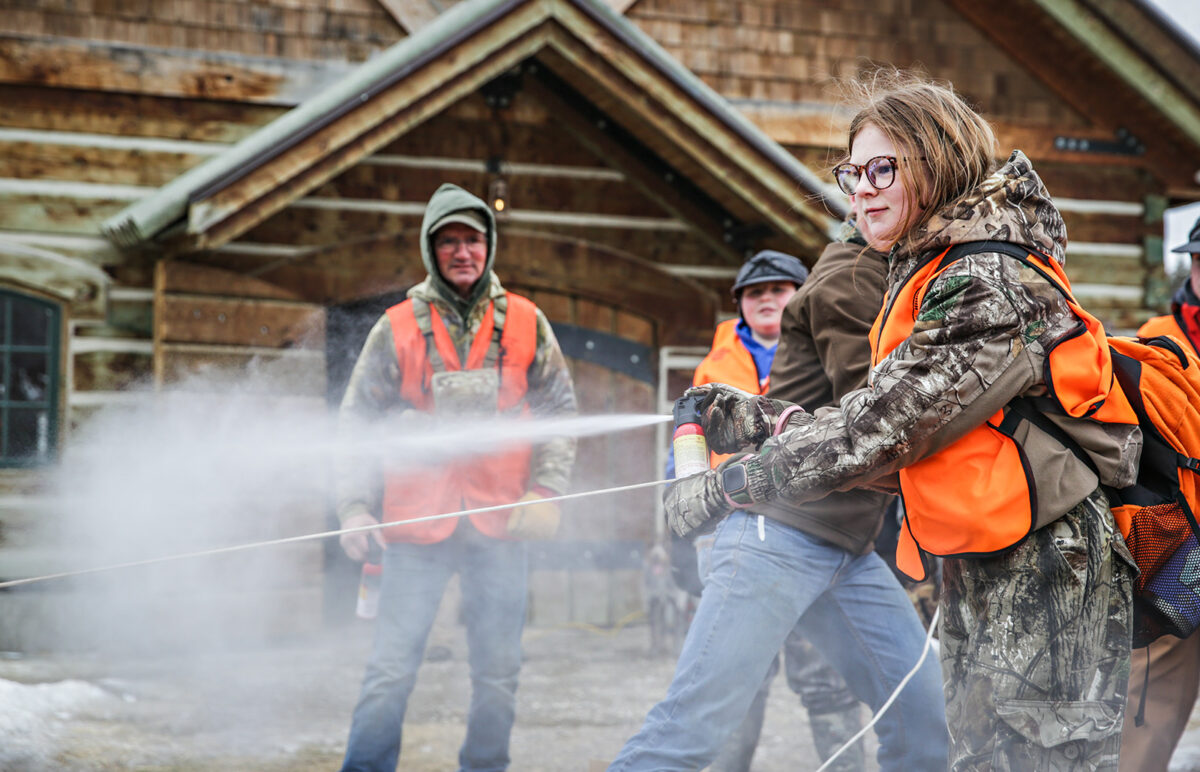
Bader, who worked in grizzly management for Yellowstone National Park in the 1980s, believed bear spray to be a common-sense, non-lethal deterrent against an attack. “When I was a ranger in Yellowstone, there was no bear spray. It was just part of my duties, I carried a .357 Magnum, which I did not believe was effective at deterring a grizzly bear,” Bader said, describing how he had been charged at and treed by grizzlies. While on carcass patrol, he carried a 12 gauge shotgun. “But had there been bear spray at that time, I certainly would’ve carried it.”
For Bader, the urgency of this proposed rule is two fold; concern over the growing number of defense-of-life mortalities of grizzlies in Montana and grizzly bear management undergoing a major shift. In July, management of the listed species was handed over to the state, and the federal government has loosened up regulations in the Endangered Species Act. “We’ve just had this big increase in defense of life kills, and just more grizzly bears in general are being shot. And if legal protection is removed from them, it’s likely more will be shot,” Bader said. “So we think it’s urgent to have this non-lethal alternative available for everybody.”
The petition has seen public pushback. An op-ed published in the Daily Interlake pushed for FWP to reject the petition, arguing that it may set an unfair precedent to overly regulate hunters. The recent grizzly bear attack fatality in Glacier National Park also sparked concern over the non-lethal deterrent’s efficacy. An interagency report that investigated the death of hiker Anthony Pollio stated that a fully discharged can of bear spray was found among his belongings, though they did not identify if it had been used in the attack.
“I think it’s inappropriate to capitalize on somebody’s tragic circumstance to make a political point. And if you look at the board of inquiry report, there were several factors that were significant,” Bader said. He compared bear spray to seat belts — it doesn’t guarantee no injuries, but it increases the odds of survival.
Similar petitions were proposed in Wyoming and Idaho in previous years, but were ultimately rejected by their respective state agencies.
A second petition, submitted to the Department on July 27 by Footloose Montana and Gallatin Wildlife Association, proposed a 24-hour mandatory trap check. The FWP currently recommends trappers check their traps every 48 hours, and those trapping wolves are required to do so.
“Wildlife deserves better,” said Anja Heister, Executive Director of Footloose Montana. Her main concern lay in preventing prolonged periods of time in traps, which can lead to internal injury and self-inflicted amputation. “If we had a 24-hour mandatory trap check, those kinds of traumas could potentially be limited,” Heister said.
“These efforts are not new,” Heister said. She viewed the current petition as a continuation of work first started nearly two decades ago by former state Representative Gail Gutsche. In 2005, Rep. Gutsche introduced House Bill 603 that would reform trapping laws, including imposing a 24-hour mandatory check. The bill failed, but FWP initiated many of the proposed changes over the last 20 years, including mandatory trapper education. Heister hopes to see the proposed rule as one more step towards stronger regulations on trapping.
As per Montana state law, the Commission has 60 days to respond — they can either deny the proposed rules with written reasoning or initiate the rulemaking process. Neither petition was submitted in time to be considered during the upcoming Commission meeting on Aug. 19.