Pursuit Resubmits Columbia Mountain Tram Proposal
The Forest Service says the plan is largely unchanged from the version it rejected in 2023, and that it will gather public input while it screens the proposal
By Tristan Scott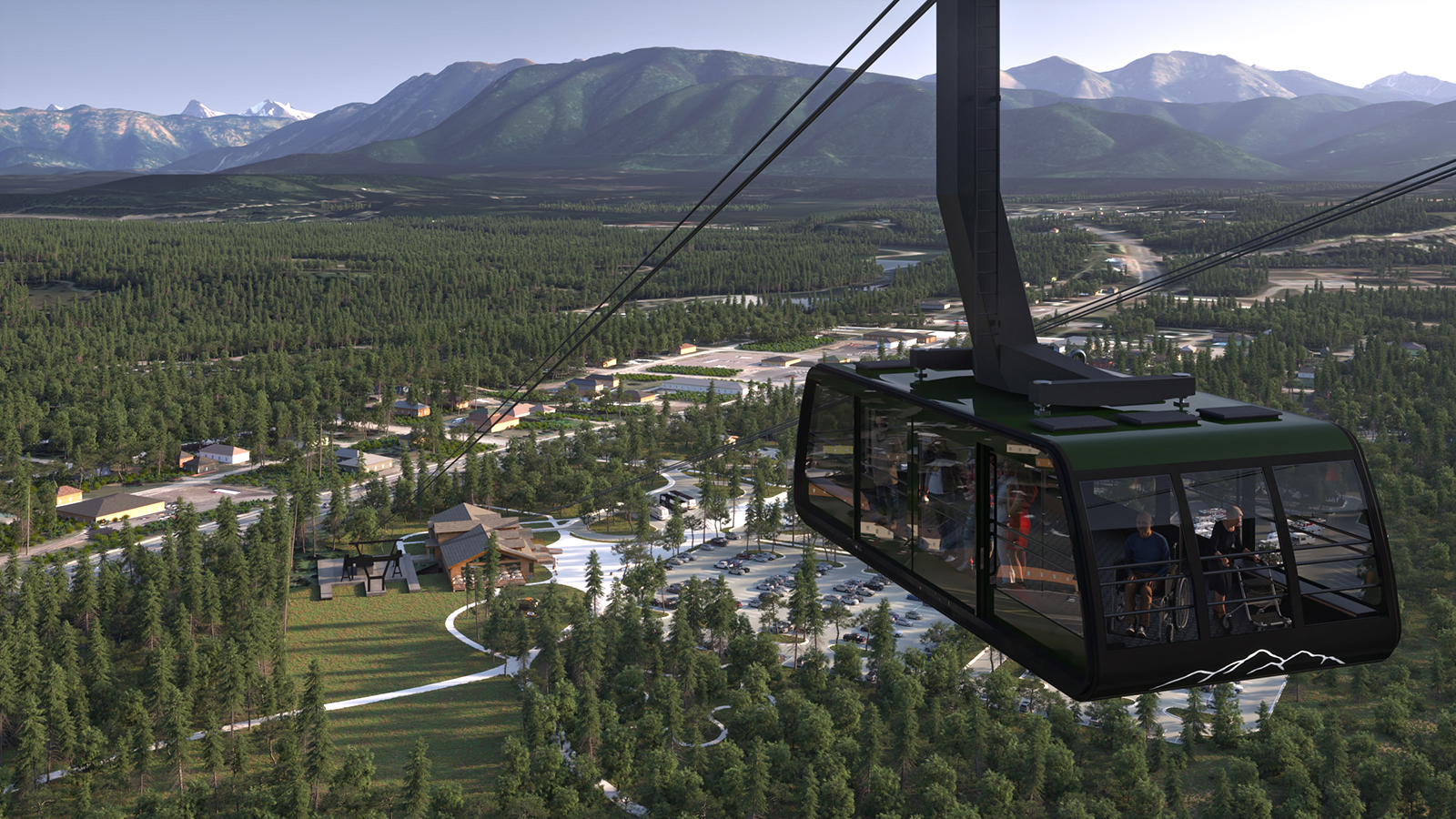
Pursuit Attractions and Hospitality announced Thursday it had submitted a proposal to the Flathead National Forest to build a year-round aerial tram up Columbia Mountain near Hungry Horse, reviving a project the agency rejected nearly four years ago. The Forest Service confirmed receipt of the proposal the same day.
The company says the main change from its 2022 proposal is that the tram would operate year-round but includes “no significant changes to the project footprint or general design.” Flathead National Forest Supervisor Anthony Botello said a cursory review of the submission found nothing substantive that differs from the earlier version, which then-Forest Supervisor Kurt Steele rejected in January 2023.
“Their proposal is pretty much the same” as in 2022, Botello said in an interview Thursday.
What both the agency and Pursuit say is different this time, however, is public engagement.
“We want to engage the public as soon as we can,” Botello said.
Pursuit COO Gary Rodgers said the company is trying to be more open about its proposal, including during a phase of the screening process that’s normally not public facing.
“The biggest change this time around is … we’re being proactive,” Rodgers told the Beacon in a Thursday interview. “We really want to make sure that people, both citizens of the greater Flathead Valley and beyond, understand the project, have an opportunity to learn more about it and ask questions or submit comments.”
In addition to issuing a press release Thursday and launching a website dedicated to the tramway project, Pursuit will read and respond to comments submitted through glacierviewtram.com, Rodgers said. This will occur separate from the agency’s outreach. The Forest Service does not usually seek public input while screening an unsolicited proposal for a special-use authorization on public land, Botello said, but will this time due to the high degree of interest.
The submission arrived overnight, Botello said, triggering a screening process to determine whether the proposal meets public need and whether Pursuit has the financial and technical ability to operate it. The agency will now run the proposal through two sets of screening criteria, including nine initial standards and five second-level benchmarks. The criteria cover consistency with the forest plan, public need and the applicant’s technical and financial ability. If the proposal passes, it becomes an application and moves into environmental review and public involvement under the National Environmental Policy Act. The agency aims to respond to Pursuit within 60 days, though Botello said a complex proposal like this could take 90.
“We haven’t even accepted it yet,” Botello said. “At this point, it’s just a proposal. Our first look was this morning and I haven’t thoroughly reviewed it, but we’ve got a team ready to work through it just as it would any other special use proposed on the national forest.”
An agency news release on Thursday called Pursuit “an established and valued partner” in providing recreation on the Flathead National Forest and Glacier National Park. Botello said that if the proposal meets the initial criteria, he is committed to working with the public and Pursuit to evaluate it and make “an informed decision.”
The Forest Service declined to release the proposal documents because they may contain proprietary information. Botello said the agency would review any such requests under the Freedom of Information Act (FOIA). The Beacon submitted a FOIA request Thursday. Pursuit also declined to release the proposal, saying in a written response that “a release of any materials related to the submission will be at the discretion” of the Forest Service.
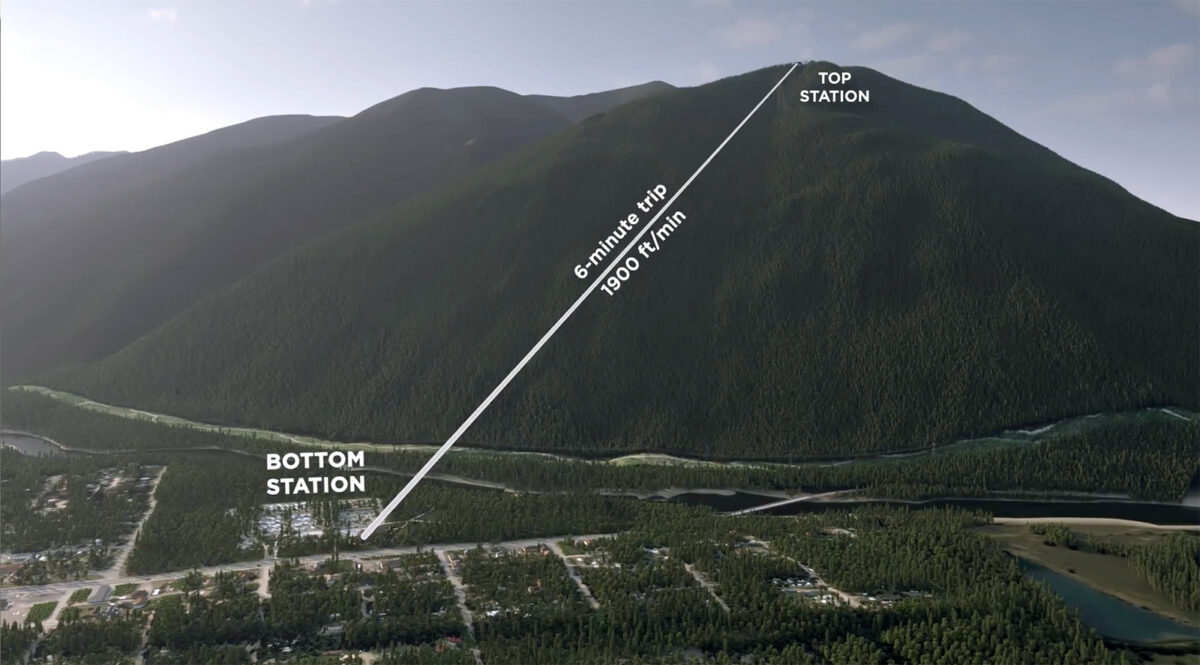
The Glacier View Tram would carry passengers more than 3,000 vertical feet in roughly six minutes, according to Pursuit. The company’s news release described two 100-passenger cabins traversing Columbia Mountain in opposite directions, like an elevator. Rodgers said in a written response that Pursuit is assessing cabin sizes of 100 to 125 passengers. With departures every 10 minutes, he said, the system would have a peak capacity of roughly 1,000 passengers per hour, and the company expects peak-demand operations of about 600 people per hour.
Pursuit did not provide daily or annual ridership projections or operating hours, saying more detailed estimates will be developed as the project progresses. Rodgers said Pursuit sees the tram as a way to capture visitors already in the Flathead area and traveling U.S. 2 toward Glacier National Park rather than as a destination in itself. He cited Montana Department of Transportation data showing an average of 10,700 vehicles a day passing the site last year.
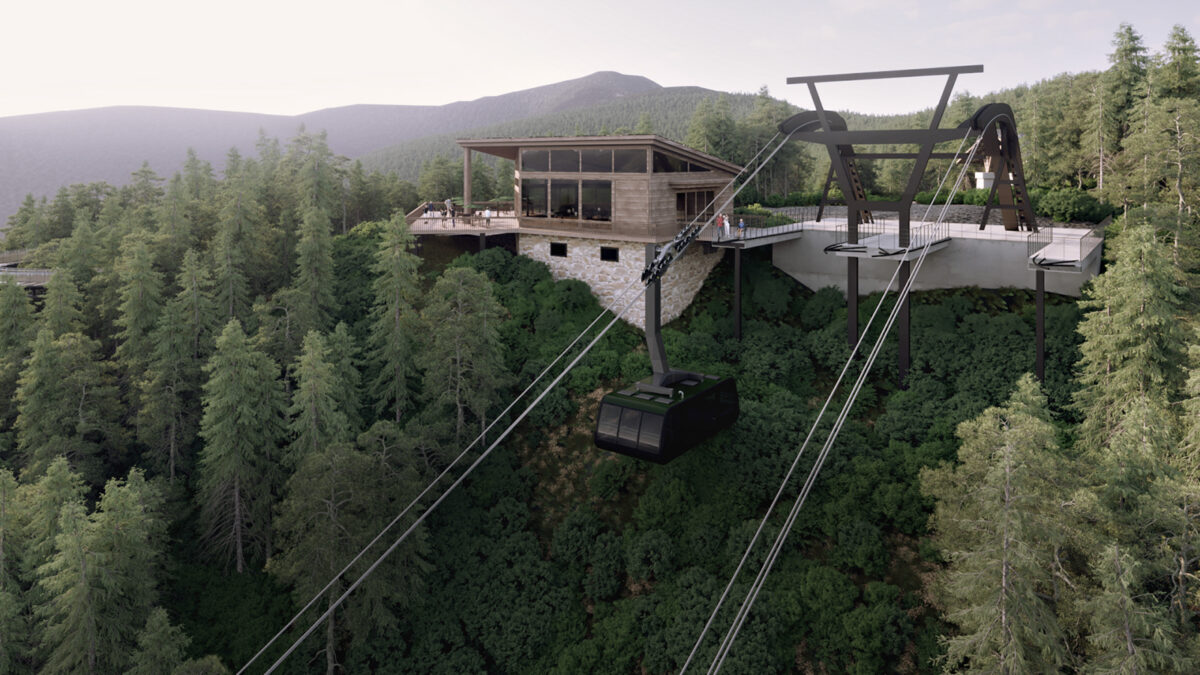
Rodgers said the upper station would sit about 1,000 feet below the summit of Columbia Mountain, with a small cafe and viewing area. Base facilities on a Forest Service parcel south of Highway 2 would include a full-service restaurant, retail space, parking and an information center, according to the company. Ultimately, the capacity of the upper station will be based on the capacity of the passenger cabins and the anticipated dwell time of visitors at the top, Pursuit officials said.
In the written response, Rodgers said Pursuit is considering year-round operation among a range of operational alternatives. The proposal does not currently include hiking trails beyond small loops within the site, he said, though he expects talks about connecting to existing trails during environmental review and said nothing in the proposal would prohibit it.
Pursuit says it would finance the project privately. Rodgers said no road would be built and the tram would be fully accessible.
“Public lands belong to everybody, and that’s why this process matters,” Rodgers said, describing the tram as offering “multi-generational, multi-ability” access to scenic views. It would be fully accessible under the Americans with Disabilities Act. He said no road would be built, while year-round operations would mean year-round employment.
Pursuit’s news release described an economic analysis prepared as part of the proposal that estimates about 230 jobs. In the written response, Rodgers said the company hired an independent consultant for initial planning estimates and that the report is not part of the submission. He called the cost of the project “significant.”
In 2023, Steele, the former supervisor, found the proposal inconsistent with the 2018 forest plan. In his denial letter, Steele wrote that he would not propose an amendment to the forest plan because it was less than five years old.
Botello, who assumed Steele’s position at the helm of the Flathead National Forest in November 2023, said the agency will test the same questions again.
“Fast forward five years down the road, we have more data on how we are implementing the forest plan,” Botello said. “I think it’ll help in that determination, whether or not [an amendment] is needed and whether or not we’re willing to do that.”
Any amendment would be site-specific and made through environmental review, and the public would be told up front, he said.
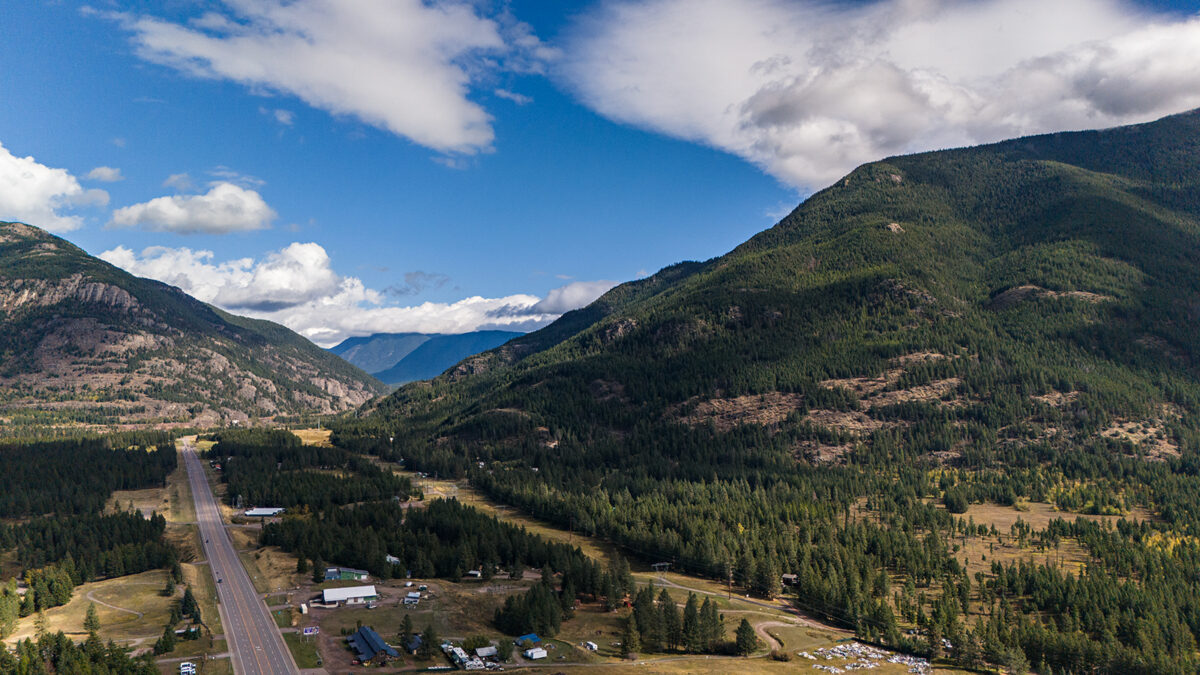
The forest plan assigns each area a management designation. The base of the tram would sit in Management Area 6C, which is categorized as general forest managed for high-intensity vegetation management, while the upper terminal would be in Management Area 5B, a backcountry area open to motorized use year-round, Forest Service officials said.
A separate system, the recreation opportunity spectrum, classifies the kind of experience an area offers by season. At the upper terminal, the summer setting is semi-primitive non-motorized and the winter setting is semi-primitive motorized, officials said. The 2023 rejection letter cited the area’s semi-primitive non-motorized setting.
A Pursuit spokesperson said in an email that the company “understands the concerns regarding the 5b management designation and will be asking the [Forest Service] to examine other similar facilities located within such management areas.
“The [agency] will make the determination of whether a ropeway system is suitable within a 5b area, and if the project progresses, they will determine whether an amendment to the forest plan is necessary,” the spokesperson said in the email.
Botello said the top station is in an inventoried roadless area. With no road planned, he said, the question turns less on road building than on whether the project fits the forest plan, which was informed by the 2001 Roadless Rule. The U.S. Department of Agriculture has proposed rescinding that rule, and there are federal proposals to change Endangered Species Act protections. Botello said no decisions have been made based on those pending changes, and that the forest plan remains the agency’s “North Star.”
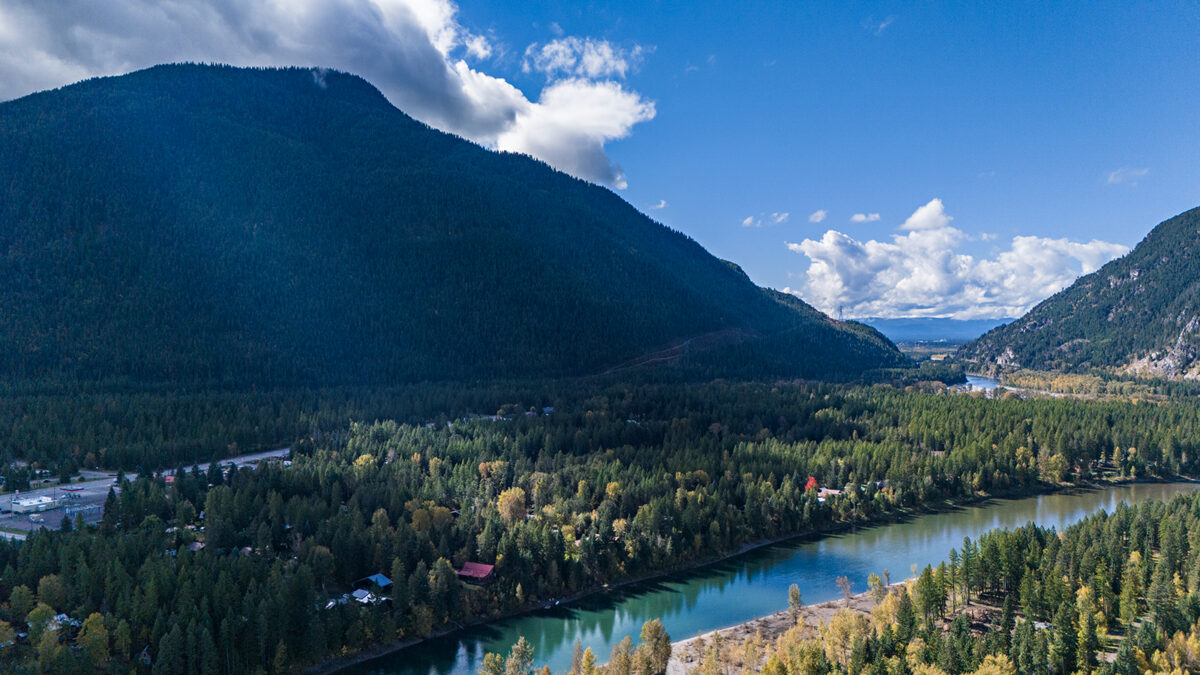
Forest Service records place the upper terminal station in core grizzly bear habitat. Year-round operation will be part of the agency’s evaluation, including effects on threatened and endangered species, including grizzlies and lynx, as well public safety, Botello said.
The agency has recently asked Pursuit whether it is open to other locations, Botello said. Rodgers said Pursuit explored Teakettle Mountain but chose Columbia Mountain for its year-round access from Highway 2 and a top terminal below the summit that limits visibility from the valley. The tram’s single support tower is intended to reduce its visual profile and blend with the surrounding terrain, according to Pursuit’s website, while all structural elements including tram cars would “use non-reflective, matte finishes in natural tones to minimize glare and visual disruption.”
Botello said the agency will look at how trams on other national forests were permitted, and emphasized that “demand doesn’t always equal need.” He said tribal consultation will be a significant part of the review, and Rodgers said Pursuit wants to talk with tribal communities about education and outreach opportunities at the base.
Botello said the agency has told Pursuit it will not take sides, even as both the applicant and the agency anticipate a high level of public interest.
“We’re not going to advocate for this. That’s not our job,” Botello said. “We’re also not going to automatically dismiss it.”
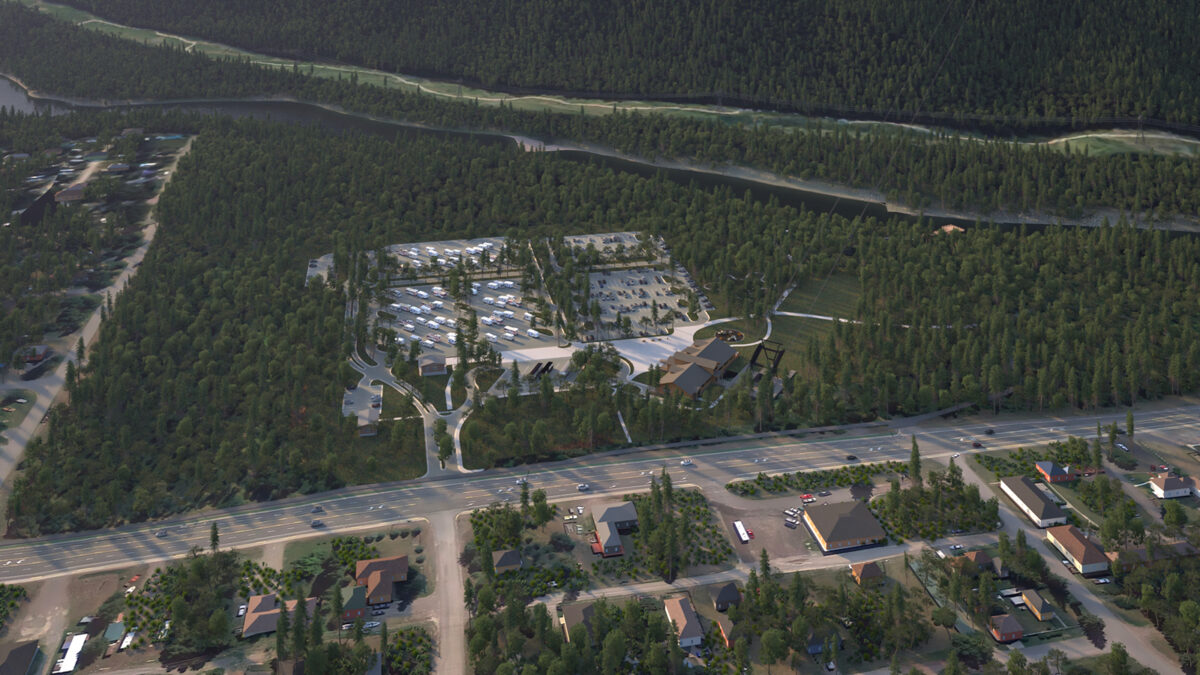
Swan View Coalition Chair Keith Hammer said in a statement that the proposal “should be summarily rejected by the Forest Service, as it was in 2023.” He said the tram would further fragment wildlife habitat and north-south travel already fragmented by Highway 2, a railroad and use of the Flathead River corridor, and that it would damage views of the mountainside.
“This is a rich-get-richer scheme and the greed is already apparent,” Hammer said. “What will come next, more trails to connect with other trails, downhill mountain bike trails, maybe a downhill ski run or two? Once these rich guys get started, they’ll be wanting more from public taxpayers and public lands in order to increase their profits.”
“I hope the Forest Service and Pursuit hear loud and clear from the public that people are fed up with seeing the Montana they love destroyed by big corporations wanting to cash in on public lands,” Hammer added.