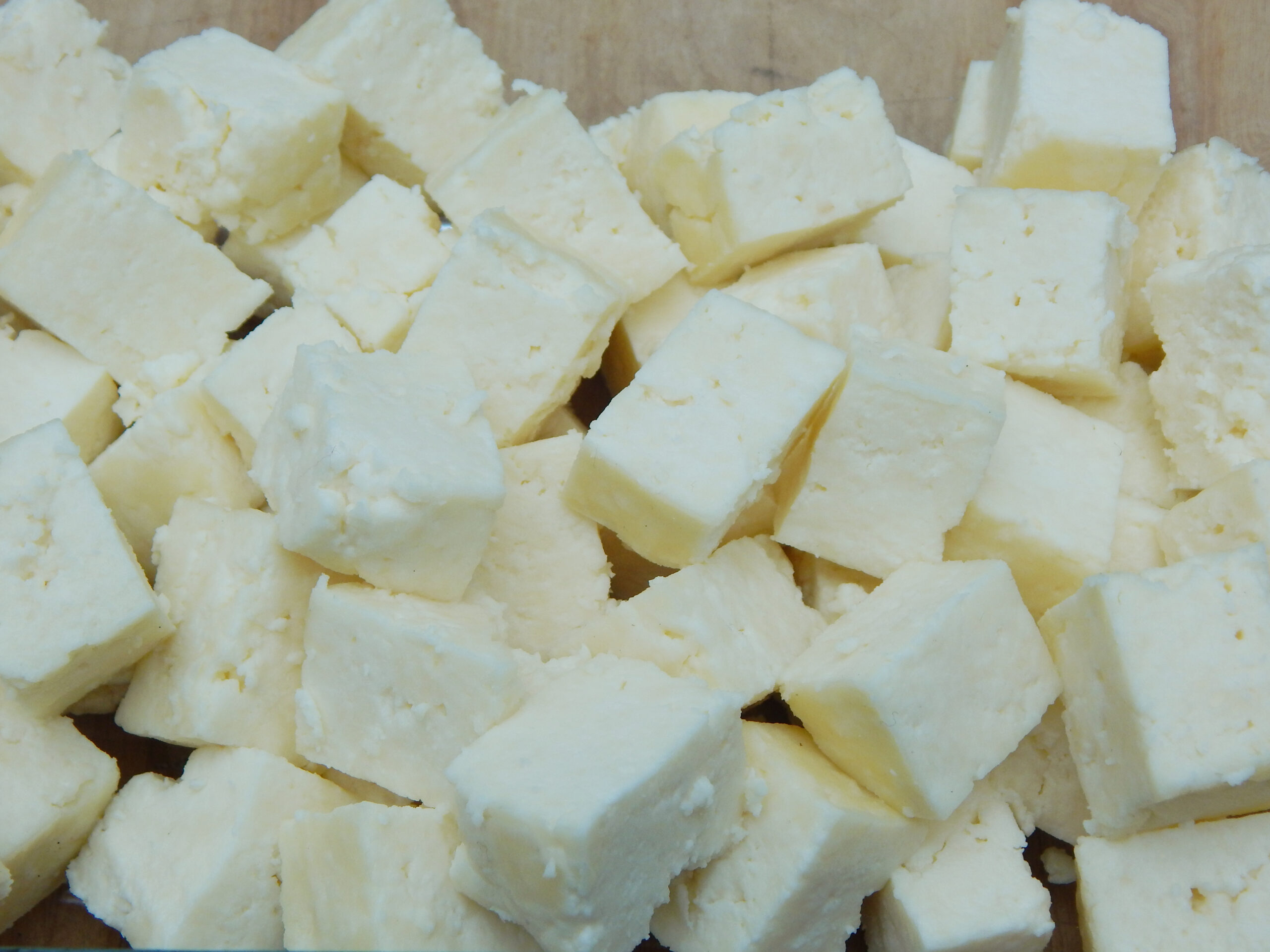
One reason I enjoy making cheese at home is that one small change creates a different cheese. My lemon-set version of farmer’s cheese, which I shared here earlier this month, develops a different flavor if I replace the lemon juice with lime juice or apple cider vinegar or add a splash of orange juice to the pot. The cheese stays softer and more spreadable when hung briefly but becomes drier and crumblier the longer it releases whey. If I shape and press even more whey from the curds, the same cheese becomes Indian paneer.
Paneer works best with a just-made batch of Lemon Cheese, or farmer’s cheese set with vinegar for a more neutral and traditional flavor. Once you’ve separated the curds from the whey, let the cheese drain for about 10 minutes and stirred in the salt, you simply change the final draining process from hanging to pressing.
You don’t need a cheese press or other fancy equipment to form paneer. I own a lovely hand-built wooden cheese press that I use to make hard aged cheeses, but I never bother to set it up for softer fresh ones. Creating paneer is more akin to pressing a block of tofu: The goal is to drain away excess liquid and compact the block just enough that it can be cut into cubes, wedges or sticks. You can actually use this cheese much like firm tofu. I often fry it like Crispy Pan-Fried Tofu or smother it in tikka masala, the recipe I’ll share next week.
Here’s how I turn lemon or farmer’s cheese into paneer:
Set the salted cheese in its finely woven cheesecloth, also called butter muslin, on a dinner plate. Shape the cheese into a 3/4- to 1-inch-thick brick, and then fold the cheesecloth smoothly around it.
Invert the plate, place it in a clean sink or container and set the cheese packet in the center. Place another inverted plate on top, and then complete the pressing tower with a full teakettle or a large cast-iron skillet. Let the cheese compress and the whey drain for about 20 minutes.
Unwrap the cheese and press on it with your fingertips; it should feel firm, with little give. If it still readily leaks whey, rewrap the cheese and press for another 10 minutes.
Unwrap the pressed panner, place it on a dry plate and put it in the refrigerator for 30 minutes before you cut it into cubes or slabs. Use immediately or transfer the cheese to a lidded container and refrigerate for up to a week.
Turning a gallon of milk into cheese leaves behind a lot of whey. An acid-set cheese like lemon or farmer’s cheese produces whey with a sharp, tangy bite. I use it to cook beans or rice and stir it into soups. I also use cheese whey in place of water when baking sourdough. It gives the bread a slightly softer crumb and plays well with its tangy fermented flavor.
Julie Laing is a Bigfork-based cookbook author and food blogger. Learn more about this month’s cheesemaking workshops at TwiceAsTasty.com.