Happy Tuesday and happy first day of September, Beacon readers! Mariah Thomas here bringing you today’s Daily Roundup, on this day that officially feels like it’s brought an end to summer. Schools are nearly all back in session, Starbucks is selling pumpkin spice lattes (this newsletter author may or may not have already had one… or two…) and fall decorations have overtaken TJ Maxx. Personally, I’m stoked — fall is my favorite season. As far as I’m concerned, it’s beyond time to cue up the Gilmore Girls and election season madness.
Anyway… onto the more important stuff.
As school started up in many corners of the state last week, Montana’s Office of Public Instruction was finalizing a settlement with plaintiffs in a class-action lawsuit concerning the state’s Indian Education for All (IEFA) guarantees.
For those unfamiliar, or in need of a refresher… Montana is the lone state in the country with a constitution that holds an explicit guarantee: K-12 students must be provided with instruction about the history, culture and contributions of Indigenous peoples in the region. First enacted in 1999, the Indian Education for All Act has long been on the books, and funding to provide the programming for students figures into the state’s complex school funding formula. (Currently, that funding is based on total student enrollment in school districts, sitting at $25.37 per student or $100 per district — whichever number is higher.)
But just because the law has been on the books for a long time, doesn’t mean school districts have implemented it uniformly across the board. The law also lacked teeth to ensure its enforcement.
It’s those issues that were at the heart of a class-action lawsuit, DuPuis-Pablo v. Montana Office of Public Instruction, filed in 2021 and including 18 students and their guardians, along with the state’s seven Tribal Nations. Last week — five years after the lawsuit was filed — the parties signed an agreement to settle the lawsuit.
The terms? Montana’s Office of Public Instruction agreed to enhance its oversight of the program (both in terms of monitoring, and in terms of finances, including publishing an annual list of noncompliant schools), strengthen and formalize tribal consultation requirements, and bolster IEFA content. That effort includes expanding educator training, maintaining and creating “publicly available educational resources” and expanding “professional development opportunities for teachers and districts.”
In an Aug. 25 press release, several parent plaintiffs and attorneys lauded the settlement, expressing their hope that it would ensure Montana’s future generations had a strong basis of understanding of tribal communities in the state.
“Hopefully, this settlement will push back against the ignorance and lack of knowledge that is all too common,” said Cammie DuPuis-Pablo, a parent plaintiff. “I didn’t get to see accurate representations of Native Americans when I was in school, my oldest kids didn’t get that when they were in school, but — with this settlement — maybe my youngest kids will. Because our ancestors’ story is meaningful, it’s what happened, and it should not be cut out from the history of America, or I would say Turtle Island.”
Susie Hedalen, the state’s superintendent of public instruction, also said she was “pleased” the settlement had been reached.
“Many of the terms of the settlement were already being undertaken at my direction including expanding the role of the Montana Advisory Council on Indian Education in statewide policy development, verification of local expenditures using IEFA funds, greater tribal consultation, and incorporation of IEFA throughout Montana’s content standards and classroom instruction,” Hedalen said. “The OPI has also launched a new website and professional development portal to house additional IEFA resources for educators and families. In Montana, we support all students and work to ensure they are seen and supported.”
The settlement also comes on the heels of the close of Montana’s School Funding Interim Commission, which has met for the past year and a half to consider the state’s funding formula for K-12 schools. In its final report, the commission found that, “State support for school districts to meet the constitutional requirements of Indian Education for All is insufficient for low-population schools.”
One of the draft bills the commission proposed at its conclusion was to increase the minimum IEFA payment from $100 to $1,000 to better equip small districts to provide IEFA programming. The commission’s final report also included a suggestion to “consider moving IEFA funding out of the general fund and into a specialized fund,” since it has specific purposes and reporting requirements.
There’s a 30-day notice period before the settlement is officially approved. Whether the School Funding Interim Commission’s proposed changes to IEFA funding will be enacted remains to be seen.
All right, folks — that’s what I’ve got for you to kick off this September. Onto the rest of the Daily Roundup!
University of Montana law student Davis R. Paul received the 2026 Loren Kreck – Edwin Fields Wilderness Scholarship for his work on transboundary water law and the Elk-Kootenai Watershed
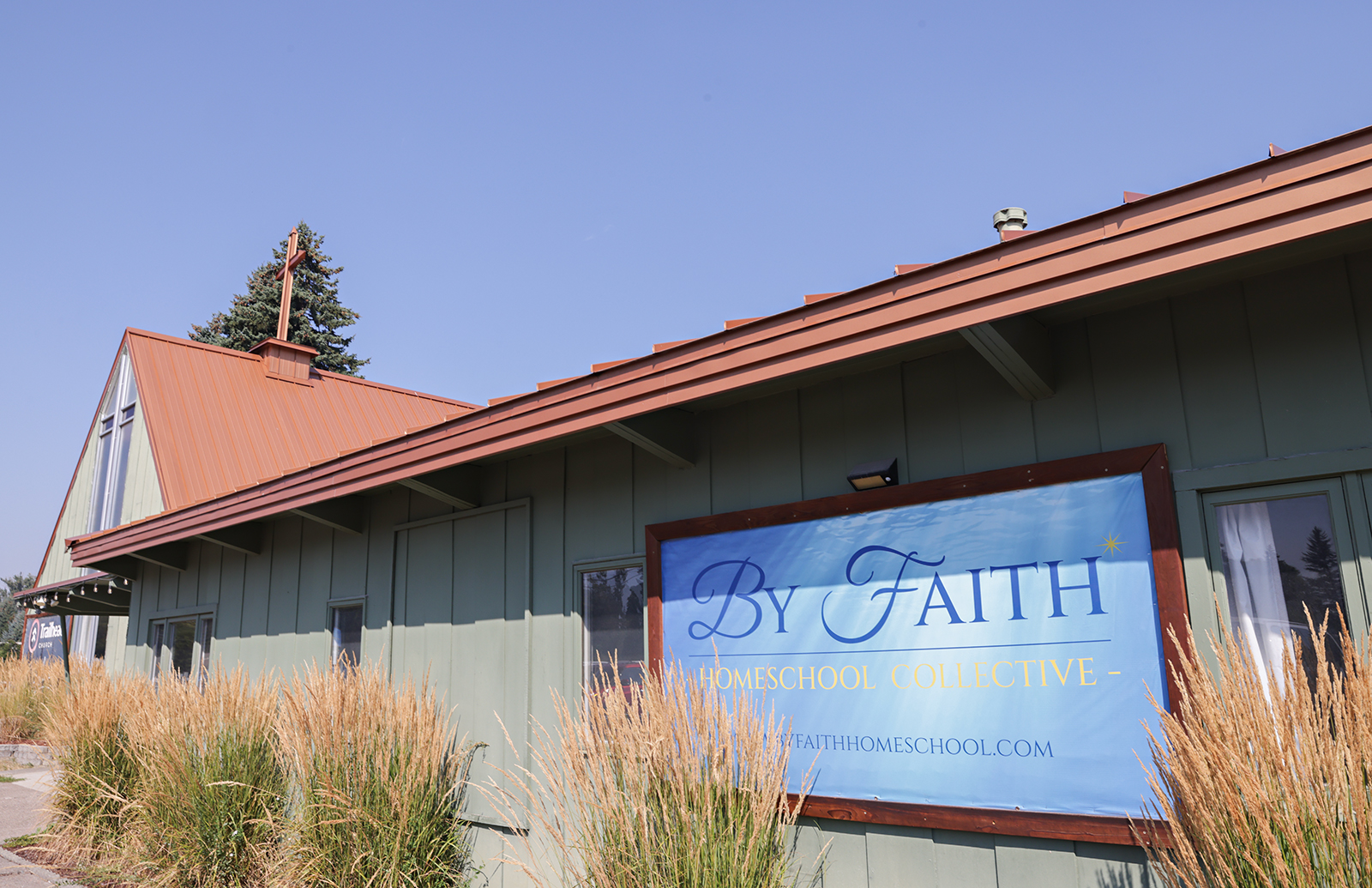
New Homeschooling Collective Set to Instruct Nearly 300 Students in its First Year
The By Faith Homeschool Collective in Evergreen, founded by Dan and Crystal Clark, is offering enrichment courses and support for homeschooling families, relying on the Clarks’ deep connections as it gets off the ground.
On the Blackfeet Nation, Shield Keepers are Working to Reverse Historical Trauma
Since launching in 2021, Blackfeet Eco Knowledge has united elders and young interns to reconnect tribal members to their land and traditions while protecting sacred places like Chief Mountain
Whether you’ve been here for decades or you’re new to the Flathead Valley, our reporting is here to help you feel smarter and in the loop about the issues most important to Northwest Montana. With your support, we can build a more engaged, informed community.