Pilot was Prepping for Youth Flight Prior to Fatal Bigfork Plane Crash
Bradley J. Young, 63, was a member of the Experimental Aircraft Association, whose former president blamed the fatal crash on a catastrophic engine failure. The Sept. 19 plane crash was the fourth in the Flathead Valley this summer.
By Mariah Thomas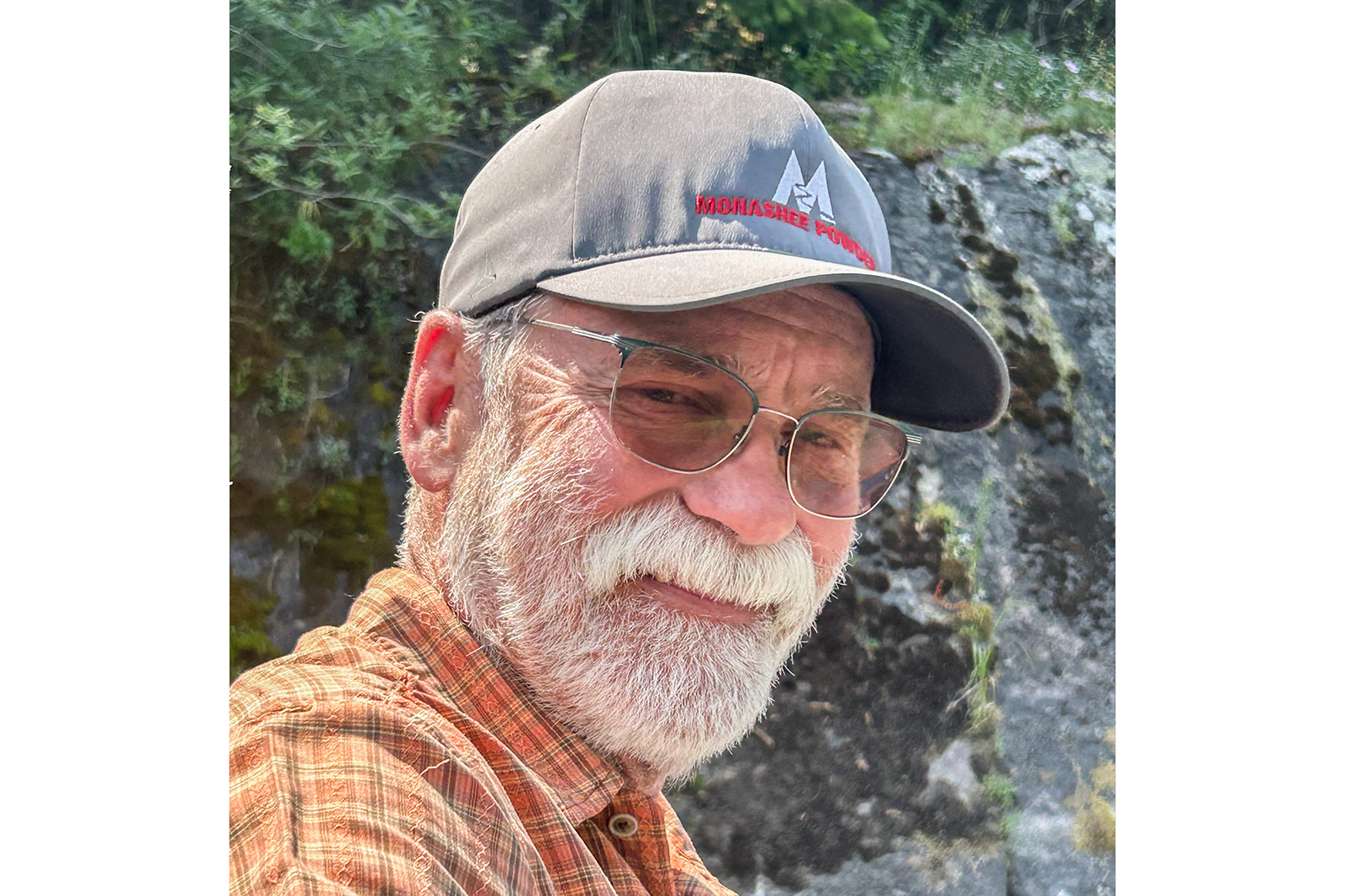
Brenton Battles isn’t sure whether Brad Young built or bought his Murphy Moose aircraft. But what Battles is certain about is that Young was a proficient pilot concerned with safety, even as he knew the risks that came with flying planes built from kits.
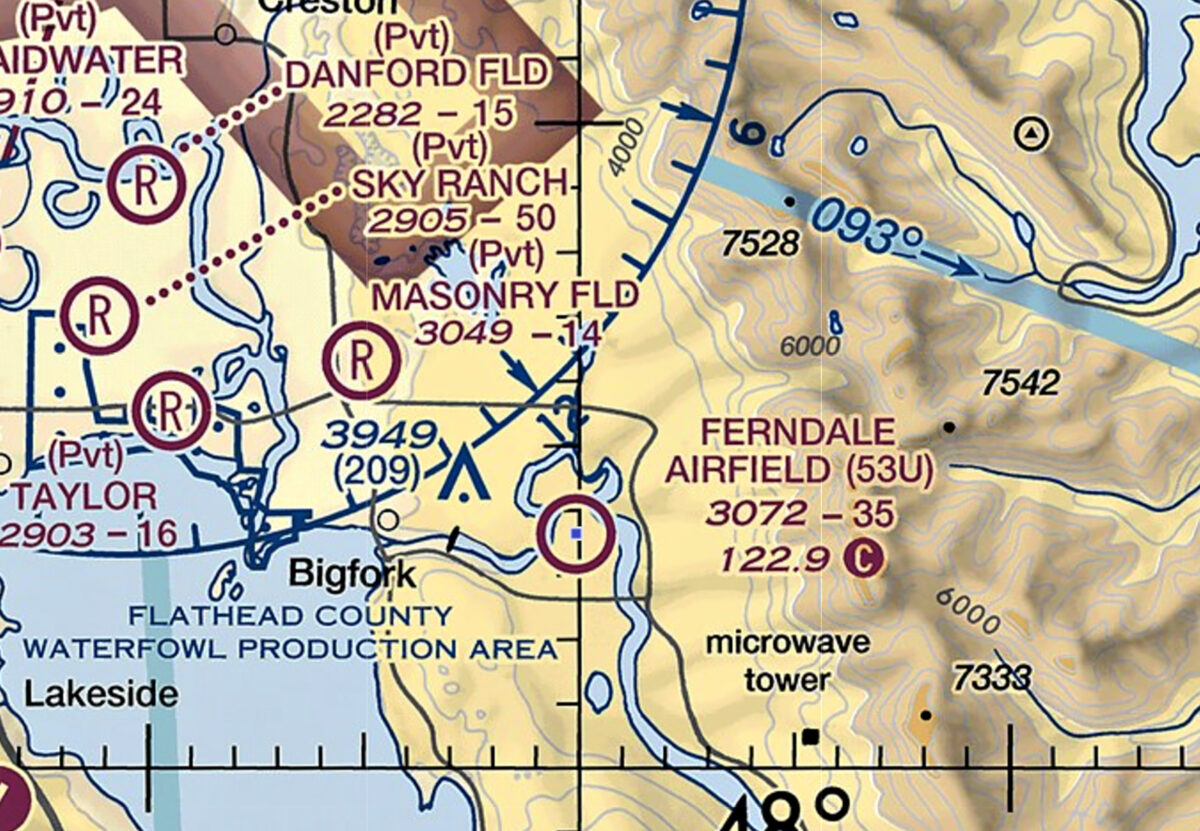
Young’s Murphy Moose, a four-to-six seat aluminum aircraft, crashed Friday morning at the Ferndale Airport. The sheriff’s office confirmed his identity Wednesday — Bradley J. Young, 63, died of injuries sustained in a crash Sept. 19, the undersheriff said.
Battles attributed the crash to a catastrophic engine failure. The National Transportation Safety Board, which is investigating Young’s crash, doesn’t yet list a report from the accident. The investigation’s status is listed as “in work.”
Battles and his wife, a long-time flight instructor, live in a home at the Ferndale Airport. They arrived at the scene of the crash Friday, heading over to it as soon as they heard sirens stop. Several agencies responded to the accident.
“The loss of this fellow is a personal pain,” Battles said. “It’s awful.”
Battles and Young came to know each other through the auspice of a group called the Experimental Aircraft Association. That group formed in 1972, and its headquarters are located in Oshkosh, Wisconsin. It has hundreds of chapters around the country and world, including the 102nd chapter, located in the Flathead Valley.
Members build airplanes, mostly assembling them from kits. The “experimental” part comes from modifications pilots make to the kits. The building of planes is usually an individual undertaking. Pilots tend to be independent and build their planes for different reasons, Battles said. But the association offers them a chance to meet others with a common interest, get safety tips and examine each other’s planes for issues.
Battles formerly served as the president of the Flathead Valley’s Experimental Aircraft Association chapter. He has flown planes since his dad got him his pilot’s license as a high school graduation gift and has been part of various chapters of the group since 2000.
When he decided to step down, he tapped Young to be his successor. Young was listed as the president on the organization’s website at the time of his death.
“He was such a fireplug,” Battles said, adding Young knew “everybody” around the airport and was quite personable.
One of the organization’s missions comes with promoting aviation to children. Battles said the chapter has done that through summer classes and a Young Eagle program, where pilots will take children between the ages of eight to 17 for a free introductory plane ride. Across the country, more than 2 million children have taken flights through the Young Eagle program. Locally, Battles said Young Eagles have gone into airline careers, become plane mechanics and joined the Air Force.
According to Battles, Young was supposed to take children on a Young Eagle ride and had wanted more practice on grass strips before heading over to Sky Ranch Airport, on the Flathead Valley’s south side, for that ride.
“He very specifically wanted to be sharp tomorrow,” Battles said. “The kind of pilot he was, was to stay proficient and challenge himself and all that.”
Young stopped by Battles’ house before taking off. The engine failure happened right at takeoff, which Battles said meant Young had mere seconds to react in the instant. Ideally, in that situation, a pilot would react by getting the plane’s nose down, before the plane lost lift in one of its wings. But the instinct when you feel like you’re losing altitude is to try to keep climbing, Battles said. In the moment, panic can set in, and not taking the right action immediately can have consequences.
“We think that’s probably what happened with Brad,” Battles said. “That’s what’s so tragic.”
Once the plane loses lift in a wing, it begins to violently turn. Young’s plane turned to the right and went down vertically, Battles said.
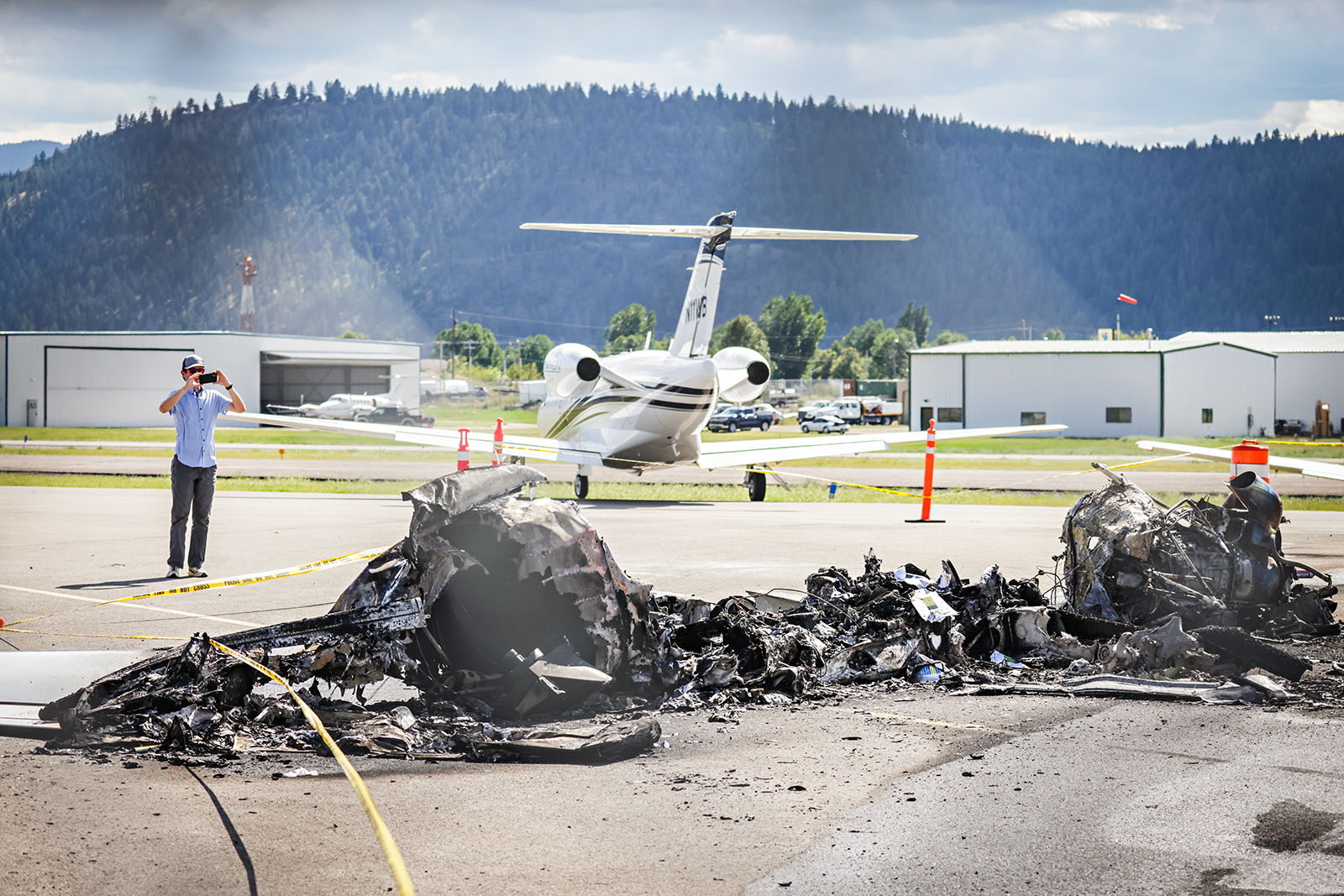
Young’s crash is the fourth to make headlines in the Flathead Valley this summer.
On July 26, two people died after a small plane veered off the runway and caught fire at a recreational airstrip in West Glacier. Then, two incidents happened in the same week. An aircraft lost control, crashed onto the runway and struck several parked airplanes, igniting fires along the way, at the Kalispell City Airport on Aug. 11. Nobody died in that incident, and all four of the aircraft’s occupants reported only minor injuries. A plane crash on Aug. 12 at the West Glacier airstrip resulted in the death of a solo pilot. Then, Young’s plane crashed on Sept. 19.
Undersheriff Luke Foster told the Beacon that seeing so many plane crashes in such a short period was “unusual.” In his more than 20 years at the sheriff’s office, he only remembers a handful of plane crashes before this summer.
The National Transportation Safety Board (NTSB) maintains a database of plane accidents. The number of incidents in the last two months match the total number of plane accidents Flathead County saw from 2022-2024 combined.
“This is just absolutely amazing that all these things could happen within 50 miles of each other in the span of (a few) weeks,” Battles said.
Foster said plane crashes are typically investigated by the feds. In civil transportation accidents, the NTSB, an independent federal agency, holds the responsibility to investigate.
Two of the four crashes this summer have NTSB preliminary reports available, which provide narratives of what happened during the accidents.
The July 26 crash at the West Glacier airport came after the airplane had a slow takeoff roll. It collided with trees and terrain, bursting into fire. The report from the Aug. 12 crash at West Glacier states the pilot had high oil temperature, and he initiated multiple go-arounds as he attempted to land. During the second go-around, “the right wing impacted a tree to the right of the runway. The airplane rolled inverted and impacted terrain in a nose down attitude.” But, the report notes, the engine sounded normal during the accident go-around.
The Kalispell City Airport crash doesn’t have a preliminary report because it’s subject to a Class 4 investigation, which seeks to identify an accident’s cause.
In Battles’ mind, Young’s crash is distinct from the others. There wasn’t much to be done with catastrophic engine failure, whereas Battles said “nine times out of 10” there is enough time for a pilot to correct any issues a plane may experience.
While Young’s crash is tragic, Battles wants to dispel the notion that just because an aircraft is experimental, it’s unsafe. He said it’s a common misconception, but those who engage in experimental aviation know their planes better than anyone else.
They also understand the risk they’re undertaking by engaging in aviation as a hobby. Young certainly understood that, according to Battles.
“He was prepared to say, ‘stuff happens and that’s okay. If that comes at me, I will have been doing what I wanted to do and it’s worth the decades probably of joy and adventure that have gone along with taking that chance, but I do it willingly,’” Battles said.
It’s not recklessness in his eyes — instead, it’s about living life to the fullest.
“There are things worth taking a risk for,” Battles said.