State Approves Environmental Assessment for Phase Two of Lakeside Sewer District Expansion Plan
The assessment found no 'significant adverse effects' on phase two of the wastewater facility project, allowing the district to begin bidding for contractors for the new treatment plant facilities
By Zoë Buhrmaster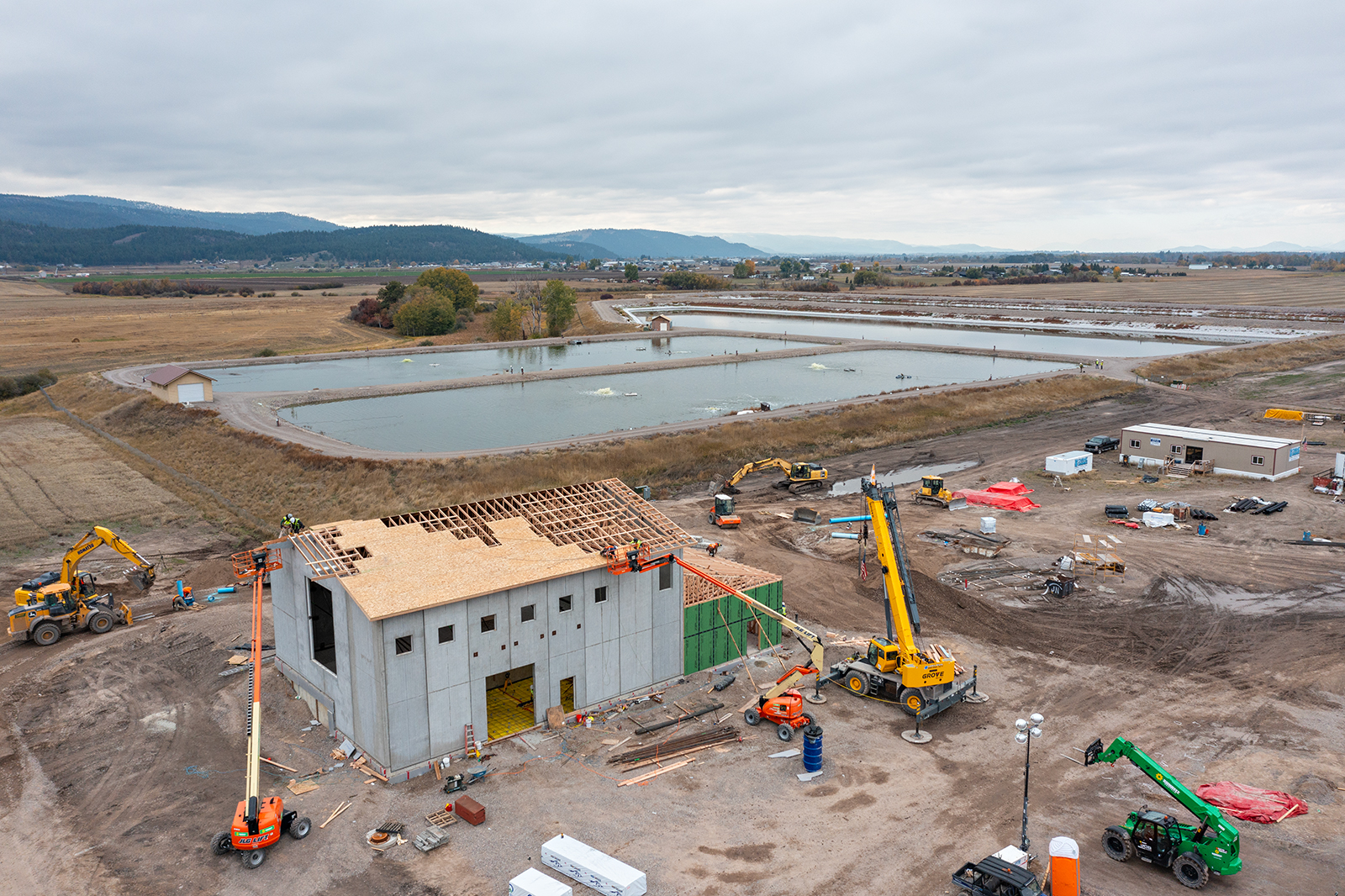
Officials at the Montana Department of Environmental Quality (DEQ) last week approved the final environmental assessment (EA) for phase two of the Lakeside County Water and Sewer District’s expansion project.
The two-phase improvement project includes an expanded wastewater treatment facility and septage receiving facility. The project is anticipated to help take on the district’s growing wastewater needs, in addition to septage from Flathead County tanks and a proposed 359-unit subdivision the Discovery Land Company has planned for Lakeside.
“We’re happy about the EA approval,” Rodney Olson, the sewer district’s general manager, said Monday. “It gives the freedom for the DEQ to finish reviewing phase two plans.”
DEQ officials approved phase one of the project last year, which included construction of a new septage receiving facility, a new headworks facility, a buried main connecting the facilities, and replacement of one of the district’s lift stations. Officials also approved a wastewater treatment permit that will allow the district to discharge treated wastewater into groundwater via rapid infiltration basins (RIBs). They noted use of the permit will require a special treatment process and regularly reporting updates on nitrogen and phosphorous levels to DEQ.
The project’s second phase includes the construction of the district’s wastewater treatment plant using sequencing batch reactor technology (SBR), the sludge-handling facilities, three RIBs, and interconnected piping.
In the EA, DEQ officials also note the district is planning a tertiary treatment involving membrane filtration and granular activated carbon to help reduce the ‘forever chemical’ PFAS and pharmaceutical concentrations found in effluent. The proposed treatment will undergo separate review once the district has submitted a complete application, officials said.
Reviewing the environmental impacts for phase two, DEQ Environmental Engineer Steve Lipetzky wrote that “no factor identifies a significant adverse effect attributable to the Phase 2 treatment upgrade.”
Lipetzky noted that several concerns brought up in public comment, including the downstream impacts of discharging into groundwater and what hydrology analysis DEQ officials used for the groundwater permit, were not part of the EA for phase two and had already been reviewed in phase one.
“Critically, the environmental impacts of Phase 2 do not add to, alter, or magnify the water quality impacts already analyzed and permitted under Phase 1,” Lipetzky wrote. “Phase 2 does not change the volume of discharge authorized under the Phase 1 permit, the location of the RIBs, or the effluent limits that govern what reaches the aquifer. Phase 2 is the mechanism by which the district will meet those limits — but whether the SBR is designed to meet specific effluents does not change the water quality impacts of the discharge, which are governed entirely by the Phase 1 permit conditions.”
Local watchdog group Citizens for a Better Flathead and the Confederated Salish and Kootenai Tribes (CSKT) are currently in litigation with DEQ over their approval of a groundwater discharge permit for the district.
In response to public comment that argued the district ought to review both phases of the project together, Lipetzky said the two phases “are not merely different phases of the same action, they involve fundamentally different types of proposed actions with fundamentally different categories of environmental impact.”
“The central environmental question in Phase 1 was whether discharging treated effluent through rapid infiltration basins (RIBs) into the shallow aquifer would comply with nondegradation requirements and protect groundwater and surface water quality,” he said. “The environmental impacts of Phase 2 are the impacts of constructing and operating those structures: land disturbance, stormwater management during construction, noise, traffic, visual change, and long-term operational considerations associated with the Final Environmental Assessment Lakeside Wastewater Improvements Project.”
Lipetzky corrected the project cost, which was originally estimated in the draft EA at $13.4 million. The phase two project is estimated to cost $31,317,190, he said.
The district is anticipated to contribute $4,015,000 for the project, Flathead County to provide $3,750,000, Western Montana Conservation Commission to fund $910,000, and a low interest loan from the DEQ’s state revolving fund program to provide $22,277,942, according to the DEQ. The total project cost for both phases is currently estimated at $59.5 million.
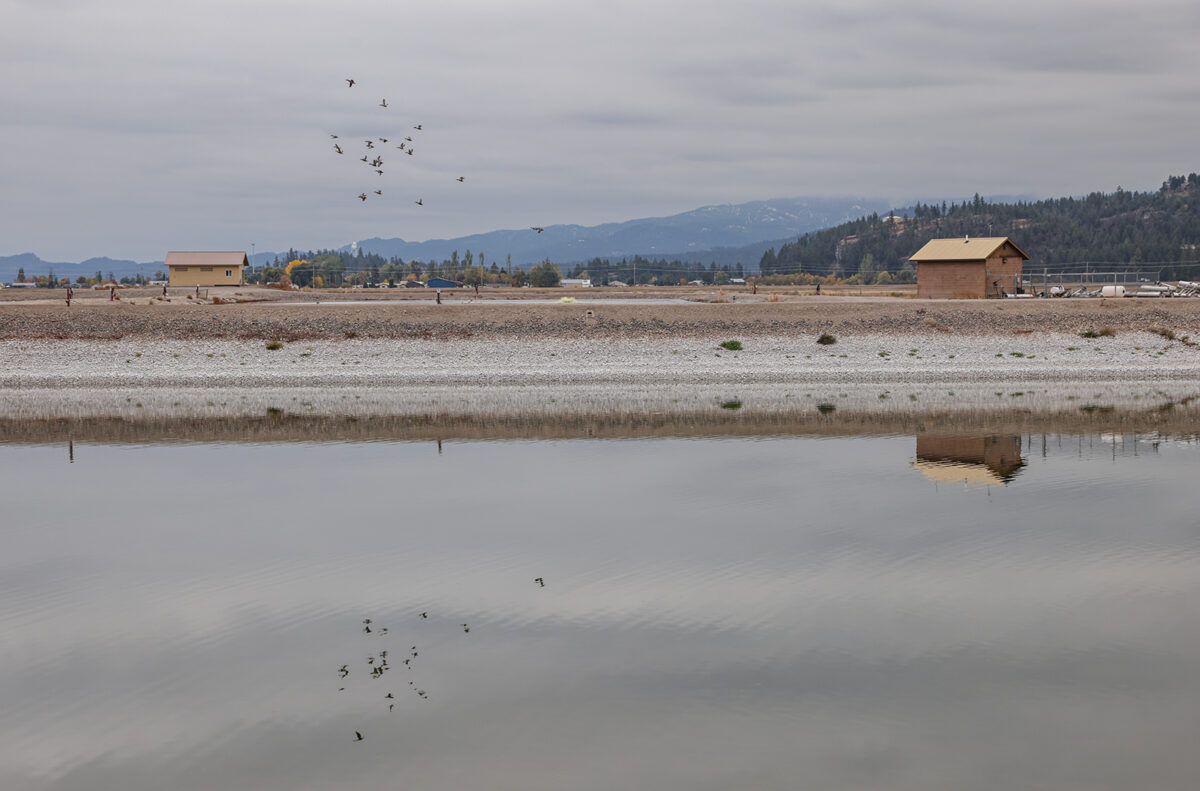
Though the district’s existing holding ponds are outside of the EA’s scope for phase two, DEQ officials entered into a memorandum of understanding with the district to determine whether the ponds are leaking after receiving a complaint during public comment. DEQ officials have investigated the district’s ponds twice after receiving complaints about possible leakage in 2024 and 2025. Both investigations came up negative.
“Additional information was provided that the district’s storage ponds are leaking in excess of state law, relying on ten years of annual totalized influent and effluent flow data for the existing treatment system,” Lindsey Krywaruchka, DEQ’s water quality division administrator, wrote in the memorandum. “While discrepancies between influent and effluent data may be caused by excess leakage, such discrepancies may also be attributable to measurement errors, different rates of evaporation or precipitation, and other factors.”
In the memorandum, the district agreed to conduct a leakage test during the spring next year when the ponds are full at maximum operating depth, informing DEQ before taking a test and immediately after obtaining the results.
Olson said district officials considered the memorandum a formality and were not concerned.
“We feel confident when we took the leak test in 2019 it was a good one,” Olson said.
DEQ’s approval of the EA gives the lake town district the green light to begin construction on phase two, starting with the required ground improvements for that phase’s facilities. Olson said they’ll soon begin bidding for contractors and hope to begin ground improvements after phase one construction is complete in September.
In the meantime, they’ll continue to review the rest of phase two with the SBR manufacturer and DEQ officials, including the significant amount of concrete needed for the project and the equipment necessary to make the SBR treatment plant come to life, Olson said.
With public pushback and lawsuits that have arisen throughout both phases of the project, district officials have begun encouraging people who support the project to speak up on its Facebook page and in guest columns.
“We get a lot of positive feedback from our customers, ratepayers, Bigfork, Kalispell,” Olson said. “They’re happy that we’re upgrading our treatment processes to current day standards.
“The reason we’re doing it is not Discovery Land,” he continued. “We believe in what we’re doing, it’s time to do it. It’s going to be a good thing.”