Happy Tuesday, Beacon readers! Mariah Thomas here with your Daily Roundup, coming off my first adventure to Polebridge over the weekend, where I checked another item off my summer bucket list. My friends and I had the BEST time dancing the night away at the Northern Lights Saloon (thank you Austin, AKA DJ Fleshtones, for the great tunes) and eating (probably too many) huckleberry bear claws.
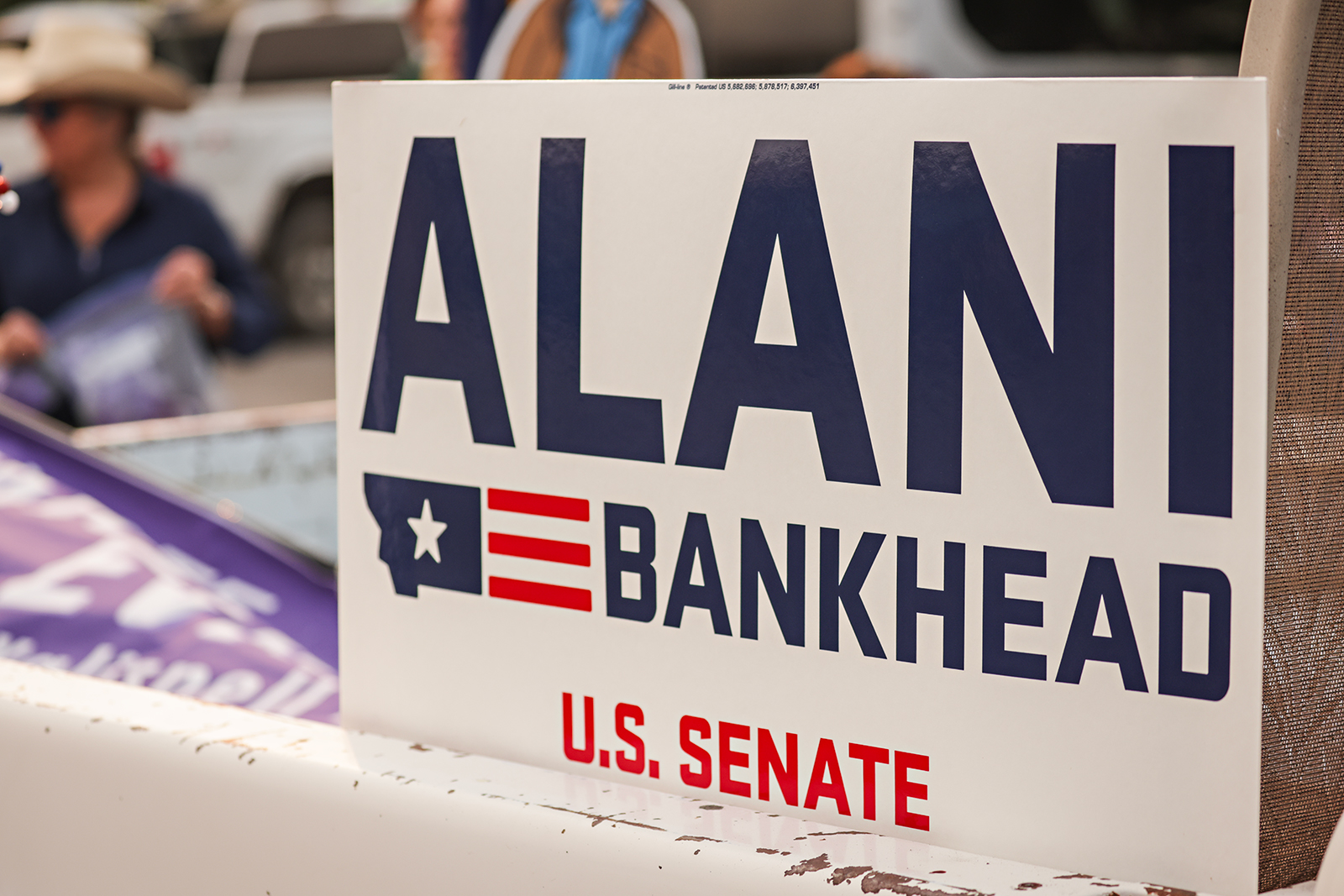
But, when I wasn’t dancing and eating my heart out in Polebridge over the weekend (seriously, I’m daydreaming about these bear claws still), I was thinking about Montana’s U.S. Senate race, which has consumed a lot of my waking hours as of late. The deadline for a candidate to withdraw came and went yesterday, and despite an intense pressure campaign for one of them to depart the race, both independent Seth Bodnar and Democrat Alani Bankhead opted to stay in the mix. It was perhaps the most predictable outcome — after talking with both candidates in the past few weeks, this reporter personally would’ve been surprised by a last-minute dropout — but important questions remain about moving forward.
Chief among them is a question that’s plagued Democrats across the country: a crisis of identity. Nationally, the Democratic Party has struggled since Kamala Harris’s 2024 loss to President Donald Trump to rebuild and define its brand, and several different strategies have emerged to combat the Republican dominance that seemed to sweep the country in that election cycle.
Democratic Party primaries across the country have led to matchups between candidates backed by established voices, versus insurgent candidates who tend to have more progressive policy positions. That dynamic gave way to Graham Platner’s troubled Senate bid in Maine, where the progressive oyster farmer bested Maine’s more centrist incumbent Democratic governor Janet Mills. Mills was endorsed by Senate majority leader Chuck Schumer. Platner, after winning the primary, departed the race due to a rape accusation, which he has denied. In Michigan, the split between moderate U.S. Rep. Haley Stevens and progressive epidemiologist Abdul El-Sayed saw the same result, with the progressive El-Sayed winning.
While their candidacies have earned support in Democratic primaries, it remains to be seen how more progressive candidates like El-Sayed might fare in a general election — even as in Michigan, his opponent has backed him, and the pair have projected an image of party unity post-primary.
“My opinion, but I’m reading the room, is that people want anti-establishment candidates. That’s why they’re winning across the country. It’s not just Montana,” Leanette Galaz, a local organizer, told the Beacon.
Galaz suggested the electorate is fed up with the consultant class telling them who to vote for. Instead, she said, people want a candidate who will answer to them, even if it’s someone they don’t agree with on everything. She’s supporting Bankhead, whom she views as such a candidate, in Montana’s Senate race.
In redder states, a different approach to the question of weak Democratic branding has taken hold, as several have seen the independent question crop up. Idaho, South Dakota, Alaska and Nebraska have each seen independent candidates run outside the two-party system as Democrats back out and, in some cases, throw their support behind a candidate outside their own party in the hopes of beating back one-party rule.
But in Montana, the contours of the branding question for Democrats looks different.
“The fact of the matter is that we are still here,” said Emily Marburger, the party’s executive director, in a Tuesday press conference about the future of the party post-withdrawal deadline. Marburger continued, saying that while the party welcomes respectful conversation and disagreements within its bounds, it also stands firm against bullying, harassment and threatening behavior — and behind its candidate.
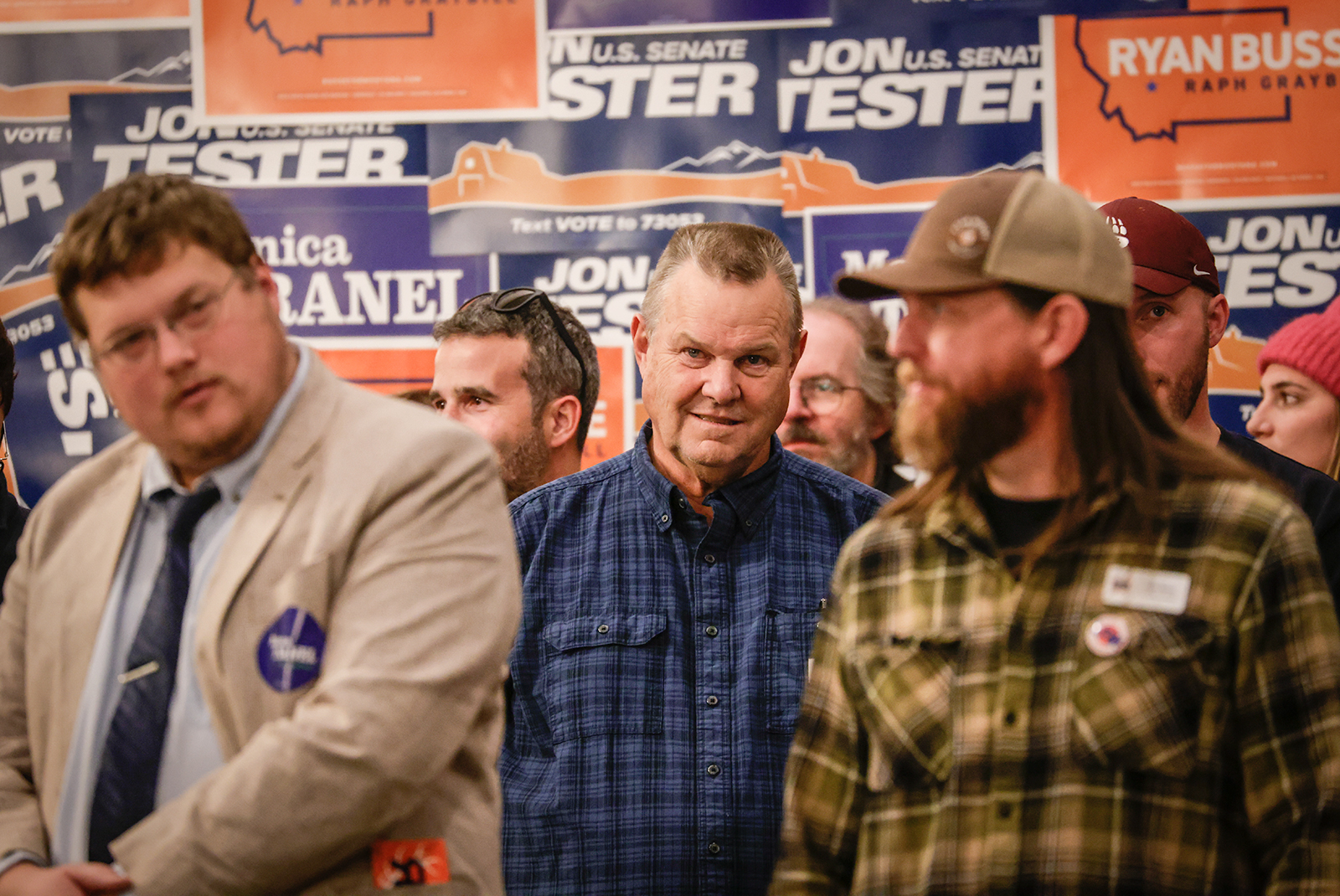
While other states, like neighboring Idaho, haven’t seen Democrats win in decades, the Montana Democratic Party is less than a decade out from the last time it successfully captured a statewide race. U.S. Sen. Jon Tester (pictured above) last won reelection to his seat in 2018. For decades before that, split-ticket voting was a common practice in the Treasure State, with both Democrats and Republicans winning statewide races.
The state’s Democratic Party often upholds its legacy, which includes statesmen like former Sen. Mike Mansfield, the longest-serving Senate majority leader; U.S. Rep. Pat Williams, who spent nearly 20 years serving Montana in Congress; Sen. Max Baucus, the state’s longest-serving senator; and Tester, who wrestled his Senate seat out of Republican hands in 2006 and was long considered something of a unicorn for his ability to win as the state’s electorate became more Republican.
“We stand on the shoulders of Democrats who organized unions, protected public lands, fought for working families and proved that Democrats can win in Montana,” Marburger said Tuesday.
But that picture has been complicated in this year’s Senate race, as some of the Democrats’ biggest names, like Tester and Baucus, have lined up not behind Bankhead, the Democrat, but instead behind independent Bodnar. Marburger seemed to address some of those elected officials in her press conference Tuesday.
“But nobody gets to turn yesterday’s victories into today’s entitlement,” she said. “You do not get to build power through grassroots organizing, climb the ladder and then pull it up behind you.”
The party isn’t dead, Marburger said, but instead, it’s rebuilding.Bankhead has previously told the Beacon that was a big part of her calculus to remain in the Senate race. She suggested her candidacy is a vital part of the party’s rebuilding effort, and that it’s not the party that’s divided, but instead an issue of old guard versus new guard.
The idea of fissures existing in the party is one former Democratic Montana Gov. Brian Schweitzer soundly rejected in a recent interview with the Beacon — though he admitted Democrats do sometimes have differing opinions.
“The Montana Democratic Party has been a wide coalition my entire adult life,” Schweitzer said. “The Republicans are more likely to tell you what you can think and what you can say and if you don’t do it, they excommunicate you, like they did here last month. But Democrats are a group of free thinkers, but we stand together in elections.”
Schweitzer has also rejected the idea that Democrats can’t win a statewide race, pointing to his own successful gubernatorial runs in 2004 and 2008.
“I do know this, that the entrenched Democrats in Helena, they had, unbeknownst to me, they had polled it, they had done focus groups, and they had determined that a Democrat couldn’t win the governor’s race in Montana,” Schweitzer said. “But of course, I didn’t know any of those people, and I didn’t spend any time in Helena because I was on the road in Lewistown and Havre and Billings and Dillon and other places. So, I ran, and I ran in all of Montana, and I wasn’t particularly concerned about what the opinion was of some people in Helena. And I won.”
In his estimation, things haven’t changed too much since then. Schweitzer pointed toward Cascade County, which has turned red in recent election cycles in a switch for Democrats. Cascade County hasn’t experienced the same growth as other places in the state since 2010, and Schweitzer suggested that likely means the same people that voted for him there are now voting Republican. It’s them, he said, who Democrats need to reach again — and the way to reach them is by showing up and truly listening.
But for state Sen. Dave Fern (pictured above), a Whitefish Democrat who signed onto a letter from more than 20 legislators suggesting Bankhead should leave the Senate race, the question of how the party rebrands and rebuilds — both on the national and statewide levels — is a difficult one.
“How do you reinvent yourself with plenty of space for local culture?” Fern said.
In other words, Fern said what works for Democrats in a state like Montana is different than what works in Maine or Brooklyn. He pointed to Rob Sands, a Democrat running for governor in Iowa, as a potential template for the type of candidate who could speak to Montanans. But a candidate like Sands, who’s a home-grown Iowan and has focused his campaign on costs, political corruption and cancer (the state has the fastest growing rate of new cancer cases in the country), isn’t one that pops up every day, Fern said.
For now, Fern said, he measures Democrats’ success in Montana by “the effectiveness of a collaborative relationship with parts of the majority and the willingness of the governor to sign your bills to address joint values this coalition would have.”
Fern’s own work offers a blueprint: the Flathead’s elder Democratic statesman was the Democrat with the most bills signed into law by Montana’s Republican Gov. Gianforte during the 2025 legislative session.
“If you’re a minority party, and you seem to be a minority party for a long period of time, then you have to figure out how you can leverage your power,” Fern said. “It’s power with a small ‘p.’ You have to see what you can do.”
State Rep. Debo Powers, another Whitefish Democrat who has signed onto letters calling for Bankhead to depart the race, still views her party as strong. She said the withdrawal debacle was a “bump in the road,” and hopes Democrats can unite against real threats to democracy and the country.
And despite a contentious election cycle thus far, Montana Democrats communications director Sofia Perez told reporters Tuesday the party hopes to do exactly that. The Democratic Party has enough room for everybody to come back into the fold, she said — including those who have supported Bodnar over Bankhead.
Nonetheless, how the rebuilding effort may ultimately pan out is a question that remains to be seen. Polling indicates with both Bodnar and Bankhead in the race, Republican Kurt Alme will be difficult to beat this November.
Still, in an election cycle marked by unexpected development after unexpected development, I’m not ruling anything out. I’m just watching and waiting to see what might happen in the lead-up to Nov. 3.
Only 84 days ‘til Election Day, folks…
And that’s what I’ve got for you today! Now, onto the rest of the Daily Roundup.
As Withdrawal Deadline Comes to a Close in Senate Race, Bankhead and Bodnar Both Commit to Staying the Course
The Democrat’s Monday pledge to remain in the race offered a final word on the dropout question, eliciting a mixed response from left-leaning voters in the Flathead as the divide clears a path for Republican Kurt Alme to hold onto Montana's open Senate seat.
A once powerful force in state politics, Montana's Democrats have faced mounting electoral losses in recent decades. As the state's most popular Democrat faces an uphill battle to reelection in the U.S. Senate, questions about the viability of the party in a post-November landscape loom.
Whether you’ve been here for decades, or you’re new to the Flathead Valley, our reporting is here to help you feel smarter and in the loop about the issues most important to Northwest Montana. With your support, we can build a more engaged, informed community.