Republican Reckonings and a Referendum on Trump Define Montana’s Western Congressional Primary
Four candidates are vying to keep the seat in GOP control after a last-minute shake-up. But as one candidate distinguishes himself with high-profile endorsements, the Republican primary is shaping up to be a referendum on whether that establishment support carries weight with voters.
By Mariah Thomas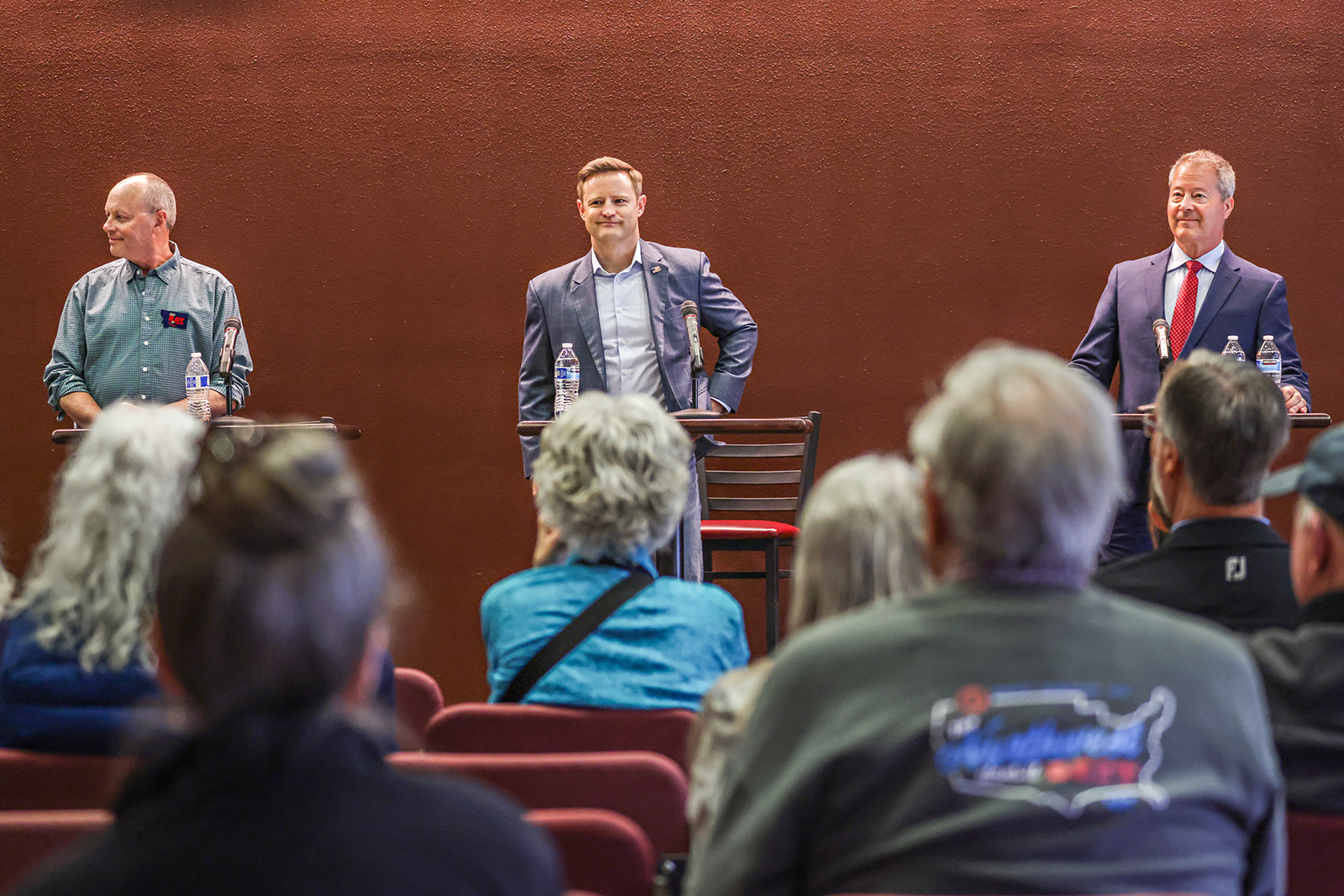
Up until two days before candidate filing closed in the state, most Democrats and Republicans in western Montana were operating under the assumption that whoever made it out of the primary on the left side of the aisle would face incumbent U.S. Rep. Ryan Zinke in November’s general election.
But on March 2, that assumption was turned on its head when Zinke announced he wouldn’t seek reelection.
His announcement triggered four late-in-the-game bids for the seat. Talk radio show host Aaron Flint entered the race with a polished campaign ad and clinched endorsements from Zinke, President Donald Trump and most other Republican power players in the state.
But two other well-known figures entered the race in the slim window between Zinke’s announcement and the close of the filing period. Perennial candidate Al Olszewski, a former orthopedic surgeon and Flathead County Republican Party chairman was first, and Montana Secretary of State Christi Jacobsen also announced a bid for the seat. A fourth competitor, Ray Curtis, a teacher from Bonner who has never run for office before, also stepped up to the plate to run for the Republican nomination.
As the four Republicans mount their respective campaigns for the seat, the party around them has faced a reckoning: Do Republican voters want to accept the successors chosen by elected officials?
The competitive GOP primary for the western congressional district perhaps offers the best opportunity for Republican voters to directly weigh in on that question.
“You know, we saw what happened and it didn’t work well for Kamala Harris and the Democrats, so I don’t know if it’s going to work that well for the Republicans,” Bruce Tutvedt said of the last-minute candidate switch-up.
Tutvedt, a Flathead farmer and former Republican state senator, said the primary offers a chance for voters to weigh in on other questions plaguing the Republican Party, too.
“But it is going to be a referendum. And of course, I think the bigger referendum is going to be on President Trump and the price of gas, and his [going] to war without congressional approval, and his tariffs and other things. I think that’s gonna be the bigger referendum that’s gonna matter. I don’t know if it’ll be enough to turn Montana less red, but it’s definitely going to have an impact.”
Tutvedt said the weight of Trump’s endorsement is to be determined in the primary.
In recent years, Trump has been something of a GOP kingmaker willing to use his position to promote allies, albeit with somewhat mixed results. And this year in particular, his popularity has waned nationally in the wake of the budding war in Iran, tariffs and immigration enforcement activities. Trump, however, still enjoys a “favorable” rating by 50% of Montanans — the highest of any of the state’s elected officials — per the Montana Free Press-Eagleton poll. (The poll was conducted in late December and early January, before the war in Iran kicked off.)
While Flint, Olszewski and Jacobsen have all touted their alliances with the president in the past, only Flint is directly tied to him this spring. It’s something Flint has regularly brought up in debates, candidate forums and in recent television advertisements.
Curtis has established himself as a moderate Republican in the race, out of alignment with much of the Trump administration’s activity.
For both Jacobsen and Olszewski — who each have historically expressed support of the president — the lack of Trump’s blessing of their campaigns allows a chance to walk the line of pledging their allegiance to Trump completely versus finding areas to create distance between themselves and the president.
But ultimately, it’s the voters who will decide how much Trump’s — and others’ — endorsements matter. They’ll have the chance to weigh in June 2. Absentee ballots will begin to be mailed out on May 8. Read on for profiles of each candidate.
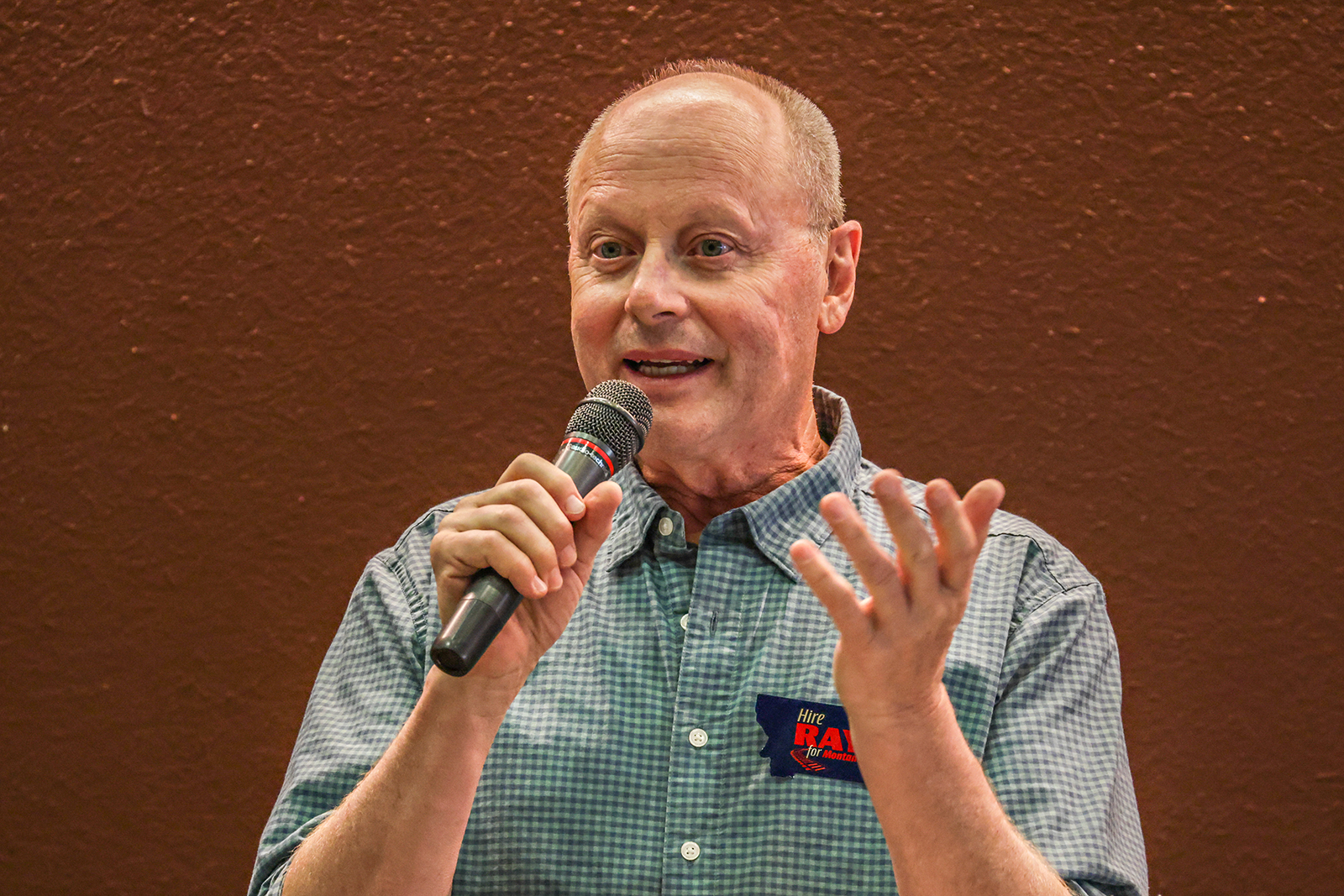
RAY CURTIS
Ray Curtis isn’t a politician. At least, that’s what he tells people when he’s on the campaign trail.
A retired American government teacher who taught students in Missoula and the Flathead for decades, Curtis has preached in the classroom about ways to get involved in the political system. He encouraged students to vote, read good media, reach out to their representatives about the issues, to call, and to engage.
Over the course of the past year and a half, he described doing all of the above in efforts to tell U.S. Rep. Ryan Zinke that he didn’t like what he was seeing.
As a government teacher, Curtis holds the Constitution in high regard. But from his purview, President Donald Trump’s administration hasn’t done the same. Both in an interview with the Beacon and at a Glacier Country Pachyderm Club candidate forum, Curtis pointed to violations of the rule of law, civil rights and a lack of checks and balances from Congress on issues like the Iran War. He also takes issue with the lack of compromise in Congress, pointing to a bipartisan immigration deal that fell through in February of 2024, after Trump pressured Republicans to oppose it. And despite reaching out, he said he didn’t hear back from his congressman.
“I have done — I did — everything except put my name on the ballot,” he said.
So, he put his name on the ballot to run for the western congressional seat. He initially hoped he’d run directly against Zinke, before the incumbent representative announced his retirement. But the rest of the pack who jumped into the mix — Aaron Flint, Christi Jacobsen and Al Olszewski — were candidates Curtis thought would be more of the same.
Curtis’s candidacy aims to speak to the middle-of-the-road voters who still align with the “old school” Republican Party. He views himself as a Republican in the image of figures like President Abraham Lincoln, Teddy Roosevelt and Dwight D. Eisenhower, whom he described as believing in ideas like equality and supporting the working man.
And his non-traditional run for the seat also includes a promise not to take any money for his campaign.
“I will owe donors nothing and voters everything,” his campaign website states.
On the issues, Curtis brings a more-moderate stance than the rest of his challengers for the Republican nomination.
For instance, at the Glacier Country Pachyderm candidate forum, Curtis said he wouldn’t support a federal abortion ban because he viewed it as a states’ rights issue that Montana had already weighed in on. He said Congress should’ve given approval to take the U.S. to war in Iran. And, he said he didn’t support the Safeguard American Voter Eligibility, or SAVE, Act. He thinks America’s elections are already safe — something he said he has seen firsthand through volunteering as a poll worker.
While those views are minority ones in the Republican Party around him (Flint and Olszewski, the two other candidates in attendance at the Pachyderm meeting in Kalispell, each gave answers that opposed Curtis’s points), Curtis said those views are ones he thinks resonate with the majority of Americans. He thinks voters are more moderate than what either party currently reflects. And he said he has heard feedback as he has talked with voters that they appreciate his approach.
His platform, too, focuses on issues he thinks everyone can agree upon: America’s republic is under strain; the economy isn’t working for many Americans who struggle with affordability; and young people should be able to believe in the American dream.
“I mean, of course, you gotta think about everyone, but I do honestly believe that we’re not leaving this place better off for young people. And it is so important that we figure that out so that young people can have the American dream,” he said. “So that they can afford rent and a house, and so that they’re not strapped with this debt that goes up a trillion dollars every five months, and we need to leave them with a place that is beautiful.”
While Curtis’s campaigning style may be untraditional, he’s hopeful that Montana voters will do their homework before they cast ballots in this year’s primary. And he’s hopeful that if they do, they’ll vote for him.
“Really, I’m thinking the big push in a campaign is know who applied. You’re gonna get your ballot — they’re gonna be mailed out in about a week — and you’re gonna see that and you go, ‘okay, here are my choices,’” Curtis said. “And hopefully people don’t vote on emotion, but I do know that many of them do. I mean, I know.”
He continued: “But, I’m thinking, ‘if voters do their job, and they understand that this is that important, they will do it.’ I think voters are there … There’s that middle group that doesn’t identify with Democrats or Republicans, especially the extremes, and there’s that middle group that wants something different.”
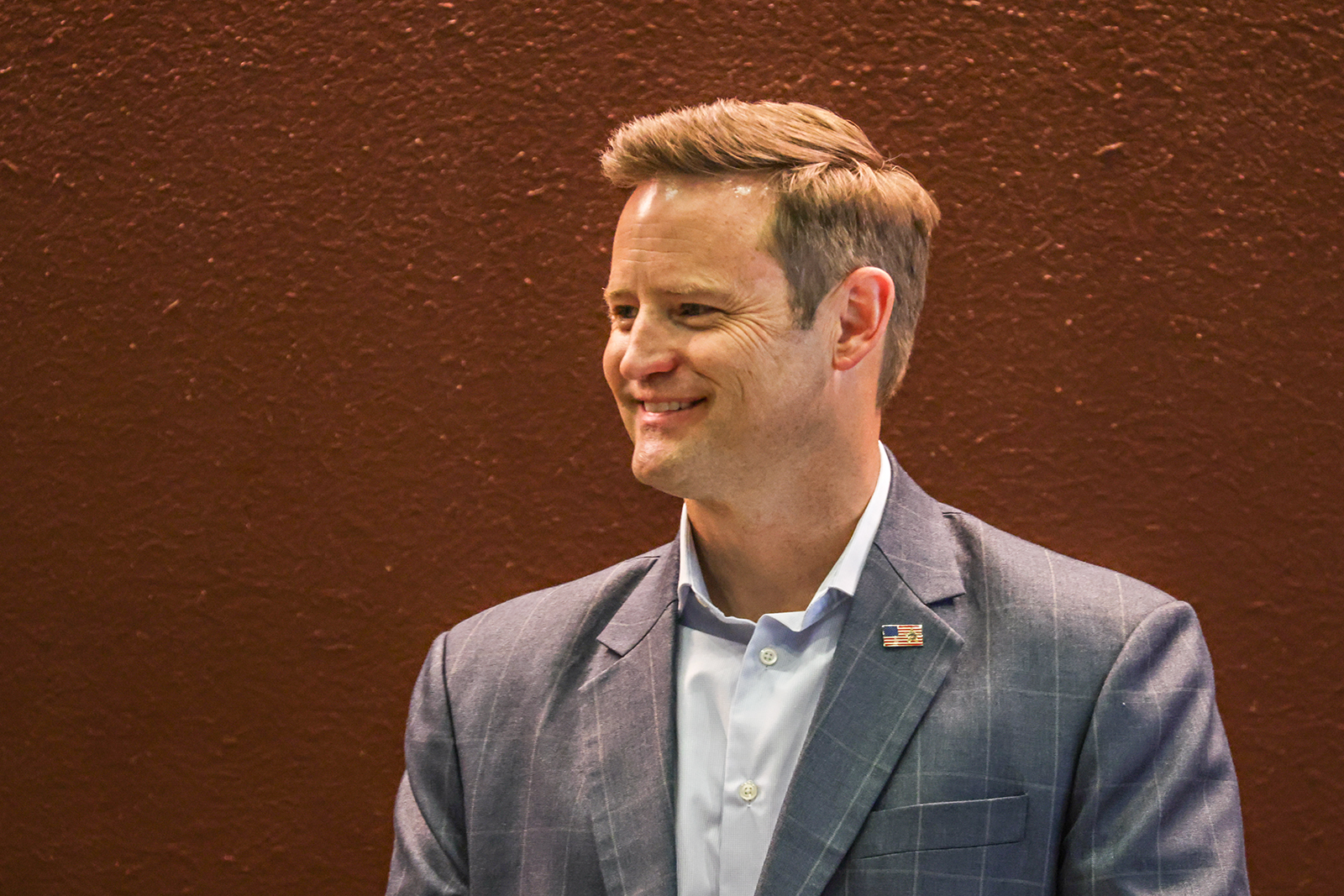
AARON FLINT
Aaron Flint, a talk radio host who frequently speaks about political issues on the airwaves, has long mulled over the idea of running for office. But the choice to dive in only came after he fielded a mid-January phone call from U.S. Rep. Ryan Zinke.
“… Ryan called me and he said, ‘look, Aaron, I need to know. Here’s what I’m thinking about doing,’” Flint said in an interview with the Beacon. “Obviously, he had to brief the president, he had to talk to the Speaker of the House before he could make his plans official. But he said, ‘Here’s what I’m thinking. I need to know, are you in or are you out?’”
Flint was in. It was that phone call that set into motion Flint’s campaign, which smoothly rolled out after Zinke made his March 2 announcement he wouldn’t run for office again — though Flint said until that announcement came, he wasn’t certain he’d be entering the race.
Upon his entry, Flint, who hails from Kalispell currently but lived in Billings for years, sealed endorsements from Attorney General Austin Knudsen and U.S. Sen. Tim Sheehy. He described both elected officials as long-time friends. But what he didn’t expect was for nearly all the rest of Montana’s statewide officials and the president to endorse him as well.
“What the President Trump endorsement means for me is, look, I know there’s some people that love President Trump’s fighting style. I know there’s some people that don’t like his fighting style,” Flint said. “But I think we can all agree that we want a fighter working for Montana back in Washington, D.C., and that’s what the Trump endorsement means for me, is that’s him telling the American people and the people of Montana, ‘this is the guy who’s gonna fight for you every single day.’”
Even so, many in the state’s GOP have expressed frustration with what they viewed as party bosses pre-selecting candidates in this year’s federal primary races after the high-profile dropouts of both Zinke and U.S. Sen. Steve Daines.
That includes Flint’s opponents in the Republican primary for the western House seat. Al Olszewski, chair of the Flathead County Republicans and one of Flint’s opponents, minced no words about how he viewed Daines’ departure, calling it a “deceptive maneuver” that “betrayed the trust of all Montanans.” He has been vocal about his view that party bosses selecting candidates is a problem.
“Our federal legislators, our representatives, chose to be deceptive and to eliminate or minimize who could get into this race to run for the Republican seats,” Olszewski said in a recent interview with the Beacon.
And Christi Jacobsen told the Beacon she was proud of her “anti-establishment” status.
Flint acknowledged the frustrations that have gripped his party over the dropouts. But he’s clear: there is a competitive Republican primary in the western district this spring. Voters will have a say on who makes it out of that primary race.
“I’m so thankful we have a primary, because I was chomping at the bit to get out there and prove who the real Montana AF — America First — freedom fighter is, and I think we’ve been doing that every single day out on the campaign trail,” he said. “So, I’m very excited about this primary election, but I’m also excited about people coming together after the primary and uniting to get into the fight, especially for this race. This is going to be one of the most important House races in the entire country.”
His assessment is buoyed by the fact that both the Democratic Congressional Campaign Committee and National Republican Congressional Committee have entered the fray, elevating the race’s profile as both parties hope to put the seat in their respective grasps.
But Flint, a combat veteran with a degree in broadcast journalism from the University of Montana, thinks he has a “leg up” on his fellow candidates in the Republican primary. He points to a long track record of listening to the issues plaguing Montanans on the airwaves over the past two decades — and before that, fielding their calls and speaking with them while working for former U.S. Sen. Conrad Burns, a Republican.
The same issues he has heard about on the radio are the ones people have talked about while he’s traversed the western district, affordability chief among them.
That issue is one Flint describes himself as becoming aware of at a young age. In appearances and interviews, he frequently describes traveling Highway 2 as a kid, going between divorced parents in Whitefish and Glasgow. Each of them worked hard to provide for their children as single parents, he said. It made him aware of money and the value of it at a young age — along with the impact public policy can have on peoples’ ability to earn and keep their wages.
In his run for office, Flint has pushed an agenda to “make the Montana dream affordable again.” For him, that consists of championing trades education, revitalizing the timber industry, bringing mining and manufacturing jobs back to Montana and unleashing American energy.
He has also railed against perennial politicians and championed a set of policies aimed at providing more ethics guardrails in Congress, including banning congressional stock trading and passing an amendment requiring Congress to pass a balanced budget or risk their own pay.
Across multiple meetings of Republican candidates, Flint has also expressed support of the president’s actions on the war in Iran and denounced “far-left socialists,” naming off U.S. Rep. Alexandria Ocasio-Cortez, D-N.Y., Bernie Sanders, I-Vermont, and Zohran Mamdani, the mayor of New York City, as examples. Flint said he views the country as being at a “turning point” in this year’s election cycle, with the western seat at risk of landing in Democratic hands without the right Republican candidate in the mix. And Flint has attempted to position himself as the candidate who has most consistently fought for conservative values in the state.
“Look, if you want to step into one of the biggest races in the country, you have got to be in this fight every single day,” he said. “That’s why I’m endorsed by President Donald J. Trump: because I’m a proven fighter. I’m a combat veteran, a retired lieutenant colonel. I’ve been in the fight every single day on the radio airwaves, and I’m the America First patriot endorsed by President Trump in this race.”
He continued: “But also, I would add this: I think anybody who’s listened to me on the radio knows that I love hearing from folks with a different viewpoint … what I found is that if you listen long enough, you can find a point of agreement.”
Flint raked in the highest dollar amount on the Republican side of the aisle during the month he’s been in the race at $453,652.78. He has just shy of $430,000 of that still in the bank.
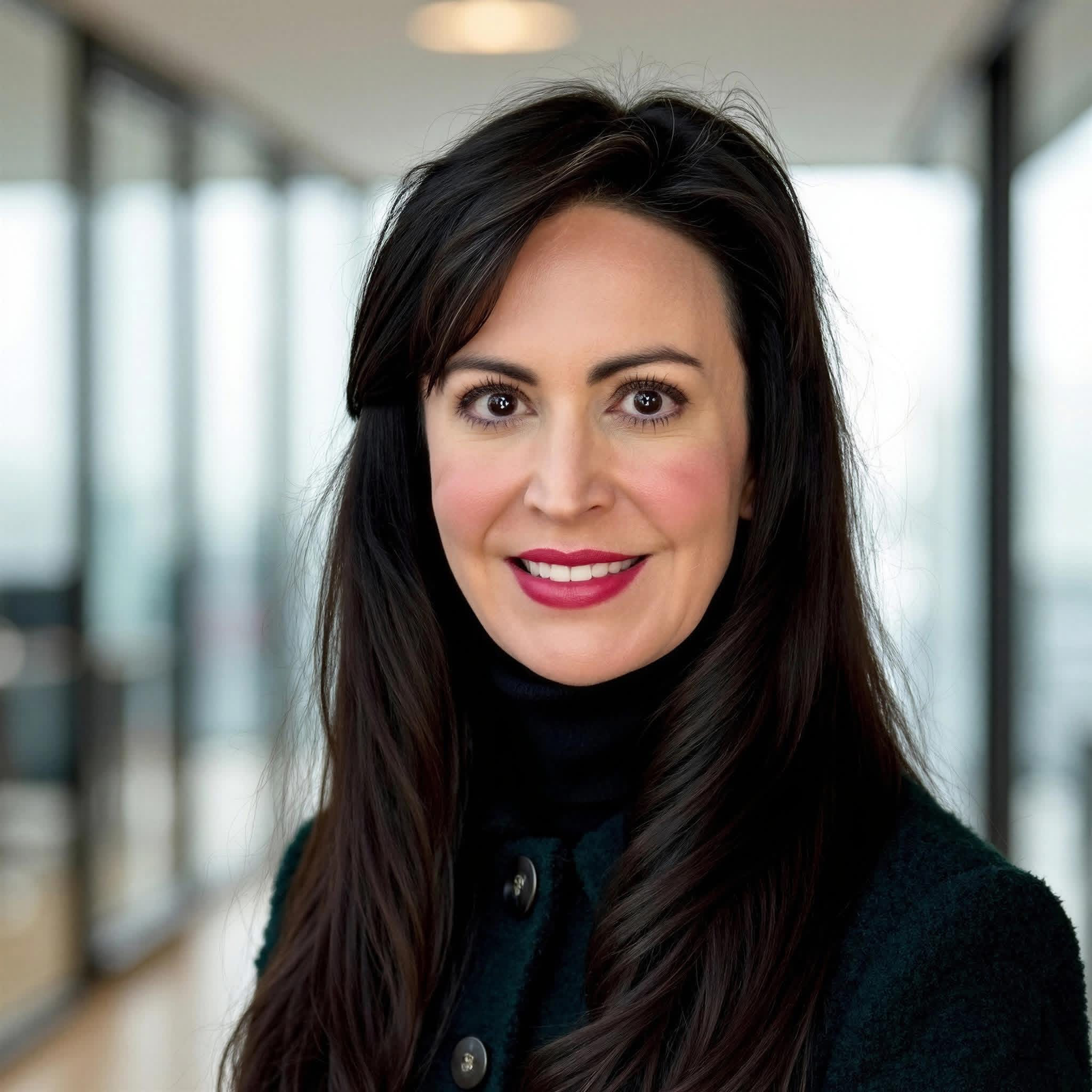
CHRISTI JACOBSEN
For Christi Jacobsen, an underdog status isn’t new. She contended with a six-way primary to secure the Republican nomination to run for Secretary of State in her first-ever try competing for office in 2020.
“I was told that they had selected their candidate, and that’s who was going to win in 2020,” Jacobsen said.
She called herself “anti-establishment, and proud of it.” And that anti-establishment bent has resonated with voters. In 2020, Jacobsen ended up winning her six-way primary by clearing 29.4% of the vote. She went on to win the general election by the widest margin of any statewide officeholder. Twice, she has shared the ballot with President Donald Trump; and twice, Jacobsen has earned more votes from Montanans than he has. She has served as Secretary of State since 2021.
This year, in the race for the western congressional seat, Jacobsen is looking to repeat her 2020 primary performance, hoping to upset a candidate many leaders in the state GOP have coalesced behind in Aaron Flint.
“I’ve been told the same thing for this current election, and the lesson is to stick the course and do your best and show up every day,” she said. “And now, I have a record and the results speak for themselves of what I’ve delivered for Montana, and my record speaks for itself. I’m the only candidate that has actually delivered on the promises and delivered in two general elections, and the other candidates in the race have not done that.”
Jacobsen, 50, hails from Helena, where she still lives. Though the capital city is technically outside the bounds of the western district she seeks to represent, Jacobsen said she has a cabin in Granite County, which is within the district’s bounds.
“I’m Montana to the core,” she said. “We have a cabin; we pay property tax in the western congressional district, and I’m ready to serve.”
As Secretary of State, Jacobsen pointed to several efforts as triumphs of her time serving in the office, including her office’s efforts to review and strike ineligible voters from the voter rolls.
Through a federal partnership called the Systematic Alien Verification for Entitlements, or SAVE, Jacobsen’s office flagged 23 Montana voters as potential non-citizens — 0.003% of the state’s registered voters. The tool also identified roughly 900 voter records of deceased individuals that had not previously been struck from voter rolls, per a January press release. The efforts to review and strike ineligible voters are in line with the Trump administration’s priorities.
She also heralded her office’s work downsizing its staffing and space to save money for taxpayers. Again, those activities fall in line with wider Republican Party ethos that calls for shrinking bureaucracy.
Even so, her tenure as Secretary of State has also recently drawn concerns that her office turned over Montanans’ voter information to the federal government, and it has generated controversy over a set of political mailers her office sent out featuring her photo with the president without immediately disclosing the funding source.
A representative from her office faced the Legislative Audit Committee last month to answer lawmakers’ questions about both issues. Austin James, Jacobsen’s elections director and chief legal counsel, told committee members the office used a federal grant to pay for the mailers. He also said he couldn’t offer specifics about what voter information the office submitted to the federal government because of threats of ongoing litigation.
As for Jacobsen, she told the Beacon that as a public official, her office is “in the hot seat every day.”
“I think, again, that experience speaks for itself that I can be in the hot seat and I can deliver for the voters of Montana,” she said. “And just listening and being accountable, being transparent, all of those things matter, and we’ve done that, and that’s why we’ve been successful.”
In the race for the western seat, Jacobsen said her platform consists of championing small government, securing elections and developing natural resources. She lauds her experience as the lone candidate who has proven she can win elections, and her work as Secretary of State both implementing laws and helping to craft policy as critically important factors in her candidacy.
“I just, I cannot reiterate enough that there is so much at stake for our state and our country,” Jacobsen said. “And I am 100% the best candidate to win in the general election, and the results speak for itself. It’s easy to talk about it. It’s another to actually do it, and that’s what differentiates me from any other candidate is I’ve actually delivered in the general election by winning by the largest margin of any other candidate on the ballot. And that signifies not only having Republicans give their solid endorsement, but also independents and Democrats as well.”
So far, Jacobsen has clinched endorsements from football player Steve Emtman and state Sen. Mike Cuffe, R-Eureka. She came in a close third in fundraising during the first quarter, raking in more than $260,000 during her first month in the race, including a $115,000 loan she made to her own campaign. She ended the quarter with more than $253,000 in cash on hand to spend ahead of the primary.
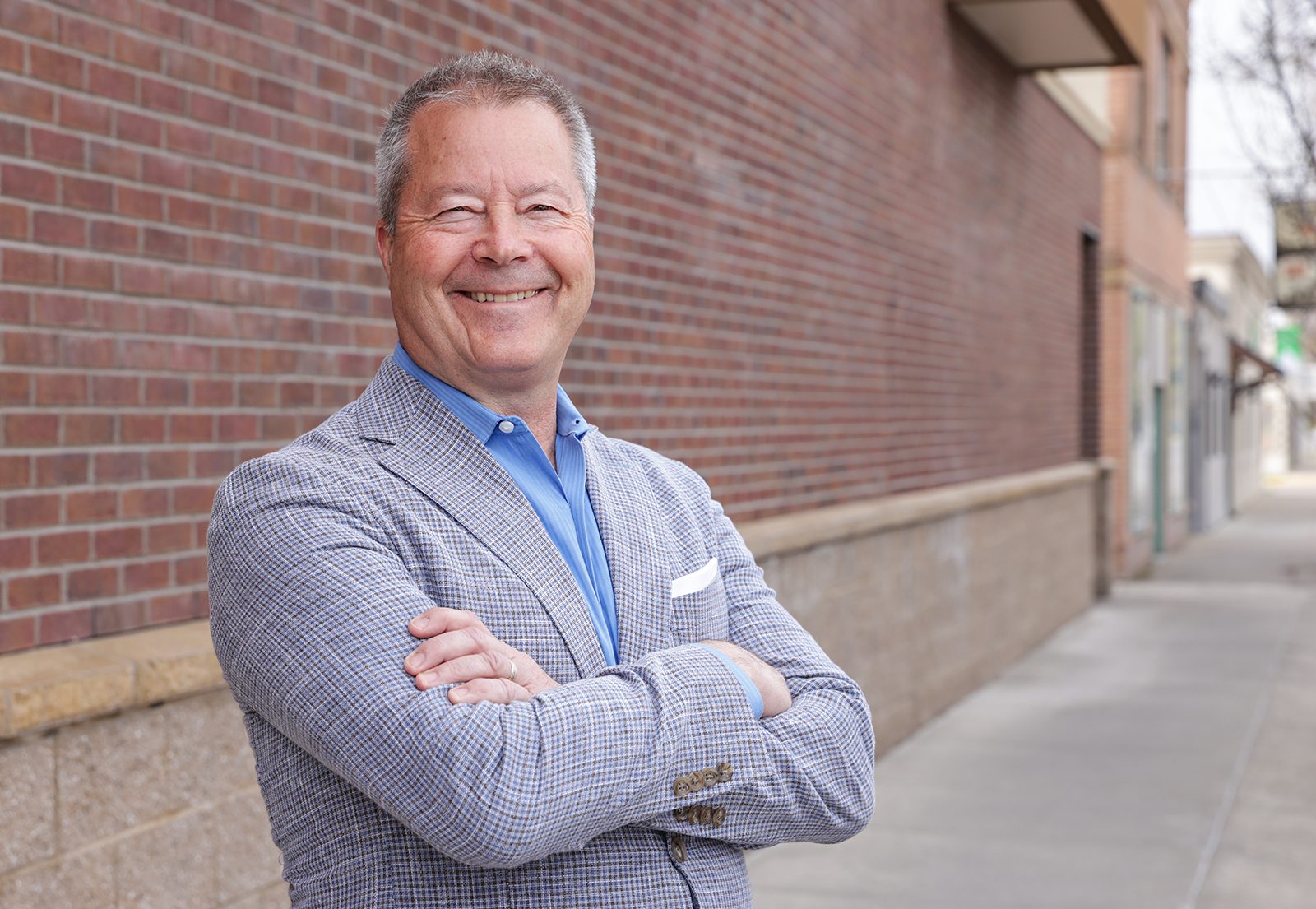
AL OLSZEWSKI
“Doc” Al Olszewski thinks there are benefits to being considered a perennial grassroots candidate. His name and stances on the issues have been well-established in his several runs for federal and statewide office. And he takes heart in the fact that each time he has run, he has clinched increasing percentages of the vote.
Between his run for the U.S. Senate in 2018 and his bid for the western congressional district in 2022, Olszewski improved from earning 18.7% of the vote and finishing last in the 2018 primary for the Senate to earning nearly 40% of the primary vote in 2022. That year, Olszewski finished a close second to U.S. Rep. Ryan Zinke, who went on to win the general election that November.
As Olszewski, 63, of Kalispell, steps up to the plate to run again in 2026, he hopes to finish the job he started in 2022. And he’s confident the grassroots momentum he has spent the past decade building will play in his favor with voters in the western district.
“As a grassroots candidate that doesn’t have high-dollar, third party special interests behind you, you have to build trust and you have to build a relationship with the people in the district that you’re running in,” Olszewski said. “And when you don’t win, you need to still stay involved, and you still need to be consistent with your beliefs and your principles. And I’ve done that.”
The former orthopedic surgeon who treated soldiers in the U.S. Air Force during the Gulf War currently serves as the chair of the Flathead County Republican Central Committee. His involvement in politics first began in 2009, he said, when he read the Patient Protection and Affordable Care Act. It concerned him because he worried it would hurt independent practitioners. He joined the Physician’s Council for Responsible Reform, started by the National Republican Congressional Committee.
That initial involvement on healthcare eventually activated Olszewski to run for office. He served terms in both the state House (2015) and Senate (2017 and 2019) before attempting his 2018 Senate run.
His experience in the legislature, he claims, sets him apart from the rest of the pack, none of whom have a voting record to demonstrate their conservative credentials. (Jacobsen has said she has helped craft legislation and implemented it as the Secretary of State. Flint has also heralded his time working for former U.S. Sen. Conrad Burns as demonstrative of legislative experience.)
He also pointed to three core tenets of his campaign, through which he plans to analyze his voting decisions should he be elected to Congress. He hopes to look at whether policies he’d support would help make Montanans more free, help families in Montana and make Montana more affordable — an issue several candidates on both sides of the aisle have identified as a top challenge facing the western half of the state.
And Olszewski said he thinks one area where Montana’s current congressional delegation has missed the mark is when it comes to holding public forums to meet with those who live in the western district. He hopes to improve that communication, should he win election to the seat, promising open town halls for voters to speak with him.
Still, Olszewski’s path to winning the seat this year has obstacles in the way.
Among them: he’s running against a slate of endorsements from most of the state’s elected Republicans, which went to his opponent, Flint.
That includes an endorsement from President Donald Trump, whom Olszewski has said he supports. But Olszewski is also measured about the weight the Trump endorsement holds. Running against the high-profile endorsements isn’t a new factor for Olszewski.
“Yeah, I support our president, but second-term Trump is not as popular in western Montana as first-term Trump was, based on the Epstein files, based on the Iran War, based on his push for AI data centers to be put everywhere in the country,” Olszewski said. “And that’s caused this sentiment of populism that’s taken away some of the power of these endorsements.”
Olszewski has developed positions on some issues that stray from the president’s. For instance, while Olszewski has said he respects that the president knows more than he does about the Iran War, he has expressed concern about war in general, and about the impact it’s having on prices. And Olszewski also said he supports the idea of Montana passing a four-year moratorium on developing any AI data centers. He cited a lack of regulations on the centers at both the state and federal level.
“Out of nowhere, we blink and all the sudden there’s 24, 25 data centers that are trying to be built here in Montana, and with no regulation,” Olszewski said. “Montana’s already been through this with our copper barons. We’ve been through this. Why are we gonna do this again with our computer barons?”
Another obstacle: while Flint and Olszewski have been largely collegial toward each other (at a recent debate in Bozeman, Flint told the audience he’d known Olszewski for a long time and said, “I love you, brother,” mid-debate), Olszewski has taken heat from other Republican players. Last month, Zinke penned an op-ed entitled, “Old Lyin’ Al,” accusing Olszewski of dividing the Flathead Republican Party.
“’Dr. Al’ Olszewski has spent the better part of a decade lying to Montana, dividing conservatives, and has used his post as county GOP chairman to pull good candidates down, rather than working to elevate all,” Zinke wrote.
The Flathead County Republican Central Committee has, in recent election cycles, used a questionnaire and vetting committee to endorse some local Republicans over others, a process some legislators have decried as biased. Last fall, the party also didn’t weigh in on Kalispell’s mayoral race until late in the game. Many have pointed to that absence as the reason Ryan Hunter, a more left-leaning candidate, ultimately prevailed in the race. Zinke’s op-ed identified Olszewski as the root. It also decried the way he represents his Air Force service in speeches and purported to “set the record straight” on what the congressman referred to as lies Olszewski has peddled about Flint.
Olszewski, for his part, says the mayoral race was complex. The central committee cannot technically make endorsements in non-partisan races, though it can issue recommendations, which it eventually did for the Republican-aligned Kisa Davison in October.
“She’s running nonpartisan-ly, and it was our fault she didn’t get elected?” Olszewski said. “Be serious. If I don’t win this race, it’s not the Republican Party’s fault, it’s not even Congressman Zinke’s fault. It’s my responsibility … I decide how I’m going to run my campaign, just like the candidate, Ms. Davison. She runs her own campaign.”
And on the issue of his Air Force service, Olszewski released his DD214, or honorable discharge paperwork, to prove his military background.
He also put out an op-ed responding to Zinke’s, arguing, “If we were losing in the polls, you wouldn’t be hearing this kind of slander.”
Even with challenges to overcome to nab the Republican nomination, Olszewski hopes he can prove himself to Montanans.
“What makes me the best candidate for the Republican Party is that, again, I’m a known person. I have a voting record, and I have a consistent stance over a decade of where I stand for a limited government, conservative platform, and where I believe the role of the government should be, that stands fully in line with the Republican Party platform,” Olszewski said. “And on top of that, I’m a known quantity of standing up when I disagree with people that are more powerful than I am, and holding them accountable, regardless if it’s popular or unpopular.”