‘Anti-Skullduggery’ Proposal Emerges in Response to Daines, Zinke Withdrawals
After final hour (and final minute) candidate switches in two federal races drew criticism this spring, one Flathead-area representative wants to prevent it from happening again
By Mariah Thomas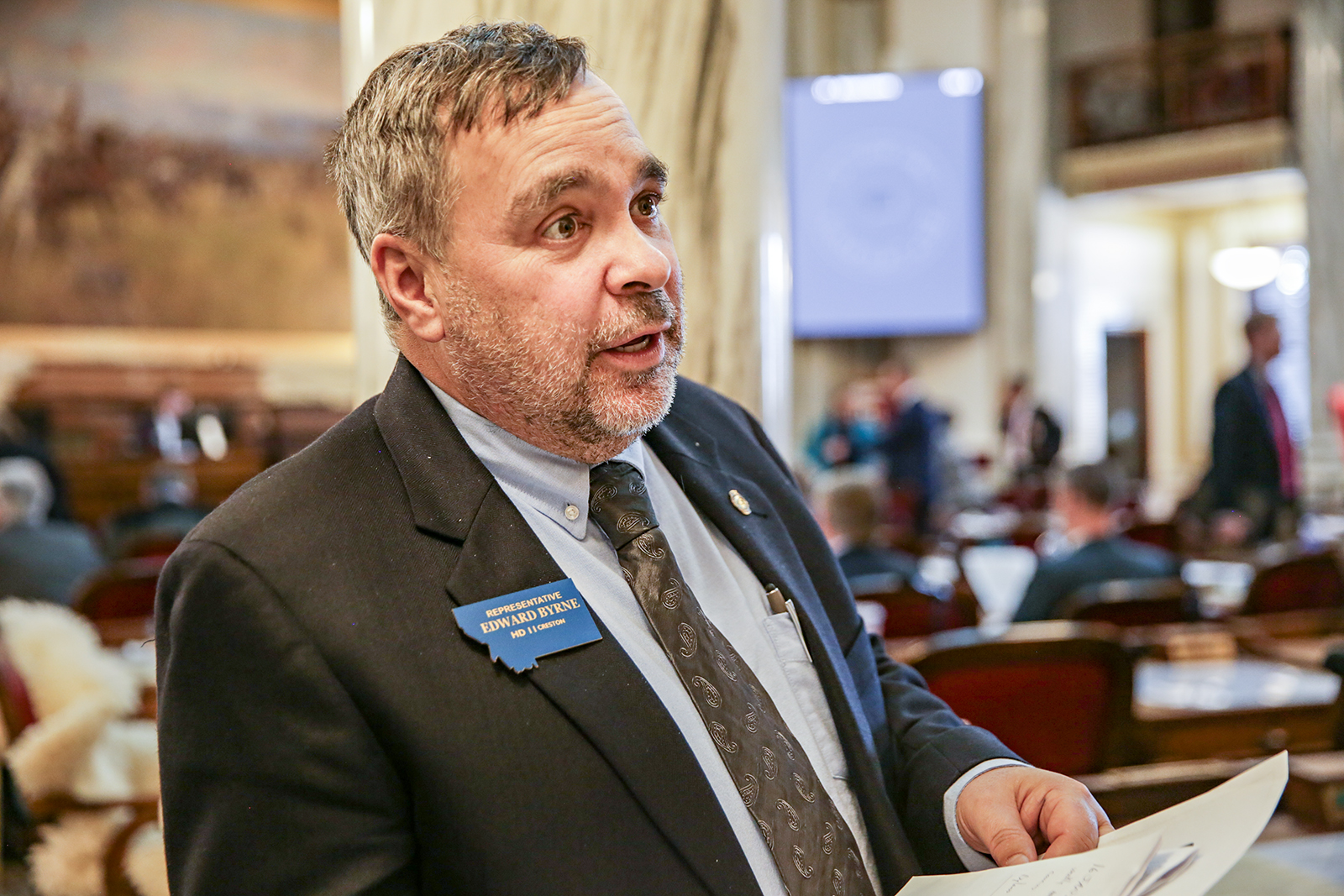
For state Rep. Ed Byrne, R-Creston, a tradition of political elites making backroom deals in Montana politics harkens back to the days of Montana’s Copper Kings — and it has continued to rear its head since, most recently with the late withdrawals of two incumbent members of the state’s federal congressional delegation in March.
Following their departures, Byrne, whose freshman session was in 2025, has spoken to local Republicans and other legislators about pursuing an “anti-skullduggery and anti-humbuggery” measure in 2027. The suggestion goes as follows: Should an incumbent withdraw within five days of the filing deadline, per a memo Byrne provided to the Beacon, the filing deadline for that race would be extended for five days. Or, if a political party’s executive committee calls for a special state convention to nominate a new candidate, Byrne’s proposal would extend the filing deadline for three weeks to allow that convention to take place.
The legislation is modeled off a similar law passed in Tennessee in 1991, a state where a politician setting up a successor to take over their seat was “the kind of cutthroat, old-school Tennessee Democratic political antic that used to be bread and butter for the state’s political writers,” according to the editor of the Tennessee Lookout.
Since Byrne is running in a contested general election, he cannot formally reserve a bill title yet. He must first win in his heavily Republican district in November. But he said his motivation to pursue the legislation came after watching his own party’s machinations during the two most-recent election cycles.
He pointed to former U.S. Rep. Matt Rosendale’s short-lived Senate bid in 2024, a six-day period in which President Donald Trump endorsed Rosendale’s primary opponent, now-U.S. Sen. Tim Sheehy. (Byrne said he still owns, and sometimes sports, a Rosendale hat.) Sheehy was handpicked to run for the Senate by U.S. Sen. Steve Daines, then the chair of the National Republican Senatorial Committee, and other national Republicans.
And this year, Daines’ own departure from the U.S. Senate race in the final minutes before the filing deadline closed made national headlines. Daines claimed he hoped to lock out any strong Democratic candidates from jumping in to compete for the open seat; but in the meantime, some have criticized the move for blocking Republicans from a potentially competitive primary, setting the stage for former U.S. Attorney Kurt Alme to run away with the party’s nomination.
U.S. Rep. Ryan Zinke similarly stepped down in the final days before the filing deadline, leaving a two-day window for a competitive primary to take shape on the Republican side of the aisle for the western congressional district. Still, Zinke’s preferred successor was clear. Talk radio show host Aaron Flint rolled out a polished campaign video and endorsements from the state’s federal delegation and the president the day Zinke departed the race. Flint told the Beacon earlier this month he fielded a call from Zinke in January asking him to run this year. But there is still a competitive primary for the Republican nod, Flint pointed out.
While it’s his own party that has made headlines for selecting successors in recent history, Byrne said it has also taken place in Democratic circles in the past.
“No one’s clean,” Byrne said.
And he anticipates the legislation will be popular.
“When I sponsor and then I get everybody to cosign it, I might have 80 cosigners,” he said. “I may have 100 cosigners between the House and Senate.”
SUPPORT THE WHOLE FUTURE OF THE FLATHEAD VALLEY
Bolster your Flathead Beacon newsroom as we follow stories past the headlines and into the impacts on our communities by making a donation of any amount. With you, we can stay resilient, focused on solutions and committed to the future of the Valley.
Byrne first presented his idea at a county central committee meeting days after Zinke and Daines both announced they’d drop out of their races, Flathead County Republican Central Committee chairman “Doc” Al Olszewski said. Olszewski, who is running to replace Zinke, said most people in attendance were emotional and felt “kicked in the stomach” about what had occurred in those races. They thought Byrne’s idea was a good one to prevent it from happening again.
“The Flathead County Republican Central Committee was very favorable of Representative Byrne’s presentation,” Olszewski said.
Across the aisle, Ron Gerson, the chair of the Flathead County Democrats, said he was unfamiliar with the specifics of Byrne’s proposal. But the elimination or restriction of backroom “shenanigans” is something he didn’t foresee Democrats opposing.
“People would be far more open to that than, for example, eliminating election registration ‘til 8:00 at night,” Gerson said.
In 2025, Senate Bill 490 restricted voter registration hours on Election Day, ending them at noon rather than 8 p.m. A Lewis and Clark District Court judge blocked the law from going into effect last week, meaning late voter registration will continue in the state at least through the June 2 primary as a legal battle plays out.
“That’s something that interferes with everybody’s civil rights, as it were, whereas this is almost an in-house matter,” Gerson said.
But he emphasized that there are larger issues to solve in the state, like underfunded schools and housing shortages.
Byrne, too, said there’s legislation he hopes to bring forward that he views as more important than the anti-skullduggery measure, should he win reelection and return to Helena in 2027. He also pointed to questions of how to fund Montana’s schools, along with property taxes and the state budget, as issues ripe for examination by the legislature.
Still, the skullduggery and humbuggery of it all does remain a topic that merits addressing, in Byrne’s mind.
“This hangover’s not going away,” Byrne said.