State and Federal Officials Tour CFAC Superfund Site as Residential Development Gets Underway
Gov. Greg Gianforte and U.S. EPA Administrator Lee Zeldin toured the superfund site on Thursday as Ruis Construction vehicles continued early work on the 421-unit residential development, Teakettle Heights
By Lauren Frick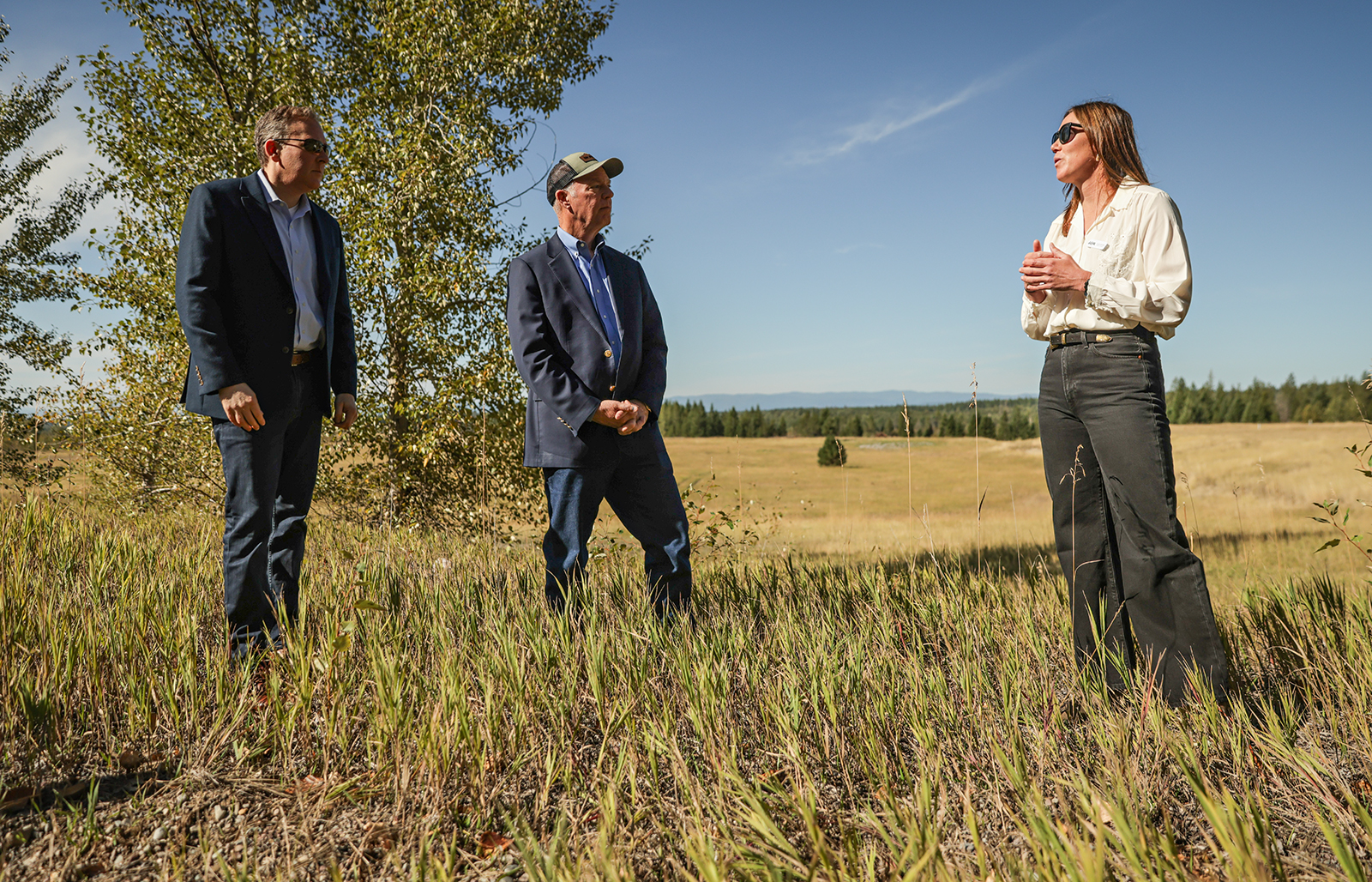
Several local, state and federal officials — including Gov. Greg Gianforte and Environmental Protection Agency (EPA) Administrator Lee Zeldin — snaked through the Columbia Falls Aluminum Company (CFAC) Superfund site in a parade of cars on Thursday, making stops across the property to be briefed on the site’s remediation progress.
In the distance, just beyond the entrance of the now-defunct factory, a handful of Ruis Construction vehicles milled about the roughly 80 acres of land that will become 421-unit Teakettle Heights, marking the early stages of Columbia Falls’ largest residential development ever approved.
The residential project within the Superfund boundary also served as a focal point of Thursday’s tour, with officials highlighting it as a prime example of redevelopment and reuse to return a site to productive use.
“I think it’s amazing that we have a private developer, a local community, and a state agency that have come together, put aside differences, to build that consensus and to create that vision,” EPA Region 8 Administrator Cyrus Western said. “I think that’s one of the coolest things about the Superfund program, is that if we all work together, we can achieve these amazing outcomes that are good for our communities and good for the environment, and that’s exactly what we have here today.”
The Columbia Falls City Council in June approved a series of measures that began clearing a path for the development of Teakettle Heights, which is backed by local developer Mick Ruis.
The planned unit development calls for a total of 421 units, including 125 single-family residences on detached lots, 56 single-family townhouse sublots and 240 multi-family apartment units, on 78.05 acres south of Aluminum Drive. The subdivision, which will be completed in three phases, will have two access points — one to Aluminum Drive and the other directly to the North Fork Road.
An outcry of community disapproval followed the project as it made its way through the planning commission and city council, with dozens of residents voicing a variety of concerns ranging from the subdivision’s proximity to the active Superfund site, the strain on city infrastructure, the project’s high density disrupting the existing neighborhood’s way of life, and its disruption to wildlife in the area.
Ruis, who attended Thursday’s CFAC tour, told the Beacon that he’s already adjusted the development’s configuration in response to community concerns, saying single-story homes for age 55 and up will now be adjacent to the nearby Aluminum City neighborhood, as opposed to three-story apartment buildings as it was first designed. Ruis said he is hopeful construction on the first homes will begin within a year.
“I have so much property and it’s so beautiful, so you don’t have to go so high like we do in the town,” Ruis said. “People that could afford a single-family home, and then the elderly could live in that [age] 55 home, and then say younger families that can get into a townhome, and you put all three of them together and it becomes one community.”

While the city fielded several complaints from residents about the apartment complex heights, one of the most prominent concerns was about the development’s location within the Superfund boundary.
On Thursday, Allie Archer, a project manager with the EPA, relayed the same message as she had during Teakettle Heights’ application process: the land has been carefully evaluated and cleared without need for remediation efforts.
“I think just helping residents understand when it is within a Superfund boundary, you would expect there to be some sort of cleanup, but that although there’s no cleanup, it doesn’t mean it wasn’t looked at very, very closely for that residential standard,” Archer said.
“The whole 2,000 acres was sampled and would have been included in any cleanup measures that were required,” she added. “There was none required for where that Teakettle Heights redevelopment is going, so it’s free to be redeveloped and reused, and we just stay in communication with Mr. Ruis on what his future plans are, so that we can support that public communication. There won’t be any restrictions on the area once we’ve completed that sole remediation that’s happening now. The groundwater has specific requirements around it and that won’t be a factor because the Teakettle Heights will be a part of the city water.”
Archer also noted that there’s no concern regarding the development’s construction, saying “construction here won’t impact anyone, especially the workers that are doing the construction.”
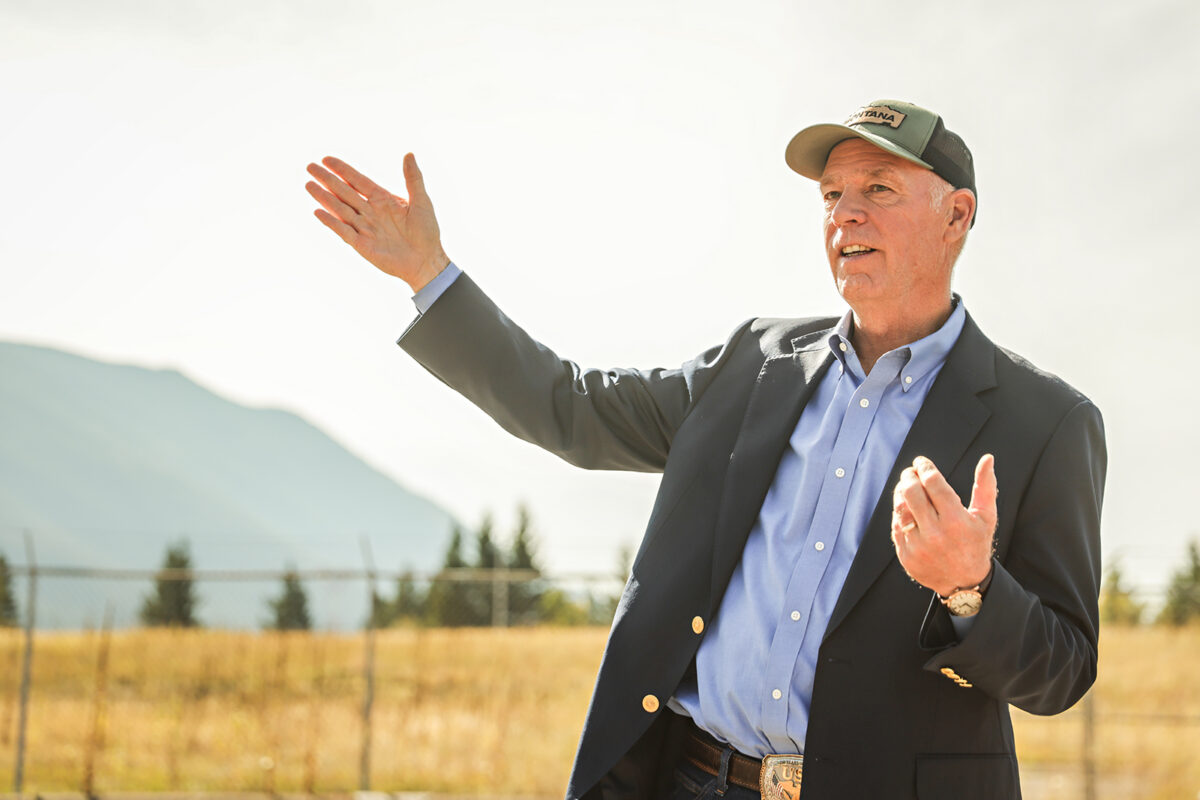
Thursday’s visit from top officials came about two months after the announcement of the Superfund site’s consent decree where Columbia Falls Aluminum Co., LLC officially agreed to the roughly $57.6 million price tag attached to the cleanup plan, which is outlined in the Record of Decision (ROD) signed by the EPA and the Montana Department of Environmental Quality (DEQ) in January 2025.
The ROD — a 423-page document that followed a proposed plan released in 2023 — provided a detailed account of the EPA’s plan to contain pockets of toxic waste buried on the sprawling property at the base of Teakettle Mountain that has been dormant since CFAC shuttered in 2009.
Throughout the tour on Thursday, Archer walked Gianforte and Zeldin through the key components of the cleanup plan, which includes: slurry walls designed to isolate waste and prevent contaminant migration; improved waste covers to reduce exposure and infiltration; an on-site landfill to safely encapsulate contaminants without off-site disposal; and long-term monitoring to ensure the effectiveness of the remedy over time.
“After a lot of scrutiny, this is going to address the contamination, hazardous materials, and eliminate exposure to prevent contamination of groundwater and the Flathead River, which is right over here, near and dear to my heart,” Gianforte said in reference to the ROD. “The First Lady and I one month ago were camping on the gravel bar just down below here, having floated from the Canadian border all the way to Evergreen, so we got to keep it clean.”
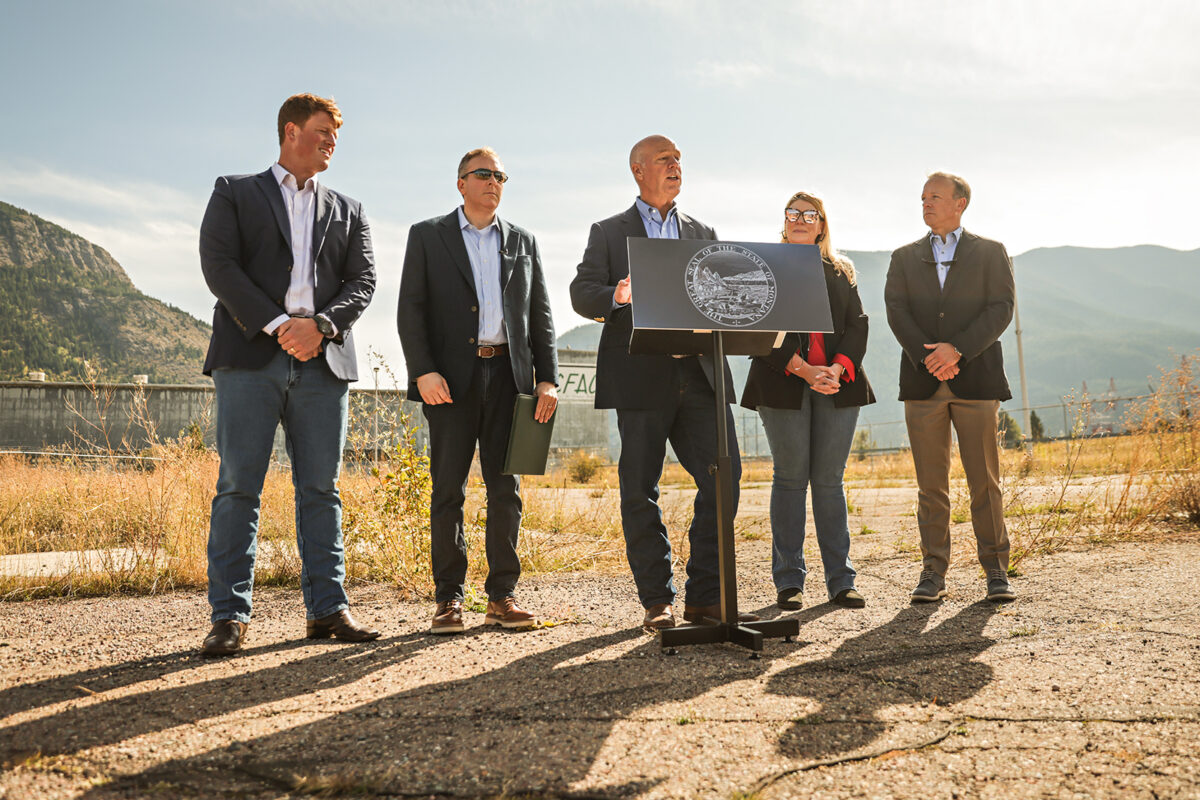
During his remarks, Zeldin told the crowd that Columbia Falls is at an “important milestone moment.”
“One of the most exciting steps of the Superfund process is being able to delist a project at the end of it; to be able to get an important vision not just started, but completed,” Zeldin said. “Unfortunately, while I’ve had a chance to visit a lot of Superfund sites, I have to tell you that some are facing what will likely be decades of work, and really never-ending work, unfortunately. We are at a very important milestone moment here in Columbia Falls, where there is just so much incredible progress imminently ahead on this project.”
On Aug. 31, the EPA and DEQ filed the proposed consent decree for the CFAC site with the U.S. District Court, meaning a federal judge will now review the decree, along with the public comments submitted.
Grassroots group Coalition for a Clean CFAC submitted one of two public comments for the consent decree, with the group saying it finds “a number of issues of concern including lack of specifics on: long-term monitoring and maintenance; long-term financial assurance; discovery of new hazards; and enforceable requirements for maintenance, monitoring, repair, and corrective action.” The group, however, noted the lack of specifics gives the EPA and DEQ “discretion to adjust the actual process as construction progresses, and new monitoring data comes in.”
“While we continue to believe there are other options more favorable to the long-term effectiveness for the protection of human health and the environment, we understand the Record of Decision has been made and the Proposed Remedy is moving forward,” Board of Directors Chair Tony Haag stated in the public comment.