Greetings, Beacon Nation! I tend to implicitly trust the old adage that, where there’s smoke, there’s probably fire, but charring my frozen pizza last night while glued to the primary election results proved an unwelcome exception to this rule. It does, however, provide an elegant segue away from our exhaustive election coverage and into an outlook on Montana’s 2026 wildland fire season, our coverage of which we very much hope will not be exhaustive.
If you came here looking for the election results, you can find them posted on our website, or linked in the “top stories” section of this newsletter. You can also stay tuned to our post-election coverage and analysis over the next few days and weeks.
If you’re wondering whether my overdone election night pizza was still palatable, I’ll just say that the tradition is more important than the tasting notes and leave it at that.
I’m Tristan Scott, here to deliver your Wednesday edition of the Daily Roundup.
“Obviously we’ve had a very complex winter, and it’s created a lot of different puzzle pieces to put together for an estimate of what’s going to happen this year,” Dan Borsum, a predictive meteorologist for the Northern Rockies, said Tuesday during the 2026 Fire Season Briefing for Montana.
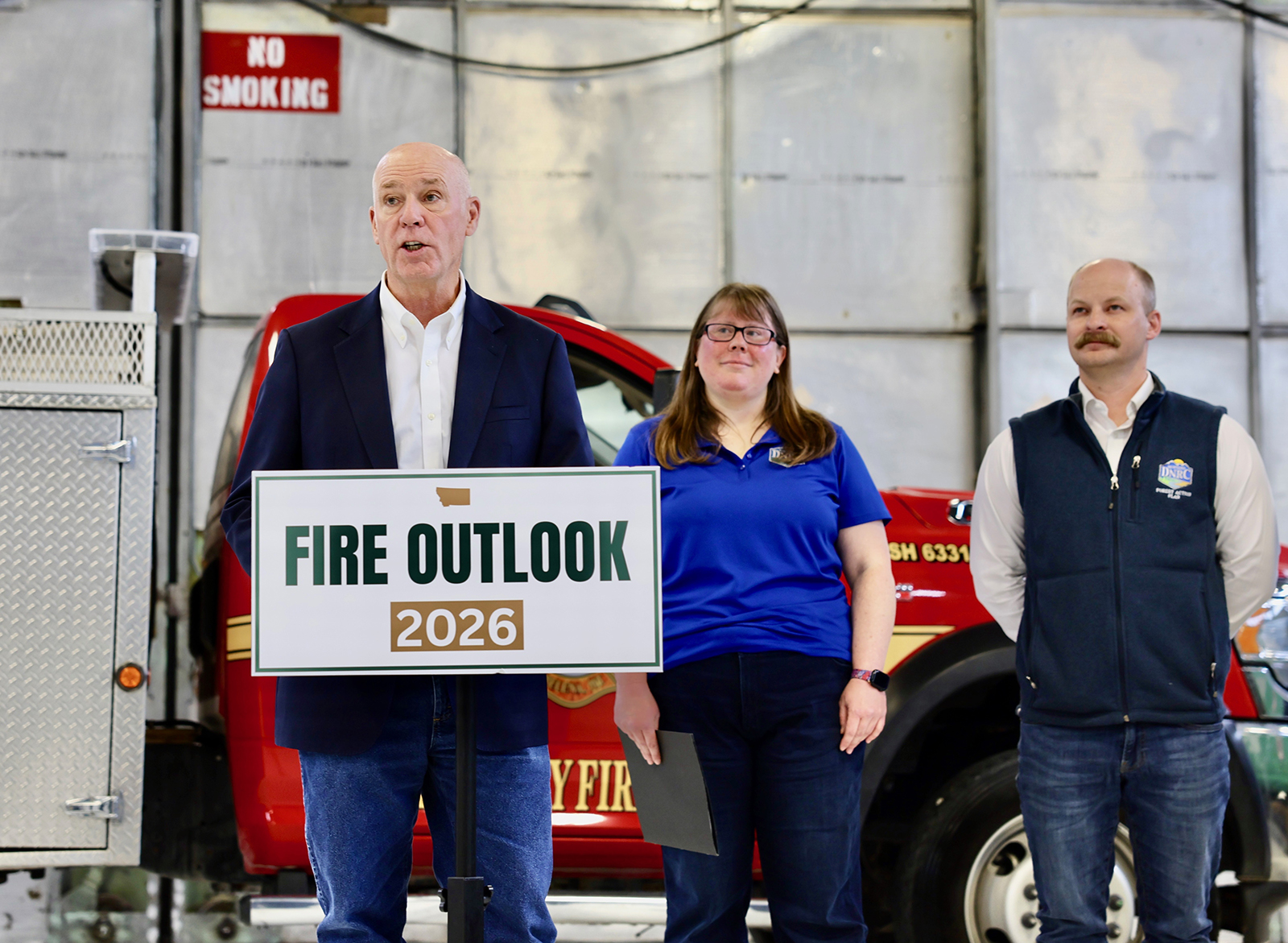
Hosted by Montana Gov. Greg Gianforte and featuring remarks from fire management professionals from state and federal agencies across the state and region, the annual fire briefing and outlook aims to provide Montanans with a clear picture of what to expect in terms of wildfire potential as the summer gets underway.
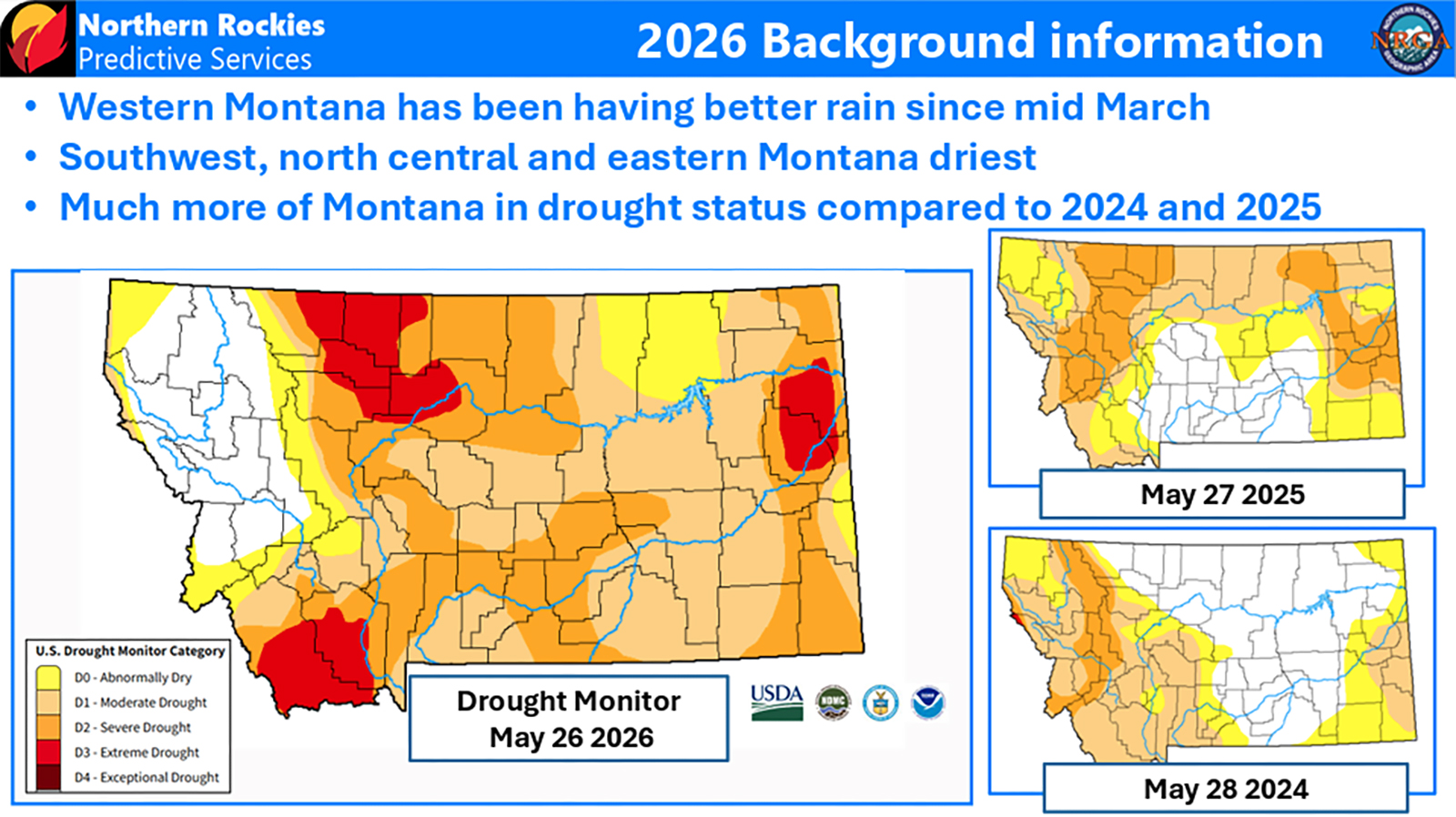
The meteorologist said he anticipated significant wildfire potential in eastern and southwest Montana in July, expanding to the Bitterroot in August. Through summer and into the fall, officials anticipate hot weather contributing to a very active fire season across Montana due to weak winter snowpack, periods of significant wind, and a dry and warm spring.
Although Borsum was far more bullish in his predictions of a normal-to-above-normal wildland fire season than last winter’s record-low snowpack has led many Montanans to anticipate, he described “gray areas” across the landscape that will be determined by a range of variables.
Although the first half of last winter (October through December) delivered an adequate amount of moisture across Montana, the second half contributed to a record-low snowpack while the warm temperatures amounted to one of the top-five warmest winters on record.
“We ended up with far less moisture than we wanted, but it was not quite as dramatic as what people expected,” Borsum said. “But what got us was the temperatures.”
The net effect of those above-average temperatures was a spotty snowpack that deprived the landscape of beneficial moisture, which the winter’s above-average winds wicked away even faster.
“The wind was a bugger this year. It was the second-windiest winter of the last 10 years,” Borsum said, noting that 2022 was windier. “We lost even more moisture to the wind because it promotes drying across the landscape.”
The biggest factor contributing to Montana’s dry conditions was its missing snowpack, which Borsum said melted out “inappropriately early” this year, especially at elevations below 8,000 feet.
“I had people reaching out to me and saying, ‘why are we golfing in January?'” Borsum said. “And that is a sign that we are missing one of our key resources in the state, which is our snowpack. It’s still a little bit of an unknown how that is going to impact our fire season … It’s one of the gray areas of the outlook.”
Even though Borsum said the recent rain event helped Montana close its moisture deficit, it doesn’t cover losses across the state. Without another weakened storm system to help offset those dry conditions, the fire potential could increase.
“This recent rain event was great. It was badly, badly needed. But it didn’t wipe out every moisture deficit that we have out there,” Borsum said, adding that “we are considerably drier this year not just in Montana, but across a considerable portion of the West.”
“It does make me suspicious that our weather can really turn on a dime this season, and potentially turn things in the wrong way,” he said.
“When I use the phrase ‘normal,’ I have to stress that it does mean that some fire activity will still occur.”
However, land managers also tried to inspire confidence by describing a high degree of preparedness and agency readiness during the press conference at the Department of Natural Resources and Conservation (DNRC) Aviation Hangar in Helena, a commitment that Gianforte said was bolstered during recent legislative sessions by historic investments to improve forest health and protect communities from wildfire. Specifically, he said that after signing House Bill 883 into law in 2023, the DNRC was allocated $60 million over the biennium “to significantly increase the pace and scale of management practices that improve forest health, reduce wildfire risk, and increase wildfire preparedness.” House Bill 127, signed into law in April 2025, continues “these important investments,” he said.
“What we heard this morning should give Montanans confidence: our local, state, and federal partners are prepared for whatever this season may bring our way,” Gianforte said, explaining that four out of five wildfires are human-caused and encouraging residents to do their part to prevent them. “We can’t do this work alone. Wildfire preparedness is a shared responsibility, and every Montanan has a role to play. That starts with preventing avoidable fires.”
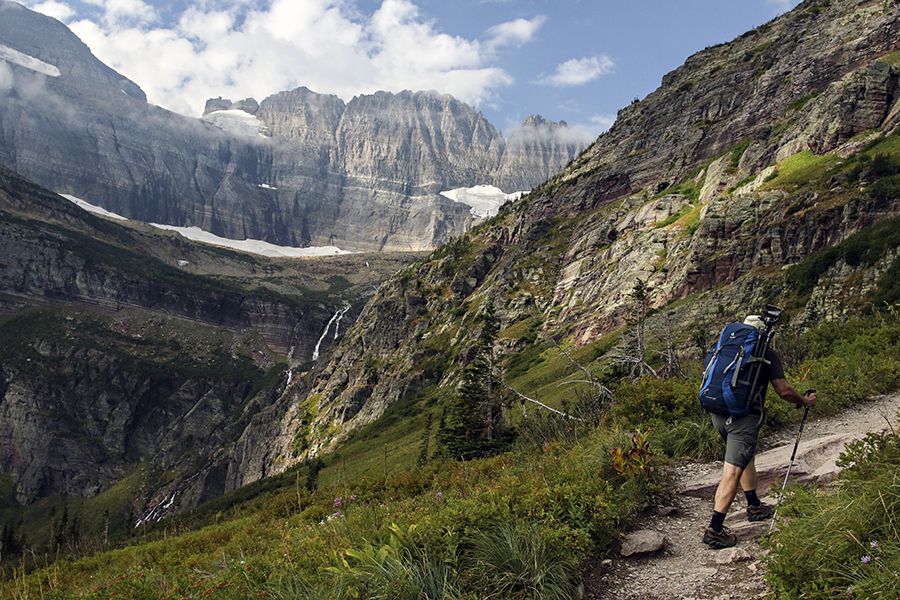
Grizzly Bear Injures Hiker in Glacier National Park
Park officials said the 32-year-old man fractured his arm in a "surprise encounter" with a grizzly on May 28, prompting the closure of the Grinnell Glacier Trail in the Many Glacier area
Columbia Falls City Council Approves 421-Unit Residential Development on Former Aluminum Company Land
Some councilors emphasized the importance of providing housing for the city’s growing population and trusting the EPA’s guidance ahead of supporting the project, which was once part of the active CFAC Superfund site
Join the Humane Society of Northwest Montana for a heartwarming day of fun, community, and compassion at the annual Summer Shindig & Fundraiser, “Paws in Paradise,” happening Saturday, June 13, from 10 a.m. to 3 p.m. at 100 Adopt A Pet Way in Kalispell. This free, family friendly event invites the entire Flathead Valley to come together in support of animals in need.
The Shindig is more than just a celebration — it’s an opportunity to make a meaningful difference. Guests can enjoy a wide variety of activities, including a silent auction, raffle basket drawings, and the final day to enter the exciting 50/50 raffle. Live music from local favorite Stevendebi will set the tone from noon to 3 p.m., creating a festive atmosphere for all ages.
Families will love the kid-friendly area featuring a bouncy house and games, while pet lovers can participate in fun contests designed for both people and their four-legged companions. Local vendors will be on-site showcasing unique goods, and delicious offerings from food trucks—including BBQ and refreshing treats—will keep everyone energized throughout the day.
Every moment spent at the Summer Shindig helps support the Humane Society’s mission to care for, protect, and find loving homes for shelter animals. Bring your friends, bring your well-behaved dogs, and experience a joyful day dedicated to a great cause. Together, we can give more animals the second chance they deserve.
Keeping you connected to Northwest Montana.
Whether you’ve been here for decades, or you’re new to the Flathead Valley, our reporting is here to help you feel smarter and in the loop about the issues most important to Northwest Montana. With your support, we can build a more engaged, informed community.