Happy Friday, Beacon readers! Lauren Frick here, and if Mother Nature’s sunny disposition today is any indication of what’s to come, I think we’re all in store for a great weekend. But before visions of amazing hikes and patio dinners with friends start dancing in your head, let’s rewind the clock a little bit and go back to a time (and room) that may have been lacking in sunshine, but was filled with some important information.
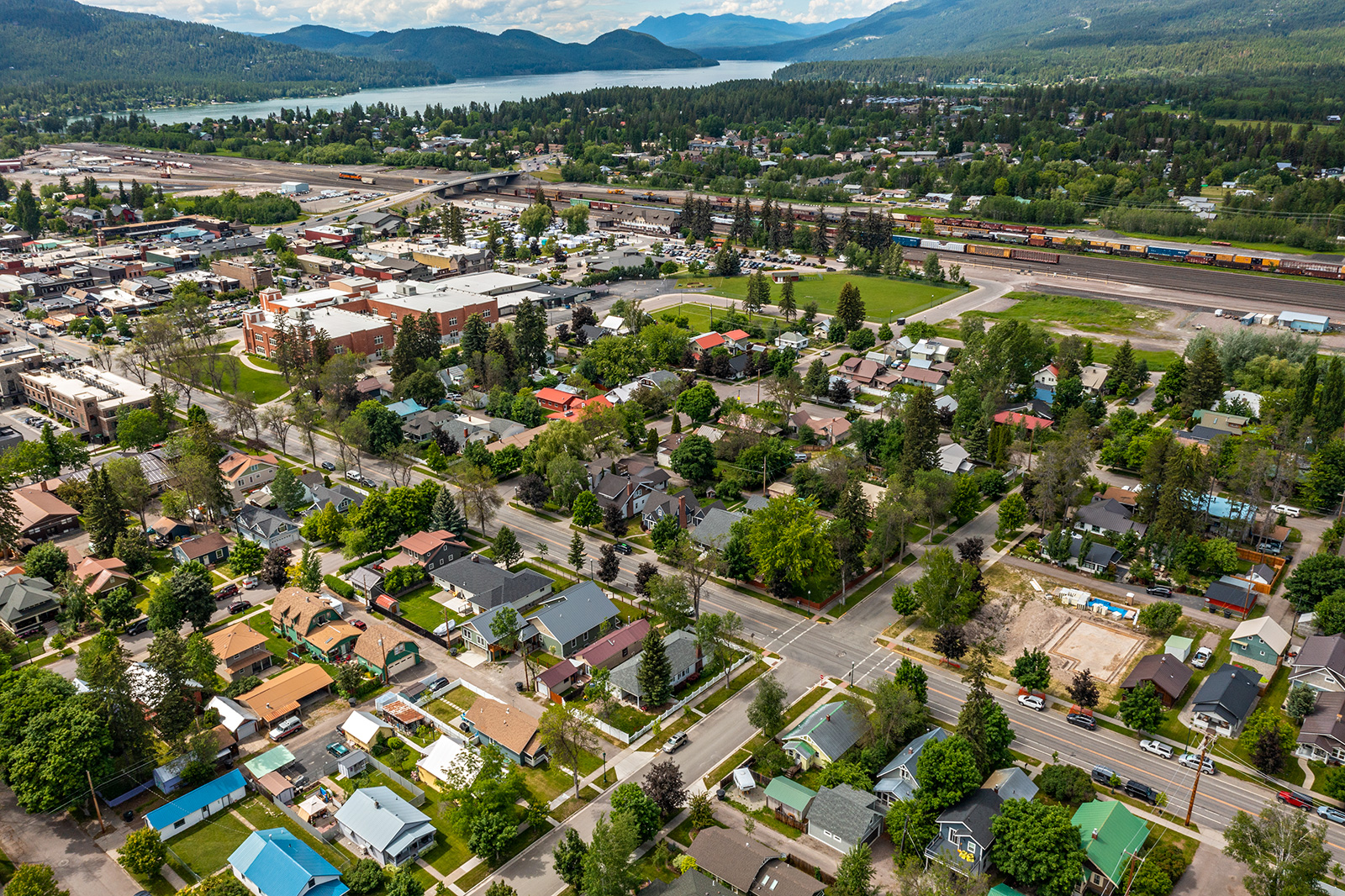
Earlier this week, the Whitefish planning commission met at City Hall to get its first look at the first phase of updates to its zoning and subdivision regulations per the Montana Land Use Planning Act (MLUPA).
ICYMI: The 2023 legislation details a set of requirements pertaining to evaluating growth over the next 20 years, aiming to address the housing crisis by easing development standards and moving approval of individual projects to a faster, more administrative staff level with less public notice.
This first set of new regulations will go to the city council for a first reading on May 18 — the state’s deadline for MLUPA compliance — and if approved, will take effect July 1, Planning and Building Director Dave Taylor said.
“The second phase will most likely come in the fall, which will be implementing the majority of the growth policy changes; things that were adopted in there with regard to the zoning,” Taylor said. “We didn’t have time to work on that, obviously. The growth policy was just adopted on April 20, but what we did have time for was to put together the required changes for the Montana Land Use Planning Act, which we’re required to put in place in order to comply with state law, as well as to actualize the grants that we’re able to get from Housing and Urban Development.”
Wednesday night’s planning commission meeting only included a presentation from city staff of the proposed changes and public comment from the sparse crowd, so for those of you who missed it, you’re in luck. The commission will meet again at 6 p.m. on May 5 to discuss the new regulations and vote on whether to recommend them to the city council.
Here’s some highlights of Wednesday night and some important information to store away ahead of Tuesday’s meeting.
A bulk of the zoning changes proposed so far by staff were made with the sole purpose of being in compliance with MLUPA, with more substantial changes to align with the growth policy and approved land use map likely to come later this year, Taylor said.
“The changes that [Kalispell] made to their code are almost identical to the things that we’re doing, mostly because our code and Kalispell’s code are almost identical,” Taylor said. “They have just gone through that same process to make most of the exact same changes that we have.”
A key point addressed in the zoning update pertains to the allowance of 60-foot buildings “by right” in certain zones of the city — a MLUPA requirement. The state-mandated 60-foot building requirement has been a hot button issue for the city council, especially when it comes to increasing building heights downtown.
For those of you who may not know, here’s an extremely brief “too long, didn’t read:” A Missoula state legislator last month sent a letter to the city saying its growth policy draft purposefully sidesteps the 60-foot building requirement, and if they city happened to get sued, well she wouldn’t have a problem testifying. City councilors took the language out of the planning document. City councilors added it back in, adopted the document and declared this was the “hill to die on.” Now, the issue will be debated again through the zoning regulations, which actually has enforcement capabilities behind it.
Taylor on Wednesday said the zoning changes relating to 60-foot buildings don’t address any of the council’s concerns, again emphasizing the first phase of changes are “the minimum that we need to do to comply” with state law.
The changes being recommended by the city would allow 60-foot buildings “for entirely multi-family residential buildings used for residential purposes.” Residential purposes is defined as living in the residence for 30 days or more, Taylor said. Additionally, “mixed use buildings where any floor above the ground floor is used entirely for multi-family residential used for residential purposes” will also be approved for 60-foot allowance.
“Short term rentals would not be permitted in those zones, and those are the only types of buildings that would be allowed to go above 45 feet or 35 feet, depending on the zone,” Taylor said.
Regarding subdivision regulations, a key point of change relates to the public notice process.
Up until July 1, 2027, there will still be an initial review process where the city notifies the public within a certain distance of the future subdivision and gives them 15 days in order to provide public comment. There’s a second notification period when there’s a decision made, if there’s additional information that’s been provided, Taylor said. Once July 2027 hits, that process will be removed.
“That’s part of what MLUPA did, is take away that notification requirement,” Taylor said. “We’ll still put that information on the city website and let people know that stuff’s coming, but under state law… it basically says we can’t solicit comment or put conditions on after that period, but we can approve or deny. We can ask for more information, but it’s no longer subject to public comment.”
Final subdivision plats will continue to go to city council for approval, but the item will be on the consent agenda and it won’t be a process that involves a lot of public input, Taylor said.
Whew, that’s a lot of city code talk for 3 p.m. on a Friday. Make sure to check out the rest of today’s Daily Roundup before zoning out and enjoying the remainder of this beautiful day in the Flathead.
Columbia Falls Continues Assessment of Water and Wastewater Treatment System to Plan for Growth
Representatives from local engineering firms on Wednesday night presented findings on the current water and wastewater systems, future infrastructure needs and constraints, and proposed improvement projects
Longtime Discover Kalispell Director Leaves Legacy of Adaptation and Shoulder Season Celebration
After nearly 16 years, Executive Director Diane Medler navigated the tourism bureau through a fluctuating economy while promoting responsible recreation as northwest Montana’s popularity grows
Fred Ramsdell, Ph.D., is a veteran biotechnology leader in immunology with over three decades of experience. Fred is a founder of Sonoma Biotherapeutics and was previously the CSO at the Parker Institute for Cancer Immunotherapy (PICI). His talk will involve the basic mechanisms by which our immune system responds to pathogens without, in most cases, attacking our own tissues – as well as the implications of this work for the development of a new therapeutic paradigm which earned him the 2025 Nobel Prize in Physiology or Medicine. This event is free and open to the public.
Keeping you connected to Northwest Montana.
Whether you’ve been here for decades, or you’re new to the Flathead Valley, our reporting is here to help you feel smarter and in the loop about the issues most important to Northwest Montana. With your support, we can build a more engaged, informed community.