Western Congressional Race May Be Democrats’ Last Best Chance to Win a High-Profile Race this Cycle
Which candidate has the best chance of flipping Montana’s western congressional seat from red to blue? Voters will have an opportunity to weigh in on a four-way Democratic primary to answer that question in June, but all candidates agree the race comes with high stakes.
By Mariah Thomas
Democrats in Montana have their eyes on a prize this election cycle: the western congressional seat.
Many have long viewed the district, which comprises 16 counties, as a potential battleground, pending a slew of favorable conditions for Democrats. And in this year’s election cycle, some of those factors appear to be coming to fruition.
The state’s Republican Party has grappled with a question all spring about whether voters want to accept the candidates put forward following the last-minute announcements of both U.S. Rep. Ryan Zinke and U.S. Sen. Steve Daines that they wouldn’t seek reelection. No incumbent House representative has been defeated in their reelection campaigns in at least 80 years’ worth of Montana elections. But Zinke’s withdrawal from the race also took away any incumbency advantage that may have existed in the district. And on the federal level, polling shows President Donald Trump’s approval slipping as voters air concerns with the war in Iran, Trump’s immigration policies and his handling of the economy. The president does still enjoy a favorable rating in Montana.
But it’s not just that Republicans are facing challenges. Democrats across the country have overperformed in key races, a point pundits say could be a harbinger of what’s to come in competitive House races across the country this fall. The Democratic Congressional Campaign Committee has anointed the state’s western district as one of its 44 “Districts in Play” across the country this fall, elevating the profile of the race for Democrats.
And a deep field of four Democratic candidates in the race for the western district — some of whom have been campaigning for longer than a year — have more time invested on the campaign trail than any of the candidates on the Republican side of the aisle, who all jumped into the race in the final two days before the filing deadline on March 4.
That deep field of Democratic candidates includes Ryan Busse, a former firearms executive who ran for governor in 2024; Russell Cleveland, a U.S. Navy veteran; Sam Forstag, a smokejumper and local union leader; and Matt Rains, a U.S. Army veteran and rancher from Simms.
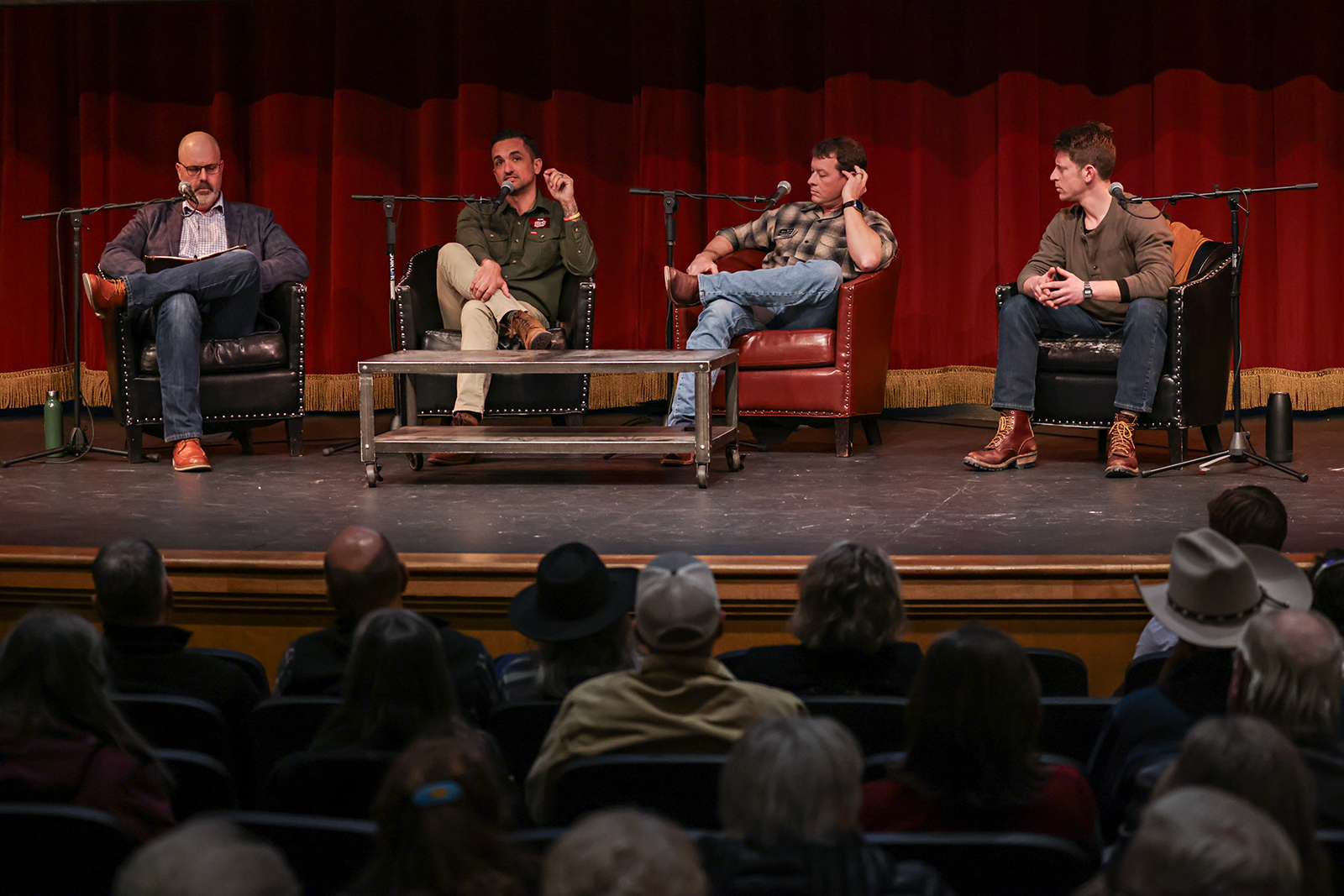
“I think that’s just healthy for us,” Joe Lamson said of the competitive Democratic field. Lamson, a longtime political strategist who ran the campaign machine for Pat Williams, the last Democrat to hold a U.S. House seat from Montana, said the Democratic nomination remains anyone’s for the taking.
“Campaigns are organic things,” he said. “You get better at them the more you have to do that, and so a good, competitive primary helps that.”
And having a competitive candidate in the general election matters for Montana Democrats, too, Lamson explained. It brings national resources to the race, which then benefits Democratic candidates down the ballot.
Still, he said winning in the Republican-held district won’t be a cakewalk.
Montana, formerly a state whose electorate had a predisposition to split-ticket voting, has undeniably shifted to the right in recent years. And the candidates running to clinch the Republican nomination are by no means inexperienced just because they aren’t incumbents.
The political popularity of Aaron Flint, a conservative radio talk show host, has yet to be ballot-tested. Still, the electoral newcomer has earned endorsements from several of the powers-that-be on the Republican side of the aisle, including President Trump and the state’s entire congressional delegation. Al Olszewski, another Republican in the primary, proved popular with voters in the western district when he ran against Zinke in the 2022 primary. Olszewski lost to the congressman by a slim margin. And Christi Jacobsen has twice won statewide races for Montana Secretary of State by the widest margin of any statewide officeholder. She earned more votes from Montanans than Trump himself when they shared the ballot in both 2020 and 2024.
“As Democratic primary voters, the question is: who will beat a Republican?” Lamson said.
All four Democrats are trying to make their cases as the best answer to that question. Each fits a slightly different mold, with some championing independence. Others, meanwhile, point toward the importance of the working class, and still others argue for a moderate approach. Even so, several of the candidates share common policy stances — though they haven’t shied away from trading barbs on topics like data centers and campaign finance in the more than a dozen meetings they’ve attended throughout the district to pitch themselves to voters.
But one point they each agree upon is that the western seat is a must-win race for the Democratic Party.
“If they don’t win this election — if we don’t put the right person forward and lose in November — this is probably the biggest missed opportunity of a century,” said Cleveland, one of the candidates running for the seat.
Voters will have a chance to weigh in for their preferred candidate in the primary on June 2. Absentee ballots will begin to be mailed out on May 8. Read on for profiles of each candidate.
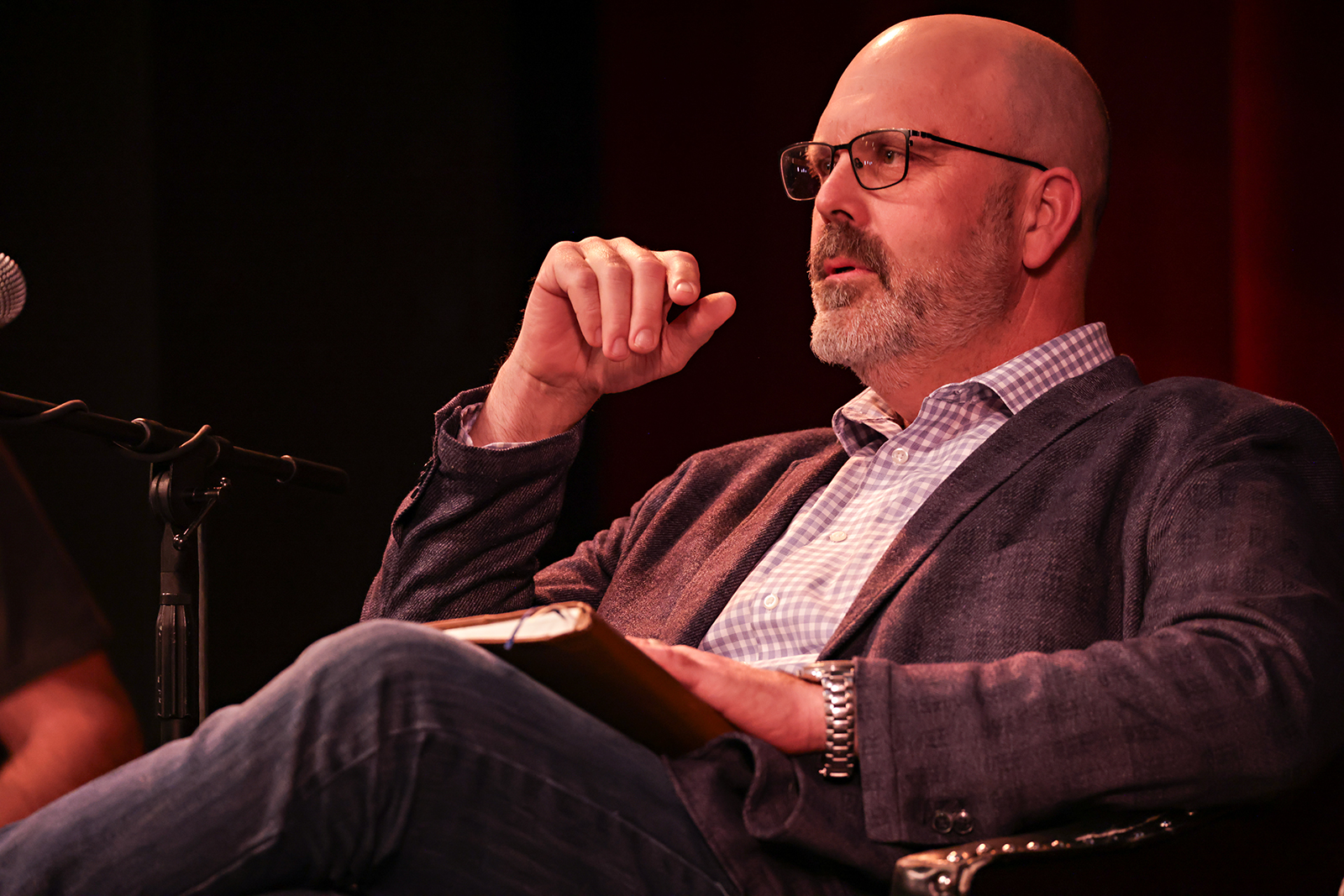
RYAN BUSSE
When Ryan Busse ran for governor in 2024, culture war issues stood out to him as top-of-mind for Montanans. But this year, he said that has turned on its head.
“What’s interesting and distressful, but heartening at the same time, is the shared experience of voters is the same now,” Busse said. “Like, Republican voters that I talk to, they’re freaked out about healthcare. They may not have the same names for the programs they want, but Democratic voters, they’re freaked out about healthcare. These guys can’t afford housing; these guys can’t afford housing. In other words, the concerns of everybody are the same now, or very close to it.”
It’s that tide change that gives Busse, 56, hope Democrats can flip the seat. The former firearms executive from Kalispell thinks he’s the best choice to do it. He points to his experience as a critical factor in the race.
Busse’s foray into politics first began when he entered the battle to stop oil and gas drilling in the Badger-Two Medicine during President George W. Bush’s administration. According to him, he never looked back.
He has since served in roles as the chair of the board of the Montana Conservation Voters and as the North American board chair for Backcountry Hunters and Anglers. He also became a gun control advocate after a 25-year career in the firearms industry. And now, running for office is his way of dedicating himself to fighting for the future of the state he loves and has lived in for more than 30 years.
As Busse tries to carve out a lane in the four-way Democratic primary field, he pointed to universal healthcare as the marquee issue for his campaign (though he also said public lands and housing are important, too). And he emphasizes those issues are ones he hears about when he talks to voters across the entire political spectrum.
“When Republicans and swing voters say they didn’t vote for this stuff, I know some Democrats want to castigate them and say, ‘oh yes, you did,’” Busse said. “But they really didn’t. They didn’t vote for Sheep Creek Mine. They didn’t vote for more expensive healthcare. They didn’t vote for thousands of people getting kicked off of healthcare in the district or for hospitals closing. They really didn’t. So, I think I have to offer something better.”
Busse has edged out his three challengers in the Democratic primary in fundraising. He ended the most recent fundraising period with a total of $368,145.39 in cash on hand. His endorsements include U.S. Sens. Ruben Gallego, D-Ariz., and Martin Heinrich, D-N.M., along with former Montana Gov. Brian Schweitzer and a slew of other state and local leaders.
His campaign also released a poll in April showing him as the primary’s frontrunner by a margin of 15 points. While Busse said he doesn’t put all his stock into polling, it affirms what his campaign has experienced on the ground.
As the primary looms, he views it as critical that the Democratic Party puts its “best foot forward” and elects someone who can “produce real results.”
“My family here in the Flathead is a family of fighters for this place,” Busse said. He pointed to his wife Sara’s advocacy for public libraries and his sons’ involvement in the landmark Held v. Montana climate trial.
“We’re proud to have a long history of sacrifice and fighting for this place. And it doesn’t really feel like a sacrifice. It feels like something that needed to be done.”
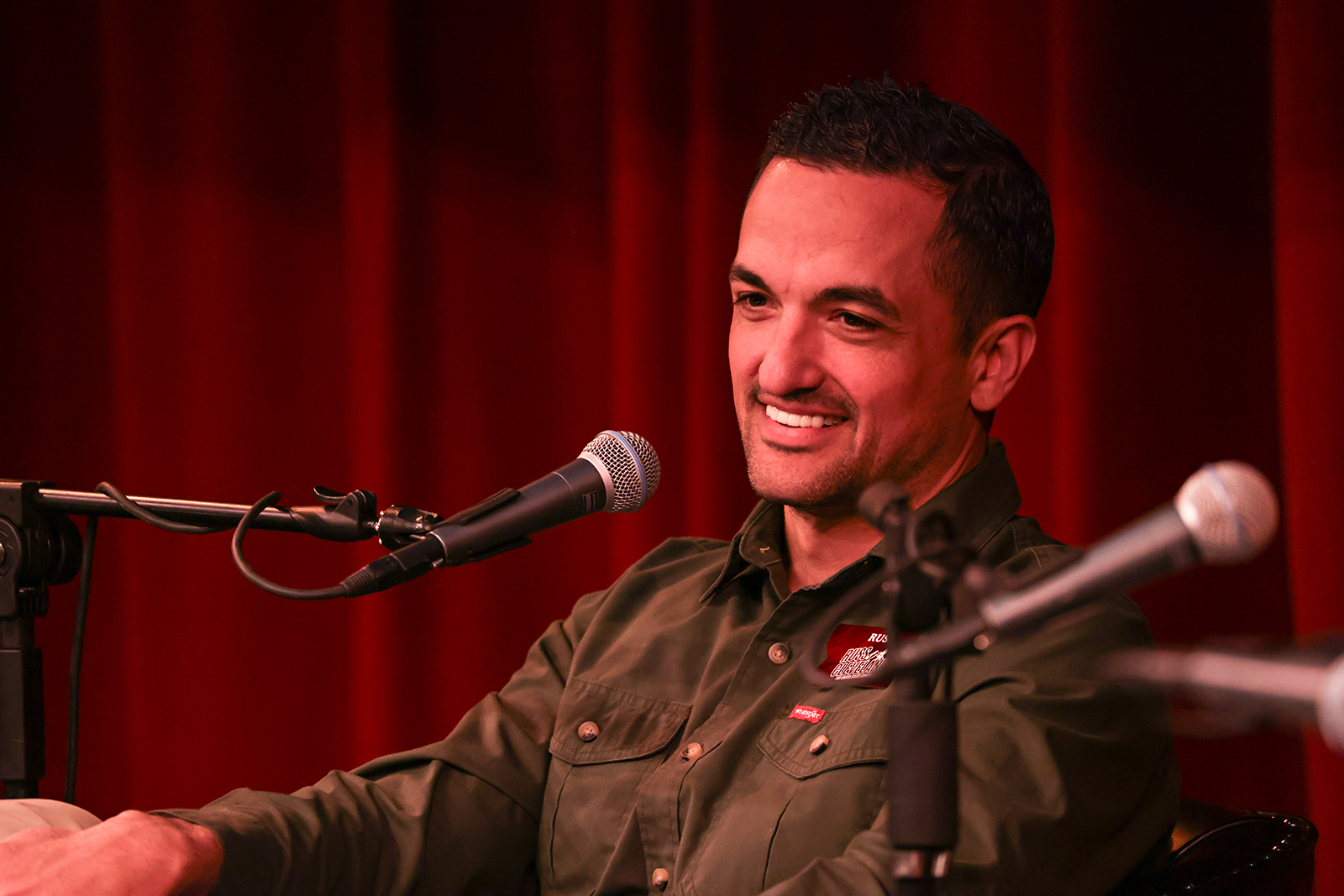
RUSSELL CLEVELAND
Russell Cleveland has tacked 53,000 miles onto his car over the course of more than a year of campaigning in Montana’s western congressional district. He has traveled anywhere and everywhere, including towns he claims Democrats haven’t visited in decades, as part of a concerted effort to bring people from all backgrounds back into the fold.
“If the Democratic Party ever wants to win in Montana again, they have to connect rural Montana back to its blue dots,” Cleveland said. “They have to embrace the independent spirit of this state.”
The 41-year-old U.S. Navy veteran from St. Regis hopes to make the case that he’s the right Democrat to connect those blue dots. He pointed to his willingness to “ruffle feathers for the people whose feathers need ruffled,” his life experiences and his stances on several key issues — from reforming ethical standards for members of Congress to his progressive stances on universal childcare and healthcare — as examples of why he’s the best candidate for the job.
“I mean, you take all of the best attributes of the other three candidates in this race, and I’m the only one that has a combination of those experiences,” Cleveland said.
He said his service in the Navy and ownership of a small ranch in St. Regis match the profile of Matt Rains; a background running his own business fits Ryan Busse’s executive experience; and he holds progressive stances on the issues, similarly to Sam Forstag.
“So, it’s just the idea of let’s not hedge our bets. Let’s put someone [forward] who has the experience and the will to do the work.”
Cleveland jumped into the race last April, after the Trump administration made cuts to cancer research early last year. It was an issue personal to Cleveland, whose daughter, Madison, died of leukemia in 2020, when she was 13. He named his family’s St. Regis ranch after her. The combination of the pain of watching her suffer and the Trump administration’s cuts to medical research prompted him to enter his name in the ring.
During his campaign, Cleveland has carved out distinctions from the rest of the field on the issue of campaign finance.
While both Forstag and Busse have pledged not to accept dark money contributions, money from the American Israel Public Affairs Committee or corporate PAC dollars, Cleveland is the lone candidate in the race who has pledged not to take any money from political action committees. Rains, for his part, has said he’ll take funding from PACs if it means he can more effectively go toe-to-toe with a Republican in the general election.
Cleveland’s outright refusal of PAC funds is a position he views as important for two reasons. The first: big corporations hold outsized influence. He views their participation in politics as part of a broader conversation of how those at the top maintain power over everyone else. He said he doesn’t want to be beholden to their interests.
And that segues into the second part of it. Not being beholden to any special interests, in Cleveland’s eyes, means he can truly home in on representing the Montanans who would elect him.
Cleveland came in third in terms of money raised in the pack of Democrats. He brought in a total of $129,968.98 from January through the end of March, per campaign finance reports from the Federal Election Commission. Cleveland has clinched support from several state legislators and local leaders (and movie star Josh Hutcherson, of “Hunger Games” film franchise fame). But for most voters he talks with, high-profile endorsements aren’t swaying them one way or the other.
Instead, in Cleveland’s estimation, his work traversing the district for more than a year makes his campaign a “sleeping giant.”
He has long heralded his campaign as that of a party outsider. Still, if he wins the nomination — or comes close to it — he thinks it should force the state’s Democratic Party to have a conversation about what voters want to see in their candidates. His hyperfocus on the working class, unabashed advocacy for progressive policies and willingness to be face-to-face with anybody are qualities he thinks resonate.
“The Democratic brand is not done here in Montana,” he said. “It just needs a different type of Democrat.”

SAM FORSTAG
Sam Forstag’s choice to run for Montana’s western congressional district followed the richest man in the world “[coming] for his coworkers’ jobs” in the form of cuts to the U.S. Forest Service from Trump’s Department of Governmental Efficiency.
“It felt like the moment had a level of urgency and it felt like there was nobody running in a way that was speaking to the sort of working people that Democrats lost last year, or to speak to union members like mine who were feeling left behind by the Democratic Party and leaving the Democratic Party behind,” Forstag said.
The former lobbyist, labor union leader and smokejumper from Missoula came out swinging against those cuts. He spoke at the side of U.S. Sen. Bernie Sanders, I-Vermont, and Rep. Alexandria Ocasio-Cortez, D-N.Y., last spring during their Fighting Oligarchy rally in Missoula.
A year later, he clinched both their high-profile endorsements in his own run to serve as Montana’s next congressman. Forstag has also earned the support of a long list of local leaders — both Democrats and some moderate former Republican legislators.
“We need people to help us remember how we speak across our differences, because we actually do agree on most things, and the issues like housing or fixing healthcare and childcare, or making sure that no elderly people are living on the streets — like, those are consensus issues, whatever party you’re affiliated with,” Forstag said.
For him, the combination of endorsements he’s earned represents the type of winning coalition Democrats must build to win the western seat. It’s a coalition he hopes to have the chance to bring together, should he win the Democratic primary this June.
To the 31-year-old, many of the issues facing the country today come back to the same challenge: a lack of representation that truly centers the experience of working people to Washington, D.C. In the Democratic primary, Forstag has positioned himself as a candidate who will bring that perspective to the halls of Congress, allowing “working people a chance to fight for ourselves.” He cites three key aspects that differentiate him from the rest of the Democratic field.
For one, Forstag has working-class roots. He grew up with a mom who was a nurse and a dad who became a teacher. He has said he works multiple jobs and still struggles to pay a mortgage on his Missoula home. In February, he gave a virtual tour of the one-bedroom house.
“Yeah, I know it’s not a lot, but I could barely afford it as it is,” he said in the video. “The mortgage takes up like two-thirds of my paycheck every month.”
He also heralds his union leadership as a critical factor contributing to his profile in the race. Union members have historically been a strong voting bloc for Democrats in Montana — and across the country. But their voting preferences have fluctuated in recent years. Republicans have chipped away at union members’ margin of support for Democratic candidates in election cycles as recently as 2020.
Forstag’s endorsements include several unions: the National Federation of Federal Employees, the Montana State Building & Construction Trades Council, and the Montana chapter of the American Federation of Labor and Congress of Industrial Organizations (AFL-CIO) among them.
His endorsement from the Montana AFL-CIO drew concern from other Democrats at a recent Helena debate for AFL-CIO’s support of data centers. Russell Cleveland, one of Forstag’s primary opponents, said during a Helena debate that Democratic Party leadership had warned him to be careful talking negatively about data centers because “AFL-CIO has asked us not to report negatively on these issues.” He attempted to frame the group’s support of Forstag as a question of Forstag’s integrity.
“We need to be careful about who we hitch our wagon to,” Cleveland said.
Forstag hit back: “We got folks on this stage, someone who’s worth $25 million, coming after the only working-class candidate in this race for support from labor unions. We should be outraged.”
As for his position on the issue, Forstag’s campaign website suggests data centers should be subject to strict federal requirements. To build in Montana, Forstag’s campaign website states data centers should provide their own power, use water-efficient cooling systems and employ local union labor.
The third cornerstone of Forstag’s profile that he thinks makes him a strong candidate: his lobbying and organizing background. His efforts on those fronts began when he was the president of the student government at the University of Montana. He brought his peers to the state capitol to protest budget cuts to higher education in the state.
Since then, Forstag has worked as a lobbyist for the ACLU of Montana, a coalition of homeless shelters he put together, and for the state’s library association. Through lobbying, he said he has built relationships across the aisle and helped pass important legislation to help Montanans.
“That is what it’s gonna take to actually win this election, is being able to reach a hand out to follow up and say, ‘I don’t care who you voted for last year,’” he said. “And I don’t care if you look or sound like me. Like, we need people from all stripes to come back to the Democratic Party, ‘cause if we can’t win this right now, it feels like we’re on a long, steep slide. And we don’t have to accept that.”
Forstag’s campaign brought in $449,612.13 during the first quarter of fundraising, per FEC filings. That’s the second-highest amount in the Democratic field.
MATT RAINS
Matt Rains is content to occupy a lane of his own in the Democratic primary. Rather than running toward the progressive end of the spectrum, Rains has carved out a brand as a moderate.
“To me personally, this is still a red district; a red state,” he said. “And the right candidate to represent the voices of Montana across the spectrum is somebody who lives and breathes and has the experience and background on both sides of the aisle.”
The 46-year-old fourth-generation rancher boasts a background including a stint as the chief of staff for the Montana Farmers Union and service in the U.S. Army, following his graduation from West Point. Those experiences, he said, provide him with several avenues through which to relate firsthand to Montanans in the western district.
Rains also pointed to former U.S. Sen. Jon Tester, whose moderate reputation helped him earn votes across the aisle in his elections, winning the district in 2024. Tester ran several points ahead of other Democrats on the ballot, including in the western district.
Rains said that’s evidence not any Democrat can carry the district. He hopes to make the case that it takes a certain type of Democrat to win the seat — and that he’s the candidate who best fits the winning profile.
“Really, everyone’s hungry for somebody who doesn’t give a damn about politics and the parties,” Rains said. “Truly, I think all sides are just so goddamn burnt out of being told how they’re supposed to think and behave.”
On the issues, Rains has taken a more moderate approach than some of his other competitors in the primary race.
While he agrees with the rest of the pack that issues like healthcare and housing are some of the biggest ones impacting western Montana voters, Rains runs more toward the center of the aisle on other questions.
Take campaign finance, for instance: while Busse, Forstag and Cleveland have all promised not to take corporate PAC dollars, AIPAC money or dark money (or, in Cleveland’s case, no PAC money at all), Rains said he doesn’t understand that posturing.
“I’ve told people I’m willing to, you know, fundraise and take the money that I need as a professional federal candidate to go toe-to-toe with the Republicans in this race,” he said. “They have a fundraising machine. Zinke was successful and his disgustingly heir-appointed Aaron Flint is going to come in strong in the general. And as a Democrat, I have an obligation to go toe-to-toe with him, and so I don’t understand the big push from the other three primary candidates to make people scared of money.”
Rains also holds a pro-Israel stance, and said it’s been “repulsing” to him to see what he called “antisemitic tones” cropping up in the Democratic primary.
Busse’s son recently made headlines for online comments regarding Israel. The New York Post initially reported on those posts. They reportedly consisted of Lander Busse saying “f—k you” to a Bozeman rabbi trying to engage him online. He also responded to a post from Israeli Prime Minister Benjamin Netanyahu. Netanyahu wrote that “Free Palestine” is the new “Heil Hitler.” Lander responded with a GIF of a TV character saying those words. Ryan Busse told the Post his son wasn’t antisemitic and that he didn’t condone that language. Lander Busse issued an apology highlighting he has “marched against the bigotry of Nazism and antisemitism through the years.”
And Cleveland’s campaign earlier this week drew criticism after his Instagram account appeared to like a comment on a post endorsing Cleveland. The comment stated, “Yeah, I wouldn’t vote for anybody who takes money from those stinking Jews.” The comment appeared on a video from Bryan Andrews, a Missouri-based country music singer and anti-MAGA influencer. Cleveland told the Bozeman Daily Chronicle he did not support the comment and would not have liked it intentionally.
“My experience being a West Pointer, duty, honor, country, having served in Iraq, I am very very adamant that I am against hatred, I’m against racism, I’m against antisemitism and I’m against terrorism,” Rains said. “So right now, it’s kind of frustrating to see and hear some of the things coming out of the extremes of our party without the background.”
For Rains, winning in the general has been the goal of his campaign since the beginning. To him, the candidate most capable of winning trust from voters is the person most capable of flipping the seat. He thinks his background uniquely positions him to do that.
“I’ve earned my stripes the hard way,” he said. “I’ve done the work, I’ve done the job, I’ve been dirty and that’s where the respect comes from.”
Rains’ campaign raked in just over $100,000 during the most recent quarter of FEC reporting, raising his total donations to $215,344.45 since he entered the race in October.