Happy Friday!It’s a bittersweet one for me — today is my last day with the Beacon.
This past summer, the first I’ve spent away from the East Coast, was full of learning: I explored Indigenous approaches to mental health care, unpacked white-nose syndrome in bats, and got a taste of home through profiling the sound engineer behind my home state’s biggest star Bruce Springsteen. On a reporting expedition with photo extraordinaire Hunter D’Antuono, I even learned that tumbleweeds are real. Exciting stuff!
How will I ever work in an office without Reynolds, the mini-Aussie puppy, sleeping on my lap, or without tug-of-war breaks with Stevie the lab? Thank you to the Beacon staff for giving me a summer I’ll never forget, and to everyone in the Flathead Valley who welcomed this east coaster with open arms.
But before I embark on the 2,000-mile drive back to my native New Jersey, here’s one more Daily Roundup.
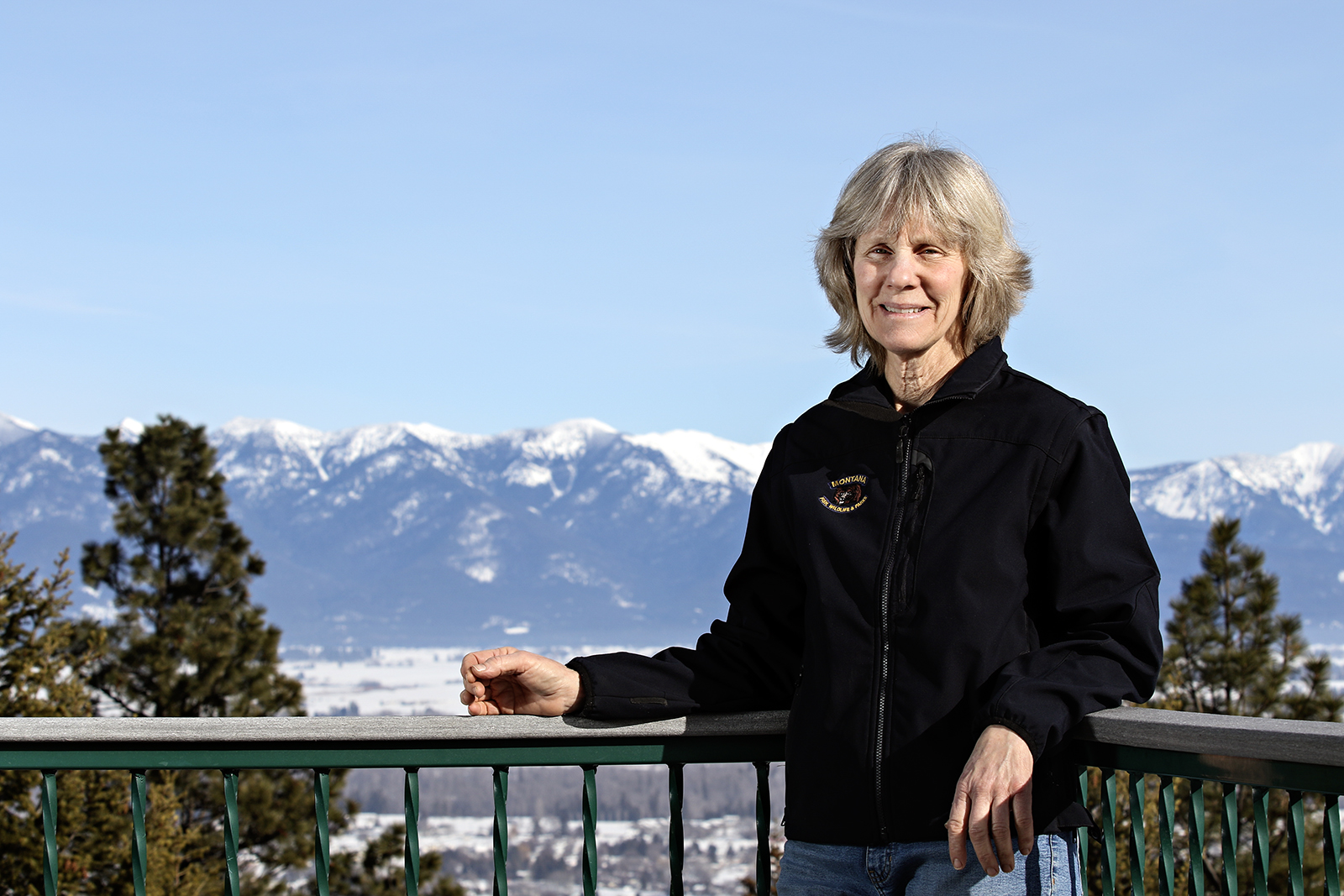
A longtime wolf biologist in northwest Montana, Diane Boyd has been advocating for wolf recovery for 45 years, often in the face of extreme public resistance. Her book recounting that journey, “A Woman Among Wolves,” was honored with a National Outdoor Book Award this week.
Today, wolves are among the most polarizing species in the U.S. Bumper stickers like “Wolves, smoke a pack a day” or “Save 100 elk, kill a wolf” are commonplace, reflecting hunters’ and ranchers’ concerns over the carnivores’ impact on deer, elk, and livestock.
But when Boyd arrived in 1979, the situation looked very different. Humans had effectively eliminated wolves in the region by the 1930s through hunting, poisoning, and habitat loss.
“They had been gone so long, there wasn’t the hatred,” Boyd told the Beacon earlier this year. “It’s been an amazing evolution of cultural perspective.”
Reports of sightings began trickling in during the 1960s and ‘70s, prompting University of Montana professor Bob Ream to launch the Wolf Ecology Project in 1973. Boyd, then a graduate student in wildlife biology at the University of Montana, joined Ream in September 1979. She was assigned to an off-the-grid cabin along the North Fork Flathead River near the Canadian border.
She says she was “enamored” by wolves, and one wolf in particular caught her attention.
Earlier that year, a researcher with the Wolf Ecology Project trapped a female wolf named Kishinena in the North Fork drainage along Glacier National Park’s northwestern edge. Funded by multiple federal and state agencies, Boyd, Ream, and fellow biologist Mike Fairchild spent the next three years tracking Kishinena’s movements.
Boyd observed the wolf from a distance to avoid disrupting natural behavior, using a radio-collar signal to track her. She mapped the findings and discovered that Kishinena had a litter of seven pups. Eventually, Boyd lost the radio signal, but another female wolf, Phyllis, assumed her role in the pack.
By 1986, the pack began denning in Glacier National Park just north of Polebridge. It was the first time in half a century that wolves had denned in the park.
“And that was the Magic Pack,” Boyd said. “These wolves walked down from Canada on their own and recolonized the area.”
From a formal scientific standpoint, the story of gray wolf recovery in the western U.S. begins with Kishinena — and nobody is better suited to tell it than Boyd.
“This has been my life’s work, and there’s no one else to tell the story,” she said. “Bob Ream, Mike Fairchild — those guys are both dead.”
The National Outdoor Book Award is the latest of several accolades Boyd’s book has received. It also won the 2025 High Plains International Book Award and was shortlisted for the 2025 Foreword INDIES Book of the Year. Pick up a copy at your local bookstore to hear a firsthand account from the “Jane Goodall of wolves.”
And now, let’s check out the rest of today’s daily round up.
Montana Supreme Court Won’t Intervene in Case Against Lakeside Sewer District
In denying the petition for supervisory control, the high court ruled that Citizens for a Better Flathead and a co-plaintiff already have "an adequate appeal process that they are actively pursuing."
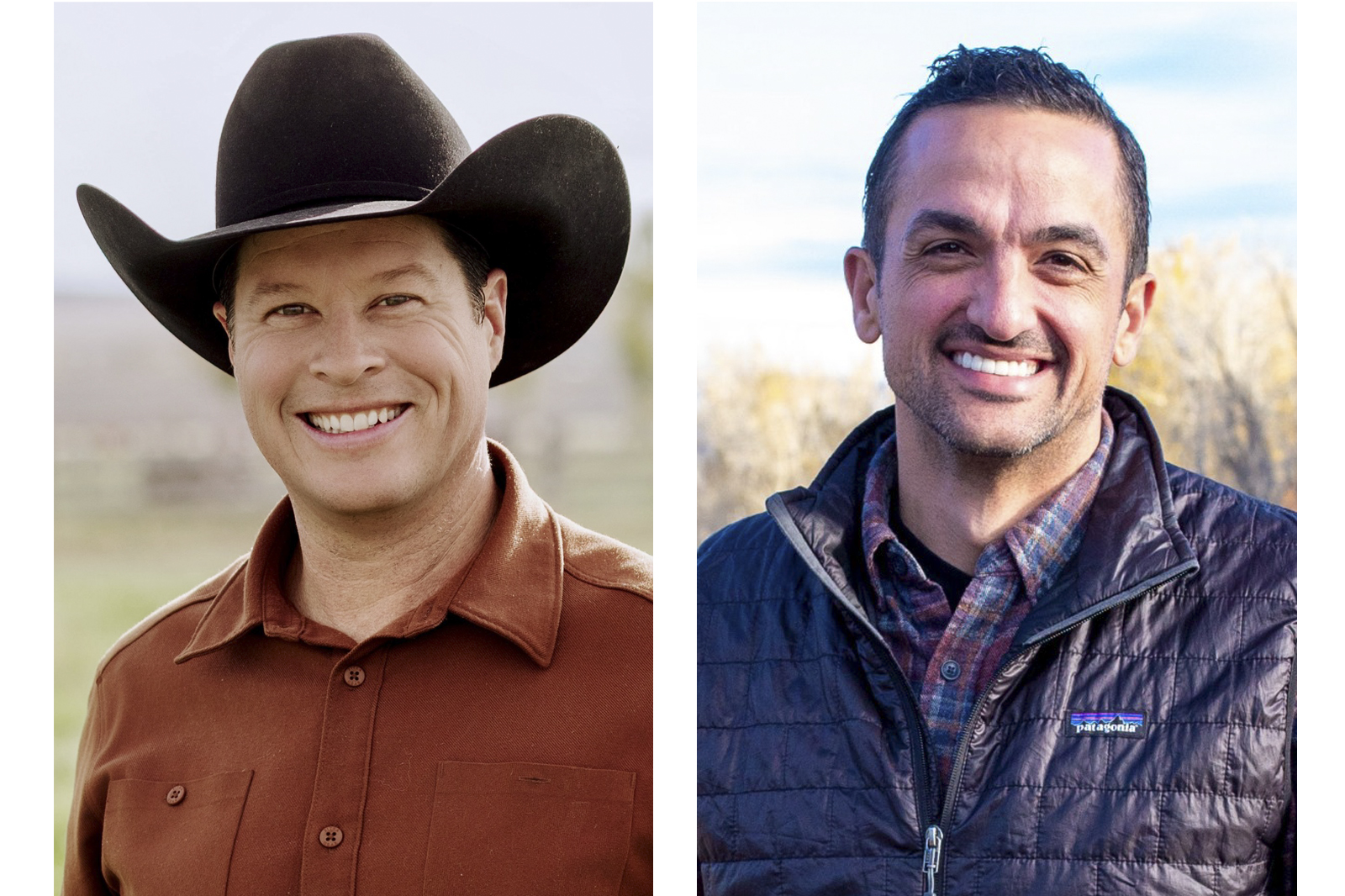
Cleveland, Rains Vie for Democratic Nomination to Run in Western House District
The (for now) two-way race will select a challenger likely to face Republican incumbent Rep. Ryan Zinke, who has served as the western district’s congressman since 2023
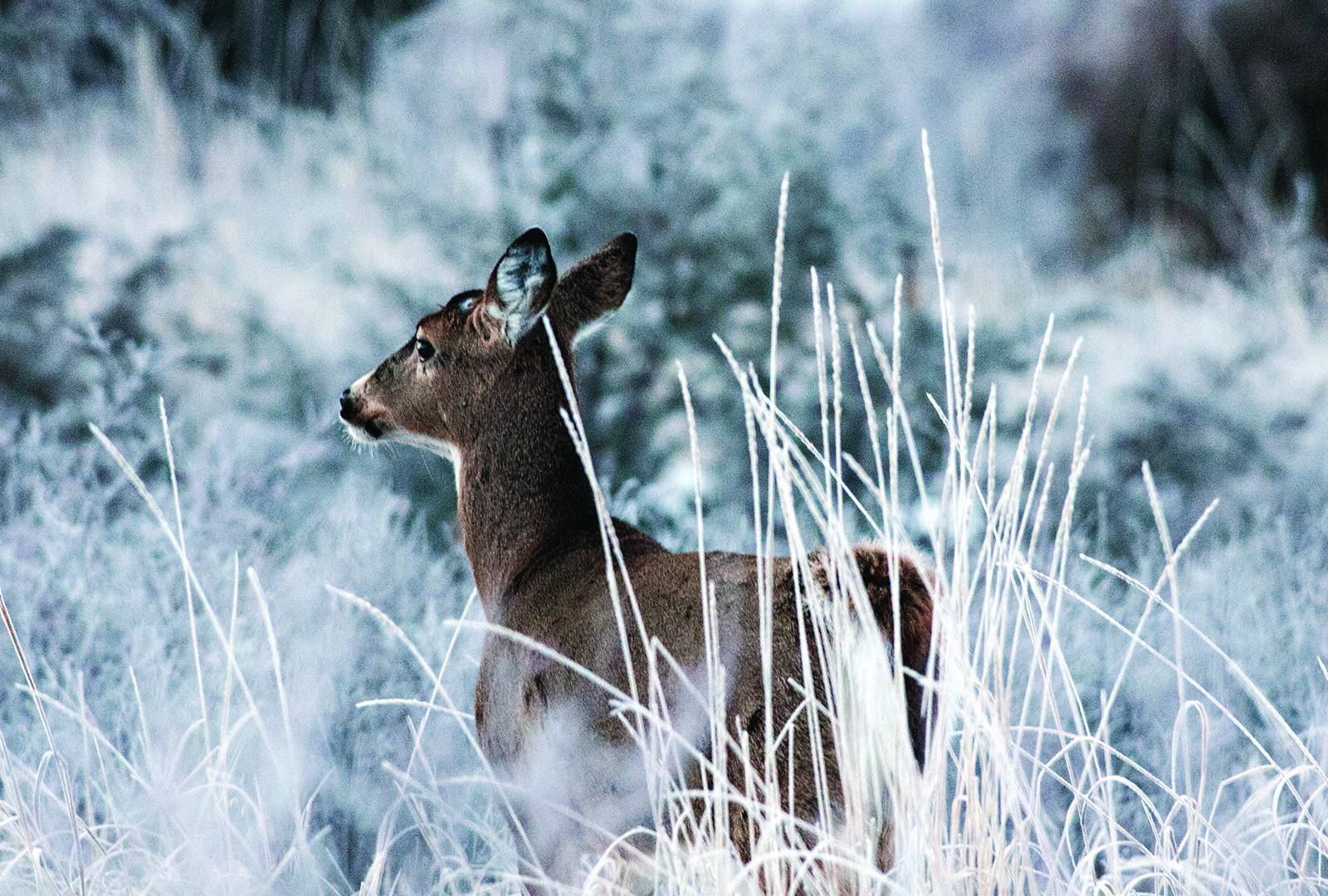
White-tailed Deer Tests Positive for CWD on Flathead Indian Reservation
If confirmed, the case marks the second detection of chronic wasting disease this year by wildlife officials with the Confederated Salish and Kootenai Tribes
Synnott is a professional climber and NYT bestselling author. An accomplished journalist, he contributes regularly to National Geographic magazine, and is the author of the international bestseller, “The Impossible Climb: Alex Honnold, El Capitan and the Climbing Life.” Synnott’s talk, “The Everest Enigma,” is the tale of his quest to solve the 100-year-old mystery of who actually summited Mount Everest first. It’s a modern-day detective story taking you from the archives of the RGS in London to high in the Death Zone, and then finally to the base.
PechaKucha which means “chit chat” in Japanese, is a presentation format that uses a fixed number of slides, each advancing automatically after a set time, to encourage presenters to be concise and maintain a dynamic pace. During “Wild in Montana,” you’ll hear from backcountry hikers, dedicated anglers, a fire and forestry historian, a Montana storytelling photographer and others who will share vivid, first-hand snapshots of what it means to get wild in the Last Best Place plus the work they’re all doing to keep Montana wild, free and accessible for everyone. This event is FREE and open to the public, no ticket is necessary.
Keeping you connected to Northwest Montana.
Whether you’ve been here for decades, or you’re new to the Flathead Valley, our reporting is here to help you feel smarter and in the loop about the issues most important to Northwest Montana. With your support, we can build a more engaged, informed community.